

Medicare deductibles take a real bite out of your budget. We at Dave Silver Insurance know that many beneficiaries overpay simply because they don’t understand their options.
The good news: smart Medicare deductible strategies can cut your out-of-pocket costs significantly. This guide walks you through the coverage choices and enrollment tactics that actually work.
How Medicare Deductibles Actually Work
Part A and Part B operate on completely different deductible structures, and most people misunderstand them. Part A covers hospital stays, and in 2027 you pay a $1,776 deductible per benefit period according to CMS data. Here’s what matters: that deductible applies every time you’re admitted to a hospital, which means if you have two separate hospital stays within a year, you pay the deductible twice. Many beneficiaries assume they only pay it once annually, then get blindsided by a second bill.
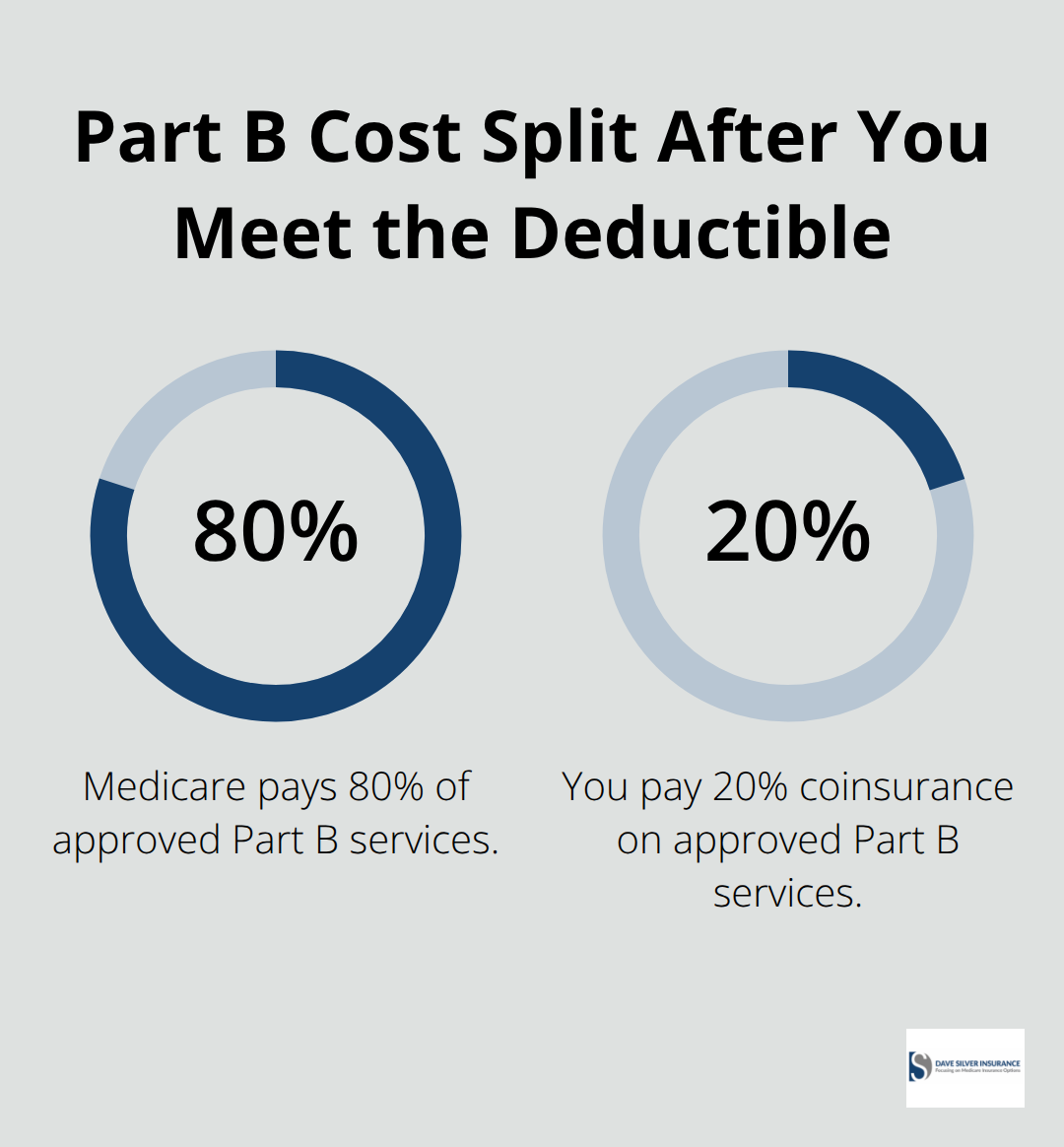
After you meet the Part A deductible, costs don’t disappear. Days 1 through 60 receive full coverage, but days 61 to 90 cost $444 per day, and days 91 and beyond cost $888 per day for your lifetime reserve days. Part B works in the opposite direction. Your 2027 Part B deductible is $292 annually, and it resets every January 1. Once you meet it, Medicare covers 80 percent of approved services and you pay 20 percent coinsurance.
The Preventive Care Exception
The catch with Part B is that this deductible only applies to certain services. Preventive care receives 100 percent coverage when you use a provider who accepts assignment, so you don’t owe anything for flu shots, pneumococcal vaccines, or COVID-19 vaccines. This distinction matters because it means you can access critical preventive services without hitting your deductible first.
Nursing and Extended Care Costs
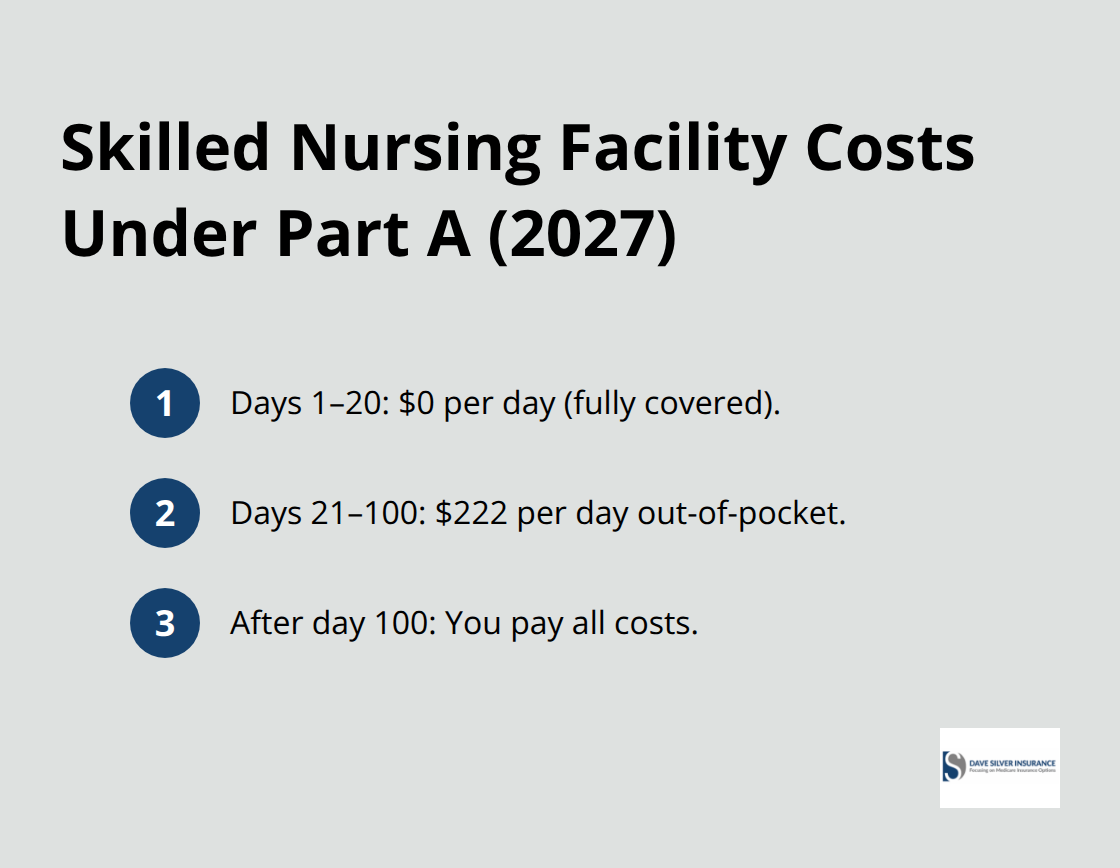
If you need nursing facility care, Part A covers days 1 through 20 completely in 2027, but days 21 through 100 cost $222 per day out of your pocket. After 100 days, you pay everything yourself. This is where costs escalate quickly for people with chronic conditions or recovery needs.
Annual Resets and Out-of-Pocket Maximums
The Part B deductible resets yearly, which means you need to budget for it every single year even if your healthcare needs stay the same. Out-of-pocket maximums differ dramatically by plan type. Original Medicare has no yearly maximum, meaning theoretically your costs could be unlimited if you face serious illness. Medicare Advantage plans cap out-of-pocket expenses at $9,850 maximum in 2027 according to CMS data, which provides real protection against catastrophic bills.
Part D and the Catastrophic Coverage Phase
Part D prescription drug plans have their own deductible up to $700 annually, and once you spend $2,400 out-of-pocket on drugs, your coverage shifts to catastrophic phase where covered medications cost nothing for the rest of the calendar year. The problem with Original Medicare is that meeting your deductible doesn’t make care free afterward; you still owe coinsurance percentages and copays for many services.
This is why comparing your actual plan options during open enrollment matters far more than focusing on deductible amounts alone. The real savings come from understanding which coverage type aligns with your health needs and financial situation-a decision that requires looking at the full picture, not just the headline deductible number.
Which Coverage Type Actually Cuts Your Deductibles
Medigap Plans Eliminate Deductible Uncertainty
Medigap plans offer the most aggressive deductible reduction available. Beneficiaries switch to Medigap specifically to eliminate the constant deductible anxiety, and the numbers justify it. Plans F, G, and J charge a $3,050 annual deductible for their high-deductible versions according to NCOA data, but once you hit that threshold, they pay 100 percent of your approved Part A and Part B costs for the rest of the year. Plan K caps your out-of-pocket maximum at $8,360 annually, and Plan L stops at $4,180. Medigap covers your coinsurance percentages, meaning that 20 percent cost-sharing under Part B disappears entirely after your deductible is met.
If you have predictable healthcare expenses or face chronic conditions requiring frequent doctor visits, Plan F eliminates the per-visit financial uncertainty that trips up Original Medicare beneficiaries. However, Medigap premiums run higher than Medicare Advantage, typically $150 to $300 monthly depending on your age and location, so this strategy works best for people with substantial medical needs who value simplicity.
Medicare Advantage Plans Cap Your Maximum Exposure
Medicare Advantage plans take the opposite approach by capping your maximum out-of-pocket spending at $9,850 in 2027 according to CMS data, which protects you against catastrophic expenses but maintains per-visit copays along the way. The average MA plan premium dropped to $12 monthly in 2027 from $14.37 the previous year, and many plans charge zero premium entirely. You trade deductible elimination for cost-sharing on individual services-you might pay $30 copays for doctor visits and $250 copays for specialist care, but once you hit $9,850 total out-of-pocket, everything becomes free.
Most people focus on the zero premium and ignore the deductible structure. MA plans often include low or zero deductibles for primary care, yet charge separate deductibles for specialists or hospital care, so comparing your specific medical needs against each plan’s actual cost-sharing is non-negotiable.
Part D Drug Coverage Strategies Within MA Plans
For Part D prescription drugs, standalone plans average $36 monthly while MA plans bundling drug coverage average just $7 monthly according to NCOA data. The Part D deductible reaches $700 maximum in 2027, but once you spend $2,400 out-of-pocket on medications, catastrophic coverage kicks in and covered drugs cost nothing for the remainder of the year.
If you take multiple maintenance medications, an MA-PD plan bundling medical and drug coverage often delivers lower total costs than Original Medicare plus standalone Part D plus Medigap, particularly for beneficiaries spending $3,000 or more annually on prescriptions. This bundled approach simplifies your enrollment process and reduces the number of separate deductibles you manage throughout the year.
The choice between Medigap simplicity and Medicare Advantage cost caps depends entirely on your prescription needs, doctor visit frequency, and financial tolerance for monthly premiums versus per-service copays. Your next step involves running actual numbers for your specific situation during open enrollment to see which structure produces the lowest total out-of-pocket costs.
How to Lock in Lower Costs Before Open Enrollment Ends
Understand Your Enrollment Windows
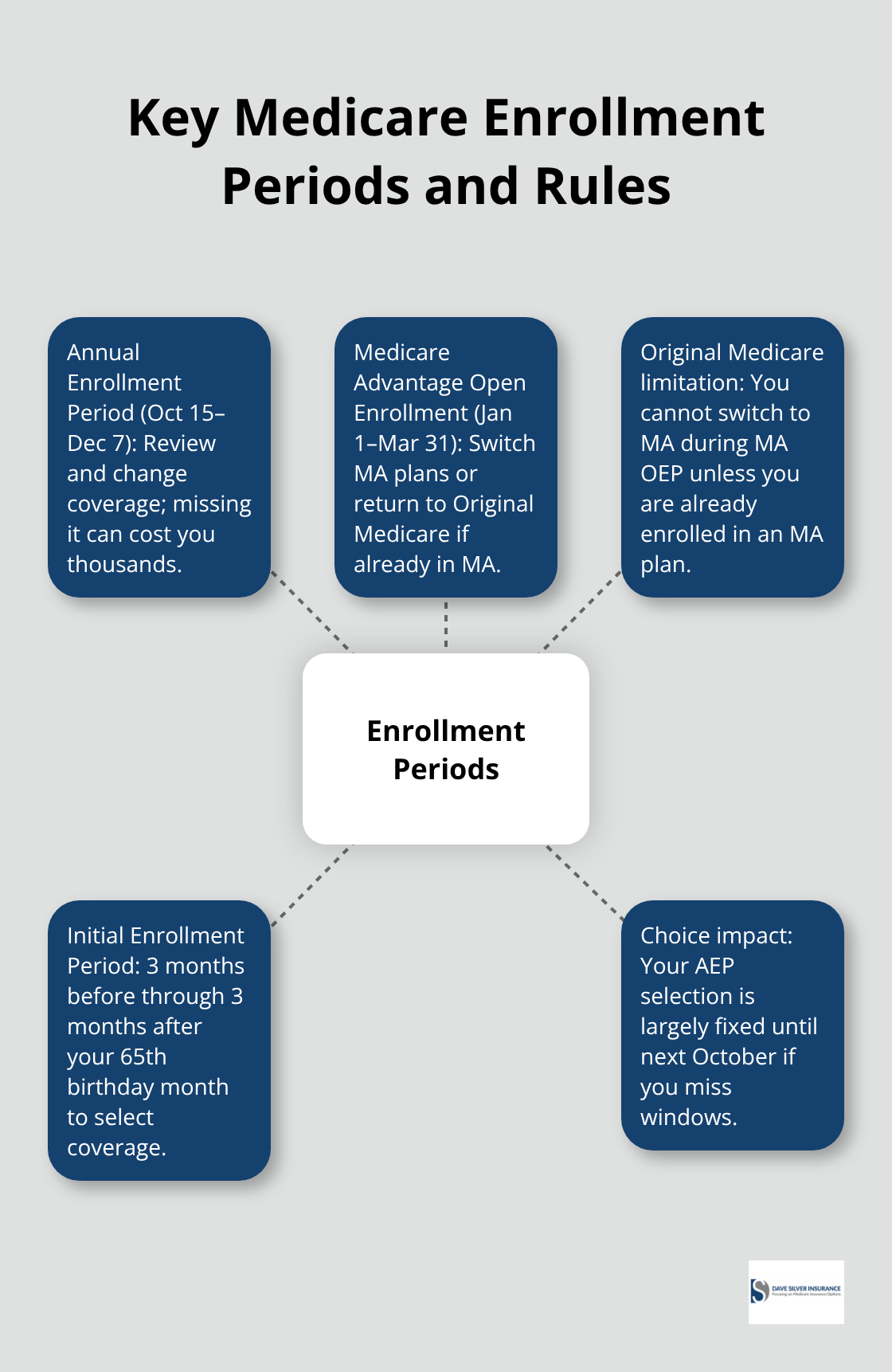
Timing your Medicare decisions matters more than most beneficiaries realize, and the enrollment windows available to you determine whether you pay full price or access better rates. If you turn 65 this year, your Initial Enrollment Period runs three months before your birthday through three months after, giving you a narrow window to select coverage that sticks with you for the full calendar year. Missing this window costs real money because you cannot change plans again until the following open enrollment unless you experience a qualifying life event like losing employer coverage or moving to a new state.
The Annual Enrollment Period runs October 15 through December 7 each year. Most beneficiaries wait until January to compare plans, then discover they missed this deadline that would have saved them thousands. The Medicare Advantage Open Enrollment Period from January 1 through March 31 lets you switch between MA plans or return to Original Medicare, but this applies only if you already enrolled in an MA plan previously. Beneficiaries on Original Medicare cannot switch to MA during this period, making your initial choice during Annual Enrollment essentially permanent until the next October arrives.
Compare Plans Using Your Actual Healthcare Needs
Stop looking at premiums first and start with your actual healthcare usage. Pull together your prescription list, count how many doctor visits you averaged last year, and note any specialists you see regularly. Enter your ZIP code into the official Medicare plan comparison tool at Medicare.gov, and you will see exact copays, deductibles, and whether your preferred doctors participate in each network (this step takes 30 minutes but prevents financial surprises mid-year).
One critical detail most people miss: MA plans often advertise zero deductibles for primary care while burying higher deductibles for hospital stays or specialist visits in the fine print. Compare the actual out-of-pocket maximum across multiple plans rather than fixating on the monthly premium, because a plan charging $15 monthly with a $500 deductible plus specialist copays can cost far more annually than a $50 monthly plan with a $0 deductible and $30 copays.
Run Drug Cost Estimates Through Each Plan
If you take medications, run the specific drug cost estimates through each plan’s formulary because a plan saving you $200 on premiums might charge $400 more annually for your maintenance medications. Part D deductibles reach $700 maximum in 2027, and once you spend $2,400 out-of-pocket on drugs, catastrophic coverage kicks in and covered medications cost nothing for the remainder of the year. This catastrophic phase matters significantly for beneficiaries on multiple maintenance medications, so factor this protection into your total cost calculation.
Maximize Preventive Services Before Year-End
Preventive services represent your easiest cost savings opportunity because Medicare covers flu shots, pneumococcal vaccines, COVID-19 vaccines, and annual wellness visits at 100 percent with no deductible when you use a participating provider. Schedule these appointments before December 31 each year so you do not waste coverage you paid for. The annual wellness visit addresses any health concerns before they escalate into costly treatments requiring hospital stays or specialist referrals that trigger separate deductibles.
Final Thoughts
Medicare deductible strategies work only when you act before open enrollment closes. Original Medicare offers simplicity but leaves you exposed to unlimited out-of-pocket costs, while Medigap plans eliminate deductible anxiety at higher premiums. Medicare Advantage plans cap your maximum exposure at $9,850 annually with low premiums, though you manage per-visit copays along the way, and Part D prescription drug coverage shifts to catastrophic phase once you spend $2,400 out-of-pocket, making your medications free for the remainder of the year.
Your next step requires gathering your prescription list, counting your typical annual doctor visits, and noting any specialists you see regularly. Contact Dave Silver Insurance to review your options with someone who understands the numbers and can show you exactly how much each plan costs for your situation. Open enrollment windows close quickly, and the difference between selecting the right plan and settling for the wrong one often exceeds $2,000 annually.
Disclaimer: The information provided in this blog is for general informational purposes only and does not constitute legal, financial, or insurance advice. Coverage options, terms, and availability may vary. Please consult with a licensed professional for advice specific to your situation