

Medicare deductibles take a real bite out of your healthcare budget each year. The average beneficiary pays hundreds or even thousands in out-of-pocket costs before coverage kicks in.
A solid Medicare deductible strategy can cut those expenses significantly. We at Dave Silver Insurance have helped thousands of people find plans that match their health needs and financial situation.
How Part A and Part B Deductibles Work
Understanding the Two Different Deductible Structures
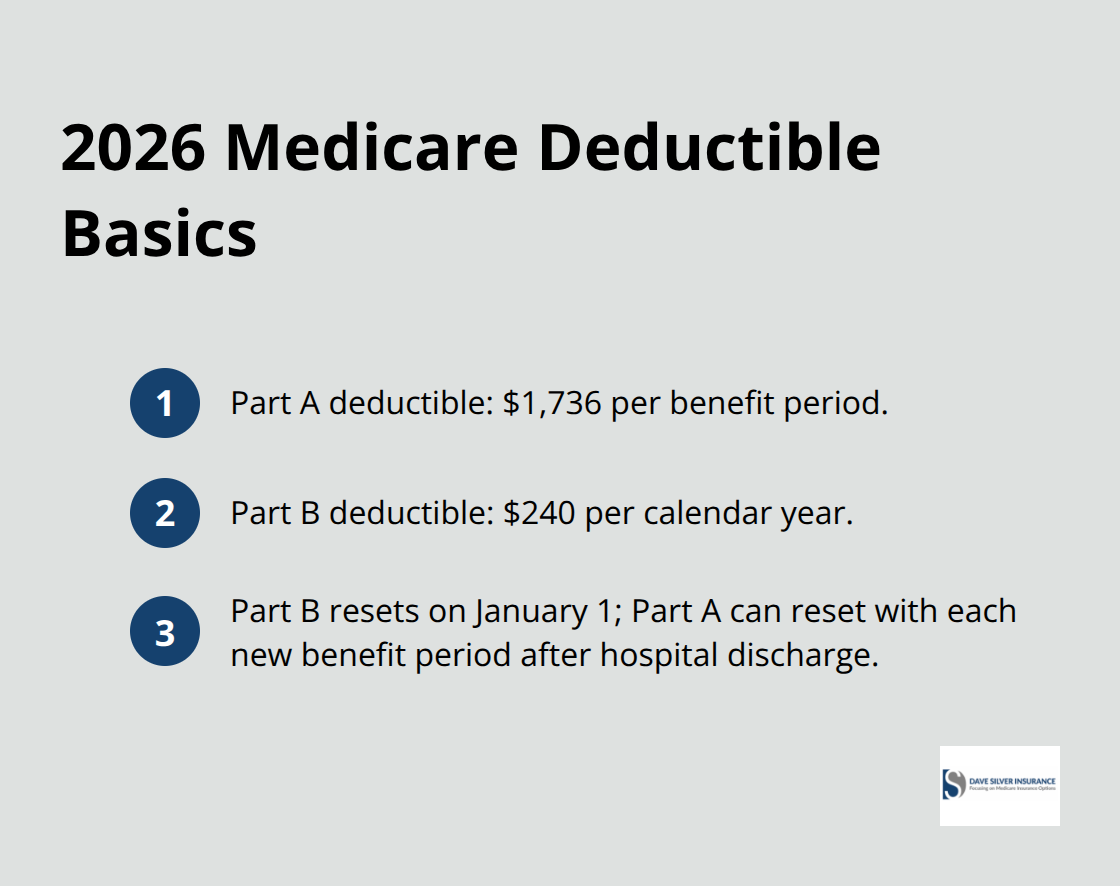
Part A and Part B deductibles operate on completely different schedules, and this distinction directly affects your annual costs. For 2026, the Part A deductible stands at $1,736 per benefit period, while Part B carries a $240 annual deductible. Part A applies to hospital stays, skilled nursing facility care, and hospice, resetting with each new benefit period that begins when you’re admitted to the hospital. Part B covers doctor visits and outpatient services, resetting on January 1 each year. The timing difference matters enormously for your wallet.
How Multiple Hospital Stays Multiply Your Costs
You might hit your Part A deductible multiple times in a single year if you have separate hospital admissions, but your Part B deductible resets just once annually. A person hospitalized twice in 2026 pays the full $1,736 deductible twice, not once. Most people underestimate this because they assume deductibles work like a single annual cap, when the reality proves far more expensive for those with recurring hospitalizations. This structure catches many beneficiaries off guard during their second or third hospital stay of the year.
What Happens After You Meet Your Deductible
Out-of-pocket costs extend well beyond deductibles once you satisfy them. After meeting your Part B deductible, you pay 20% coinsurance for most doctor services and outpatient care for the rest of the year. Part A requires daily coinsurance amounts after your deductible, with days 61-90 at $434 each day and days 91-150 at $868 each day while using your 60 lifetime reserve days. Someone facing a two-week hospitalization in 2026 could pay the $1,736 deductible plus coinsurance costs totaling over $4,000.
Evaluating Your Coverage Options
This is why Medigap plans and Medicare Advantage alternatives exist: they cap these secondary costs so you avoid unlimited exposure. Planning ahead means evaluating whether your expected healthcare needs justify the higher premiums of comprehensive Medigap coverage or whether a Medicare Advantage plan with predictable copays makes more financial sense for your situation. Your choice between these options shapes how much you’ll actually spend on healthcare this year.
How Medigap and Medicare Advantage Plans Slash Your Deductible Exposure
Medigap Plans Eliminate Deductible Costs Upfront
Medigap plans cover what Medicare leaves behind, protecting you from deductible expenses entirely. When you pair original Medicare with a Medigap policy, plans like Plan G or Plan N cover your Part A deductible of $1,736 and your Part B deductible of $283 immediately-you never pay those amounts out of pocket. Plan G extends further by covering coinsurance amounts after you meet your deductible, capping your exposure for the year. The trade-off is straightforward: you pay higher monthly premiums for Medigap coverage, typically $150–$250 monthly depending on your age and location, but you gain predictability and protection against catastrophic costs. This approach works best if you anticipate significant healthcare use or simply want certainty about your annual expenses.
Medicare Advantage Plans Cap Your Out-of-Pocket Maximum
Medicare Advantage plans replace your deductibles with copays and coinsurance that cap your out-of-pocket maximum, which for 2026 typically ranges from $3,000 to $6,700 annually depending on the plan. An MA plan might charge you a $200 copay for a hospital stay instead of a $1,736 deductible, immediately saving you money if you require inpatient care. The advantage here is that once you hit your plan’s out-of-pocket maximum, everything costs nothing for the remainder of the year, whereas original Medicare leaves you exposed to coinsurance indefinitely. Many MA plans also include integrated Part D prescription coverage and additional benefits like dental or vision, making them particularly valuable if you take multiple medications or need routine dental work.
Schedule Elective Procedures Early in the Year
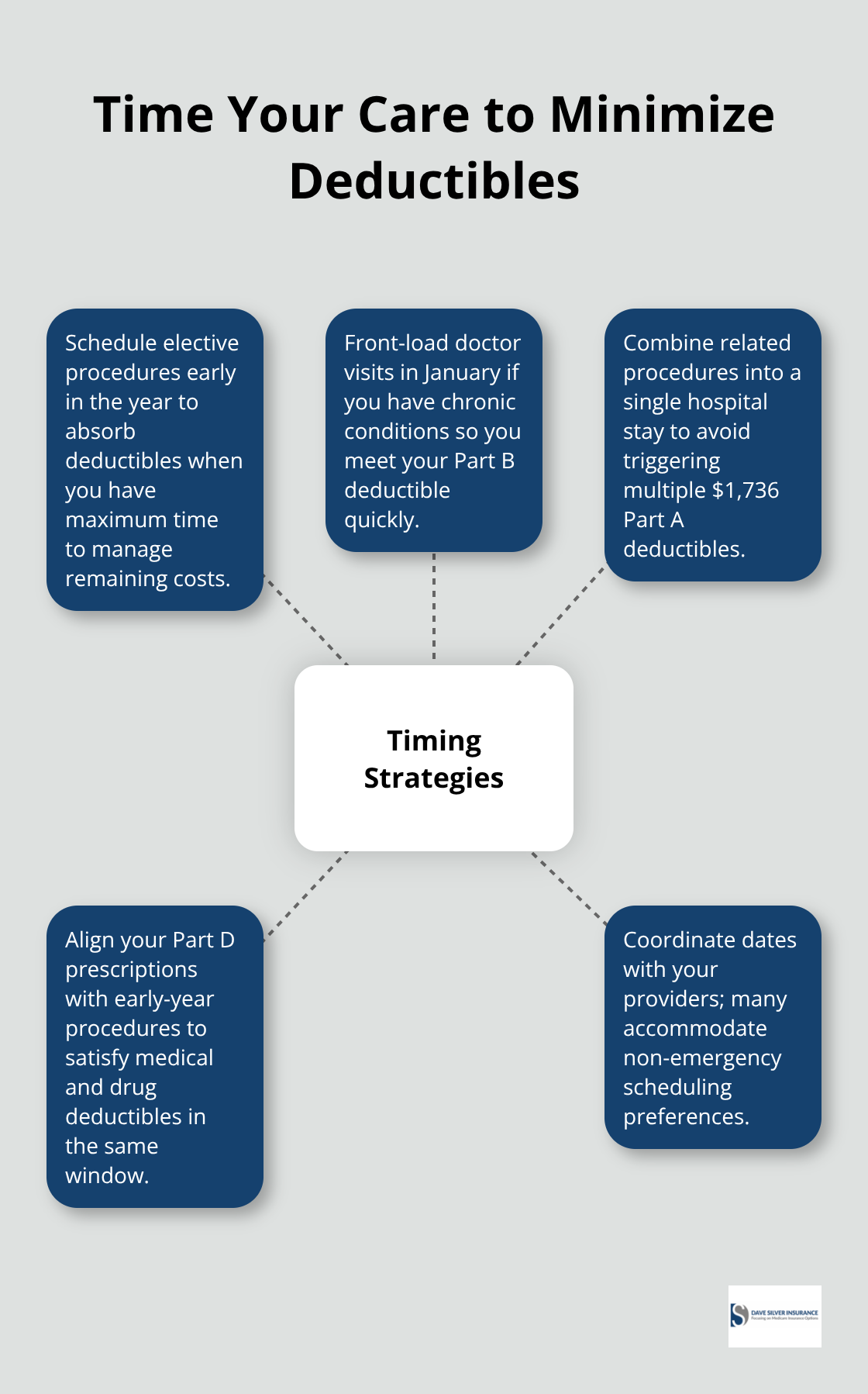
Scheduling elective procedures early in the calendar year forces you to absorb deductibles when you have maximum time to spread remaining costs across twelve months. If you need a knee replacement or cataract surgery, January or February ensures your Part B coinsurance kicks in when you still have most of the year ahead rather than facing multiple deductibles compressed into fall and winter. Conversely, if you anticipate a major procedure in November, postponing it until January of the following year means you satisfy only one year’s deductible instead of spreading costs across two calendar years. This strategy requires coordination with your physician, but orthopedic surgeons, ophthalmologists, and other specialists routinely accommodate scheduling preferences for non-emergency care.
Front-Load Doctor Visits to Meet Your Deductible Quickly
People with chronic conditions who need multiple doctor visits should front-load appointments in January to meet their Part B deductible quickly, then schedule follow-ups throughout the year when coinsurance applies but the deductible no longer drains your account. If you experience multiple hospital admissions, understand that each separate benefit period triggers a new Part A deductible, so timing matters less for inpatient care-you cannot avoid these costs through scheduling. What you can control is whether you combine elective and necessary procedures into fewer hospital stays rather than spreading them across the year, reducing the number of times you pay $1,736. This approach (coordinating with your care team) transforms what feels like an unavoidable expense into a manageable one.
Combine Procedures to Minimize Deductible Hits
Consolidating multiple procedures into a single hospital admission or surgical event protects your budget far more effectively than spacing them throughout the year. Two separate knee surgeries scheduled months apart trigger two Part A deductibles totaling $3,472, while scheduling both procedures during one hospital stay means you pay the deductible only once. Your surgeon can often accommodate this request, especially when both procedures address related issues or when the second procedure can wait a few weeks without compromising your health. Discussing this strategy with your healthcare provider opens doors to cost savings that most beneficiaries never consider, making the difference between paying thousands in preventable deductibles and keeping that money in your pocket.
How to Use Preventive Care and Plan Your Deductible Strategy
Maximize Free Preventive Services Before Paying Deductibles
Medicare covers over 100 preventive services without charging you a deductible or coinsurance, yet most beneficiaries never fully utilize this benefit. The Centers for Medicare and Medicaid Services lists covered items including annual wellness visits, cancer screenings, cardiovascular testing, and diabetes management at zero cost to you. An annual wellness visit costs nothing and includes a personalized prevention plan tailored to your age and health history. Colonoscopies, mammograms, and bone density scans all fall under this umbrella of free preventive care. The practical strategy is straightforward: schedule every preventive screening you qualify for before you incur any deductible charges, then tackle elective or non-urgent care afterward. This approach front-loads your healthcare spending with free services, stretching your deductible dollars further when you do need treatment. A 68-year-old who schedules a colonoscopy, mammogram, and annual wellness visit in January consumes zero deductible while gathering critical health information that might prevent costlier problems later. Preventive care directly reduces your deductible burden by eliminating charges that would otherwise count against it.
Understand Part B’s Calendar-Year Reset
Part B resets on January 1 each calendar year, meaning your deductible obligation vanishes at midnight on December 31. This annual reset creates a clear planning window: you know exactly when your deductible refreshes and can time your healthcare accordingly. If you schedule major outpatient procedures or doctor visits in early January, you satisfy your Part B deductible while having eleven months remaining to manage coinsurance costs. Conversely, a significant procedure in December forces you to pay deductibles again just weeks later in January. Understanding this reset date transforms what feels like a fixed cost into an expense you can actually control through strategic timing.
Navigate Part A’s Benefit-Period Reset
Part A resets when your hospital benefit period ends, which occurs 60 days after you leave the hospital with no subsequent inpatient admission. This means someone discharged on October 15 will have a fresh Part A deductible available on December 14, potentially allowing them to schedule a second admission without triggering a second deductible if timing aligns correctly. Unlike Part B’s predictable January reset, Part A’s reset depends entirely on your hospitalization patterns. Someone with multiple planned procedures can consolidate them into a single hospital stay to avoid paying the deductible twice. This flexibility rewards those who coordinate their care strategically with their healthcare providers.
Align Part D Prescription Coverage with Your Schedule
Part D prescription coverage resets annually on January 1, and your deductible typically ranges from $500 to $600 per year depending on your plan. If you know you need a joint replacement and expect prescription medication adjustments, scheduling the procedure in early January means you satisfy both Part B and Part D deductibles simultaneously while having eleven months to manage coinsurance costs. This alignment prevents you from paying separate deductibles for medical care and prescriptions across two calendar years. Mapping your anticipated healthcare events against these reset dates allows you to control when you absorb deductible costs rather than letting them happen randomly throughout the year.
Coordinate Multiple Healthcare Events Strategically
The critical action is mapping your anticipated healthcare events against these reset dates, then scheduling accordingly. If you face a major procedure in December, postponing it until January forces you to pay deductibles again in just weeks-an expensive mistake that costs thousands in preventable charges. Conversely, front-loading procedures into early January means you satisfy multiple deductibles (Part B and Part D) simultaneously, then spend the remaining eleven months managing only coinsurance. Your healthcare providers routinely accommodate scheduling preferences for non-emergency care, so discussing this strategy with your care team opens doors to real savings. This approach transforms what seems like fixed costs into flexible expenses you can actually control through strategic planning.
Final Thoughts
Minimizing your Medicare deductible requires understanding how Part A and Part B reset at different times, then using that knowledge to schedule your healthcare strategically. Front-load preventive care in January when it costs nothing, consolidate elective procedures into single hospital stays to avoid paying deductibles multiple times, and choose between Medigap or Medicare Advantage based on your anticipated healthcare needs. Medigap plans eliminate deductible exposure entirely through higher monthly premiums, while Medicare Advantage plans replace deductibles with capped out-of-pocket maximums that provide predictability and often include prescription coverage and additional benefits.
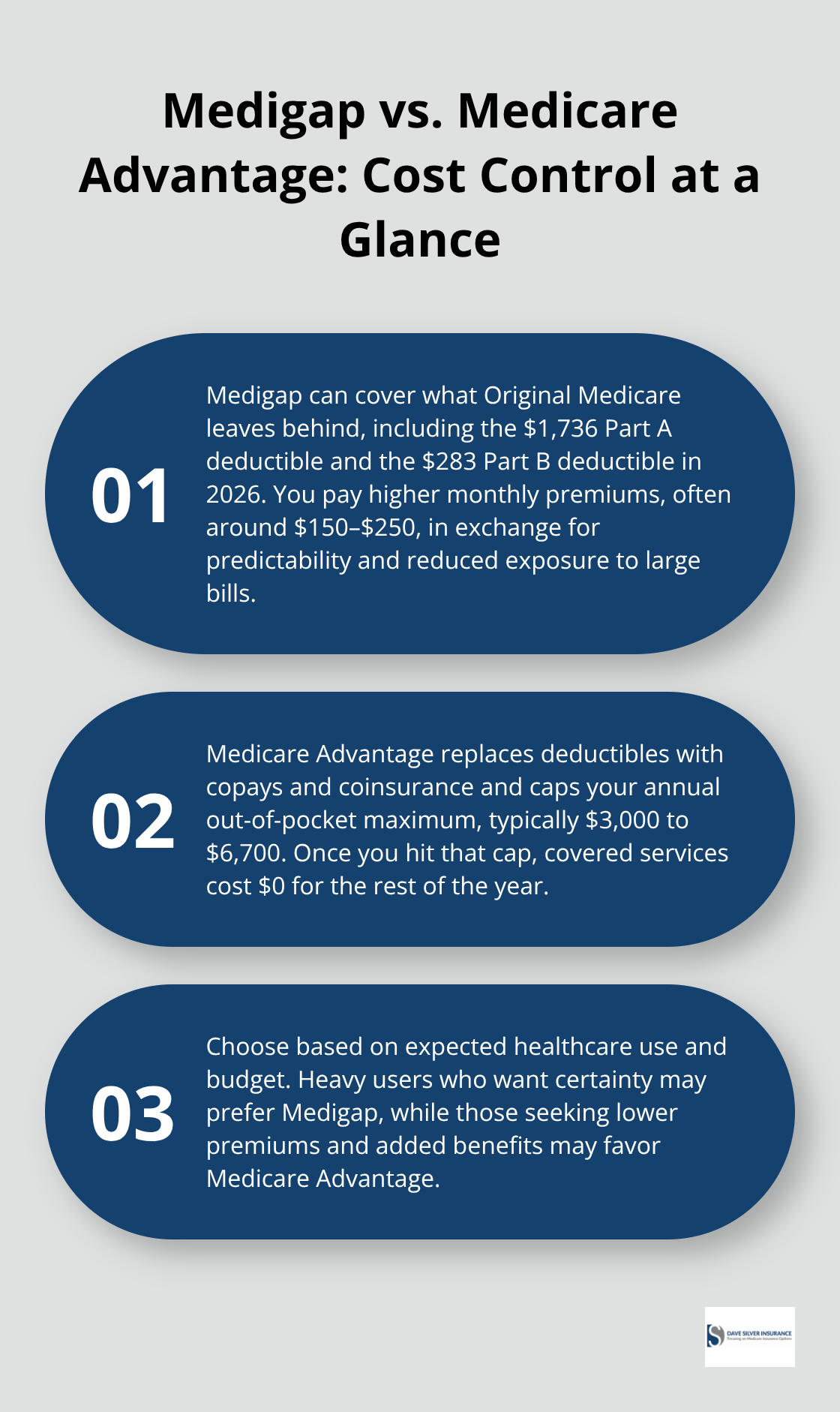
Your Medicare deductible strategy depends on your health situation and financial circumstances-a one-size-fits-all approach wastes money. If you anticipate significant healthcare use or want absolute certainty about annual costs, Medigap coverage makes financial sense despite the premium expense. If you prefer lower monthly payments and can tolerate copays instead of coinsurance, Medicare Advantage plans deliver real savings, especially when you hit your out-of-pocket maximum.
We at Dave Silver Insurance have guided thousands of beneficiaries through this exact decision-making process, and our team is accessible seven days a week to answer your questions and ensure you understand how your coverage works. Schedule a consultation with us to review your Medicare deductible strategy and confirm you’re enrolled in the plan that actually saves you the most money this year.
Disclaimer: The information provided in this blog is for general informational purposes only and does not constitute legal, financial, or insurance advice. Coverage options, terms, and availability may vary. Please consult with a licensed professional for advice specific to your situation