

Medicare costs explained can feel overwhelming when you’re trying to budget for healthcare. Between premiums, deductibles, and copayments, the bills add up fast.
At Dave Silver Insurance, we’ve helped thousands of people understand exactly what they’re paying for and why. This guide breaks down the real costs behind your Medicare bill and shows you concrete ways to pay less.
What Makes Up Your Medicare Bill
Part A: Hospital Insurance Costs
Your Medicare bill starts with Part A, which covers hospital stays, skilled nursing facility care, and hospice services. Most people pay no Part A premium if they worked for at least 40 quarters, but hospitalization triggers a deductible of $1,676 per benefit period in 2026. Each new hospital admission resets this deductible, so multiple stays in the same year multiply your costs significantly. Part A also limits skilled nursing facility coverage to 100 days per benefit period, leaving you responsible for all costs beyond that threshold.
Part B: Medical Insurance Premiums and Coinsurance
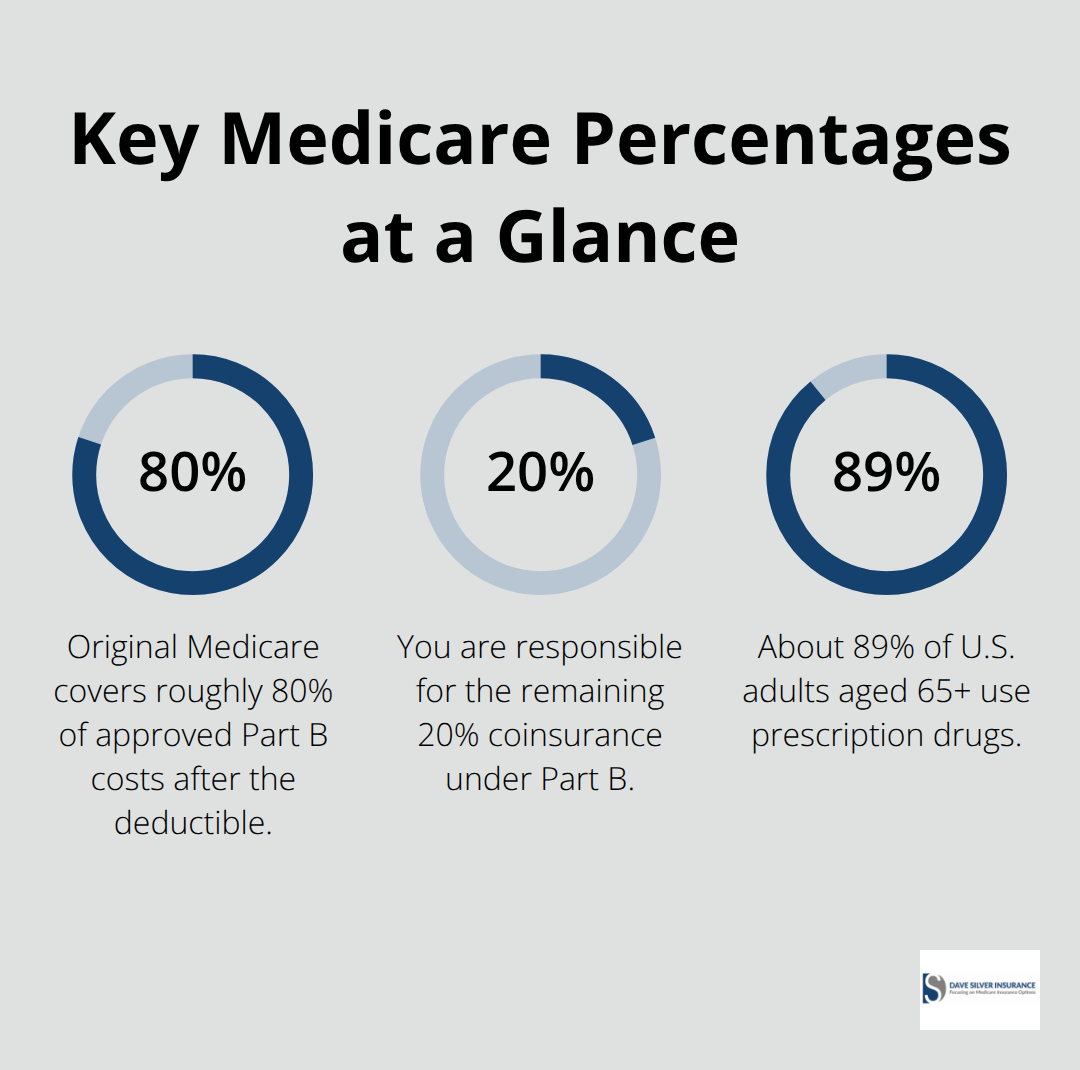
Part B covers doctor visits, outpatient services, and medical equipment, with premiums running about $202.90 per month in 2026. After you pay your annual deductible, Original Medicare covers roughly 80% of approved costs, leaving you responsible for the remaining 20% coinsurance. This structure means ongoing medical care creates substantial bills that accumulate throughout the year. The gap between what Medicare covers and what you actually pay widens significantly with serious illness or chronic conditions requiring frequent treatment.
Out-of-Pocket Expenses Without a Safety Net
Out-of-pocket expenses under Original Medicare have no yearly limit unless you have supplemental coverage. Your costs can grow indefinitely depending on your healthcare needs, which creates real financial risk for people with serious conditions. About 89% of adults aged 65 and older use prescription drugs according to CDC data, yet drug coverage requires separate enrollment through Part D with its own premiums averaging about $34.50 per month and annual out-of-pocket caps of $2,100. Original Medicare also excludes routine dental, vision, hearing aids, and long-term care, forcing you to budget separately for these common healthcare needs in retirement.
Enrollment Timing and Permanent Penalties
Missing your Initial Enrollment Period for any part triggers permanent penalties that follow you for life. Part B penalties run 10% per year of delay, while Part D penalties accumulate at 1% monthly for each month you wait. These penalties attach to your premiums permanently, making enrollment timing a financial decision with lasting consequences. The next section explores how your income level and where you live further shape what you actually pay each month.
Factors That Drive Up Your Medicare Expenses
How Your Income Level Triggers Higher Premiums
Your income level creates immediate financial pressure on your Medicare bill through Income-Related Monthly Adjustment Amounts, known as IRMAA surcharges. The Social Security Administration calculates these surcharges using your income from two years prior, meaning your 2026 Medicare costs depend on what you earned in 2024. If your modified adjusted gross income exceeds $97,000 as a single filer or $194,000 as a married couple filing jointly, you’ll pay higher premiums on Part B and Part D.
A single person earning $120,000 annually faces Part B surcharges adding $70 to $140 monthly on top of the base $202.90 premium, depending on exactly how much over the threshold you fall. This creates a genuine penalty for being more financially successful, making retirement income planning inseparable from Medicare cost planning. Healthcare professionals, business owners, and anyone with investment income need to pay particular attention here since capital gains and distributions count toward IRMAA calculations.
Work backward from your desired retirement lifestyle to understand what income level keeps you below IRMAA thresholds, then structure your withdrawals from retirement accounts accordingly. This proactive approach prevents surprise surcharges that compound your monthly expenses.
Geographic Location and Regional Cost Variations
Geographic location shapes your actual out-of-pocket costs in ways most people overlook when planning retirement. Medicare Advantage plan premiums and benefits vary dramatically by ZIP code, with some regions offering $0 premium plans while others charge $100 monthly for comparable coverage. Original Medicare premiums stay consistent nationally, but your actual spending depends on regional provider costs and utilization patterns.
A person in a high-cost urban area might see substantially higher coinsurance bills under Original Medicare simply because providers in that region bill Medicare higher amounts. Your location fundamentally determines whether your retirement healthcare budget holds up or gets strained by regional pricing differences.
Enrollment Age and the Cost of Delays
Delaying enrollment after your Initial Enrollment Period creates permanent financial damage that compounds throughout retirement. A 10% Part B penalty and 1% monthly Part D penalty accumulate year after year, making a three-year delay cost you 30% extra on Part B premiums forever. Someone who waits three years to enroll in Part B at age 68 will pay 30% more than someone who enrolled at 65, and that penalty never disappears even if they live to 95.
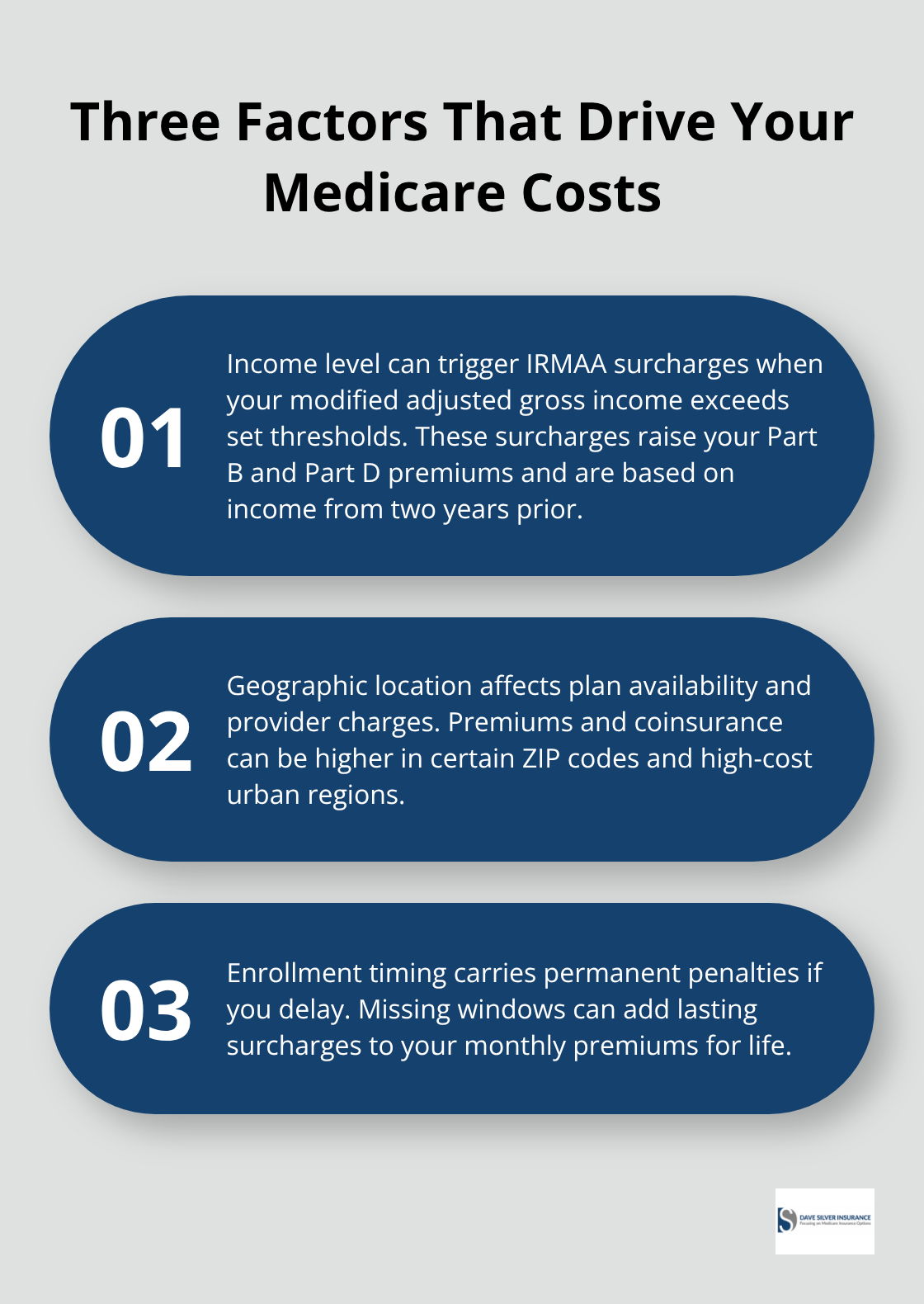
The financial math is brutal and irreversible, making enrollment timing one of the few Medicare decisions you cannot undo later. These three factors-income level, geographic location, and enrollment timing-interact to shape your total Medicare costs, but they’re only part of the picture. The next section reveals concrete strategies to reduce what you actually pay each month.
Ways to Reduce What You Pay for Medicare
Medigap Insurance Closes the Coverage Gap
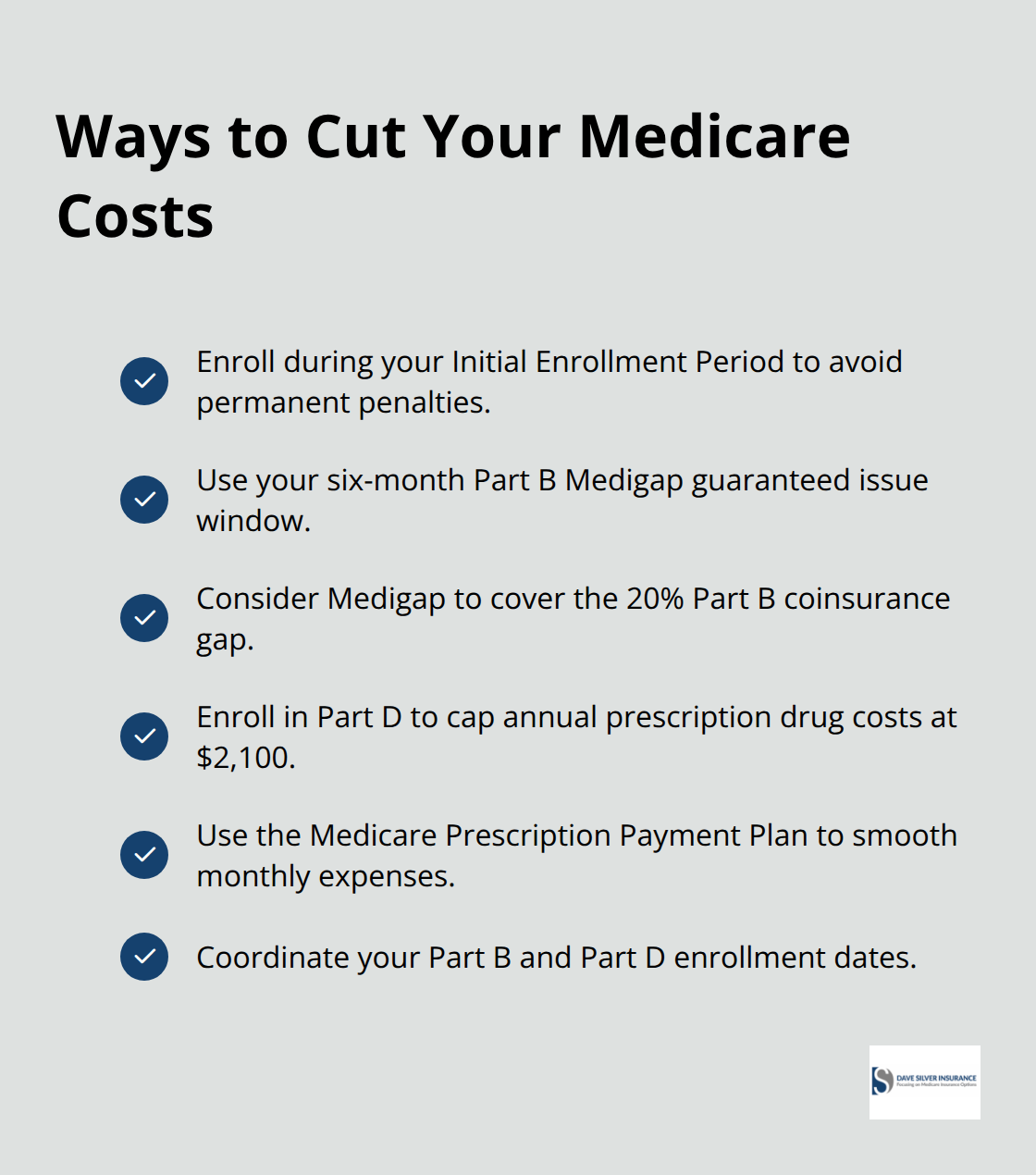
Medigap insurance stands as the most direct way to eliminate the 20% coinsurance gap that Original Medicare leaves on your shoulders. When Original Medicare covers 80% of approved Part B costs, Medigap insurance closes the coverage gap, with your Medigap policy paying your doctor whatever amount you owe under your policy and you’re responsible for any costs that are left. The timing of your Medigap purchase matters enormously because you have a guaranteed issue window during the first six months after you enroll in Part B-meaning insurers must offer you coverage at their best rates without medical underwriting. Wait beyond those six months and insurers can deny you coverage, charge higher premiums based on your health history, or exclude pre-existing conditions entirely.
Someone with diabetes or heart disease who delays Medigap enrollment faces substantially higher costs or outright rejection. The federal government recognizes this protection as so valuable that it expires after six months, creating genuine financial urgency around your enrollment timeline. Medigap SELECT policies offer lower premiums than standard Medigap but restrict you to in-network providers, making them worthwhile only if you’re comfortable with that trade-off.
Part D Coverage Protects Your Prescription Drug Budget
Prescription drug coverage through Part D requires separate attention because many people postpone this enrollment until crisis hits their medicine cabinet. Part D out-of-pocket costs cap at $2,100 annually, creating a predictable ceiling on drug expenses that Original Medicare never provides. The Medicare Prescription Payment Plan allows you to spread prescription costs over time rather than paying the full amount upfront at the pharmacy, giving you monthly budgeting flexibility when costs spike.
Enrollment timing determines whether you pay permanent penalties or avoid them entirely, and this decision compounds over decades of retirement. Someone who enrolls in Part D at age 65 pays no penalty, while someone who waits until age 70 accumulates 60 months of 1% monthly penalties, meaning they’ll pay roughly 6% extra on their Part D premiums for life. The financial damage from delayed enrollment never reverses, making your Initial Enrollment Period window the only opportunity to start penalty-free.
Coordinate Your Enrollment Timeline
Coordinate your Part D enrollment with your Part B enrollment to keep yourself on track with Medicare’s deadlines and protect your long-term budget from permanent surcharges. This synchronization prevents you from missing critical windows that trigger lifelong financial penalties.
Final Thoughts
Your Medicare costs explained boils down to three realities: premiums, out-of-pocket expenses, and the permanent financial penalties that follow enrollment mistakes. Income level, geographic location, and enrollment timing create the foundation of what you’ll actually pay each month, while Medigap insurance and Part D coverage provide the tools to control those costs. The $1,676 Part A deductible, $202.90 Part B premium, and unlimited coinsurance under Original Medicare demand serious planning before you turn 65.
The strategies that work are straightforward and largely irreversible once you miss them. Enroll during your Initial Enrollment Period to avoid permanent penalties that compound throughout retirement, use your guaranteed issue window within six months of Part B enrollment to lock in Medigap coverage at the best rates before medical underwriting kicks in, and coordinate Part D enrollment to cap your prescription drug costs at $2,100 annually. A three-year enrollment delay costs you 30% extra on Part B premiums for life, missing your Medigap guaranteed issue window can result in denial or exclusion of pre-existing conditions, and waiting on Part D accumulates permanent penalties at 1% monthly.
We at Dave Silver Insurance work with you seven days a week to build a personalized plan that fits your health needs and financial situation, covering Part A, B, C, and D enrollment alongside Medigap options tailored to your circumstances. Schedule a consultation with our team to get clarity on your specific situation and confidence in your healthcare decisions before enrollment deadlines pass.
Disclaimer: The information provided in this blog is for general informational purposes only and does not constitute legal, financial, or insurance advice. Coverage options, terms, and availability may vary. Please consult with a licensed professional for advice specific to your situation