

Medicare Open Enrollment is a critical time for beneficiaries to review and adjust their coverage. At Dave Silver Insurance, we often get asked, “What does Medicare Open Enrollment mean?”
This annual period allows you to make important changes to your Medicare plans, ensuring your healthcare needs are met for the coming year. In this post, we’ll break down the key aspects of Open Enrollment and help you navigate this important decision-making process.
What Happens During Medicare Open Enrollment?
Medicare Open Enrollment is an annual period when beneficiaries can reassess and modify their coverage. This window of opportunity runs from October 15 to December 7 each year, allowing Medicare recipients to make adjustments to their health and prescription drug coverage for the following year.
Eligibility for Participation
All current Medicare enrollees can participate in Open Enrollment. This includes:
- Individuals aged 65 and older
- People under 65 with certain disabilities
- Those with End-Stage Renal Disease
It’s important to note that Open Enrollment differs from the Initial Enrollment Period, which is specific to when you first become eligible for Medicare.
Types of Changes Allowed
During Open Enrollment, you have the flexibility to make several types of changes:
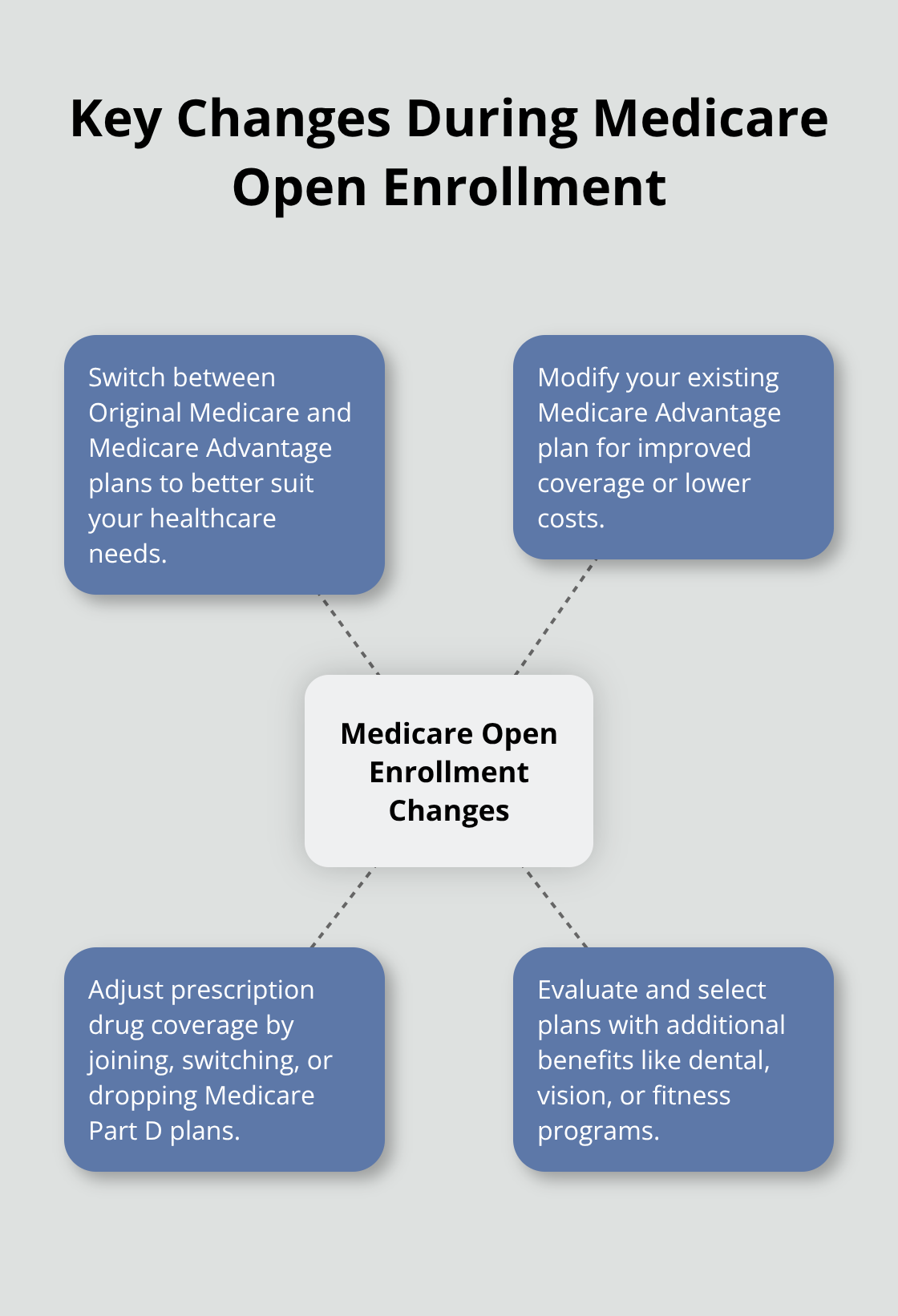
- Switch from Original Medicare to a Medicare Advantage plan (or vice versa)
- Change between Medicare Advantage plans
- Join, switch, or drop a Medicare Part D prescription drug plan
The Importance of Annual Review
Reviewing your coverage annually can lead to significant benefits. Healthcare needs change, and so do the plans offered by insurance providers. A plan that suited you last year might not be the best fit now.
For example, a client (who switched to a plan that better covered their new medications) saved over $2,000 annually. This illustrates the potential benefits of reassessing your coverage during Open Enrollment.
A study by the Kaiser Family Foundation revealed that only about 30% of Medicare beneficiaries compare plans during Open Enrollment. This statistic suggests that a majority might miss out on potential savings or better coverage options.

Timing and Deadlines
Changes made during Open Enrollment take effect on January 1 of the following year. It’s essential to make informed decisions before the December 7 deadline to avoid any gaps in coverage or unexpected costs in the new year.
As we move forward, let’s explore the specific steps you can take to make the most of the Medicare Open Enrollment period and ensure you have the best coverage for your needs.
What Changes Can You Make During Open Enrollment?
Medicare Open Enrollment provides an annual opportunity to reassess and adjust your coverage. This period allows for significant modifications that can impact your healthcare experiences and costs. Let’s explore the key changes you can make during Open Enrollment.
Switching Between Original Medicare and Medicare Advantage
One of the most substantial changes you can make is to switch from Original Medicare to a Medicare Advantage plan, or vice versa. Medicare Advantage plans, offered by private insurers, often include additional benefits not covered by Original Medicare, such as dental, vision, and hearing services. Medicare Advantage enrollment grew by about 1.3 million beneficiaries, or 4%, between 2024 and 2025, which highlights the growing popularity of these comprehensive options.
When you consider this switch, you must evaluate your current healthcare needs and compare them with the benefits offered by different plans. For example, if you require frequent specialist visits, you should ensure that the Medicare Advantage plan you’re considering has a network that includes your preferred providers.
Modifying Your Medicare Advantage Plan
If you’re already enrolled in a Medicare Advantage plan, Open Enrollment allows you to switch to a different plan that might better suit your needs. This could mean changing to a plan with lower out-of-pocket costs, better prescription drug coverage, or a network that includes your preferred healthcare providers.
Adjusting Prescription Drug Coverage
Whether you’re enrolled in Original Medicare or a Medicare Advantage plan, Open Enrollment is the time to review and modify your prescription drug coverage. This includes joining a standalone Medicare Part D plan, switching between Part D plans, or selecting a Medicare Advantage plan with integrated drug coverage.
Prescription drug formularies and pricing tiers can change annually, so it’s essential to review these changes and ensure your medications are covered at a cost-effective level in your chosen plan.
Evaluating Additional Benefits
Many Medicare Advantage plans offer extra benefits that Original Medicare doesn’t cover. During Open Enrollment, you can explore plans that provide services like:
- Dental care (cleanings, fillings, dentures)
- Vision care (eye exams, glasses, contact lenses)
- Hearing aids and fittings
- Fitness programs (gym memberships, wellness classes)
- Transportation to medical appointments
These additional benefits can significantly enhance your overall healthcare experience and potentially reduce your out-of-pocket expenses for these services.
As you navigate these options during Open Enrollment, it’s important to consider how each change might affect your overall healthcare strategy. The next section will guide you through the essential considerations to keep in mind as you make these important decisions.
How to Make Informed Decisions During Open Enrollment
Medicare Open Enrollment requires careful consideration to optimize your health and financial well-being. This annual opportunity allows you to make significant changes to your coverage. Here’s what you need to focus on to make the most of this period.
Assess Your Current Health Needs
Take a close look at your health status and how it changed over the past year. New conditions or different medications can significantly impact which plan is best for you. For example, a diagnosis of a chronic condition might benefit from a plan with lower specialist copays or a more comprehensive prescription drug formulary.
Scrutinize Plan Changes
Insurance companies often modify their plans yearly. Review your Annual Notice of Change (ANOC) document carefully. This document outlines any changes to your current plan for the upcoming year. Pay special attention to:
- Premium increases
- Changes in deductibles or copayments
- Modifications to the drug formulary
- Alterations in the provider network
A study by the Kaiser Family Foundation found that premiums for Medicare Advantage plans decreased by an average of 8% from 2022 to 2023. However, this doesn’t mean your specific plan won’t see an increase (underscoring the importance of reviewing your ANOC).
Compare Total Costs, Not Just Premiums
While a low premium might seem attractive, it’s essential to look at the total cost of care. This includes:
- Monthly premiums
- Annual deductibles
- Copayments and coinsurance
- Out-of-pocket maximums
A plan with a $0 premium might end up costing more if it has high deductibles or copayments, especially if you require frequent medical care or expensive medications.

Check Provider Networks
If you have preferred doctors or hospitals, verify that they’re still in-network for the plans you’re considering. Out-of-network care can be significantly more expensive. The Medicare Plan Finder tool can help you check which plans your doctors accept.
Review Drug Coverage
For those on regular medications, reviewing the drug formulary is critical. Check not only if your medications are covered but also their tier placement, which affects your out-of-pocket costs. The Centers for Medicare & Medicaid Services reports that in 2023, the average basic Part D premium is $31.50, a decrease from $32.08 in 2022.
Making informed decisions about your Medicare coverage is crucial. We recommend starting your plan review well before October 15 to ensure you have sufficient time to compare options and make the best choice for your healthcare needs.
Final Thoughts
Medicare Open Enrollment means a chance to optimize your healthcare coverage. From October 15 to December 7, you can make important changes to your Medicare plans. You can switch between Original Medicare and Medicare Advantage, adjust prescription drug coverage, or explore plans with additional benefits.
Annual reviews of your coverage can lead to significant improvements in your healthcare experience. Your needs may change, and insurance plans often update their offerings. We at Dave Silver Insurance specialize in simplifying the Medicare enrollment process (with over 17 years of experience).
Our team provides personalized guidance on all aspects of Medicare, including Parts A, B, C, and D, as well as Medigap Insurance. We offer expert advice tailored to your unique health and financial needs. You can reach out to us for a consultation to help clarify your options and make informed decisions about your healthcare coverage.