

Medicare costs explained can feel overwhelming when you’re first navigating the system. Between premiums, deductibles, copayments, and out-of-pocket limits, the numbers add up fast.
At Dave Silver Insurance, we’ve helped thousands of people understand exactly where their money goes and how to pay less. This guide breaks down every cost component so you can make smarter coverage decisions.
How Medicare Premiums Work
Part A and Part B Premium Structures
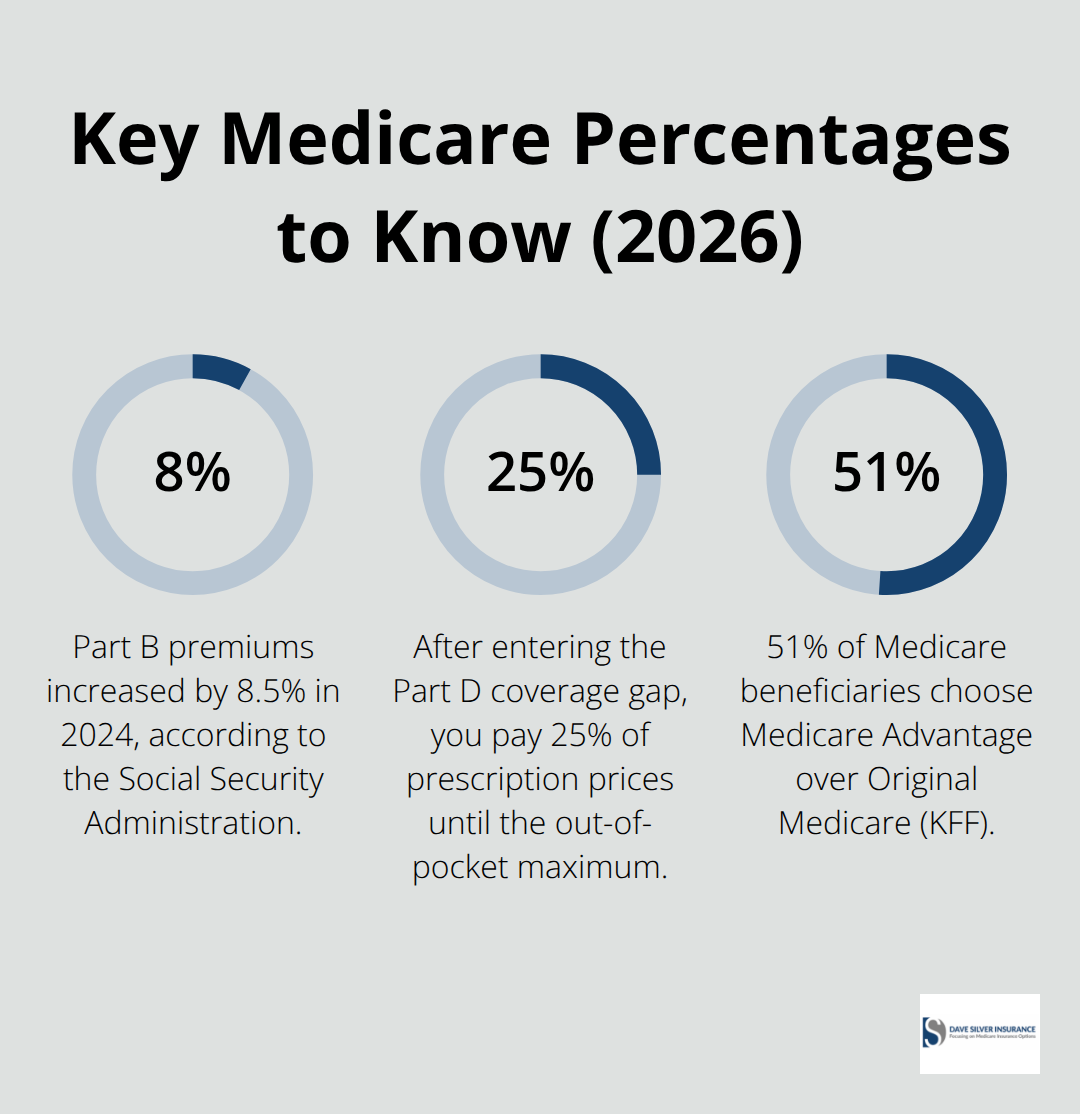
Medicare Part A and Part B premiums work differently, and most people don’t realize they’re paying for both. Part A covers hospital stays, and most people age 65 and older pay no premium because they or their spouse paid Medicare taxes for at least 10 years. Part B covers doctor visits and outpatient care, and that’s where your monthly bill arrives. In 2026, the standard Part B premium is $185.80 per month for most beneficiaries, though this amount increases annually. The Social Security Administration reported that Part B premiums increased by 8.5 percent in 2024 alone, so these costs aren’t staying flat.
Income-Related Monthly Adjustment Amounts
If you have higher income, you’ll pay more through Income-Related Monthly Adjustment Amounts, which the Centers for Medicare and Medicaid Services applies when your modified adjusted gross income exceeds certain thresholds. Single filers earning over $103,000 and married couples earning over $206,000 face surcharges that can double or triple your Part B premium. These surcharges apply to Part D prescription drug coverage as well, so a high earner can easily pay $400 to $500 monthly just for premiums before any medical services are used.
Calculating Your Real Annual Premium Burden
Most people underestimate their total annual premium costs because they forget about Part D. Part D prescription drug premiums vary wildly depending on which plan you choose, ranging from $5 to over $100 per month. Add Part B at roughly $186, Part D at an average of $35, and if you want Medigap coverage to reduce out-of-pocket expenses, you’re looking at $250 to $400 monthly just in premiums. That’s $3,000 to $4,800 annually before you walk into a doctor’s office or fill a single prescription.
Your income, prescription needs, and expected healthcare usage should all factor into which plan makes sense for your wallet. The Medicare Plan Finder tool on Medicare.gov lets you enter your prescriptions and see actual costs for different Part D plans, which is one of the few truly useful government tools for this purpose. Understanding these premium structures now positions you to tackle the other half of the equation: out-of-pocket expenses that hit after you’ve already paid your premiums.
Understanding Out-of-Pocket Expenses
Deductibles That Hit Before Coverage Starts
After you’ve paid your premiums, Medicare still requires you to cover deductibles, copayments, and coinsurance before hitting your out-of-pocket maximum. In 2026, the Part A deductible is $1,676 per benefit period for hospital stays, while Part B has a $283 annual deductible before your coverage kicks in for doctor visits and outpatient services. A single emergency room visit or hospitalization instantly wipes out your Part A deductible, leaving you responsible for additional costs until Medicare’s coverage takes over. Part D prescription drug plans add another layer with their own deductibles ranging from $0 to $565 in 2026, depending on which plan you select. The Centers for Medicare and Medicaid Services data shows that many beneficiaries underestimate these deductibles and face unexpected bills within the first few months of their plan year.
Copayments and Coinsurance Drain Your Wallet Fast
Copayments and coinsurance work differently across Medicare parts and can drain your savings faster than you expect. Part B typically requires 20 percent coinsurance after your deductible, meaning you pay one-fifth of the cost for doctor visits, lab work, and imaging services, while Medicare covers the rest. A specialist visit costing $300 means you owe $60 out of pocket, and these charges accumulate quickly for anyone with chronic conditions requiring regular monitoring. Part D uses a tiered copayment structure where generic drugs cost less than brand-name medications, but once you enter the coverage gap around $5,850 in total drug costs, you suddenly pay 25 percent of prescription prices until you reach your out-of-pocket maximum of $8,000 in 2026. This coverage gap catches many beneficiaries off guard because they don’t realize their copayments spike dramatically mid-year.
Your Out-of-Pocket Maximum: The Financial Safety Net
The out-of-pocket maximum provides your safety net, capping your total spending at $8,000 annually for Part D and $8,700 for Parts A and B combined (though these limits increase yearly). Understanding where these maximums sit matters because reaching them changes your financial picture entirely for the remainder of that year. Once you hit your out-of-pocket maximum, Medicare covers 100 percent of your covered services for the rest of that calendar year. This protection becomes especially valuable for beneficiaries managing multiple chronic conditions or those facing unexpected hospitalizations. Knowing your exact out-of-pocket maximum helps you budget for healthcare expenses and plan which coverage options make financial sense for your situation.
Ways to Reduce Your Medicare Costs
Medigap Insurance Covers What Medicare Leaves Behind
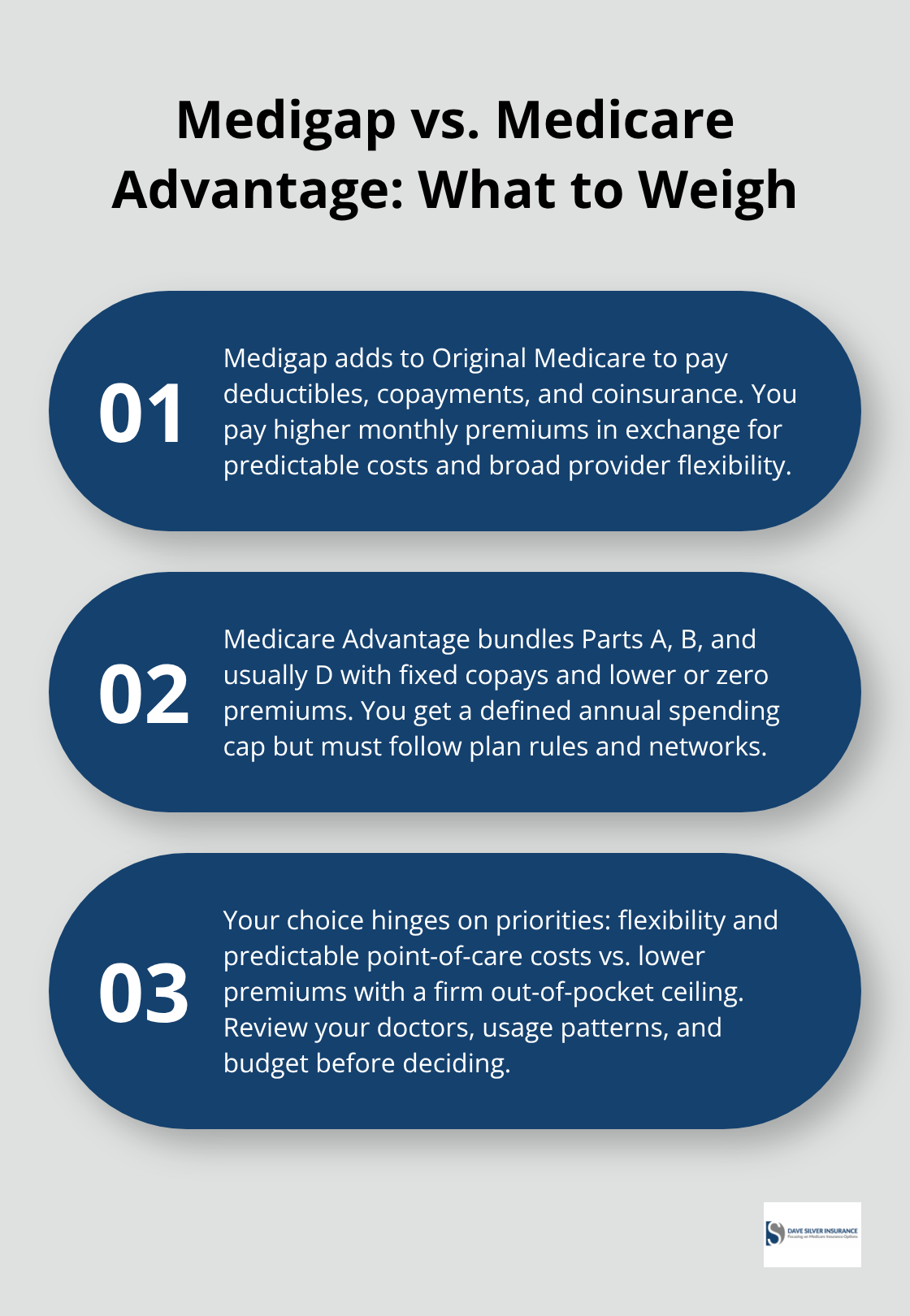
Medigap insurance and Medicare Advantage plans represent two entirely different strategies for managing costs, and picking the wrong one wastes thousands annually. Medigap plans supplement your original Medicare coverage by paying deductibles, copayments, and coinsurance that Medicare leaves behind. Beneficiaries with Medigap plans typically have lower out-of-pocket expenses compared to those on original Medicare alone.
Plan G, the most comprehensive Medigap option available, covers your Part B deductible, 20 percent coinsurance, and excess charges, meaning you pay virtually nothing at the point of care beyond your monthly premium. Medigap premiums range from $100 to $300 monthly depending on your age, location, and health status, but that investment pays for itself quickly if you have frequent doctor visits or ongoing medical needs. The trade-off is straightforward: you pay higher premiums upfront for predictable costs and maximum flexibility in choosing providers.
Medicare Advantage Plans Cap Your Annual Spending
Medicare Advantage plans take the opposite approach by bundling Parts A, B, and D into a single plan with fixed copayments and lower or zero premiums. These plans cap your out-of-pocket spending at $8,500 or less annually, giving you a hard ceiling on expenses that original Medicare cannot provide without Medigap. According to the Kaiser Family Foundation, approximately 51 percent of Medicare beneficiaries now choose Advantage plans over original Medicare, driven largely by lower premiums and predictable costs.
The tradeoff involves network restrictions, prior authorizations for certain procedures, and limited out-of-network coverage in most plans. You sacrifice provider flexibility for cost predictability, which works well if you have established relationships with in-network doctors or prefer knowing your maximum annual expense upfront.
Part D Prescription Costs Vary Wildly Between Plans
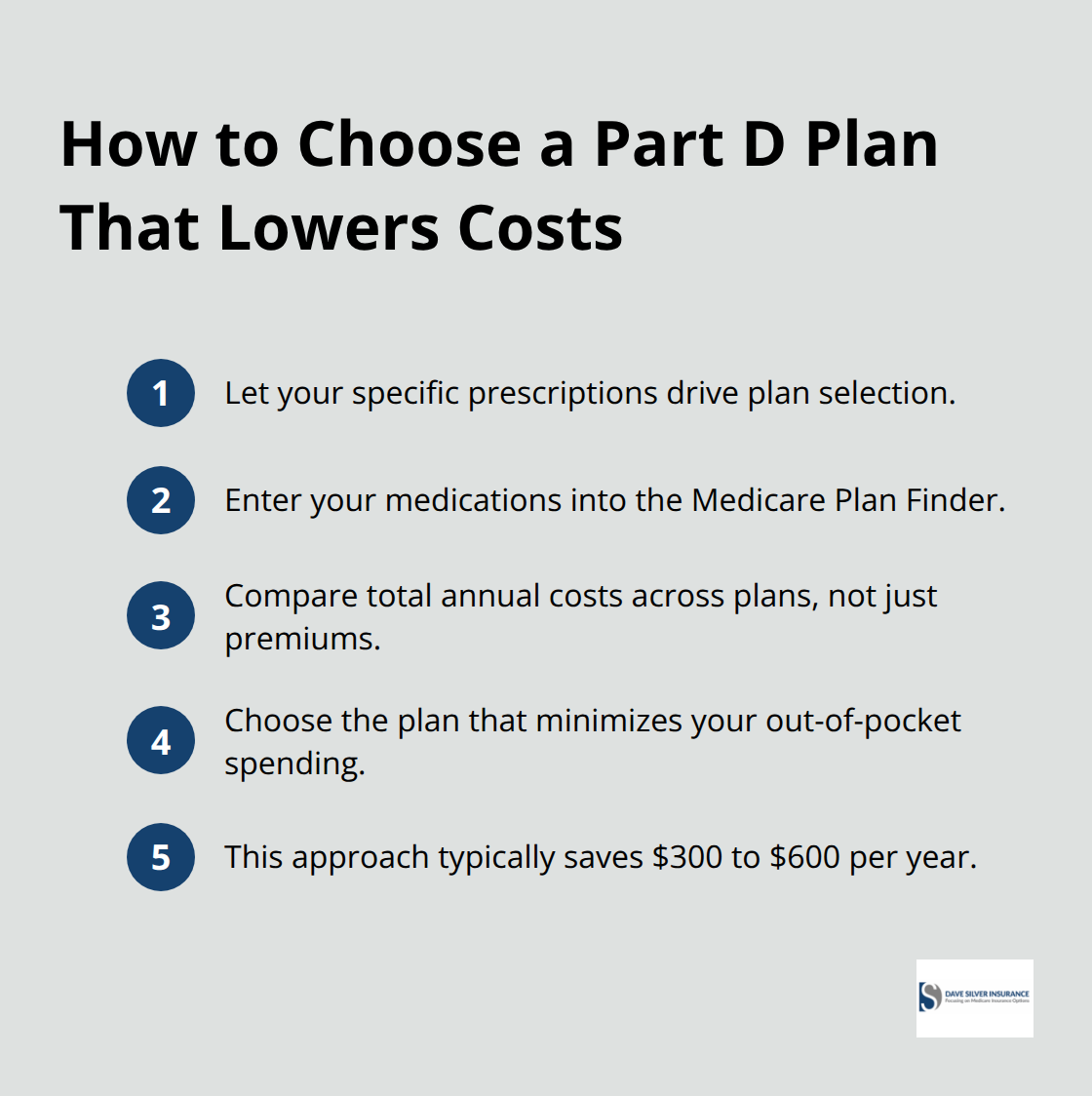
Part D prescription drug coverage represents the single largest variable in your annual spending. Generic medications cost far less through Part D than brand-name alternatives, and using the Medicare Plan Finder tool before enrollment reveals actual costs for your specific prescriptions across different plans. Many beneficiaries overpay by $20 to $50 monthly simply because they selected a Part D plan based on the lowest premium rather than the lowest total cost for their actual medications.
Your specific prescriptions should drive your Part D selection, not the advertised premium. Enter your medications into the Plan Finder, compare total annual costs across options, and select the plan that minimizes your out-of-pocket spending for the drugs you actually take. This approach typically saves $300 to $600 annually compared to choosing based on premium alone.
Final Thoughts
Medicare costs explained ultimately comes down to three core components: premiums you pay monthly, deductibles and copayments you cover at the point of care, and your annual out-of-pocket maximum that caps total spending. The difference between choosing original Medicare with Medigap versus Medicare Advantage can easily exceed $2,000 per year, making your selection one of the most financially significant healthcare decisions you’ll make. Your specific prescriptions should drive your Part D selection entirely, not the advertised premium.
Your health needs, prescription costs, and financial situation determine the right coverage strategy for you. If you have established doctors and specialists you want to keep seeing, Medigap provides maximum flexibility and predictable costs. If you prefer knowing your absolute maximum annual expense upfront and don’t mind network restrictions, Medicare Advantage delivers that certainty.
We at Dave Silver Insurance have spent over 17 years helping people navigate this decision. Our team works with you seven days a week to analyze your situation and recommend the coverage combination that minimizes your total spending. Schedule a consultation with our team to get personalized guidance tailored to your circumstances.
Disclaimer: The information provided in this blog is for general informational purposes only and does not constitute legal, financial, or insurance advice. Coverage options, terms, and availability may vary. Please consult with a licensed professional for advice specific to your situation