

Medicare Part C benefits offer a different approach to health coverage than Original Medicare. These managed care plans combine hospital, medical, and often prescription drug coverage into one plan.
At Dave Silver Insurance, we know choosing the right Medicare option can feel overwhelming. This guide walks you through what Part C includes, how much it costs, and how to find the plan that fits your situation.
What Part C Actually Is
Understanding Medicare Advantage Plans
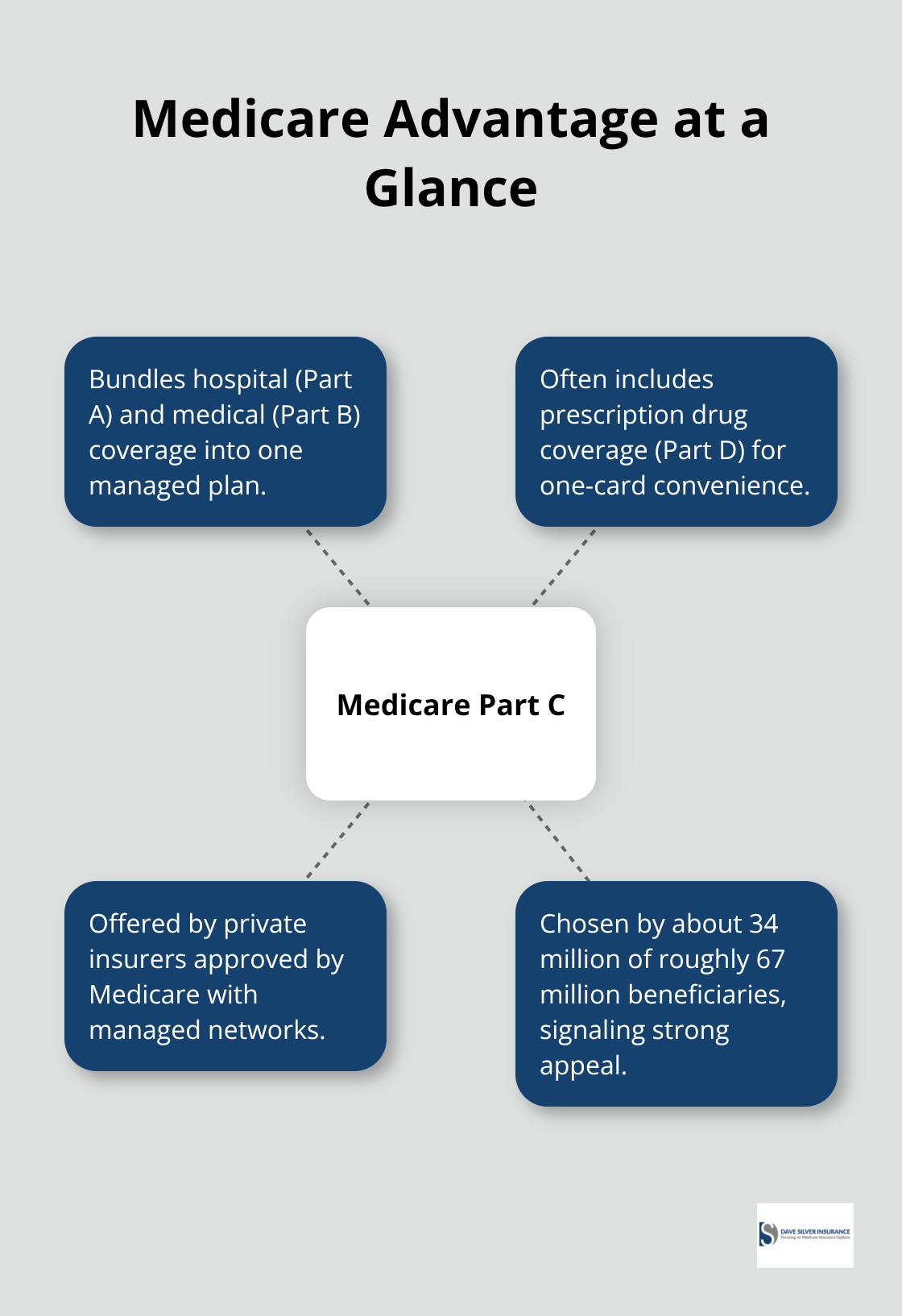
Medicare Part C, officially called Medicare Advantage, is a private insurance plan approved by Medicare that bundles your hospital coverage (Part A) and medical coverage (Part B) into a single managed care plan. Most Part C plans also include prescription drug coverage (Part D), which means you get medical and drug benefits in one plan rather than juggling separate coverage. About 34 million of roughly 67 million Medicare beneficiaries have chosen Part C according to CMS data, showing this option has real appeal for people who want simplified, all-in-one coverage.
How Part C Differs from Original Medicare
The key difference from Original Medicare is that Part C operates through private insurance companies using networks of doctors and hospitals, while Original Medicare is federal and lets you see any provider nationwide that accepts Medicare. Part C plans charge copays for specific services (like $30 for a doctor visit or $150 for an MRI) instead of the 20 percent coinsurance you’d pay with Original Medicare after meeting your deductible.
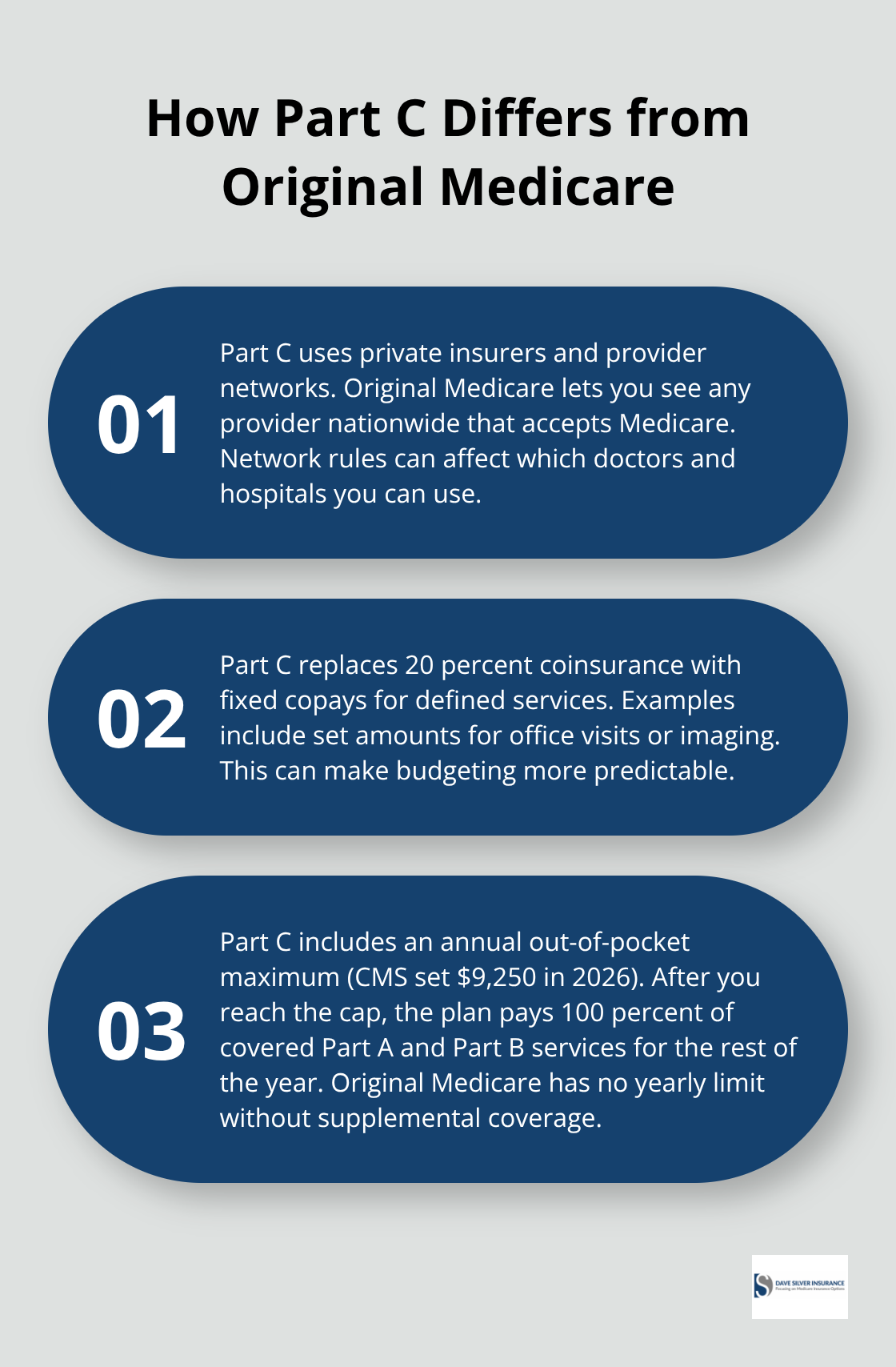
This structure means your costs are more predictable because Part C plans have an annual out-of-pocket maximum, which was $9,250 in 2026 according to CMS. Once you hit that limit, the plan pays 100 percent of your covered Part A and Part B services for the rest of the year.
Many Part C plans advertise low or zero monthly premiums, but that does not mean the plan is free-you still have copays, deductibles, and potentially other costs.
Enrollment Requirements and Eligibility
To enroll in Part C, you must be enrolled in both Part A and Part B and live in the plan’s service area. Your initial chance to join happens during your Initial Enrollment Period, which runs three months before to three months after your 65th birthday. If you miss that window, you can enroll during the Annual Enrollment Period from October 15 through December 7, with changes taking effect on January 1 the following year. Some people qualify for Special Election Periods if they move out of their plan’s service area or experience other qualifying life events, allowing mid-year changes.
Verifying Your Providers and Making Changes
The enrollment process requires you to verify that your current doctors and hospitals are in-network for the specific plan you’re choosing, since switching plans means potentially changing providers. You can switch between different Part C plans during the Annual Enrollment Period, or you can switch back to Original Medicare if Part C no longer fits your needs. One critical point: if you drop Part B, you automatically lose your Part C coverage, so maintaining Part B enrollment is non-negotiable if you want to stay in a Medicare Advantage plan.
With enrollment rules and eligibility confirmed, the next step involves understanding exactly what benefits and coverage your Part C plan will provide once you enroll.
What Part C Actually Covers
Hospital and Medical Services Included
Part C plans cover all the hospital and medical services that Original Medicare covers, with two important exceptions: clinical trials and hospice care. You receive inpatient hospital stays, emergency room visits, doctor appointments, lab work, imaging like MRIs and CT scans, and preventive services such as annual wellness exams and cancer screenings. The real advantage is that Part C adds benefits Original Medicare does not include. Most plans don’t cover routine dental care like cleanings, fillings, and tooth extractions, or items like dentures and implants. Vision coverage typically includes eye exams and glasses or contact lenses. Hearing care covers testing and hearing aids, which can cost thousands of dollars out-of-pocket without insurance.
Understanding Your Copay Structure
Your actual copay amounts vary by plan and location, so a doctor visit might cost $20 in one plan and $40 in another. The Summary of Benefits document for each plan lists exact copay amounts for every service, and you should review this carefully before enrolling because these copays add up fast if you see specialists regularly. According to CMS data, about 34 million Medicare beneficiaries chose Part C partly because these extra benefits matter for everyday health.
Prescription Drug Coverage and Formularies
Prescription drug coverage in Part C operates differently than it would if you enrolled in Original Medicare plus a separate Part D plan. Most Part C plans bundle drug coverage into the same out-of-pocket maximum as your medical services. This matters significantly because once you hit that $9,250 annual out-of-pocket maximum in 2026, the plan covers your drugs at no cost for the remainder of the year. The plan’s formulary (which lists which medications are covered and at what cost tier) changes annually, so you must verify your current medications are covered before you enroll.
Wellness Programs and Fitness Benefits
Some plans include wellness programs and gym memberships through programs like SilverSneakers, offering free or low-cost fitness access that supports staying active without extra charges. Fitness programs have real value since regular physical activity reduces hospital visits and complications from chronic conditions. The combination of medical, dental, vision, hearing, and drug coverage in one plan with a single out-of-pocket cap makes Part C practical for people managing multiple health needs.
Understanding what Part C covers helps you evaluate whether this option meets your health requirements, but the real decision comes down to comparing specific plans available in your area and confirming your doctors participate in each plan’s network.
What Part C Really Costs
Part C premiums vary significantly by plan and location, and the 2026 average hovers around $14 per month according to CMS data, but this low number masks the full cost picture. Some plans charge zero monthly premiums while others charge $50 or more, depending on the benefits included and your geographic area. The critical mistake people make is focusing only on the monthly premium and ignoring copays, deductibles, and annual out-of-pocket maximums. A plan with a $0 premium might have higher copays for doctor visits and specialist care, while a plan charging $30 monthly might have lower copays that save you money if you see doctors frequently.
How Your Healthcare Usage Affects Total Costs
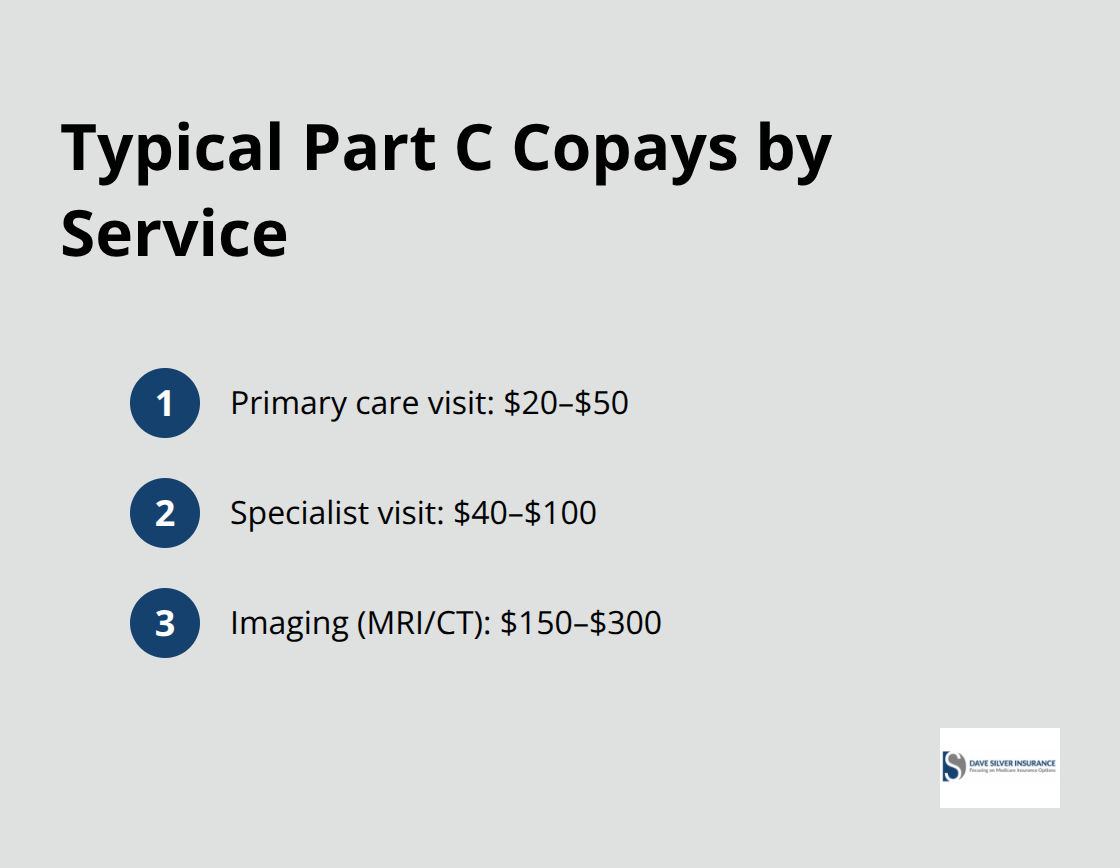
Your actual yearly cost depends on how much healthcare you use, which medications you take, and which providers you need to see. Most Part C plans include a yearly deductible ranging from $0 to several hundred dollars before copays begin, though many preventive services like annual wellness exams and cancer screenings have no deductible. Once you meet your deductible, you pay copays for each service: typical amounts include $20 to $50 for primary care visits, $40 to $100 for specialist visits, and $150 to $300 for imaging like MRIs or CT scans depending on the plan.
Understanding Your Annual Spending Cap
The annual out-of-pocket maximum for 2026 means once you and the plan combined spend that amount on covered services, the plan pays 100 percent of your remaining Part A and Part B costs for the year. Many plans set their out-of-pocket maximum lower than the CMS limit, sometimes at $6,500 or $7,000, which provides better protection against catastrophic costs. This annual cap represents the biggest advantage Part C offers over Original Medicare, which has no yearly limit on out-of-pocket spending unless you purchase supplemental coverage. If you have chronic conditions requiring frequent specialist visits, imaging, or hospital stays, you will likely reach that annual maximum, and the protection becomes genuinely valuable.
Calculate your expected costs by multiplying your anticipated doctor visits by the copay amount, then add estimated prescription drug costs from the plan’s formulary to understand your true financial commitment. Compare this total against the plan’s out-of-pocket maximum to see where your actual costs would stop accumulating. Plans with lower out-of-pocket maximums typically charge higher monthly premiums, so you must weigh whether paying more monthly saves money annually based on your specific health situation.
Prescription Drug Costs Within the Plan
Part D drug coverage bundled into Part C means your medications count toward the same out-of-pocket maximum as your medical services, which simplifies cost tracking considerably. The plan’s formulary determines your drug costs, with medications typically placed into tiers where tier-one drugs cost less and tier-three or tier-four drugs cost significantly more. Some plans cover generic medications at $1 to $5 per prescription while brand-name drugs might cost $30 to $100 depending on the tier, and you must verify your specific medications are covered at acceptable costs before enrolling.
Once you hit the annual out-of-pocket maximum, your prescription drugs cost nothing for the remainder of the year, which matters tremendously for people taking expensive medications. The formulary changes annually, so a medication covered inexpensively this year might move to a higher tier next year, requiring you to review your coverage during the Annual Enrollment Period and potentially switch plans if costs become unmanageable.
Final Thoughts
Finding the right Medicare Part C plan requires you to compare what’s available in your ZIP code, verify your doctors participate in the network, and calculate your total expected costs rather than focusing only on monthly premiums. Enter your ZIP code into Medicare.gov to see which plans operate in your area, then review each plan’s Summary of Benefits document to understand exact copays, deductibles, and the annual out-of-pocket maximum. Cross-reference your current doctors and hospitals against each plan’s provider network because switching plans often means changing healthcare providers, which disrupts continuity of care if you’ve built relationships with your physicians.
Calculate your realistic annual costs by adding your anticipated copays to your prescription drug expenses, then compare this against each plan’s out-of-pocket maximum. A plan with a $0 premium but $50 copays for doctor visits costs more annually than a plan charging $30 monthly with $20 copays if you see specialists regularly. Review the drug formulary carefully to confirm your current medications are covered at acceptable costs, since formularies change yearly and can significantly impact your total expenses (especially for people managing multiple chronic conditions).
We at Dave Silver Insurance help people navigate these decisions with personalized guidance based on your specific health needs and financial situation. Our team works with you to find Medicare Part C benefits that actually fit your life and your budget. Contact Dave Silver Insurance to get clarity on which plan works best for you.
Disclaimer: The information provided in this blog is for general informational purposes only and does not constitute legal, financial, or insurance advice. Coverage options, terms, and availability may vary. Please consult with a licensed professional for advice specific to your situation