

Medigap enrollment season can feel overwhelming, but it doesn’t have to be. We at Dave Silver Insurance created this Medigap enrollment checklist to walk you through every step of the process.
From understanding enrollment deadlines to comparing plan options, we’ll help you gather the right documents and make informed decisions about your coverage.
When to Enroll in Medigap
The timing of your Medigap enrollment matters far more than most people realize. You have a six-month window starting the first month you have Medicare Part B and you’re 65 or older, and this is your best opportunity to buy coverage without health questions. According to Medicare.gov, insurers must sell you any Medigap plan available in your state at the best rates during this initial enrollment period. Miss this window, and you’ll face medical underwriting that can result in denied applications or higher premiums based on pre-existing conditions. The federal government guarantees your right to buy during this six-month period, but that protection expires once the window closes. If you delay enrollment and wait until later, insurers can legally reject your application or charge substantially more.
Your enrollment deadline depends on when you sign up for Part B
The six-month Medigap open enrollment period starts the first month you have Medicare Part B and you’re 65 or older. This distinction matters because delaying Part B enrollment delays your entire Medigap window. If you turn 65 in March but don’t enroll in Part B until June, your six-month Medigap period begins in June, not March. You must enroll in Part B before you can purchase any Medigap policy. The Annual Open Enrollment Period for Medicare Advantage and Part D runs October 15 through December 7 each year, but this does not apply to Medigap. Medigap has its own enrollment rules separate from the Medicare Advantage and Part D windows, so don’t assume the fall open enrollment helps you switch Medigap plans. If you miss your initial six-month window, you’ll need to qualify for a guaranteed issue window, which are limited situations where insurers must sell you coverage without underwriting.
Guaranteed issue windows provide second chances
Guaranteed issue windows exist in specific situations where you can buy Medigap without health questions, even after your initial six-month period ends. If you move to a new state, you qualify for a special enrollment period to enroll in a Medigap plan offered in your new service area. California and Oregon residents can use the birthday rule to switch to an equal or lesser Medigap policy during their birth month without answering health questions. If you have employer health coverage when you turn 65, you can delay Medigap enrollment and buy later without penalties when your employer coverage ends, provided you enroll within 60 to 63 days after that coverage terminates.
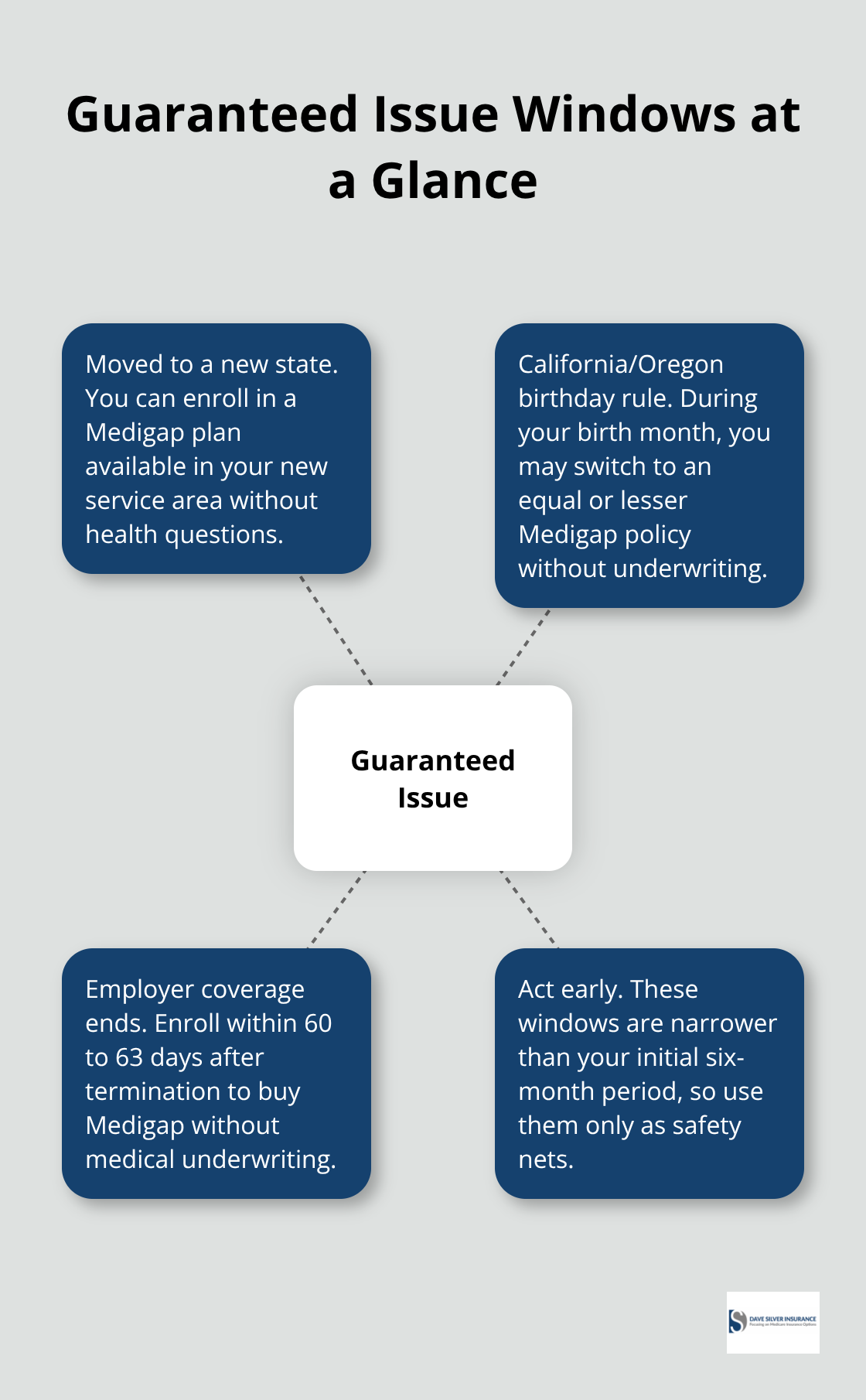
These windows are your safety nets, but they’re narrower and harder to navigate than your initial six-month period. Act during your primary enrollment period instead of counting on a guaranteed issue window.
What happens if you miss your window
Missed enrollment windows carry real consequences. Once your six-month period closes, insurers can ask detailed health questions and deny your application based on your medical history. Some states offer additional protections beyond federal law, so check with your State Insurance Department to learn what rights apply where you live. If you recently lost Medigap coverage due to company bankruptcy or misrepresentation, you may qualify to buy again-keep letters, notices, and claim denials as proof. The path forward becomes complicated and expensive, which is why acting during your initial enrollment period matters so much.
Now that you understand when to enroll, you’ll need to gather the right documents and information to complete your application.
Documents and Information You’ll Need
Medigap applications move faster when you have everything ready upfront. Start with your Medicare card, which contains your Medicare number and Part B effective date. Insurers need this information to verify your enrollment status and determine whether you qualify for guaranteed issue rates.
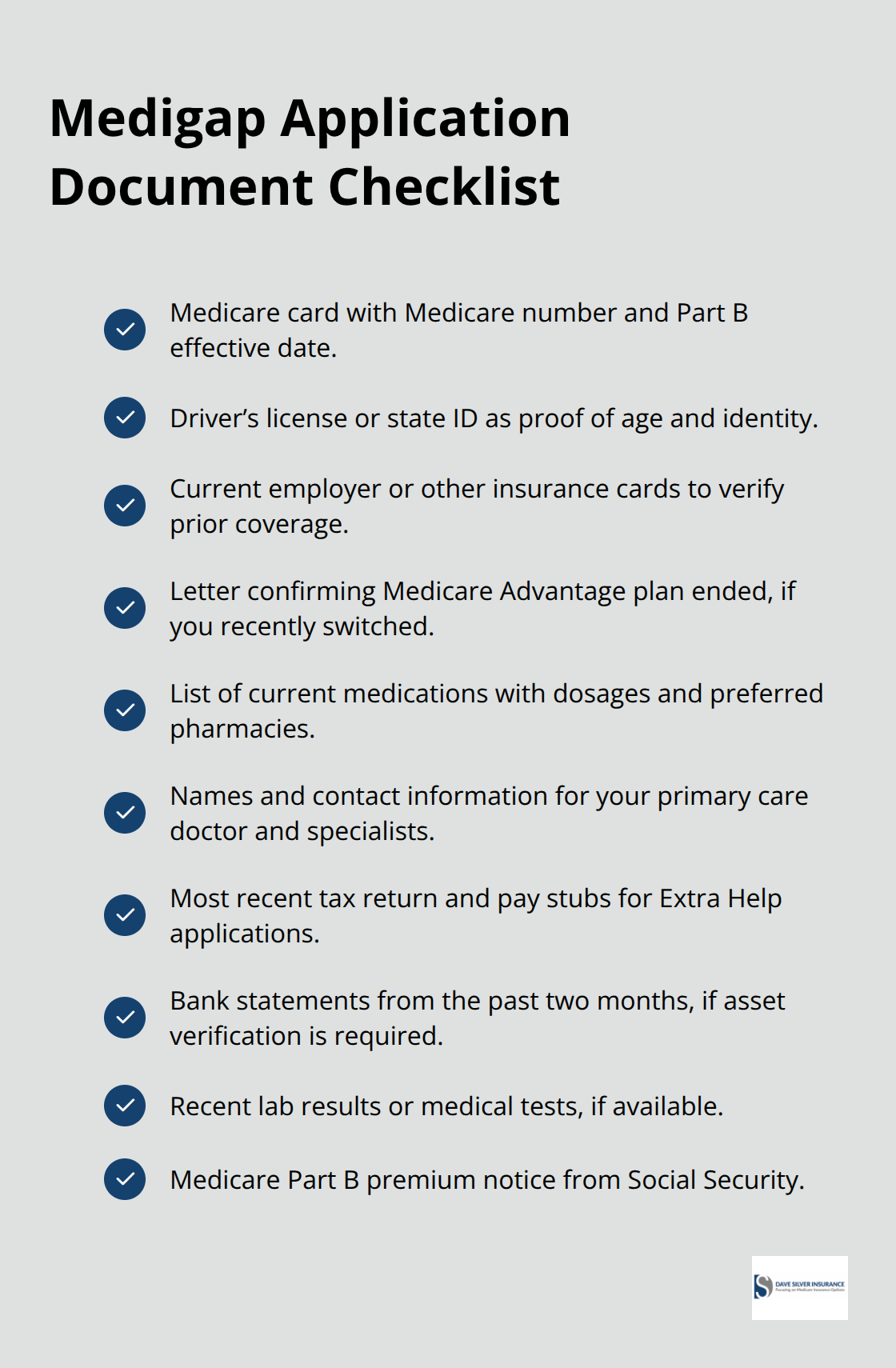
Your driver’s license or state ID serves as proof of age and identity, since Medigap requires you to be 65 or older. Gather your current health insurance cards from any employer coverage or other policies, as these documents prove your prior coverage and may qualify you for special enrollment periods. If you recently switched from Medicare Advantage to Original Medicare, keep the letter confirming your MA plan ended, since this triggers your 60 to 63 day window to buy Medigap without medical underwriting.
Organize your prescriptions and medical information
Create a list of every medication you currently take, including dosages and the pharmacy where you fill them. This matters because some Medigap carriers may ask about your health history during underwriting, and having documentation ready prevents delays. List any chronic conditions you manage, recent surgeries, hospitalizations, or ongoing treatments. Write down the names and contact information for your primary care doctor and any specialists you see regularly, since you’ll want to confirm they accept your chosen Medigap plan. If you’ve had recent lab work or medical tests, gather those results as well. Applicants who arrive organized with complete medication lists and doctor information get approved faster than those who apply with incomplete details. Some carriers use this information only to verify your eligibility for guaranteed issue rates, while others may request it for underwriting purposes depending on your enrollment situation.
Prepare financial documentation for income verification
You’ll need recent financial records if you plan to apply for Extra Help, which reduces prescription drug costs for eligible individuals. Gather your most recent tax return and pay stubs to document your current income. Bank statements from the past two months help verify assets if the Extra Help application requires it. Your income and asset limits determine whether you qualify for Extra Help, so having these documents ready accelerates the application process. Keep copies of your Medicare Part B premium notice from Social Security, since this shows your income level and helps you understand your financial obligations. Having these documents prepared means you won’t scramble at the last minute or miss application deadlines due to missing paperwork.
Verify coverage details before you submit
Contact your preferred Medigap carriers to confirm they accept applications in your state and service area. Ask whether they require additional documentation beyond what you’ve already gathered (some insurers request medical records or pharmacy information during underwriting). Confirm the specific plans each carrier offers, since availability varies by location and not all carriers sell all plan types. This step prevents you from submitting incomplete applications or choosing plans that don’t exist in your area. With your documents organized and carrier requirements confirmed, you’re ready to move forward with comparing the actual Medigap plans available to you.
Comparing Medigap Plans and Selecting Coverage
Medigap plans come in eight standardized types (A, B, C, D, F, G, K, and L), and the benefits within each type remain identical across all carriers. This standardization means Plan G from one insurer covers exactly what Plan G covers from another insurer. What differs dramatically is the premium you pay, which can vary by hundreds of dollars annually for the same coverage. According to Medicare.gov, shopping around can save approximately $1,800 per year because carriers price their plans differently even though benefits don’t change. Most people overlook this fact and assume all plans cost the same, but premium variation is real and significant. Start by determining which plan types are actually available in your state, since not all eight options sell everywhere. California and Texas offer all eight types, while some states limit availability to just three or four options. Once you know what’s available, compare premiums across carriers for each plan type. If Plan G is available in your area, compare Plan G premiums specifically since this is the most popular choice for people switching from Medicare Advantage to Original Medicare and offers comprehensive coverage at competitive rates.
Calculate Your Total Annual Cost, Not Just the Premium
The monthly premium is only part of your expense picture. Medigap plans cover different percentages of coinsurance and copays depending on which type you select, and these out-of-pocket costs add up quickly if you visit doctors frequently. Plan A and Plan K have the lowest premiums but require you to pay coinsurance for hospital stays, doctor visits, and blood transfusions. Plan G and Plan N offer middle-ground pricing with more comprehensive coverage but still leave some costs on your shoulders. Plan D and Plan F provide the most generous coverage but typically charge higher premiums. Estimate your annual healthcare spending by reviewing how many doctor visits you had last year, any hospital stays, and specialist appointments you anticipate next year. Add your estimated coinsurance and copay obligations to the annual premium to find your true total cost. Someone who rarely sees doctors might save money with a lower-premium plan that includes higher out-of-pocket costs, while someone with multiple chronic conditions needs a plan that minimizes copays and coinsurance even if the premium costs more. This calculation determines whether a plan is actually affordable for your situation. Contact carriers directly and ask them to provide annual cost estimates based on your anticipated healthcare usage, since this removes guesswork from your decision.
Match Your Prescription Needs to Your Plan Choice
Medigap plans themselves don’t include prescription drug coverage, but your choice to add Part D affects your overall costs. If you take expensive medications, enroll in Part D during your initial enrollment period to prevent late enrollment penalties later. For 2026, Part D includes significant changes through the Inflation Reduction Act, with insulin copays capped at $35 monthly and an out-of-pocket maximum of $2,000 for the entire year. Once your out-of-pocket costs hit $2,000, the plan covers 100 percent of your remaining prescription costs for the rest of the year. This change eliminates what beneficiaries call the donut hole, making Part D substantially more affordable.
The number 100% seems to be not appropriate for this chart. Please use a different chart type. Review your current medications on Medicare’s Plan Finder tool and compare how different Part D plans cover your specific drugs, including any prior authorization requirements or formulary restrictions. Some plans cover your medications at lower copays than others, and this variation can save or cost you hundreds annually. If you take multiple medications, the Plan Finder shows estimated annual costs for each plan option based on your pharmacy and current prescriptions. Make your Medigap and Part D decisions together rather than separately, since they work together to determine your total healthcare expenses.
Assess Your Health Needs and Budget
Your health status and financial situation should drive your plan selection. List any chronic conditions you manage, recent hospitalizations, or ongoing treatments to understand your likely healthcare usage. Try to estimate how many doctor visits, specialist appointments, and hospital stays you anticipate in the coming year. Someone with diabetes, heart disease, or arthritis typically visits doctors more frequently than someone in excellent health, and this usage pattern should influence which plan type makes sense. Review your current budget and determine how much you can comfortably spend on premiums each month. A plan with a lower premium but higher out-of-pocket costs might strain your finances if you actually need frequent medical care. Conversely, paying for comprehensive coverage you don’t use wastes money. The right plan balances your anticipated healthcare needs with your financial capacity to pay. Talk with your doctor about your expected healthcare usage next year, since they understand your medical situation better than anyone and can help you anticipate costs.
Compare Plans Across Multiple Carriers
Premium prices vary significantly even for identical coverage, so comparing multiple carriers is essential. Contact at least three to five carriers that sell Medigap plans in your area and request quotes for the specific plan types available to you. Ask each carrier about their underwriting process, approval timeline, and any additional documentation they require. Some carriers approve applications within days, while others take weeks, and this timing matters if you have an enrollment deadline approaching. Verify that each carrier accepts new enrollees in your state and service area, since some carriers limit enrollment geographically or by age. Request written quotes rather than verbal estimates, so you have documentation of the prices offered. Compare not just the premium but also the carrier’s reputation for claims processing and customer service. Online reviews and ratings from current policyholders reveal whether a carrier pays claims promptly or creates obstacles. Your choice of carrier matters as much as your choice of plan type, since you’ll work with them for years to come.
Final Thoughts
Your Medigap enrollment checklist now covers every step from understanding enrollment deadlines to comparing plans across carriers. The six-month window starting when you enroll in Part B at age 65 offers your best rates and guaranteed acceptance, while missing it forces you into medical underwriting that can deny coverage or raise premiums substantially. Guaranteed issue windows exist for specific situations like moving states or losing employer coverage, but these narrower safety nets don’t replace your initial enrollment period.
The documents you organize now prevent application delays and help carriers verify your eligibility quickly. Your Medicare card, health information, and financial records streamline the process, and having these materials ready means you won’t scramble at the last minute or miss deadlines due to incomplete paperwork. Shopping across multiple carriers for the same plan type saves approximately $1,800 annually since premiums vary dramatically even though benefits remain identical.
Calculate your total annual cost by combining premiums with estimated out-of-pocket expenses rather than focusing only on the monthly premium. Coordinate your Medigap choice with Part D enrollment to ensure your prescriptions stay affordable, especially with 2026 changes that cap insulin at $35 monthly and limit out-of-pocket drug costs to $2,000 annually. If you need personalized guidance based on your specific health and financial situation, Dave Silver Insurance offers expert support to help you navigate enrollment with confidence.
Disclaimer: The information provided in this blog is for general informational purposes only and does not constitute legal, financial, or insurance advice. Coverage options, terms, and availability may vary. Please consult with a licensed professional for advice specific to your situation