

Turning 65 or becoming eligible for Medicare can feel overwhelming. At Dave Silver Insurance, we’ve helped thousands of people navigate this transition, and we know the enrollment process doesn’t have to be confusing.
This Medicare enrollment guide walks you through every step, from understanding your enrollment periods to picking the coverage that fits your life. We’ll also show you the mistakes that cost people money and how to avoid them.
When Can You Actually Enroll in Medicare?
Your Seven-Month Initial Enrollment Window
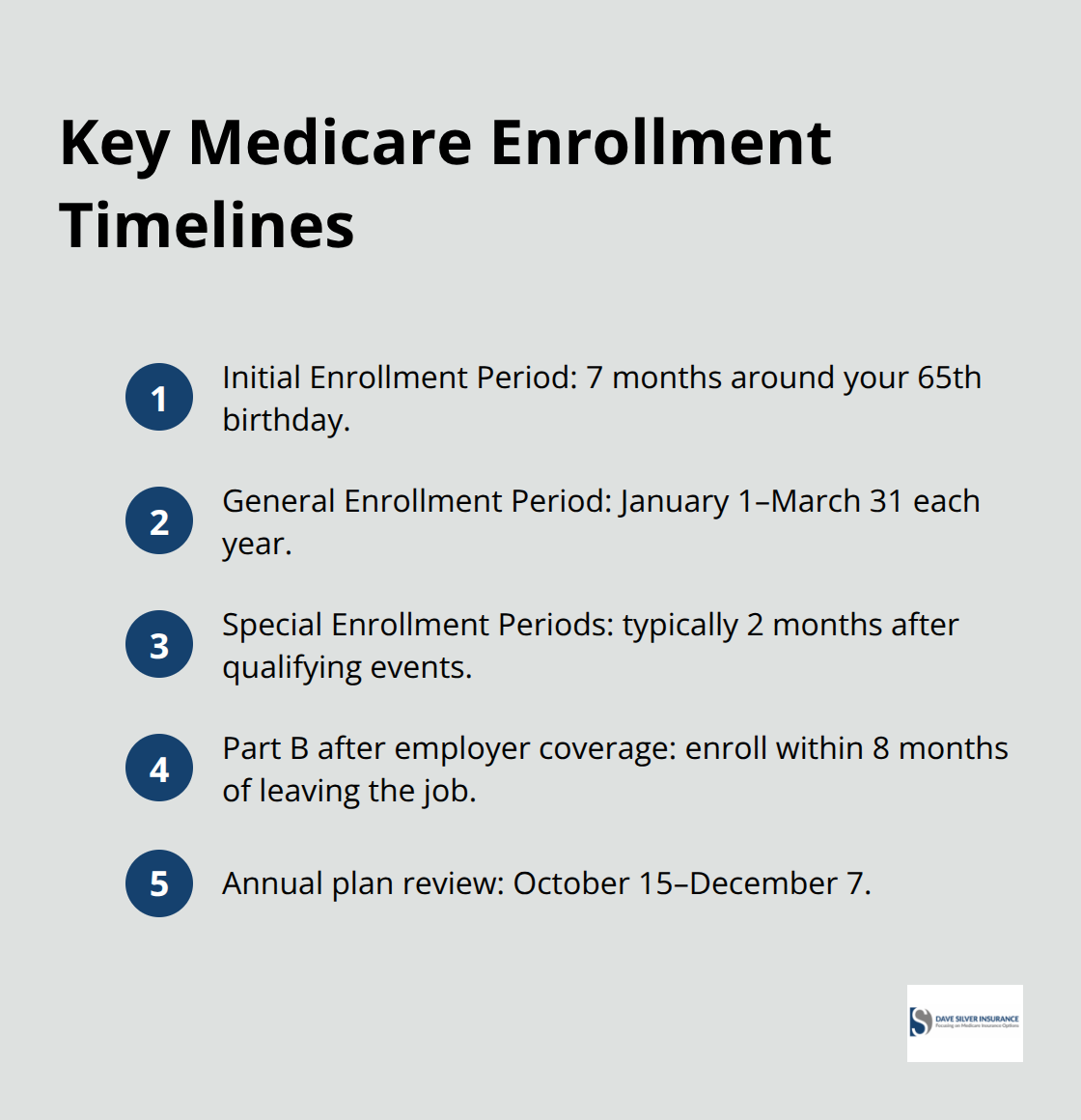
Your enrollment window matters more than you think. Miss it, and you’ll pay penalties for the rest of your life. The Initial Enrollment Period gives you seven months to sign up-three months before you turn 65, the month you turn 65, and three months after. If you receive Social Security retirement or disability benefits before turning 65, Social Security automatically enrolls you in Part A and Part B. But if you’re still working or haven’t claimed Social Security yet, you must actively sign up during this window or face consequences. According to the Social Security Administration, signing up before your 65th birthday means coverage starts the month you turn 65. Wait until after your birthday, and your coverage won’t begin until the following month. This timing difference matters if you need immediate coverage.
The General Enrollment Period and Its Permanent Cost
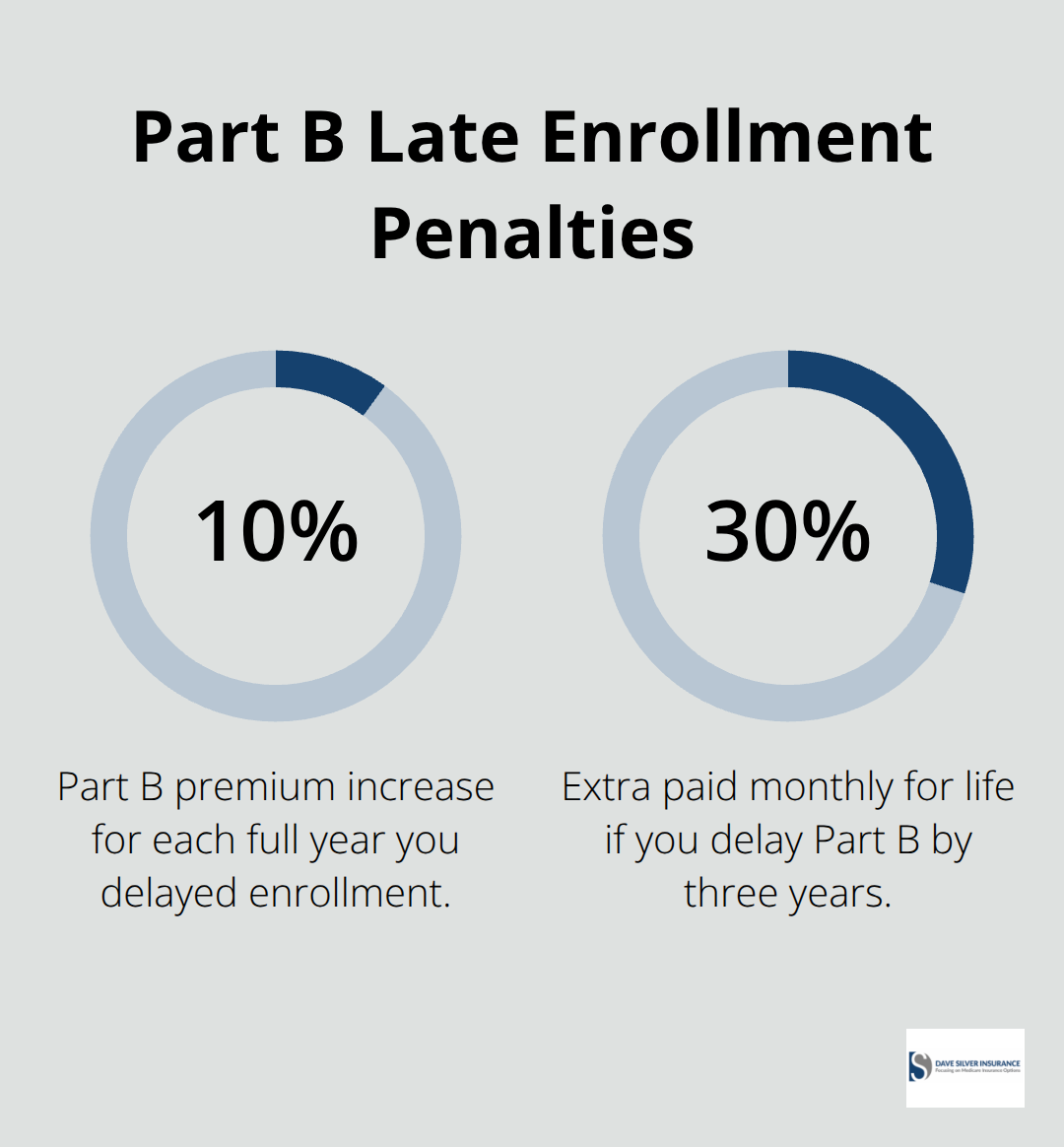
The General Enrollment Period runs January 1 through March 31 each year, but this option comes with a steep price. If you missed your Initial Enrollment Period and don’t qualify for a Special Enrollment Period, you can enroll during this window-but your Part B premium increases by 10 percent for each year you delayed, and this penalty sticks with you permanently. Someone who delays Part B by three years pays 30 percent more every month for life.
Special Enrollment Periods for Life Changes
Special Enrollment Periods exist for specific life changes like losing employer coverage, gaining Medicaid, or experiencing certain hardships. These periods typically give you two months to enroll without penalties. The Social Security Administration manages Part A and Part B enrollment, while Medicare.gov handles Medicare Advantage and drug plan decisions.
How to Complete Your Enrollment
You can apply online at SSA.gov, call 1-800-772-1213 weekdays from 8 a.m. to 7 p.m., or visit your local Social Security office. If you have employer coverage while working past 65, delaying Part B enrollment can save you money-but only if you’re actively employed. Once you leave that job, you have eight months to enroll without triggering a late enrollment penalty. Don’t assume your employer will handle Medicare enrollment automatically; you own this responsibility.
What Happens Next in Your Coverage Journey
The enrollment period you qualify for determines when your coverage starts and what penalties you’ll face. But enrollment is only the first step. Selecting the right coverage type-Part A, Part B, Part C, or Part D-requires understanding what each part covers and how they work together to protect your health and finances.
Building Your Coverage Foundation
Part A and Part B: The Original Medicare Base
Part A covers inpatient hospital stays, skilled nursing facility care, hospice care, and some home health care, and it’s premium-free for most people if you or your spouse paid Medicare taxes for at least ten years. Part B covers doctor visits and outpatient services, and it requires a monthly premium that varies based on your income. The Social Security Administration deducts Part B premiums automatically from your Social Security check in most cases, so you won’t receive a separate bill. Your Part A coverage starts when you turn 65 if you qualify for premium-free enrollment, but Part B timing depends on when you actually sign up. If you’re still working past 65 and have employer health insurance, delaying Part B can save money since you won’t pay premiums while covered by your employer plan. However, once you leave that job, you have eight months to enroll in Part B without facing a permanent penalty.
The Coverage Gaps Original Medicare Leaves Behind
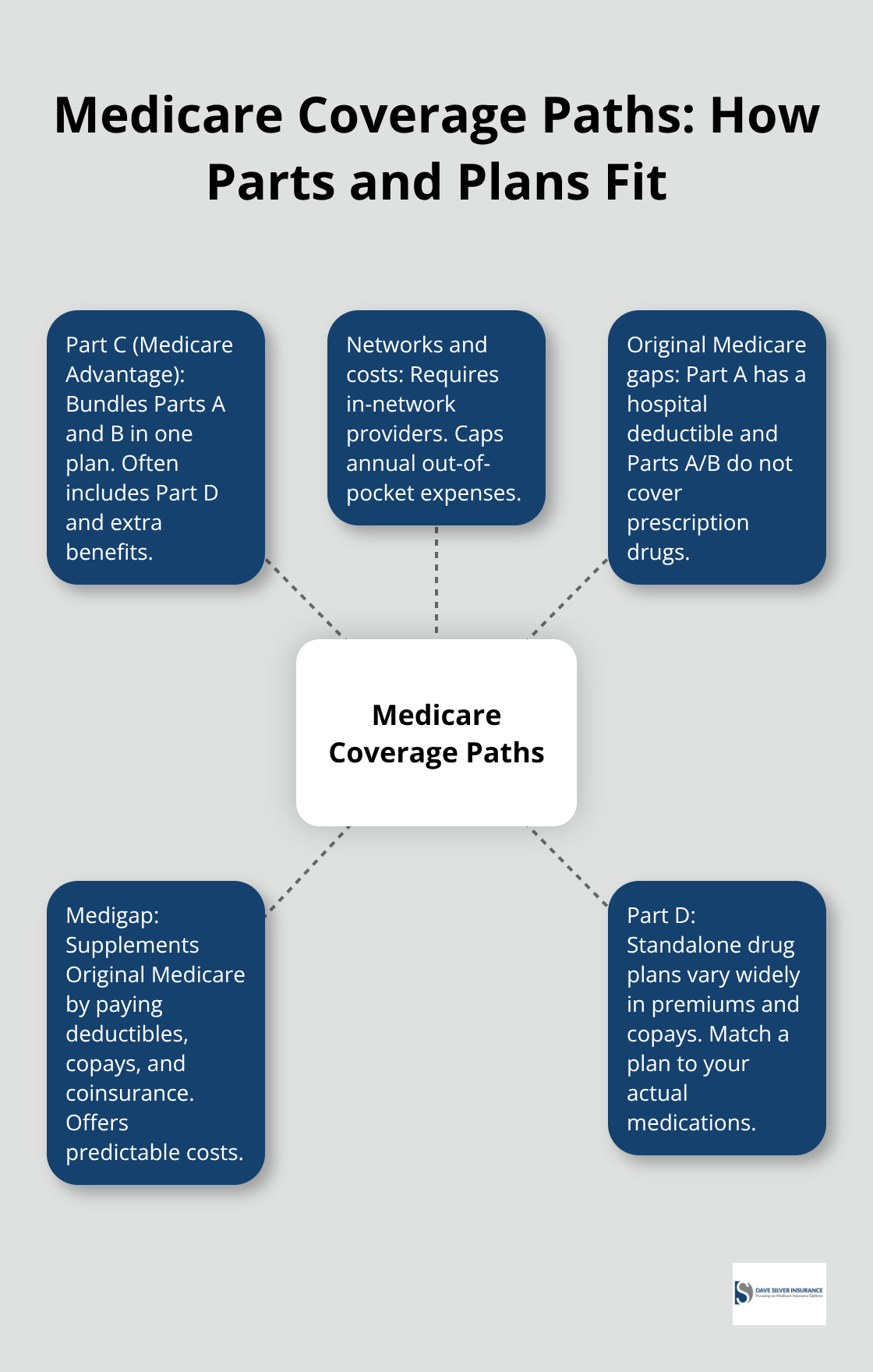
Part A and Part B form the foundation of Original Medicare, but they leave significant gaps. Part A requires you to pay a deductible for hospital stays (currently $1,676 per benefit period according to Medicare.gov), and neither part covers prescription drugs. This is where Part C and Part D become critical decisions that directly impact your out-of-pocket costs. Part C, also called Medicare Advantage, bundles Parts A and B into a single managed care plan offered by private insurers. These plans often include prescription drug coverage (Part D) and additional benefits like dental or vision, which Original Medicare doesn’t cover. However, Part C plans typically require you to use doctors and hospitals within their network, and they cap your maximum out-of-pocket costs.
Part D: Prescription Drug Coverage That Varies Dramatically
Part D covers prescription medications and is available as a standalone plan if you choose Original Medicare, or bundled into Part C. The cost difference between plans is substantial. Someone on multiple medications might pay $50 monthly for a Part D plan with generous coverage, while another plan might charge $15 monthly but require higher copays per prescription. Comparing your actual medications on Medicare.gov’s plan comparison tool reveals these real differences before you enroll.
Medigap Insurance: Predictability Over Flexibility
Medigap insurance works differently from Part C by supplementing Original Medicare rather than replacing it. Medigap covers costs that Medicare doesn’t, including deductibles, copays, and coinsurance. A Medigap Plan G policy, for example, covers the Part B deductible and 80 percent of costs that Medicare approves but doesn’t pay. This predictability appeals to people who want to avoid unexpected medical bills. Medigap premiums vary by insurer and location, ranging from $100 to $300 monthly depending on the plan letter and your age. The trade-off is that Medigap doesn’t cover prescription drugs, so you’ll still need Part D.
Making Your Choice: Part C Versus Medigap
Your choice between Part C and Medigap shapes your healthcare experience for the entire year. Part C saves money if you rarely visit doctors but need prescription coverage, while Medigap offers stability for people with chronic conditions and established doctor relationships. These two paths create fundamentally different financial outcomes, which means your next step involves examining your actual health situation and prescription needs to determine which structure protects your finances most effectively.
Common Enrollment Mistakes to Avoid
Missing Deadlines Triggers Permanent Penalties
The penalties for enrollment mistakes don’t disappear after one year-they follow you for life. The Social Security Administration confirms that Part B late enrollment penalties increase by 10 percent for each full year you delay, and this permanent increase applies to every monthly premium payment you’ll ever make. Someone who waits three years past their Initial Enrollment Period pays 30 percent more monthly forever. People who delayed enrollment thinking they could catch up later discovered they had locked in higher costs for decades. The most dangerous mistake is assuming your employer will handle Medicare enrollment automatically when you turn 65. Your employer has no legal obligation to notify you about Medicare deadlines, and Social Security won’t automatically enroll you unless you’re already receiving retirement or disability benefits. If you’re still working past 65 with employer coverage, you have an eight-month window after leaving that job to enroll in Part B without penalties. Missing this deadline means paying 10 percent more per year indefinitely.
Ignoring Your Medications and Doctor Networks
Overlooking your actual prescription medications and doctor networks during the enrollment decision phase creates preventable financial damage. Medicare.gov’s plan comparison tool requires you to enter your specific medications, and this step reveals real cost differences between plans that generic descriptions never show. Two people with similar health conditions might face $200 monthly differences in Part D costs based on which plan covers their specific medications. Your doctors and preferred pharmacies must be in-network for Part C plans, and checking this before enrollment prevents the frustration of switching providers mid-year when you discover your cardiologist isn’t covered. Many people select plans based on the lowest premium without calculating total out-of-pocket costs for their actual health situation. Someone with three chronic conditions requiring regular specialist visits and multiple medications might save $2,000 annually by choosing a higher-premium Part C plan with lower copays instead of selecting Original Medicare plus Medigap.
Skipping Your Annual Plan Review
The annual review each October through December matters equally to the initial enrollment decision. Your health changes, medications change, and plan networks change every year. People who enrolled five years ago in the same plan often don’t realize their costs have shifted dramatically or that better coverage options now exist for their current situation. Set a calendar reminder for October 15 to review your plan options before the December 7 deadline, because your December choice determines your coverage and costs for the entire following year.
Final Thoughts
Medicare enrollment decisions shape your healthcare experience and financial security for years to come, which is why this Medicare enrollment guide matters more than rushing through the process. Your specific situation determines which coverage path works best-someone with multiple chronic conditions and established specialists needs different protection than someone in excellent health with minimal prescriptions. Mark your enrollment deadlines immediately, compare plans using your actual medications and doctor networks on Medicare.gov, and commit to reviewing your coverage annually each October because your health and plan options change every year.
We at Dave Silver Insurance understand that Medicare enrollment involves real financial consequences and complex decisions that affect your health access. Our team brings over 17 years of expertise helping people navigate these choices with confidence, and we’re accessible seven days a week because Medicare questions don’t follow business hours. We provide personalized guidance on Medicare Part A, B, C, and D, and we help you understand how supplemental insurance reduces your out-of-pocket expenses.
Schedule a consultation with our team to review your specific situation and receive tailored recommendations based on your health needs and financial circumstances. We’ll walk you through your enrollment options, explain the costs you’ll actually face, and help you avoid the expensive mistakes outlined in this guide. Contact Dave Silver Insurance today to secure the coverage that protects your health and your finances.
Disclaimer: The information provided in this blog is for general informational purposes only and does not constitute legal, financial, or insurance advice. Coverage options, terms, and availability may vary. Please consult with a licensed professional for advice specific to your situation