

Switching Medigap plans doesn’t have to mean sitting through long waiting periods. At Dave Silver Insurance, we know that timing matters when you’re making changes to your coverage.
The good news is that certain situations let you switch without delays. Understanding when you qualify for these exceptions can save you months of uncertainty.
When You Can Switch Without Waiting Periods
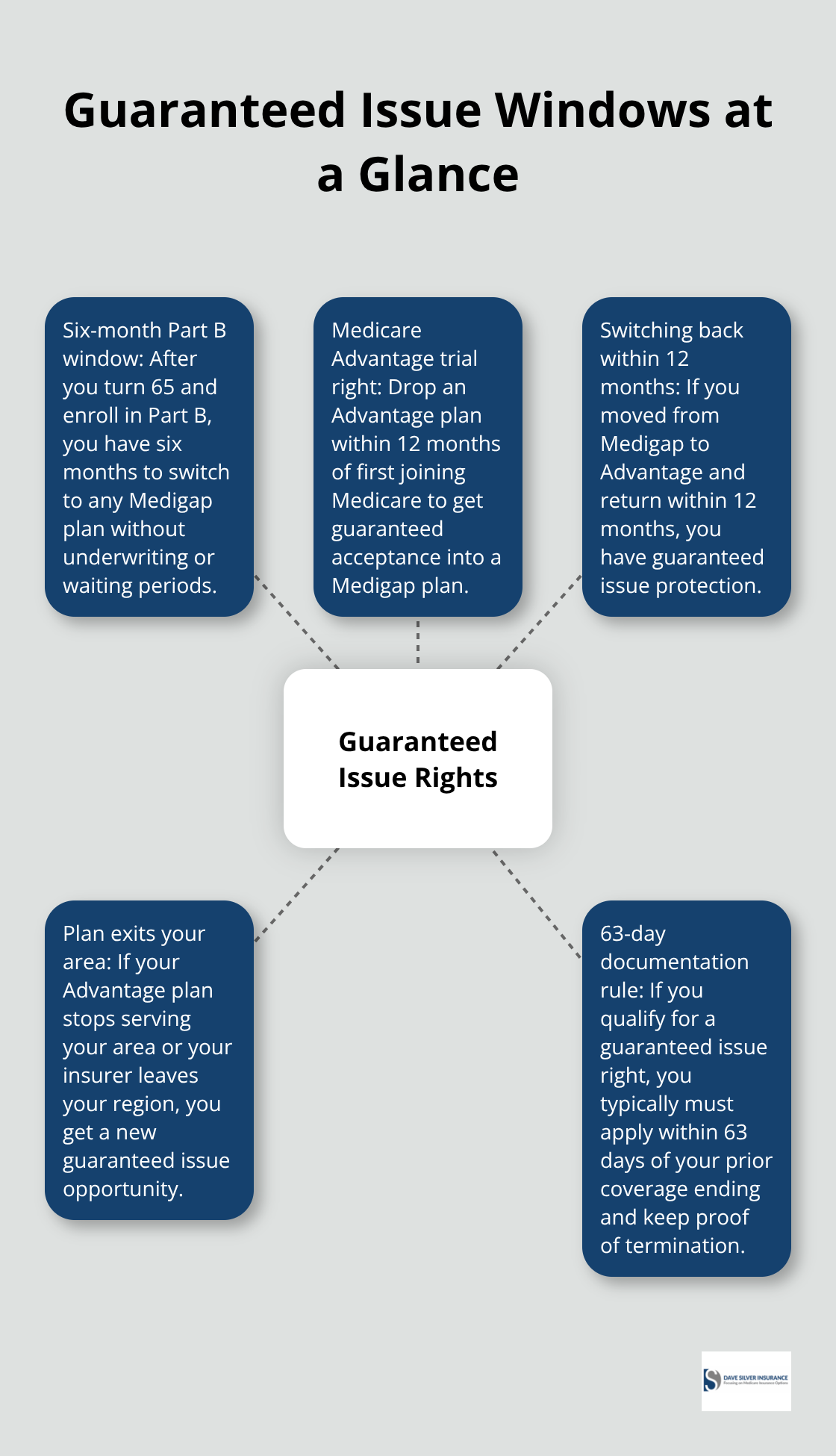
The six-month window after you turn 65 and enroll in Medicare Part B offers your best opportunity to switch plans without restrictions. During this period, insurers must accept your application for any Medigap plan without asking about your health history or charging you more based on pre-existing conditions. This guaranteed issue right means you can switch from one Medigap plan to another, or even from Medicare Advantage to Medigap, without facing waiting periods or coverage exclusions. According to Medicare.gov, this protection lasts exactly six months from your Part B enrollment date. If you’re within this window, act before it closes-after six months, insurers will underwrite your application and can impose waiting periods of up to six months for pre-existing conditions.
Leaving Medicare Advantage Creates Another Window
If you enrolled in a Medicare Advantage plan and now want to switch to Medigap with traditional Medicare, you get limited guaranteed issue rights during specific enrollment periods. You qualify for guaranteed acceptance into a Medigap plan if you drop your Advantage plan within 12 months of first joining Medicare. The same protection applies if you switch from Medigap to Advantage and then back to Medigap within 12 months. Additionally, if your Advantage plan stops covering your area or the insurer leaves your region, you get another guaranteed issue opportunity.
Outside these narrow windows, switching from Advantage to Medigap requires underwriting, which means waiting periods become possible. Many people miss these limited rights, and that oversight costs them thousands in avoidable premiums and coverage gaps.
Special Circumstances That Override Waiting Periods
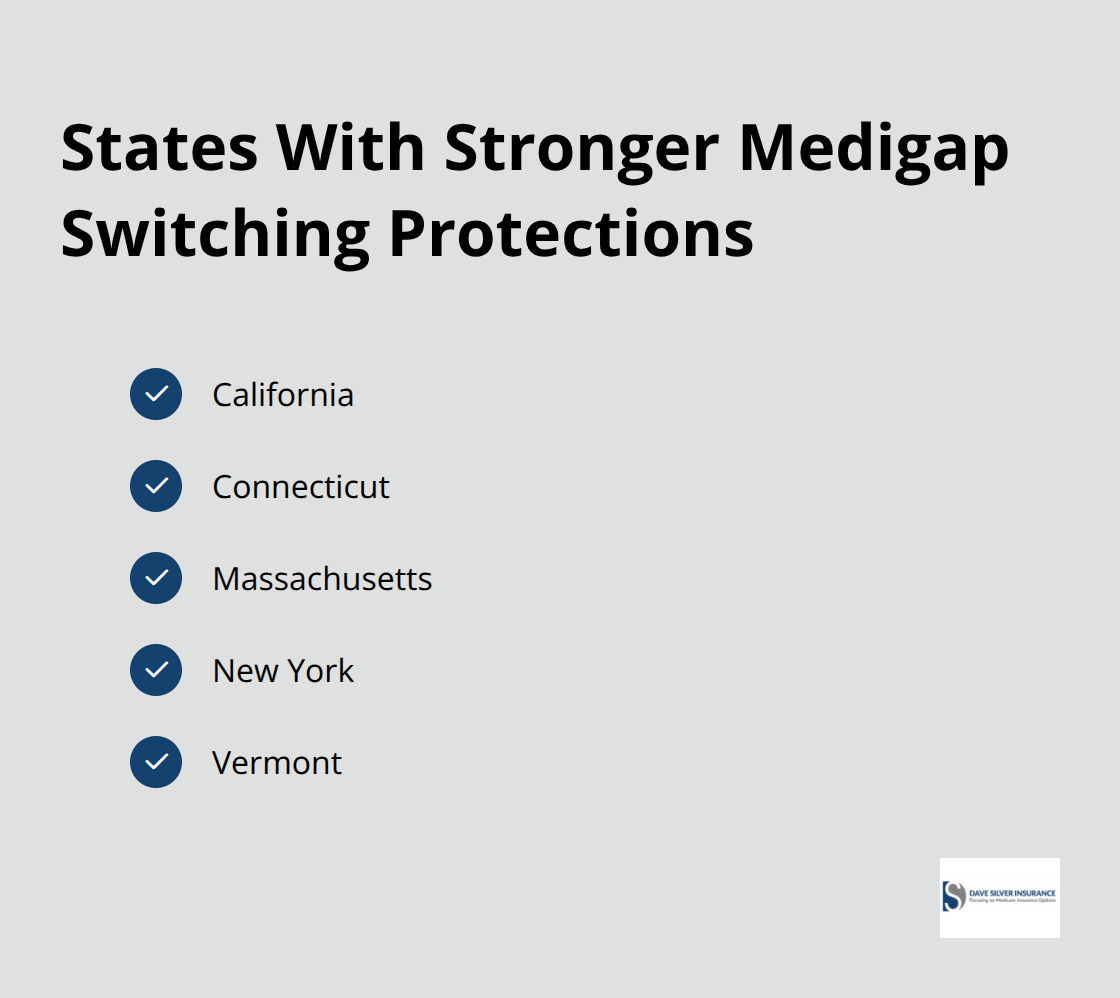
State laws in California, Connecticut, Massachusetts, New York, and Vermont provide easier switching rules than federal law allows. These states let you switch Medigap plans multiple times while retaining guaranteed acceptance, though typically you can only move to equal or lesser coverage, not upgrade to more expensive plans.
If your Medigap insurer goes bankrupt or stops offering coverage in your state, you receive guaranteed acceptance into a new plan regardless of your health status. Keep any cancellation letters or denial notices from your previous insurer-you’ll need proof of termination to support your claim. Outside these situations, federal law provides no guarantee. If you need to switch and don’t fall into these categories, you’ll face medical underwriting and potential waiting periods unless you can prove you have a qualifying guaranteed issue right within 63 days of your coverage ending.
Understanding your specific situation determines whether waiting periods apply to your switch. The next section explains how waiting periods actually work and what timeline you should expect for coverage to begin after you enroll in a new plan.
How Waiting Periods Work When Switching Medigap Plans
When you switch Medigap plans outside a guaranteed issue window, insurers can impose waiting periods for pre-existing conditions. This means any health condition you had before applying for the new plan may not be covered during that waiting period. If you have diabetes, heart disease, or arthritis, claims related to those conditions won’t be paid until the waiting period expires.
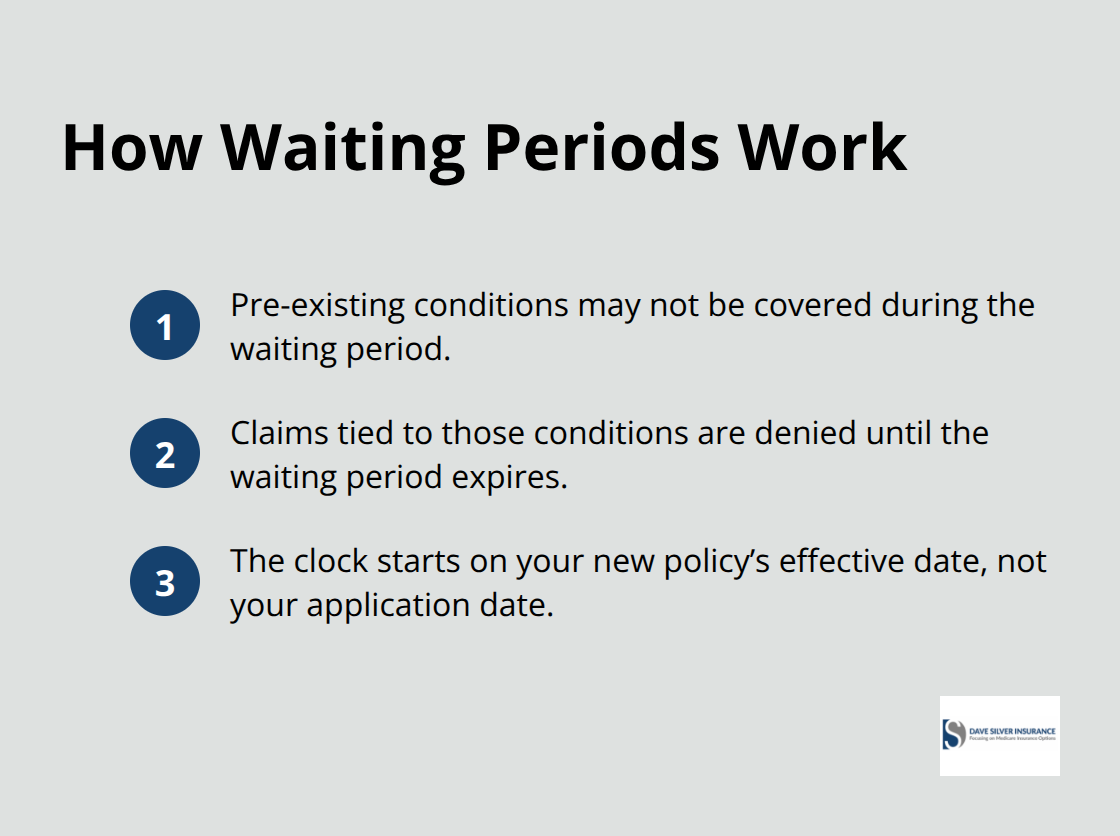
The waiting period clock starts when your new coverage becomes effective, not when you submit your application.
Federal law sets limits on waiting periods, but your state may have different rules that actually work in your favor. California, Connecticut, Massachusetts, New York, and Vermont offer stronger protections than federal law requires, sometimes allowing you to switch plans without triggering waiting periods at all. Outside these five states, you face standard underwriting, which means the insurer reviews your health history and decides whether to accept you, deny you, or impose waiting periods. This is why timing your switch during the six-month guaranteed issue period after turning 65 and enrolling in Part B matters so much-you completely avoid waiting periods during that window.
When Your New Coverage Starts
Your new Medigap coverage typically begins on the first or fifteenth of the month following your approval, though some plans allow coverage to start sooner. This means you could face a gap in coverage between your old plan ending and new plan beginning. Never cancel your existing Medigap policy until you receive written confirmation that your new plan is active and you’ve reviewed the details during any free look period.
If you receive approval in mid-month, your coverage might not start for several weeks, leaving you temporarily uninsured. Some people experience overlap where they pay premiums for both policies during the transition month-this is unavoidable but temporary. Check with your new insurer about the exact effective date before making any cancellation decisions.
How Pre-Existing Conditions Affect Your Timeline
If you switch during Open Enrollment or within a guaranteed issue window, the timeline feels less urgent because you know waiting periods won’t apply. Outside these windows, waiting periods could delay coverage for conditions you already have, so understanding your state’s rules and your guaranteed issue eligibility becomes critical before you submit any application. The insurer’s underwriting decision determines not only whether you qualify but also what conditions (if any) they’ll exclude from coverage during the waiting period.
State variations mean your location significantly impacts how long you wait and what gets covered. Some states protect you more than others, so verify your state’s specific rules before switching. This protection level directly affects your out-of-pocket costs and coverage gaps during the transition.
Taking Action Before Waiting Periods Apply
Switching at the right time eliminates waiting periods entirely. If you’re approaching the end of your six-month guaranteed issue window or considering a move from Medicare Advantage to Medigap, act within your eligible timeframe. Missing these windows costs you thousands in avoidable premiums and coverage gaps over time.
The strategies you use to time your switch determine whether waiting periods become a factor in your decision. Understanding your guaranteed issue rights and state protections helps you move forward with confidence.
How to Time Your Switch and Act on Guaranteed Rights
Act Within Your Six-Month Window After Turning 65
The six-month window after you turn 65 and enroll in Medicare Part B closes permanently, and once it does, insurers can impose waiting periods of up to six months for pre-existing conditions. Mark your Part B enrollment date on your calendar and set a reminder for month five-do not wait until month six to start shopping. Contact insurers during month four or five to understand plan options, premiums, and effective dates. This timing gives you breathing room to compare plans without rushing a decision in your final weeks. If you currently fall within this window, switching now eliminates waiting periods completely. After the window closes, you lose this protection and face medical underwriting on every future switch unless you qualify for another guaranteed issue right.
Capitalize on Your Medicare Advantage Escape Route
Medicare Advantage members have a narrower path but one that still works if you act correctly. You get guaranteed acceptance into a Medigap plan if you drop your Advantage coverage within 12 months of first joining Medicare. This means if you enrolled in Advantage at 65, you have until age 66 to switch to Medigap without waiting periods. Many people do not realize this window exists, and they miss it by waiting too long. If you switched from Medigap to Medicare Advantage and now regret it, the same 12-month protection applies when switching back-but only if you act within that timeframe. Document your Advantage enrollment date immediately and count forward.
Respond Quickly When Your Plan Exits Your Service Area
If your Advantage plan stops serving your area or the insurer exits your state, you get another guaranteed issue opportunity regardless of how long you have held the plan. These triggered rights often surprise people because they happen unexpectedly, so verify your plan’s service area annually. When your insurer notifies you of a service termination, you typically have 60 days to switch to a Medigap plan without waiting periods-this is your window to act. Waiting periods become unavoidable if you delay beyond these specific timeframes.
Understand the Financial Stakes of Your Timing Decision
The cost difference between switching during a guaranteed issue period and switching outside one can exceed $1,200 per year, making timing worth your immediate attention. This substantial savings reflects the premium increases and potential coverage exclusions that insurers impose when they conduct medical underwriting. Your decision to act now or later directly impacts your out-of-pocket costs for years to come.
Final Thoughts
Switching Medigap plans without waiting periods requires you to know your window and act within it. The six-month guaranteed issue period after you turn 65 and enroll in Medicare Part B offers your strongest protection against Medigap waiting periods. During this time, insurers cannot deny you coverage or charge higher premiums based on your health history, so switching now eliminates waiting periods entirely.
Verify your guaranteed issue eligibility and confirm your state’s specific rules before you make any switch. California, Connecticut, Massachusetts, New York, and Vermont offer protections beyond federal law, so your location significantly impacts your options. Document your Medicare enrollment dates and any plan termination notices from your current insurer, then never cancel your existing Medigap policy until your new coverage is active and you’ve confirmed the effective date in writing.
The financial stakes justify acting now rather than later-switching outside a guaranteed issue window can cost you over $1,200 annually in higher premiums and potential coverage exclusions for pre-existing conditions. Contact Dave Silver Insurance to review your specific situation and confirm whether you qualify for guaranteed issue rights. Our team provides personalized guidance on Medigap insurance and all Medicare options, available seven days a week.
Disclaimer: The information provided in this blog is for general informational purposes only and does not constitute legal, financial, or insurance advice. Coverage options, terms, and availability may vary. Please consult with a licensed professional for advice specific to your situation