

Medicare Part B costs can feel overwhelming when you’re trying to plan your healthcare budget. Between premiums, deductibles, and coinsurance, the numbers add up fast.
At Dave Silver Insurance, we’ve helped thousands of people understand exactly what they’ll pay and where they can save. This guide breaks down every cost component so you can make informed decisions about your coverage.
Medicare Part B Coverage and How It Fits Into Your Overall Plan
What Part B Actually Covers
Medicare Part B covers doctor visits, lab work, imaging, and outpatient procedures-the medical services you use outside a hospital setting. When you see your primary care physician for a checkup, get blood work done at a lab, or have an X-ray at an imaging center, Part B pays its share. Part B also covers preventive services like cancer screenings and vaccinations at no additional cost to you.
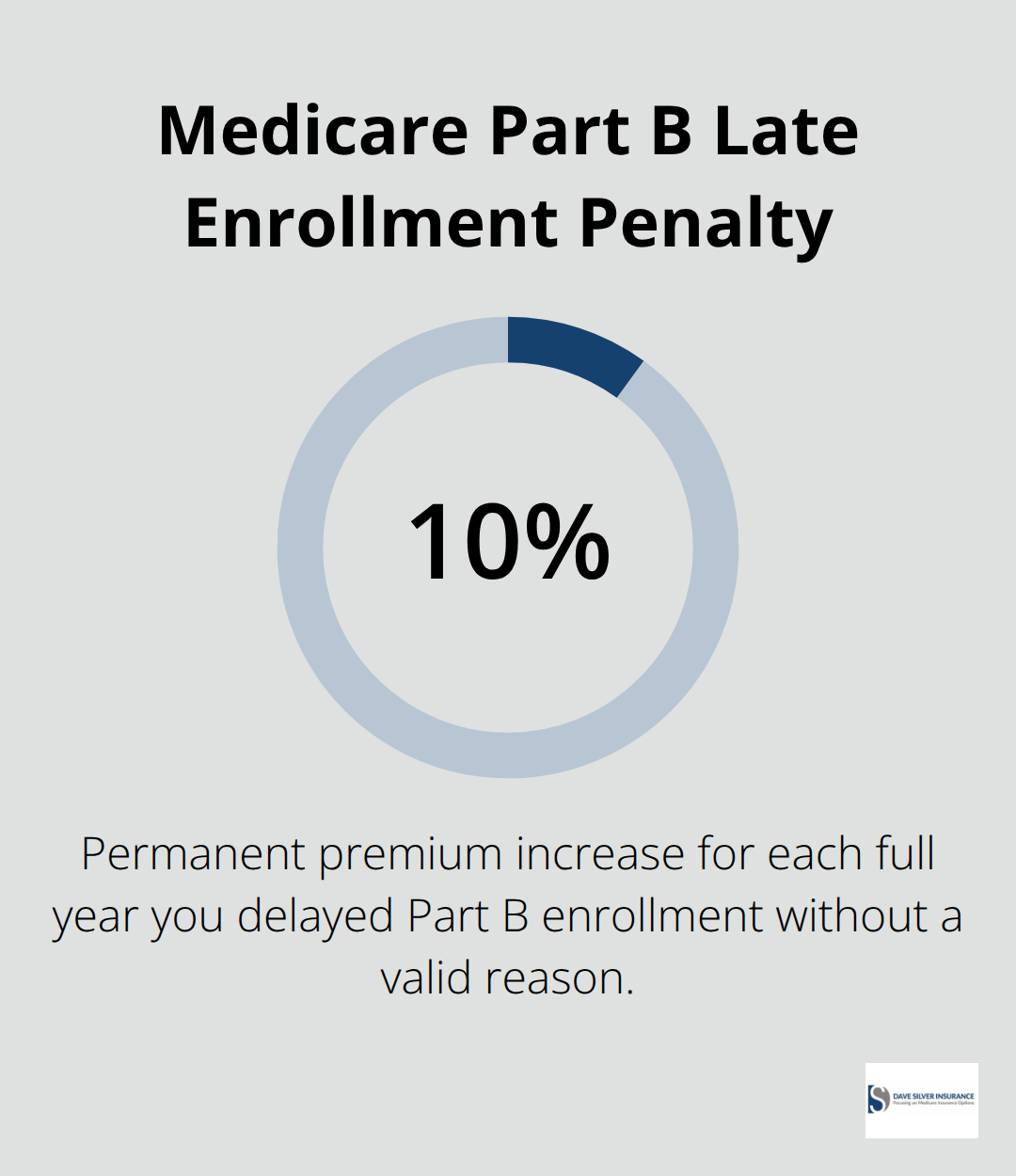
The reality is that Part B is non-negotiable if you want coverage for these everyday medical needs. Without it, you’d pay the full bill yourself for medical services. Part B becomes available the month you turn 65, and enrollment deadlines matter significantly. If you delay signing up without a valid reason, you’ll face a permanent 10% premium penalty for each year you didn’t enroll. That penalty sticks with you for life.
How Part B Fits With Your Other Coverage
Medicare Part A handles hospital stays and skilled nursing care, while Part B handles everything outpatient. Together they form Original Medicare, but neither covers everything you’ll need. Prescription drugs require Part D enrollment, and dental, vision, and hearing care aren’t covered by either Part A or B.
Most people need additional coverage beyond Original Medicare. You can either add a Medigap policy (which covers gaps in Original Medicare) or switch to a Medicare Advantage plan that bundles Parts A, B, D, and often includes dental and vision. For 2026, the standard Part B premium is $185 monthly for most beneficiaries, though higher earners pay more through Income-Related Monthly Adjustment Amounts, or IRMAA.
Understanding IRMAA and Income-Based Premiums
Those earning over $109,000 annually face surcharges depending on their income bracket. The income threshold used is from your tax return filed two years prior, so a major life event like retirement or marriage can significantly impact what you owe. Understanding your IRMAA bracket now helps you plan your healthcare budget accurately and avoid unexpected premium increases when you enroll.
Breaking Down Your 2026 Medicare Part B Costs
The Base Premium and Income-Based Surcharges
The standard Part B premium for 2026 sits at $185 monthly for most beneficiaries, but your actual premium depends entirely on your income. The Social Security Administration uses your tax return from two years ago to determine whether you owe IRMAA, the Income-Related Monthly Adjustment Amount that stacks on top of your base premium. If you earned over $109,000 as an individual in 2024, you pay more than $185.
The surcharges climb steeply across six income brackets. The highest earners pay an additional $689.90 monthly on top of the standard premium. Couples filing jointly face higher thresholds, with IRMAA kicking in at $218,000 combined income. This two-year lookback creates real problems because major life changes like retirement or a spouse’s death don’t immediately lower your premium.
Navigating the Two-Year Lookback Rule
The two-year gap between your income and your premium calculation catches many people off guard. You’ll need to request a new assessment from SSA with documentation of your changed circumstances if you want relief from an outdated IRMAA calculation. Life events like job loss, marriage, or divorce qualify for reassessment, but SSA requires proof.
This timing issue means your 2026 premium reflects 2024 income, not your current financial situation. Planning ahead matters because you can’t simply wait for the system to catch up. Understanding this lag helps you anticipate what you’ll owe and budget accordingly.
The Deductible, Coinsurance, and Copayments
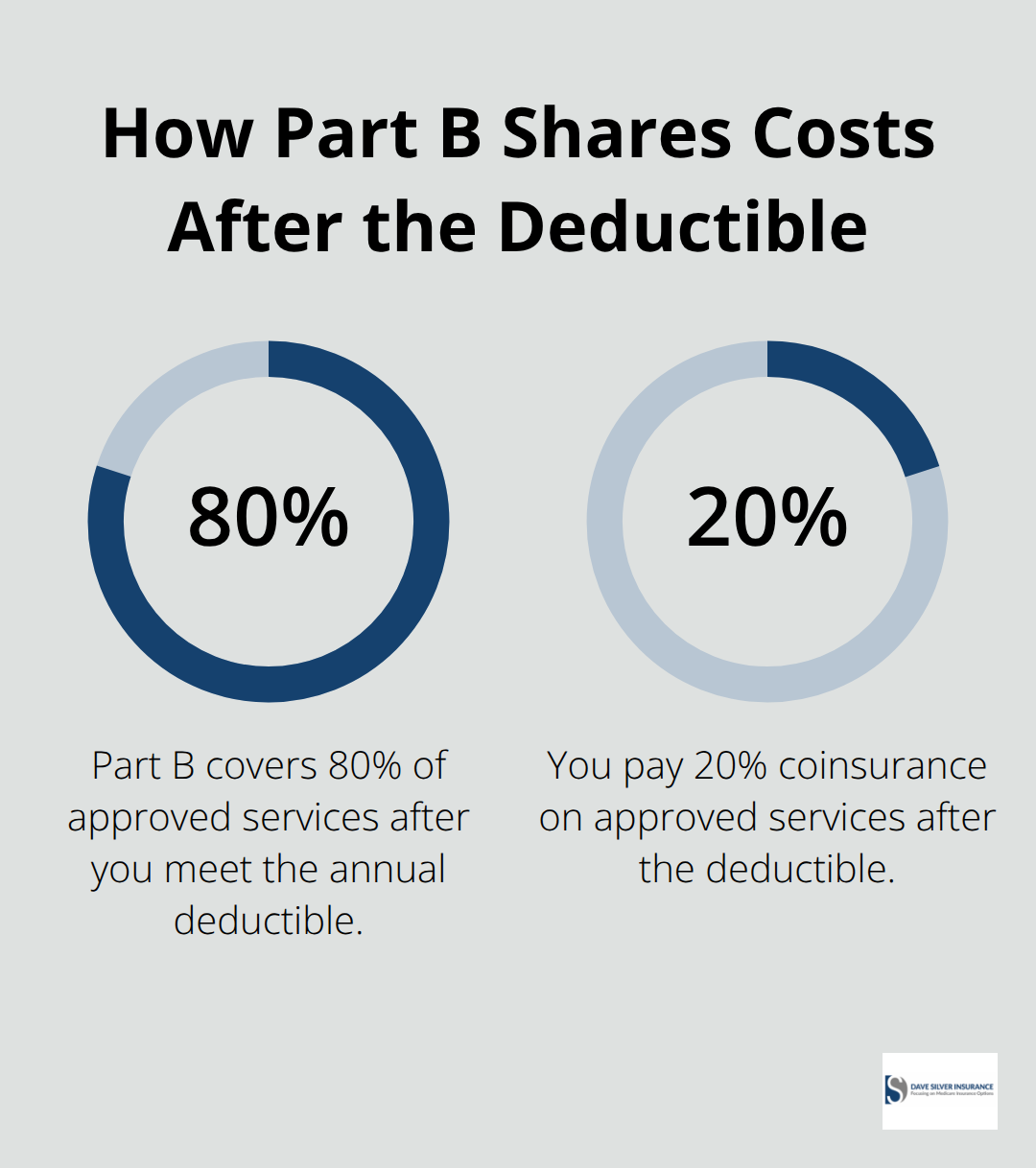
The deductible adds another layer to your costs: you pay $240 annually before Part B starts covering its share of services. After you meet that deductible, Part B covers 80% of approved services while you pay coinsurance of 20%. For doctor visits and outpatient procedures, this coinsurance varies depending on the service type, so a specialist visit might cost you differently than lab work.
Copayments for specific services like telehealth visits run $0 for preventive care but apply to other outpatient treatment. These out-of-pocket expenses accumulate quickly without supplemental coverage. Calculating your exact income bracket now and understanding what your 2026 premium will be helps you build that number into your healthcare budget rather than facing surprises when your first bill arrives.
Planning Your Healthcare Budget
Your total Part B cost combines the base premium, any IRMAA surcharge, the annual deductible, and ongoing coinsurance. Most beneficiaries spend between $185 and $875 monthly just on Part B premiums, depending on income. Adding the deductible and coinsurance on top means your actual out-of-pocket spending can reach thousands annually.
The practical move is calculating your exact income bracket now and understanding what your 2026 premium will be. Building that number into your healthcare budget prevents financial strain when enrollment begins. With these costs in mind, exploring ways to reduce your out-of-pocket expenses becomes the next logical step.
How to Cut Your Part B Costs Without Sacrificing Coverage
Medigap Plans: Predictable Coverage and Peace of Mind
Medigap policies cover the gaps that Original Medicare leaves behind, paying your coinsurance, copayments, and deductible so you avoid surprise bills. Plan G stands as the strongest option available today, covering everything except the Part B deductible, and costs between $100 and $300 monthly depending on your location and age. Plan N costs less upfront but requires you to pay small copayments at doctor visits, making it better for people who rarely see specialists.
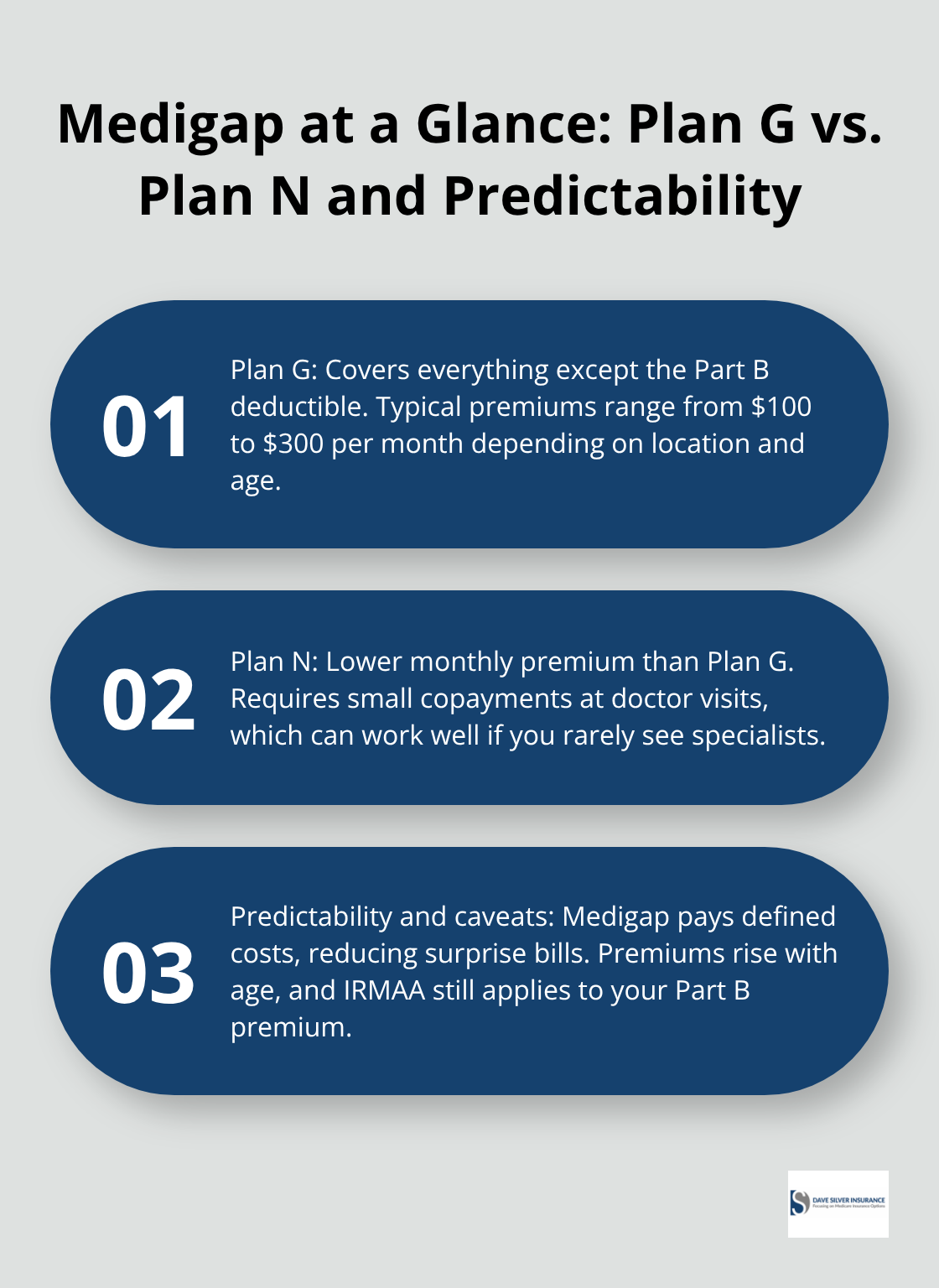
The real advantage of Medigap is predictability: you know exactly what you’ll pay because the policy covers defined costs, eliminating the uncertainty of coinsurance percentages. However, Medigap premiums rise with age, so locking in coverage at 65 costs significantly less than waiting until 75. Your IRMAA surcharge still applies on top of Medigap, so high earners don’t escape premium increases through supplemental coverage.
Medicare Advantage Plans: Lower Premiums With Trade-Offs
Medicare Advantage plans bundle Parts A, B, and D into one monthly premium that often costs $0 or under $50, which immediately appeals to budget-conscious enrollees. The tradeoff involves accepting a provider network and prior authorization requirements, plus higher copayments per visit. Advantage plans typically cap your out-of-pocket spending at $8,000 annually, which protects you from catastrophic costs but means you’ll hit that maximum faster than with Original Medicare plus Medigap if you need extensive care.
Advantage plans also include dental and vision benefits that Original Medicare doesn’t cover, so if you need frequent dental work, the savings there alone can justify the switch. Your IRMAA still applies to Advantage plans, so income-based surcharges don’t disappear through this route either.
Coordinating Part D and Managing IRMAA Across Plans
IRMAA applies to both Part B and Part D premiums simultaneously, which creates substantial costs for higher earners. This dual impact makes income planning critical when you approach Medicare enrollment.
Making Your Choice During Open Enrollment
Open enrollment runs from October 15 through December 7 each year, and this window is your only chance to switch plans without penalties. Waiting until after December 7 locks you into your current coverage for the entire following year, so procrastinating costs real money. Review your actual healthcare spending from the past year: if you visited specialists frequently or took multiple medications, Medigap with Original Medicare likely costs less overall than an Advantage plan’s copayments. If you stayed healthy with minimal doctor visits, an Advantage plan’s low or zero premium saves substantial money upfront.
Getting the Right Recommendation for Your Situation
Calculate which option costs less based on your health history and income level rather than making assumptions. Dave Silver Insurance can review your specific situation and provide tailored guidance to help you make the decision with actual numbers. With over 17 years of Medicare expertise, the agency offers personalized recommendations based on your unique health and financial needs, accessible seven days a week to answer your questions.
Final Thoughts
Medicare Part B costs represent a significant portion of your healthcare budget, and understanding every component gives you real control over your spending. The base premium, IRMAA surcharges, deductible, and coinsurance all add up differently depending on your income and health needs. Your 2026 premium reflects 2024 income due to the two-year lookback rule, so calculating your exact bracket now prevents surprises when enrollment begins.
The path forward depends on your specific situation. If you visit specialists frequently or take multiple medications, Original Medicare paired with a Medigap plan typically costs less overall than a Medicare Advantage plan’s copayments. If you stayed relatively healthy last year with minimal doctor visits, a Medicare Advantage plan’s low or zero premium saves substantial money upfront.
Open enrollment runs through December 7 each year, and this window is your only chance to switch plans without penalties. We at Dave Silver Insurance have spent over 17 years helping people navigate these exact decisions with actual numbers rather than assumptions. Contact us today to review your specific situation and discover which plan saves you the most money on your Medicare Part B costs.
Disclaimer: The information provided in this blog is for general informational purposes only and does not constitute legal, financial, or insurance advice. Coverage options, terms, and availability may vary. Please consult with a licensed professional for advice specific to your situation