

Medicare enrollment steps can feel overwhelming, but they don’t have to be. Missing a deadline or choosing the wrong plan costs you thousands in penalties and out-of-pocket expenses.
We at Dave Silver Insurance have helped thousands of people navigate enrollment without costly mistakes. This guide walks you through exactly what you need to do, when to do it, and how to avoid the pitfalls that trip up most people.
When Your Medicare Enrollment Window Opens
Your eligibility date controls everything in Medicare enrollment. When you turn 65 or become eligible for Medicare due to disability or ESRD, a seven-month window opens automatically. This Initial Enrollment Period spans three months before your eligibility month, the month itself, and three months after. Miss this window and you face permanent penalties that stick with you for life.
A 10% penalty on your Part B premium applies for each year you delayed enrollment without qualifying coverage. For prescription drug coverage, the penalty is 1% per month of delay. If you wait five years, that penalty reaches 60% on your Part D premium-a cost you cannot escape.
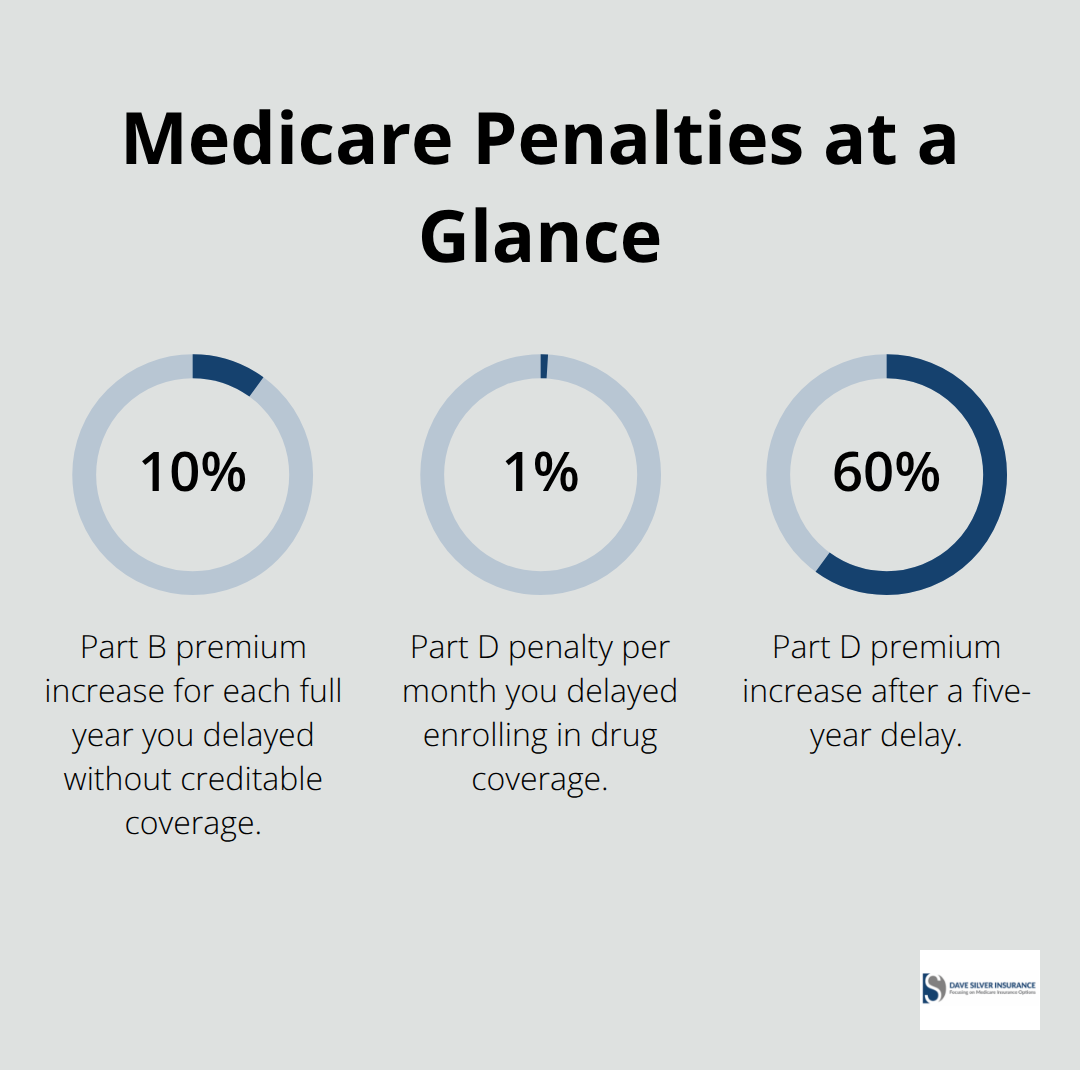
The math is brutal: someone delaying Part D enrollment by just two years pays an extra $150 to $200 annually for the rest of their retirement, according to Centers for Medicare and Medicaid Services data.
Verify Your Employer Coverage Before Your Birthday
Your enrollment period is not negotiable and not flexible. If you have employer coverage at 65, you might think you can skip Medicare and enroll later without penalty. This is where people make expensive mistakes. Employer coverage must meet Medicare standards to protect you from penalties. Most employer plans do qualify, but you need to verify this with your HR department before your 65th birthday arrives.
If your employer coverage ends, you then have a Special Enrollment Period of up to 60 days to sign up for Medicare without penalty. After those 60 days close, you are locked into whatever penalties apply. The General Enrollment Period runs January 1 through March 31 each year, but this option only works if you missed your Initial Enrollment Period and have no qualifying event. Use this period and penalties still apply retroactively to your original eligibility month.
Qualifying Events Open New Enrollment Windows
A Special Enrollment Period gives you a second chance when specific events occur. Losing employer coverage, moving to a new state, changes in your Medicaid status, or release from incarceration all trigger Special Enrollment Periods lasting up to 60 days. This matters because most people qualify for a Special Enrollment Period without realizing it. You can enroll in Medicare Advantage or Part D plans within two months of a qualifying event without waiting for the annual enrollment period.
If you lose coverage mid-year and need immediate protection, this window saves you from coverage gaps. The key is documenting your qualifying event. Keep records of job termination letters, Medicaid denial notices, or proof of address changes. When you contact Medicare or work with an agency, these documents prove your eligibility for the Special Enrollment Period and protect you from penalty disputes.
Document Everything to Protect Your Eligibility
Qualifying events require proof, and the burden falls on you to provide it. Insurance agencies and Medicare representatives cannot override penalties without documentation that supports your claim. A job termination letter shows the exact date your employer coverage ended. A Medicaid denial notice establishes when your state benefits changed. A utility bill or lease agreement proves you moved to a new state. These documents become your shield against retroactive penalties and coverage denials.
The timing of your documentation matters as much as the documents themselves. Submit your proof within the 60-day window after your qualifying event occurs. Delays beyond this period can result in penalties even if you eventually enroll. With your enrollment window confirmed and your documents organized, you now face the next critical decision: which type of Medicare coverage actually fits your health needs and budget.
How to Gather Your Information and Pick the Right Coverage Type
Collect the Four Pieces of Information That Matter
Enrollment starts with paperwork, but not the kind that buries you in forms. You need four specific pieces of information before you make any plan decisions: your current insurance status, your medical conditions, the doctors and hospitals you use, and your prescriptions with the pharmacies where you fill them. Without this foundation, you will choose a plan that leaves you paying thousands in unexpected costs or forces you to switch doctors mid-year.
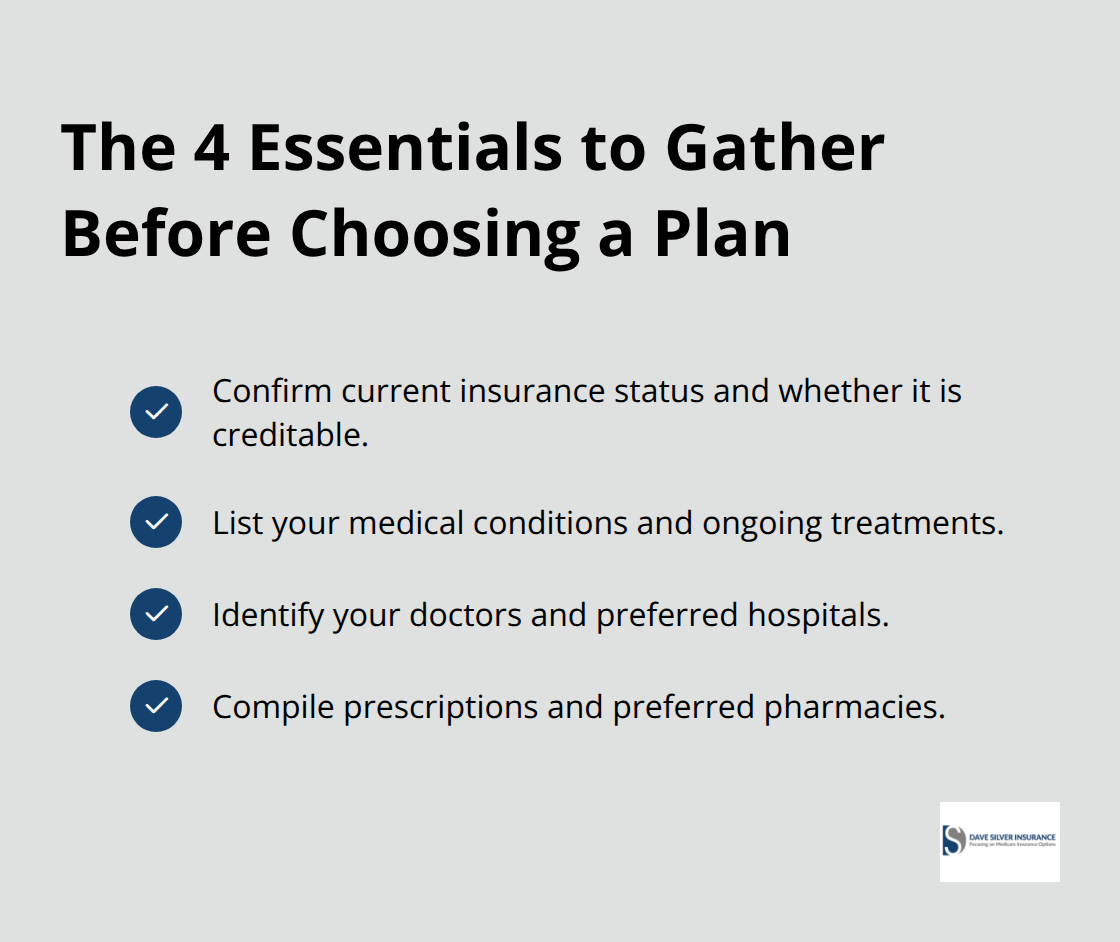
Start by pulling your insurance cards, medication bottles, and a list of your healthcare providers. Call your current insurer if you have coverage and ask whether it meets Medicare standards for creditable coverage. This single call prevents penalty mistakes down the road.
Map Your Medications and Pharmacy Costs
Next, write down every medication you take, including dosages and which pharmacy fills each one. The pharmacy matters because costs vary dramatically between locations. Someone paying $8 per month at CVS might pay $45 at Walgreens for the identical drug.
Visit Medicare.gov and use their Plan Finder tool to enter your medications and see which plans cover them at your preferred pharmacies. Fidelity estimates that 65-year-olds retiring today face $172,500 in lifetime healthcare costs, making plan selection genuinely consequential.
Original Medicare Versus Medicare Advantage: The Real Trade-Off
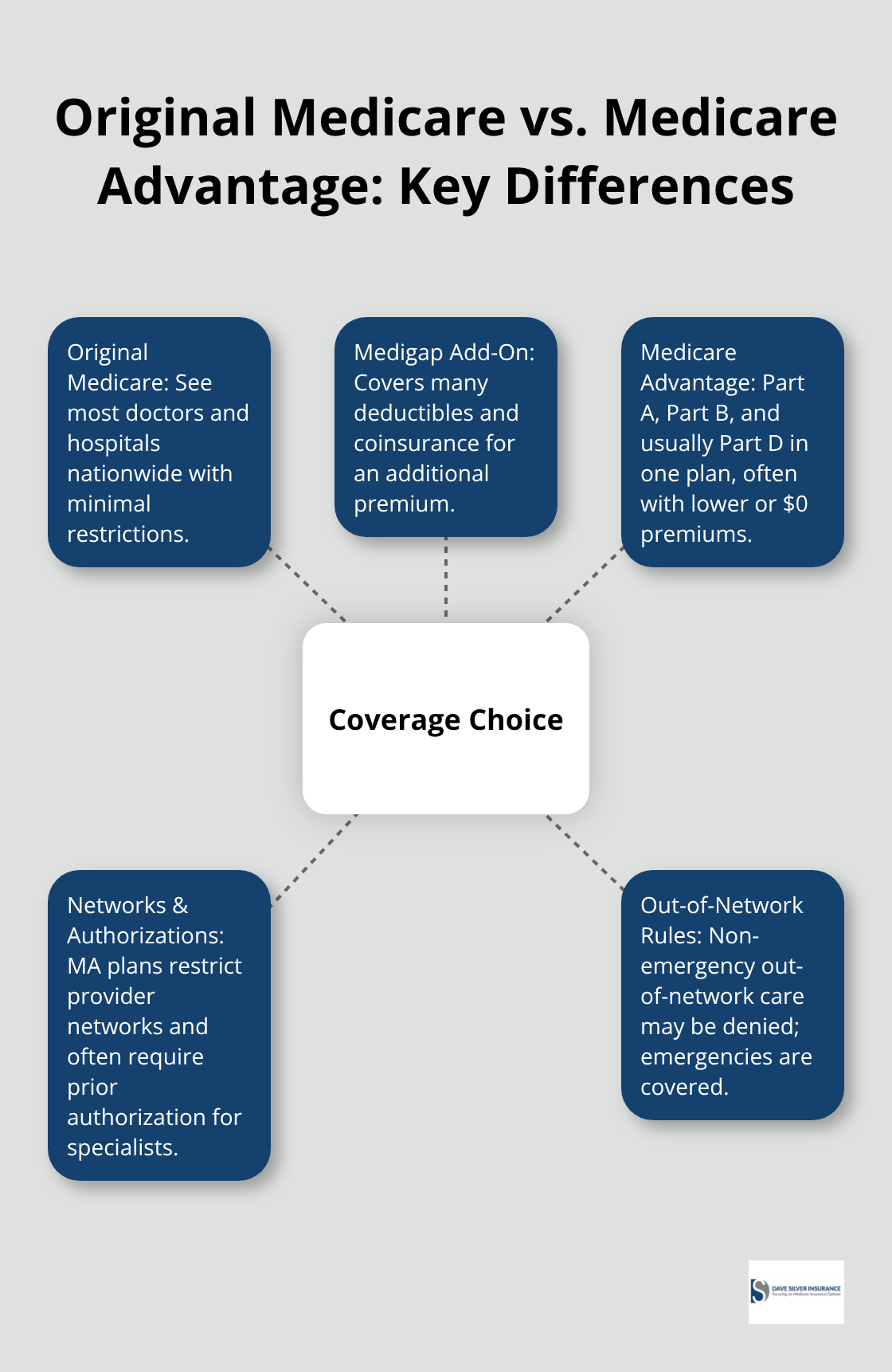
Your choice between Original Medicare and Medicare Advantage reshapes your healthcare equation significantly. Original Medicare means you keep your current doctors and hospitals with minimal restrictions. You pay Part A and Part B premiums, plus deductibles and coinsurance. Add a Medigap policy and you cover many out-of-pocket costs, but you pay another premium on top of Medicare.
Medicare Advantage replaces Original Medicare entirely. You get Part A, Part B, and usually Part D wrapped into one plan, often with lower or zero premiums. The trade-off is real: MA plans restrict your provider network, require prior authorization for specialist visits, and may deny coverage for out-of-network care except emergencies.
If you have chronic conditions requiring frequent specialist access, Original Medicare with Medigap gives you freedom. If you are relatively healthy and want predictable costs with minimal paperwork, Medicare Advantage makes financial sense. Answer this question honestly: would you rather pay more upfront for maximum flexibility, or accept network limitations to save on premiums? Your answer determines which path works.
Compare Part D Plans Annually for Maximum Savings
Prescription drug coverage requires separate attention because costs fluctuate annually. Part D plans change their formularies every January, meaning drugs covered this year might not be covered next year at the same price tier. The Centers for Medicare and Medicaid Services reports that reviewing Part D coverage saves beneficiaries over $300 annually on average.
Use the Medicare Plan Finder between October 15 and December 7 during the Annual Enrollment Period to compare all available plans side by side. Enter your medications and see which plans offer the lowest total cost, including premiums, deductibles, and coinsurance. Look specifically at the donut hole coverage and whether the plan covers your drugs during the coverage gap.
Some people switch plans every year because their medication needs change or a competitor offers better pricing. This is not wasteful-it is smart. Your coverage should match your actual healthcare spending, not what you paid last year. With your information organized and your coverage type selected, you now face the final step before enrollment: understanding which mistakes derail most people and how to avoid them.
Avoiding Common Enrollment Mistakes
Deadline Mistakes Cost You Forever
Deadline mistakes haunt Medicare beneficiaries for life, yet most people treat enrollment windows casually. Missing your Initial Enrollment Period triggers a permanent 10% penalty on Part B premiums that never disappears, according to the Centers for Medicare and Medicaid Services. For Part D, the penalty compounds at 1% per month of delay. Wait three years and you owe an extra 36% on your prescription drug premiums forever. Someone who delays enrollment by five years pays 60% more annually on Part D costs for the remainder of their retirement. The financial damage extends beyond penalties because coverage gaps leave you uninsured during months when medical emergencies strike.
If you have a qualifying event like job loss or moving states, your Special Enrollment Period window lasts exactly 60 days. After day 60 closes, penalties apply retroactively to your original eligibility month regardless of when you finally enroll. This is not a soft deadline you can negotiate around. Insurance companies and Medicare representatives cannot waive penalties based on excuses. Your only protection is documentation proving your qualifying event occurred within the enrollment window. Keep termination letters, Medicaid notices, and address verification organized before you contact Medicare.
Medigap Coverage Gaps Drain Your Budget
Overlooking Medigap insurance represents the second major mistake because people assume Original Medicare covers most costs. It does not. Original Medicare leaves you responsible for deductibles, coinsurance, and copayments that accumulate to thousands annually. A Medigap policy fills these gaps, covering expenses Original Medicare does not pay. Unlike Medicare Advantage plans, Medigap policies do not restrict your provider network or require prior authorization for specialist visits. You keep your doctors and hospitals while Medigap handles the financial gaps.
The catch is timing: you have a guaranteed enrollment window for Medigap lasting 63 days starting when you turn 65 and enroll in Part B. After this window closes, insurers can deny you coverage or charge higher premiums based on your health status. People who delay Medigap enrollment often face medical underwriting that results in rejection or unaffordable rates. This window opens only once, so act within it.
Annual Reviews Reveal Hidden Savings
The third costly mistake involves skipping your annual coverage review during the Annual Enrollment Period from October 15 through December 7. Your plan from last year may no longer match your current medications, doctors, or costs. Formularies change every January, meaning drugs covered at low tiers this year shift to higher tiers or disappear entirely next year.
Reviewing Part D coverage alone saves beneficiaries over $300 per year on average according to the Centers for Medicare and Medicaid Services. Ask yourself whether your current plan still covers your medications at your preferred pharmacies, whether your doctors remain in-network if you chose Medicare Advantage, and whether your out-of-pocket costs from last year suggest a better option exists this year. Failing to review annually locks you into plans that no longer serve your needs and wastes money you cannot recover.
Final Thoughts
Medicare enrollment steps shape your retirement healthcare for years to come, so act with precision from the start. Mark your calendar for the Annual Enrollment Period from October 15 through December 7 each year and review your Part D coverage, doctor networks, and out-of-pocket costs against available alternatives. This annual habit takes a few hours and saves over $300 on average according to the Centers for Medicare and Medicaid Services.
Expert guidance transforms Medicare enrollment from stressful to manageable, and we at Dave Silver Insurance have spent over 17 years helping people navigate these exact decisions. Our team understands how Medigap insurance reduces your out-of-pocket expenses and which plan combinations actually match your health situation and budget. We are accessible seven days a week because Medicare questions do not follow business hours.
Contact Dave Silver Insurance to discuss your specific situation with someone who knows the regulations inside and out. You will receive tailored recommendations based on your medications, doctors, and financial needs rather than generic advice. The clarity and confidence that comes from expert guidance is worth far more than the cost of a conversation.
Disclaimer: The information provided in this blog is for general informational purposes only and does not constitute legal, financial, or insurance advice. Coverage options, terms, and availability may vary. Please consult with a licensed professional for advice specific to your situation