

Medicare enrollment deadlines are not suggestions-they’re hard cutoffs that determine your coverage and your wallet. Miss them, and you’ll face penalties that can add up to thousands of dollars over your lifetime.
At Dave Silver Insurance, we’ve seen too many people scramble after the fact, wishing they’d acted sooner. The good news is that avoiding these costly mistakes is entirely within your control.
What Happens When You Miss a Medicare Enrollment Deadline
Part B Penalties Add Up Fast
Part B penalties are relentless. If you delay enrolling in Part B without creditable coverage, Medicare charges 10% extra for each full year you missed the deadline. In 2026, the standard Part B premium sits at $202.90 per month. A 20% penalty-which you owe after just two years of delay-pushes that to roughly $243.50 monthly. The brutal part: you pay this penalty every single month for as long as you have Part B coverage. According to Medicare.gov, this penalty can last for your entire life.
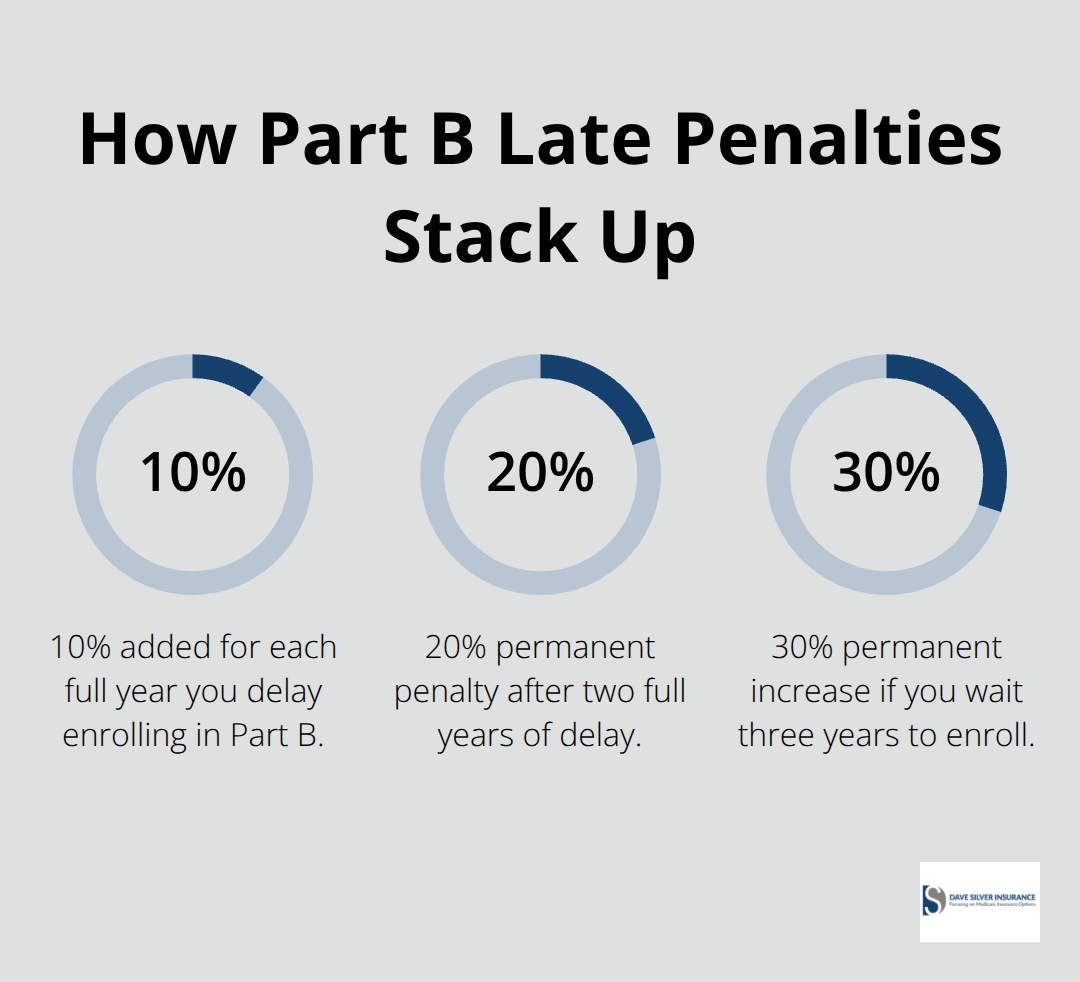
A person who waits three years before enrolling faces a 30% permanent increase, adding nearly $61 to their monthly bill forever.
Part D Penalties Compound Over Time
Part D penalties work differently but hit just as hard. For every month you go without creditable drug coverage, Medicare tacks on 1% of the national base beneficiary premium. In 2026, that base is $38.99, meaning a 14-month delay costs you roughly $5.50 extra per month on top of your plan premium. Unlike Part B, the Part D penalty stays with your drug coverage indefinitely, so switching plans won’t escape it. Someone who delayed enrollment for two years faces a permanent 24% penalty. Over a decade, that single mistake compounds to thousands in extra costs.
Income-Related Surcharges Create Additional Burden
The income-related monthly adjustment amounts add another layer of complexity. If your modified adjusted gross income exceeds certain thresholds, you’ll pay surcharges on top of your regular Part B and Part D premiums. These thresholds haven’t budged since 2011, but inflation means more people trigger them each year. A married couple filing jointly with income over $194,000 in 2026 pays substantially more than the standard premium. These adjustments apply regardless of whether you enrolled on time, but they stack on top of late enrollment penalties, creating a compounding financial burden that most people never anticipate. Understanding how these three penalty types interact helps you grasp why enrollment timing matters so much-and why the next section covers the real reasons people miss these critical deadlines in the first place.
Why People Miss Their Medicare Deadlines
The Enrollment Window Nobody Knows About
Most people who miss Medicare deadlines don’t do it intentionally. They miss them because Medicare’s enrollment system is genuinely confusing, and the consequences aren’t obvious until penalties start appearing on bills. The Medicare Initial Enrollment Period timeline lasts for 7 months, starting 3 months before you turn 65 and ending 3 months after the month you turn 65-a window that sounds generous until you realize most people don’t know it exists. According to data from KFF Health News, thousands of beneficiaries lost drug coverage after missing deadlines, and many didn’t realize they had a deadline at all. Medicare sends notices, but they arrive in thick envelopes with 21-page annual notices that most people never open. If you’re still working at 65 or covered by an employer plan, the urgency feels low. Then the coverage ends unexpectedly, and suddenly you’re scrambling to enroll during a window that may have already closed.
Many people assume their employer coverage transitions automatically into Medicare. It doesn’t. When employer coverage ends, you typically have a two-month Special Enrollment Period to join a Medicare Advantage plan or standalone drug plan without penalties. Miss that window by even one day, and you’re locked into paying penalties for life.
Multiple Enrollment Periods Create Decision Paralysis
The second trap is confusion over which enrollment periods apply to your situation. You face the Initial Enrollment Period, Open Enrollment, Special Enrollment Periods for life events, the five-star plan switch window, and separate rules if you lose employer coverage or Medicaid. Someone who moves out of state has 60 days to switch plans. Someone who loses Medicaid has 90 days. Someone leaving employer coverage has 60 days.
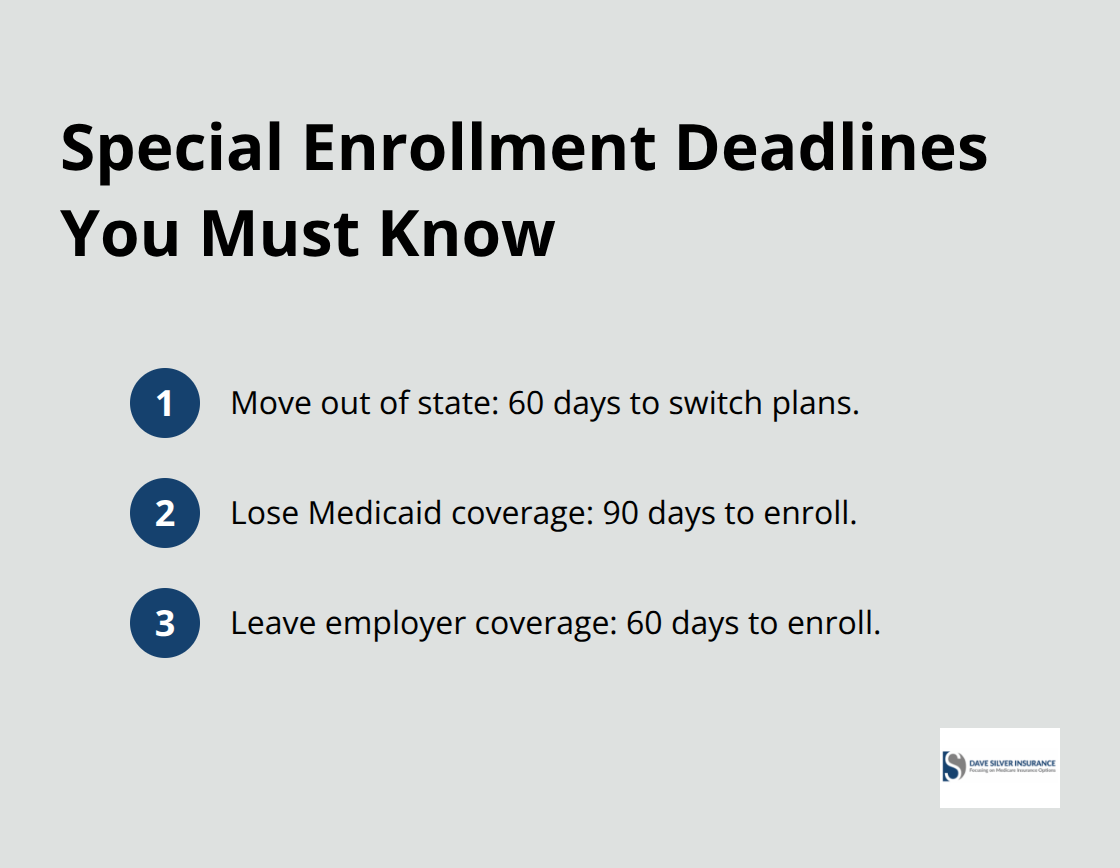
These windows overlap, contradict each other in people’s minds, and create decision paralysis.
Many beneficiaries also wait too long during Open Enrollment, thinking they have until the deadline to decide. Open Enrollment for drug plans runs through December 7 each year, but if you wait until November to compare plans and realize your current plan’s premium jumped significantly, you’re making rushed decisions under pressure.
When Coverage Disappears Without Warning
Some people discover their drug plan dropped them mid-year because they missed a premium payment by just $8.10, as happened with thousands of Wellcare Value Script members in 2026. Once disenrolled, you can’t rejoin a drug plan until the next enrollment period unless you qualify for an exception. A 63-day gap without coverage triggers a permanent penalty that follows you for life.
The real issue isn’t that you need to read more Medicare materials. You need personalized guidance specific to your situation rather than relying on general information that may not apply to you. That’s where the next section shows you exactly how to lock in your enrollment dates and get the support you need to avoid these traps entirely.
Lock in Your Enrollment Dates Now
Your Seven-Month Window Starts Before You Turn 65
Your Initial Enrollment Period spans seven months, starting three months before you turn 65 and ending three months after the month you turn 65. If you turn 65 in June, your window opens in March and closes in September. Write this date down today and add it to your phone calendar with a reminder set for the first day of your enrollment window, not the last day. Most people wait until the final month to think about Medicare, by which time their options have already narrowed and their stress level has peaked. Set your first reminder for the month your window opens, then add a second reminder for the first day of the month you turn 65. This two-step approach forces you to act early rather than scramble late.
Employer Coverage Changes Everything
If you still work at 65 and carry employer health insurance, your situation changes the entire timeline. Your creditable coverage from your employer may not cover your health care expenses if you don’t enroll in Part B. The moment your employer coverage ends, your clock starts ticking. That two-month Special Enrollment Period is your only window to avoid penalties if you weren’t enrolled in Medicare Part B when your employer coverage ended. Many people lose employer coverage in January or July and assume they can enroll whenever they want. They cannot. Missing that two-month window means you pay a 10% penalty on Part B every month for life, starting immediately when you finally do enroll.
Life Events Trigger Different Enrollment Windows
Your specific enrollment windows depend on your exact situation, and this is where generic advice fails you. If you lose Medicaid coverage, you get 90 days to enroll without penalties. If you move out of state, you get 60 days to switch plans. If you lose creditable drug coverage from a previous employer or union plan, you get 60 days to join a Medicare drug plan without triggering the 1% monthly penalty. These windows do not overlap with your Initial Enrollment Period; they replace it or extend it depending on your circumstances. Write down your specific enrollment windows for your specific life situation. Do not rely on remembering them or assuming you will figure it out later. Contact Medicare directly at 1-800-MEDICARE or visit Medicare.gov to confirm your exact window based on your employment status, coverage type, and life events. Then write those dates down in multiple places-your phone calendar, your paper calendar, and an email to yourself all count.
Document Your Dates in Multiple Locations
The reason we emphasize this repetition is simple: people forget, life gets busy, and a forgotten deadline costs you thousands. Once you know your windows, the final step is obtaining personalized guidance that applies to your situation, not generic Medicare information that may or may not apply to you. Personalized guidance specific to your circumstances prevents the costly mistakes that affect thousands of beneficiaries each year. Contact Medicare or a qualified Medicare advisor who can review your employment status, current coverage, and life events to confirm your exact enrollment deadlines. This verification takes minutes but protects you from penalties that last a lifetime.
Final Thoughts
Missing Medicare enrollment deadlines costs you thousands in penalties that compound over your lifetime. Part B penalties hit 10% annually and never stop, while Part D penalties add 1% monthly indefinitely. Income-related surcharges stack on top, creating a financial burden that most people don’t anticipate until it’s too late.
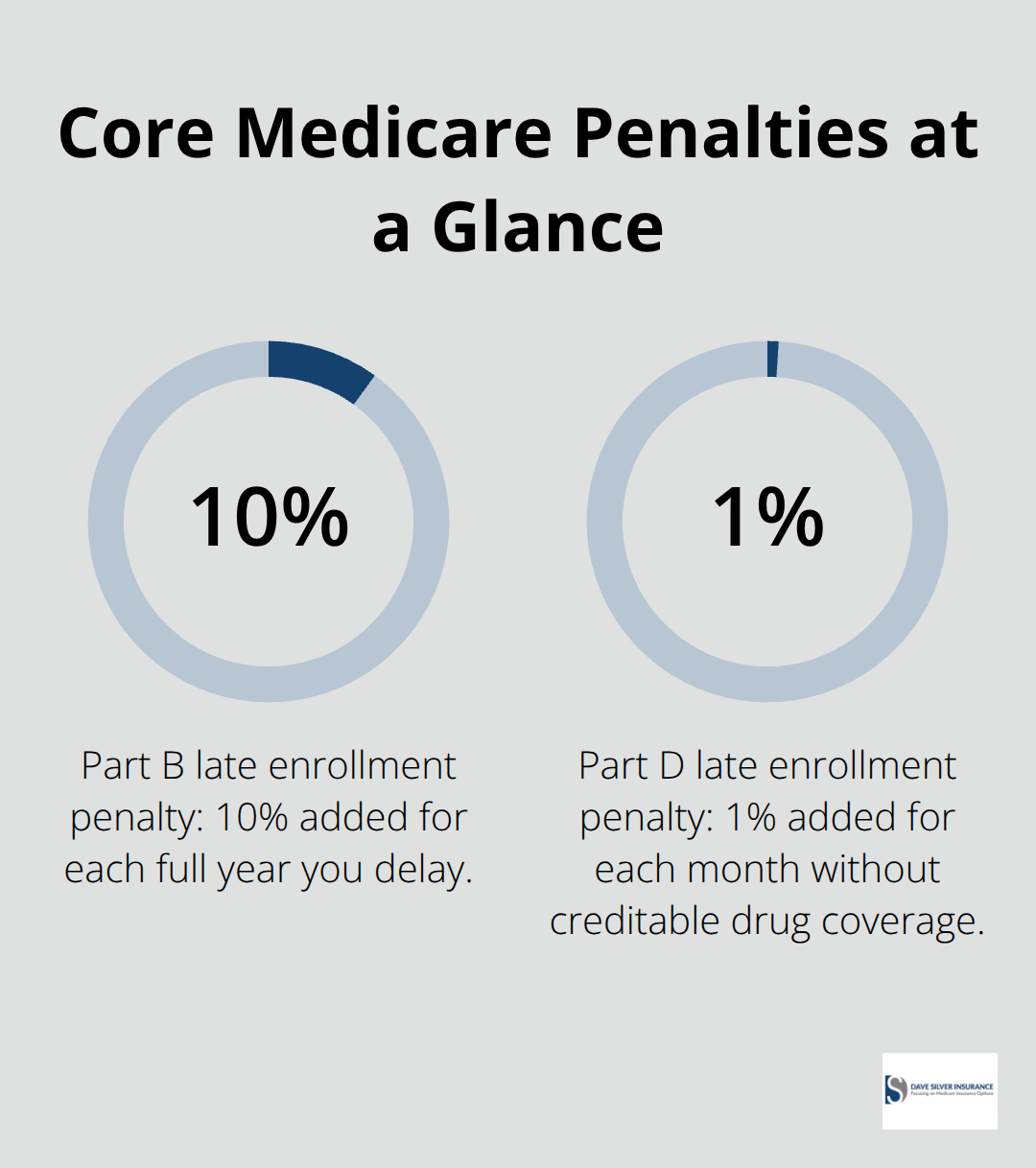
The real damage isn’t just the immediate cost-it’s the permanent penalty that follows you for as long as you have Medicare coverage.
Your Medicare enrollment deadlines don’t bend, and they don’t offer second chances. Write down your specific enrollment window today, not tomorrow. If you turn 65 soon, your seven-month Initial Enrollment Period is already ticking; if you’re losing employer coverage, your two-month Special Enrollment Period starts the moment that coverage ends; if you’ve experienced a life event like moving or losing Medicaid, your enrollment window is already open. One missed deadline means paying penalties every single month for the rest of your life.
We at Dave Silver Insurance understand that Medicare enrollment feels overwhelming, which is why we’ve spent over 17 years helping people navigate these exact decisions. Our team provides personalized guidance on Medicare Parts A, B, C, and D, plus Medigap Insurance to reduce your out-of-pocket expenses, and we’re accessible seven days a week to tailor our recommendations to your unique health and financial situation. Contact us today to get clarity on your Medicare enrollment deadlines and confidence in your healthcare decisions before penalties lock in permanently.
Disclaimer: The information provided in this blog is for general informational purposes only and does not constitute legal, financial, or insurance advice. Coverage options, terms, and availability may vary. Please consult with a licensed professional for advice specific to your situation