

Original Medicare covers a lot, but not everything. You’ll face significant out-of-pocket costs for copayments, coinsurance, and services Medicare doesn’t cover at all.
That’s where Medigap comes in. We at Dave Silver Insurance help people find affordable Medigap quotes that actually fit their budget and health needs. This guide walks you through comparing your options so you can make a smart choice without overpaying.
What Is Medigap and Why You Need It
Coverage Gaps in Original Medicare
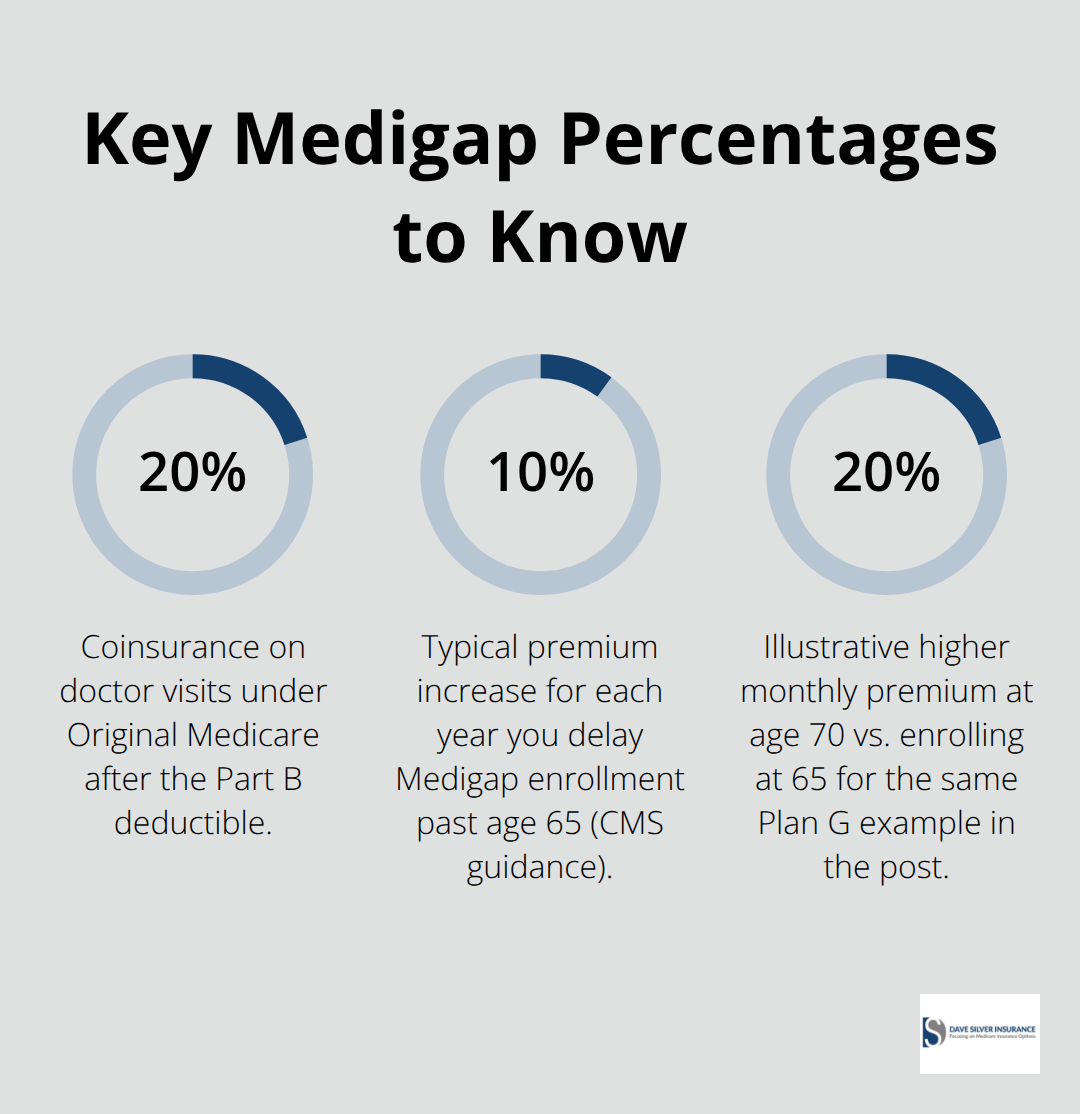
Original Medicare covers hospital stays, doctor visits, and some preventive care, but the gaps are substantial and costly. According to the Kaiser Family Foundation, beneficiaries enrolled in Original Medicare spent an average of $5,460 out-of-pocket in 2023 for healthcare expenses not covered by the program. You’ll face 20% coinsurance on doctor visits after meeting your deductible, and there’s no cap on how much you can spend annually. Emergency room visits, skilled nursing facility care beyond 100 days, and most dental, vision, and hearing services aren’t covered at all. Many people assume Medicare is comprehensive until they receive their first major medical bill and realize they’re responsible for thousands of dollars in unexpected costs.
Out-of-Pocket Costs Without Medigap
Without supplemental coverage, a single hospitalization or chronic condition can drain your savings quickly. If you require an extended hospital stay, you’ll pay $419 per day for days 61-90 in coinsurance, according to the Kaiser Family Foundation. Ongoing prescriptions, specialist visits, and preventive screenings add up fast without coverage assistance. Some retirees delay necessary medical care to avoid these expenses, which often leads to more serious health complications and higher costs down the line.
How Medigap Reduces Your Healthcare Expenses
Medigap addresses these gaps by covering coinsurance amounts, copayments, and deductibles that Original Medicare leaves you responsible for. The standardized Medigap plans available in your state are designed to work specifically with Original Medicare to eliminate or significantly reduce your out-of-pocket burden. These plans (which range from $100 to over $300 monthly depending on your age, location, and health status) come in 10 different standardized options, each offering different levels of coverage. Understanding which plan level matches your health profile and budget prevents you from choosing blindly among options that may not fit your situation.
The next section walks you through how to compare these plans effectively and find quotes that work for your finances.
How to Compare Medigap Plans Without Wasting Time
Understanding the 10 Standardized Plans
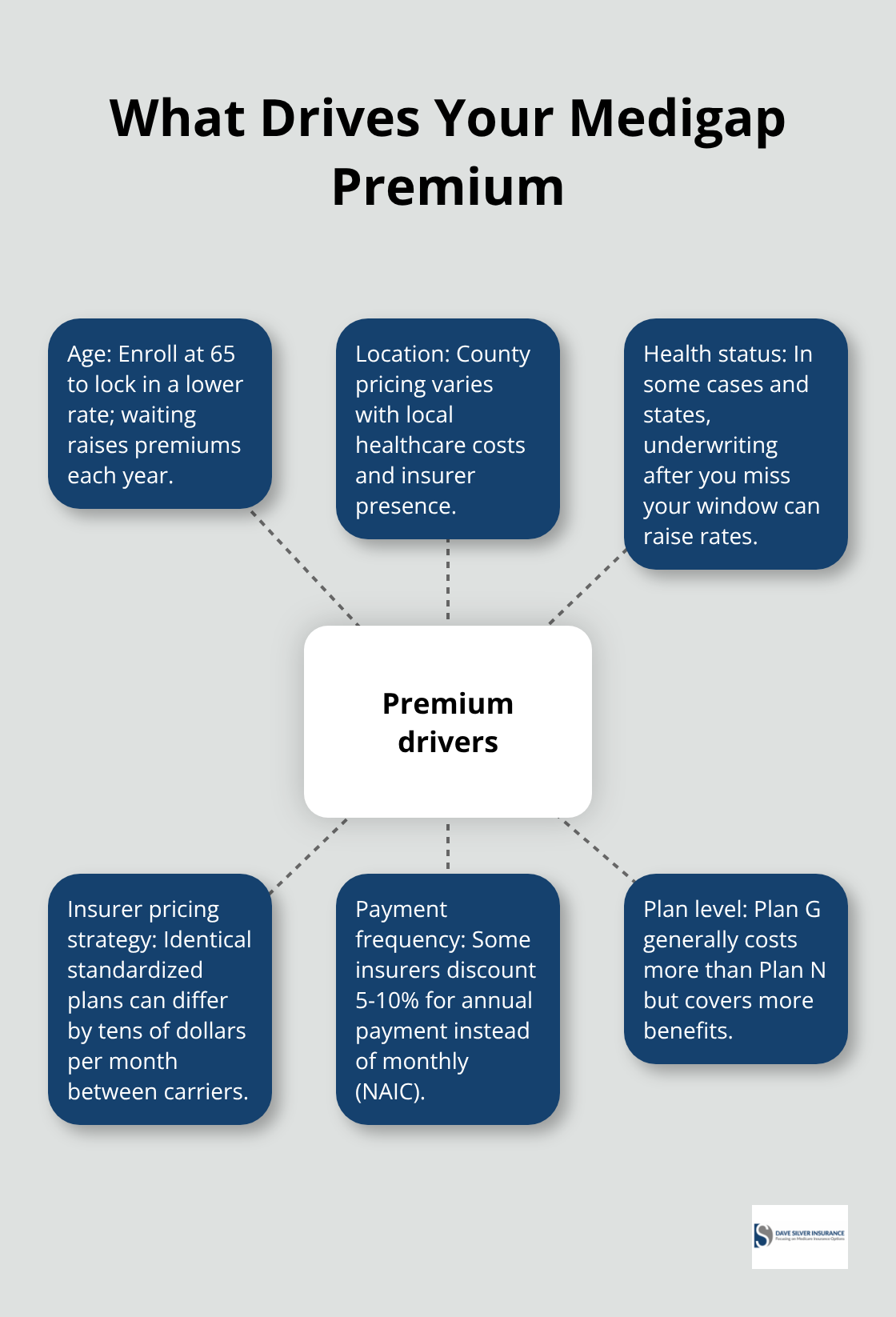
The 10 standardized Medigap plans available to you are labeled A through N, and each one covers a specific combination of costs that Original Medicare doesn’t pay. Plan G covers the most benefits and costs the highest premiums, while Plan N offers moderate coverage at lower costs. The Medicare.gov website displays what each plan covers, but the real work happens when you request actual quotes from insurers. A 65-year-old in Florida might pay $150 monthly for Plan G with one insurer but $210 with another for the exact same coverage. The difference compounds to thousands of dollars annually, making it worth 30 minutes of your time to collect multiple quotes.
Gathering Quotes from Multiple Insurers
You should contact at least three different insurers before making a decision, since premiums for identical plans vary significantly based on where you live and the insurance company’s pricing strategy. When you gather quotes, focus on comparing the same plan across different insurers rather than jumping between plans. Write down the monthly premium, annual deductible if applicable, and any restrictions the plan imposes, such as network requirements or prior authorization rules. Some insurers offer discounts for paying annually instead of monthly, which can reduce your yearly costs by 5-10% according to data from the National Association of Insurance Commissioners.
Key Factors That Impact Your Premium
Age matters significantly for pricing-your premium typically locks in at the rate you pay when you first enroll, so enrolling at 65 costs substantially less than waiting until 72. Your location affects premiums dramatically as well; the same Plan G can cost $120 monthly in one county and $280 in another nearby, depending on local healthcare costs and insurer presence. These two factors alone (age and geography) create enormous variation in what you’ll actually pay for identical coverage.
Creating a Side-by-Side Comparison
After collecting three to five quotes, create a simple spreadsheet listing the plan name, monthly cost, deductible, and coverage details side by side so the differences become immediately clear. This approach eliminates guesswork and prevents you from overpaying for coverage you don’t need or underpaying and facing unexpected medical bills later. Once you’ve identified which plans fit your budget and health needs, contact a local agent to lock in the lowest possible rates.
Finding the Best Rates by Timing Your Enrollment
Lock in Your Rate at 65
Your enrollment timing determines your premium for years to come, and waiting even one year costs thousands in additional premiums. The Initial Enrollment Period starts three months before you turn 65 and runs three months after your birthday month. Enroll during this window and your rate locks in at that age, protecting you from age-based increases that accumulate annually. Wait until 66 and you’ll pay a permanently higher premium for the same coverage because insurers apply a 10% increase for each year you delay enrollment past 65, according to the Centers for Medicare and Medicaid Services.
Calculate the Long-Term Cost of Waiting
A 65-year-old paying $150 monthly for Plan G would pay approximately $180 monthly if they enrolled at 70 for that identical plan. That 20% difference continues for life, making early enrollment a financial decision with lasting consequences. The difference between enrolling at the right time versus waiting can equal $1,000 to $3,000 annually depending on your age, location, and chosen plan level. Missing your Initial Enrollment Period doesn’t just cost you more money-it also opens the door to medical underwriting in many states.
Understand Medical Underwriting and State Rules
Enrollment outside your Initial Period triggers late enrollment penalties, but more importantly, some states allow medical underwriting if you miss your window. This means insurers can reject you or charge more based on your health conditions. Your location matters significantly here. Open enrollment for Medigap runs from October 15 to December 7 annually, but only certain states allow you to switch plans during this period without restrictions.
Know Your State’s Specific Rules
Some states like New York, Connecticut, and Massachusetts have different rules entirely, allowing continuous open enrollment regardless of age. Check your state’s specific rules before assuming you have flexibility after your Initial Enrollment Period ends. The rules vary dramatically by location, and what works in one state won’t work in another. These state-level differences mean you need accurate information about your specific situation before making enrollment decisions.
Final Thoughts
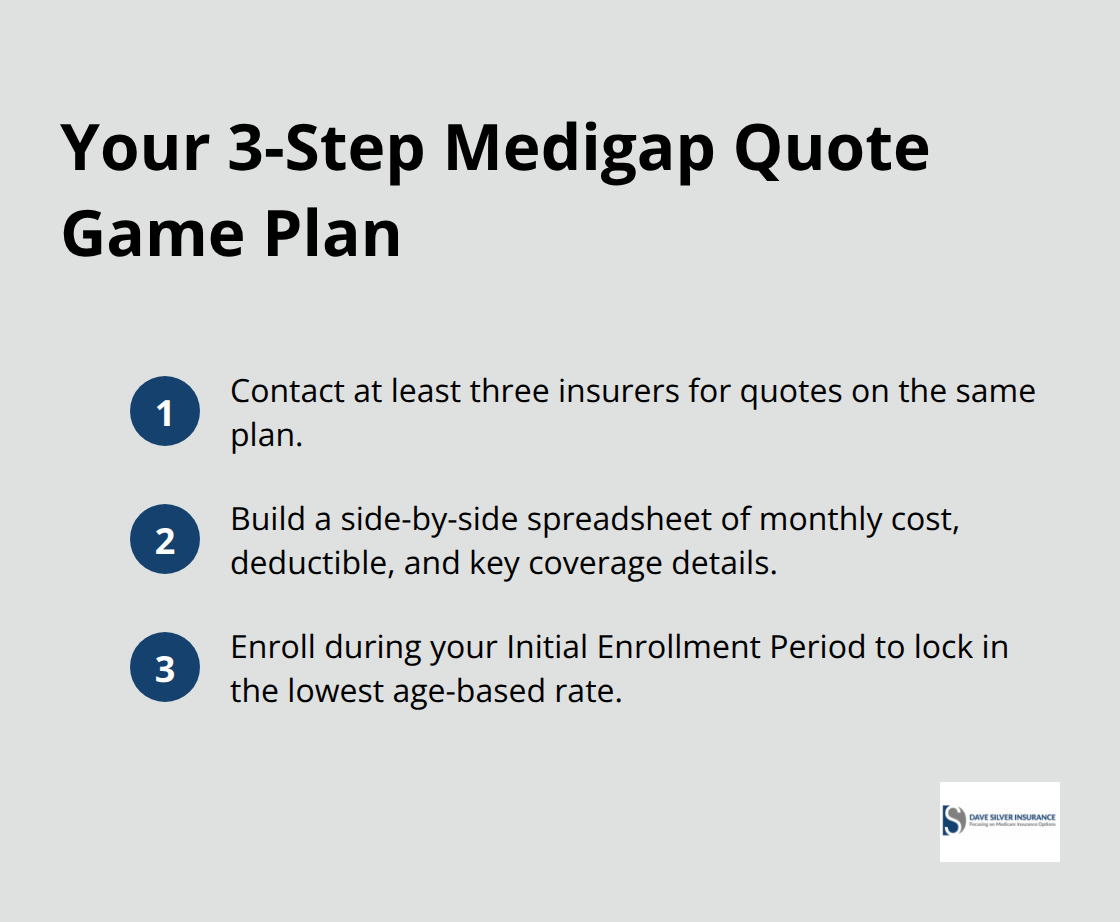
Comparing affordable Medigap quotes comes down to three concrete actions: contact at least three insurers for the same plan, create a side-by-side comparison of monthly costs and coverage details, and enroll during your Initial Enrollment Period to lock in the lowest rate. Waiting even one year past 65 permanently increases your premium by 10% or more, costing thousands over your lifetime. Your location and age determine what you’ll pay, so quotes that work for your neighbor won’t match your costs.
Your state’s specific Medigap rules matter more than most people realize, since regulations vary dramatically by location. Some states allow continuous enrollment flexibility while others enforce strict windows that trigger medical underwriting or late enrollment penalties if you miss them. Contact insurers directly or work with an agent who understands your state’s requirements before your enrollment window closes.
We at Dave Silver Insurance help people find affordable Medigap quotes that fit their health needs and budget, not just the cheapest option available. Our team works seven days a week to match you with personalized guidance on Medigap coverage and all Medicare parts. Schedule a consultation with our team to review your specific situation and lock in the right coverage.
Disclaimer: The information provided in this blog is for general informational purposes only and does not constitute legal, financial, or insurance advice. Coverage options, terms, and availability may vary. Please consult with a licensed professional for advice specific to your situation