

Medicare Open Enrollment runs from October 15 to December 7 each year, and getting it right matters. Missing this window can cost you thousands in penalties and leave you without coverage gaps you didn’t plan for.
We at Dave Silver Insurance have helped thousands of people navigate this process. A solid Medicare open enrollment checklist keeps you organized and prevents costly mistakes that many people make every single year.
When to Act on Medicare Open Enrollment
The 2025 Medicare Open Enrollment Period runs from October 15 through December 7, giving you time to make changes to your coverage. This window applies whether you’re already on Medicare or turning 65 this year. The Centers for Medicare & Medicaid Services reports that approximately 10.5 million people are eligible to make changes during this period, yet many wait until the final week, creating unnecessary stress and rushed decisions. Start your review in mid-October rather than late November-this gives you time to contact plans, compare options, and ask questions without pressure. The December 7 deadline is absolute. Any changes submitted after 11:59 p.m. Eastern Time won’t take effect until January 1, 2026, meaning you could face coverage gaps or overpay for unnecessary plans during the transition month.
Who Qualifies to Make Changes
You can make changes during Open Enrollment if you’re currently enrolled in a Medicare Advantage plan or a standalone prescription drug plan, or if you’re turning 65 and enrolling in Medicare for the first time. People already on Original Medicare plus a Medigap plan can switch Medigap coverage during this period, though switching away from Medigap without guaranteed issue rights exposes you to medical underwriting and potential denial based on pre-existing conditions. If you experience a qualifying life event like losing employer coverage, moving to a new state, or getting married, you may qualify for a Special Enrollment Period outside these dates-don’t assume you’re stuck waiting until next year if your circumstances change. The Social Security Administration data shows that roughly 2.2 million people turn 65 annually in the United States, and many miss their initial enrollment window, triggering permanent late-enrollment penalties that compound every year you delay.
The Real Cost of Missing Your Deadline
Penalties for late enrollment vary depending on which part of Medicare you miss. The Part B premium penalty is 10 percent per year of non-enrollment, calculated on the standard premium of $174.70 monthly as of 2024-someone who waits five years to enroll pays permanently higher premiums. Part D prescription drug penalties accumulate at 1 percent per month of delay multiplied by the national base beneficiary premium, which was $34.20 in 2024. A person who waits three years before enrolling in drug coverage pays an extra 36 percent on their premium permanently.
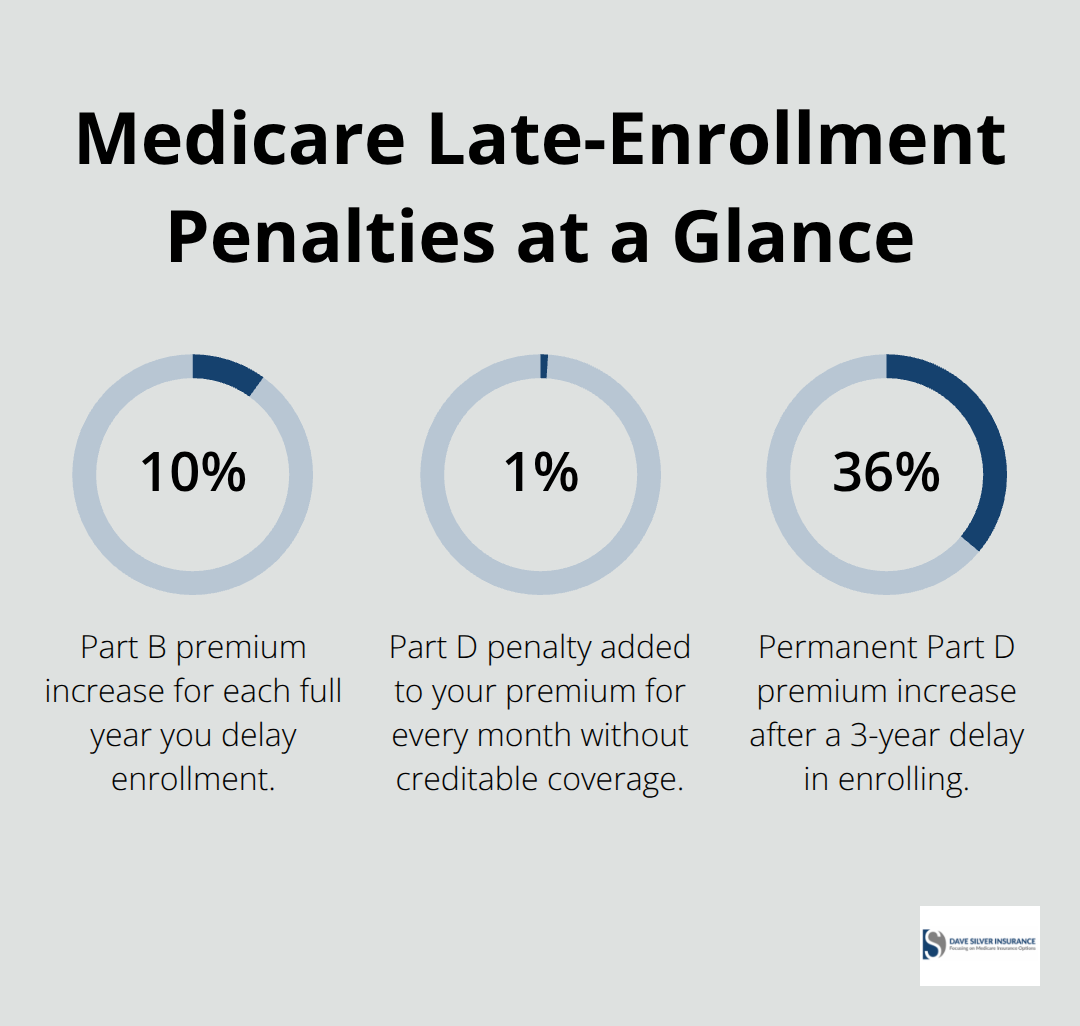
Medicare Advantage plans have no formal late-enrollment penalty, but missing the deadline means you cannot change plans until the following year, locking you into your current coverage even if it no longer fits your needs. These penalties don’t disappear; they follow you for life unless you qualify for a Special Enrollment Period, making procrastination far more expensive than spending a few hours now reviewing your options.
With your enrollment window and eligibility confirmed, the next step involves comparing the actual plans available to you.
Which Medicare Plan Actually Saves You the Most Money
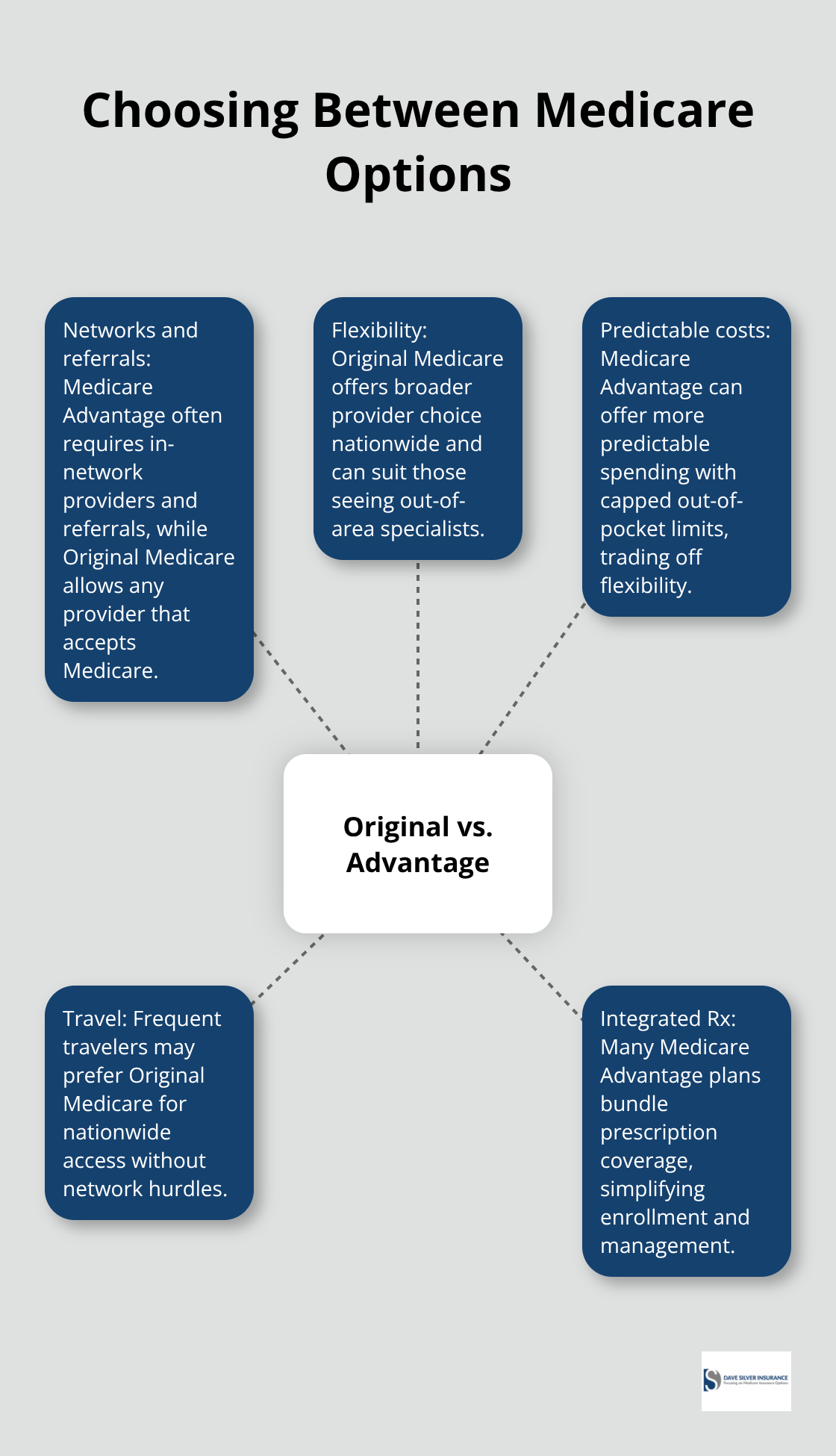
Original Medicare and Medicare Advantage represent fundamentally different approaches to coverage, and the right choice depends on your specific health situation and budget. Original Medicare covers hospital stays and doctor visits through Parts A and B, but leaves you responsible for 20 percent of doctor visit costs and all prescription drug expenses unless you add separate coverage. Medicare Advantage plans bundle hospital, doctor, and often prescription drug coverage into one monthly premium, capping your out-of-pocket costs at $9,250 for in-network services and $13,900 for combined services in 2026. The trade-off is that Medicare Advantage plans restrict you to in-network doctors and require referrals for specialists, whereas Original Medicare lets you see any provider accepting Medicare nationwide. Original Medicare works best if you travel frequently, see specialists outside your area, or prefer maximum flexibility. Medicare Advantage makes sense if you want predictable costs, don’t mind network restrictions, and value integrated prescription drug coverage without separate enrollment.
Prescription Drug Coverage Prevents Financial Disaster
Skipping Part D enrollment or choosing the cheapest plan available costs thousands of dollars annually. The average monthly cost for common medications like atorvastatin and metformin ranges from $15 to $45 when you have Part D coverage, compared to $40 to $150 without it, according to GoodRx pricing data. Your Part D plan’s formulary changes every January, meaning the drug tier and copay you paid last year might increase this year or disappear entirely. Compare your current medications against each plan’s formulary before enrolling-use the Medicare Plan Finder tool to see exact copays rather than guessing. If you take specialty medications for conditions like rheumatoid arthritis or hepatitis C, these often cost $2,000 to $15,000 monthly without insurance, making plan selection critical. Some plans offer $0 copays on insulin as of 2025, directly addressing the 7.5 million Medicare beneficiaries taking insulin according to the American Diabetes Association.
Medigap Plans Fill the Gaps Original Medicare Creates
Medigap insurance works alongside Original Medicare to cover the 20 percent coinsurance and deductibles that Medicare leaves you paying. Plan G, the most popular Medigap option, covers your Part B deductible and all coinsurance costs, meaning you pay nothing beyond your monthly Medigap premium for in-network services. Plan N costs roughly 20 to 30 percent less than Plan G monthly but requires small copays of $20 to $50 per doctor visit. Switching Medigap plans after your initial enrollment window closes triggers medical underwriting, and insurers can deny coverage or charge significantly higher premiums based on pre-existing conditions. Lock in your Medigap plan during your first six months of Medicare Part B enrollment when guaranteed issue protections apply-this timing matters more than most people realize. If you’re over 75 with multiple chronic conditions, the peace of mind from comprehensive Medigap coverage typically outweighs the premium cost compared to managing deductibles and coinsurance yourself.
How Plan Changes Affect Your Wallet Year After Year
Plan premiums, deductibles, and copays shift annually, and what worked last year may cost you significantly more this year. The Kaiser Family Foundation reports that Medicare Advantage premiums increased an average of 6 percent from 2024 to 2025, while some plans added new copays or removed coverage for certain medications. Your current plan might have dropped a pharmacy from its network, forcing you to pay higher out-of-pocket costs at your preferred location. Reviewing your plan’s Summary of Benefits and Coverage document (not just the premium) reveals these hidden changes before they hit your wallet. Many people assume their plan remains identical year to year and miss opportunities to switch to plans with lower costs or better drug coverage. Comparing plans takes roughly 30 to 45 minutes using the Medicare Plan Finder, yet this investment prevents overpaying by hundreds or thousands annually.
With your plan comparison complete, you’re ready to address the specific coverage gaps that catch most people off guard.
Common Medicare Enrollment Mistakes to Avoid
Plan Changes That Hit Your Wallet Every Year
Most people treat their Medicare plan as a set-it-and-forget-it decision, but this approach costs them hundreds annually. Your plan’s formulary, network pharmacies, and copay structure shift every January, sometimes dramatically. The prescription drug you paid $15 for last year might jump to $75 this year because the plan moved it to a higher tier or dropped it entirely. Your preferred doctor might leave the network, forcing you to either switch providers or pay out-of-network rates.
The Kaiser Family Foundation found that roughly 60 percent of Medicare Advantage plans change their drug formularies annually, yet fewer than 40 percent of beneficiaries actually review these changes before their coverage starts. This gap between plan changes and beneficiary awareness creates unnecessary out-of-pocket costs that proper review prevents. Spend 45 minutes comparing your current plan’s Summary of Benefits and Coverage against two or three alternatives using the Medicare Plan Finder tool.
Check whether your medications appear on the new formulary at the same tier, whether your pharmacy network remains stable, and whether your doctors still participate in-network. If your plan’s premium stayed the same but your copays increased or your drug coverage worsened, switching plans immediately saves money. Many people discover these mistakes mid-year when they pick up a prescription and face a surprise copay, but enrollment has already closed.
Dental, Vision, and Hearing Coverage Gaps
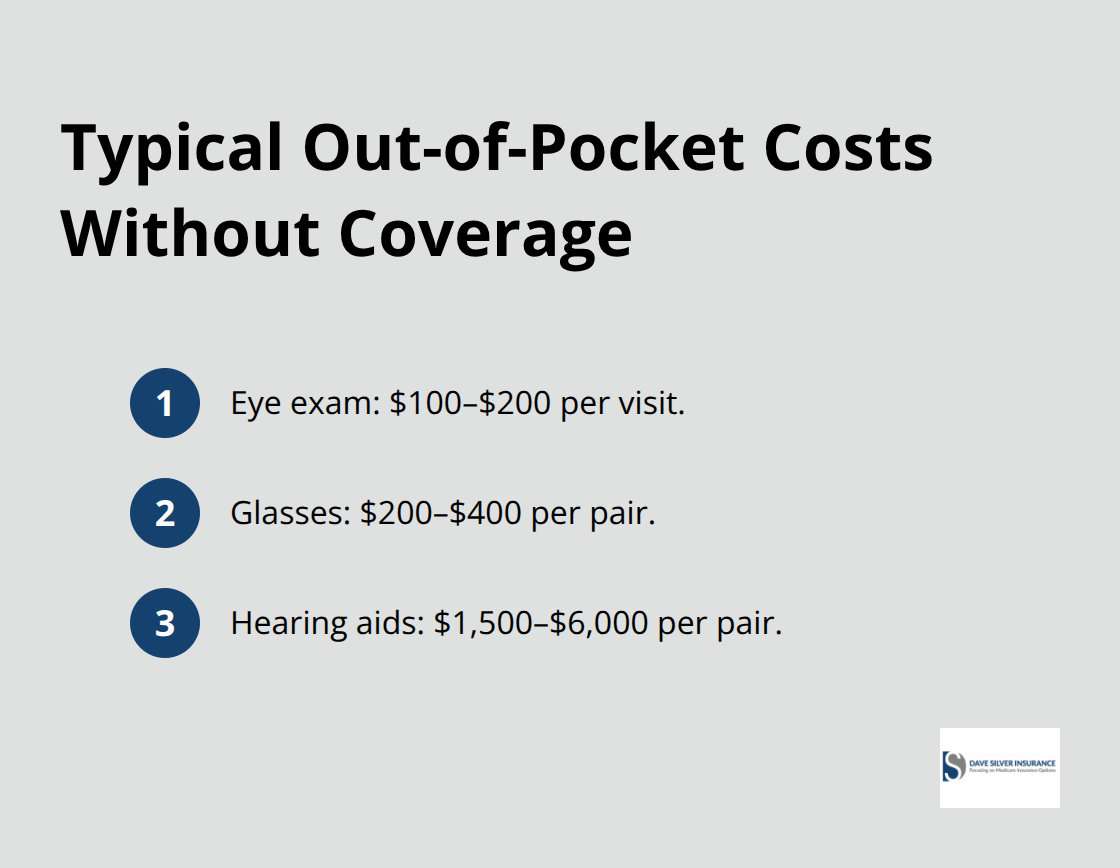
Dental, vision, and hearing coverage represent a major gap that catches Medicare beneficiaries off guard. Original Medicare covers none of these services, which means you pay 100 percent out-of-pocket for everything from eye exams to hearing aids unless you add separate coverage. A basic eye exam costs $100 to $200, glasses run $200 to $400, and hearing aids range from $1,500 to $6,000 per pair according to the American Speech-Language-Hearing Association.
Medicare Advantage plans offer these benefits as optional add-ons, though coverage varies significantly by plan and region. Some plans cover routine dental cleanings twice yearly with zero copay, while others require you to pay the first $50 or $100 before coverage kicks in. Vision coverage might include one eye exam annually and a $100 allowance toward glasses or contacts. Hearing benefits often cover one hearing aid evaluation yearly and a partial subsidy toward devices, though the subsidy rarely covers the full cost.
The mistake most people make is assuming their Medicare Advantage plan automatically includes these benefits, then discovering gaps only after they need care. During open enrollment, download your plan’s evidence of coverage document and search specifically for dental, vision, and hearing sections. If your current plan offers minimal coverage in these areas and you require regular care, switching to a plan with better benefits often costs less than paying entirely out-of-pocket. A person needing annual eye exams, glasses every two years, and routine dental cleanings saves $400 to $600 yearly by selecting a plan with comprehensive vision and dental coverage instead of skipping coverage altogether.
Special Enrollment Periods You Might Qualify For
Life events that trigger Special Enrollment Periods represent an enrollment mistake people overlook entirely. Moving to a different state, losing employer coverage, getting married, or experiencing another qualifying event lets you change plans outside the standard October 15 to December 7 window, but only if you act within 60 days of the event. Most people don’t realize this option exists and assume they’re locked into their current plan until next year’s open enrollment.
If you retire and lose your employer health insurance, you have 60 days to enroll in Medicare or a Medicare plan without waiting for October. If you move from Florida to New York, your Medicare Advantage plan might not follow you, forcing an immediate change. If you get married and your spouse turns 65, they can enroll in Medicare outside the standard period. The Social Security Administration handles Special Enrollment Period documentation, and you’ll need proof of the qualifying event such as a job termination letter or moving documentation.
Contact an insurance advisor immediately after a qualifying event rather than waiting weeks, since the 60-day clock starts the moment the event occurs. Delaying contact means you might miss the deadline and face coverage gaps or forced continuation of a plan that no longer serves your location or health needs.
Final Thoughts
Medicare open enrollment decisions stick with you for an entire year, which is why you need to act now rather than procrastinate. Your Medicare open enrollment checklist should include verifying your medications against each plan’s formulary, confirming your doctors remain in-network, and checking dental and vision coverage. The gap between knowing what to do and actually doing it is where most people stumble, leaving thousands of dollars on the table through overpayment or coverage gaps.
The complexity of Medicare isn’t going away, but you don’t have to navigate it alone. We at Dave Silver Insurance have spent over 17 years helping people move past confusion and into confident decisions, and our team works seven days a week to provide personalized guidance on Medicare Part A, B, C, and D, plus Medigap Insurance options tailored to your specific health and financial situation. Schedule a consultation with Dave Silver Insurance to get recommendations based on your actual medications, doctors, and budget rather than guessing which plan saves you the most money.
The December 7 deadline arrives faster than you expect, and taking action this week prevents the regret of overpaying for coverage that doesn’t fit your needs or missing deadlines that trigger permanent penalties. Your Medicare decision deserves the same attention you’d give any major financial choice. Contact us today to move forward with confidence.
Disclaimer: The information provided in this blog is for general informational purposes only and does not constitute legal, financial, or insurance advice. Coverage options, terms, and availability may vary. Please consult with a licensed professional for advice specific to your situation