

Medicare Part B covers doctor visits, preventive care, and outpatient services-but understanding what’s actually included can be confusing. We at Dave Silver Insurance created this Medicare Part B overview to cut through the complexity and show you exactly what you’re paying for.
This guide breaks down your benefits, explains enrollment deadlines, and reveals how to maximize your coverage. By the end, you’ll know whether Part B alone is right for you or if you need additional plans.
Medicare Part B Eligibility, Enrollment, and Costs
Who Qualifies for Medicare Part B
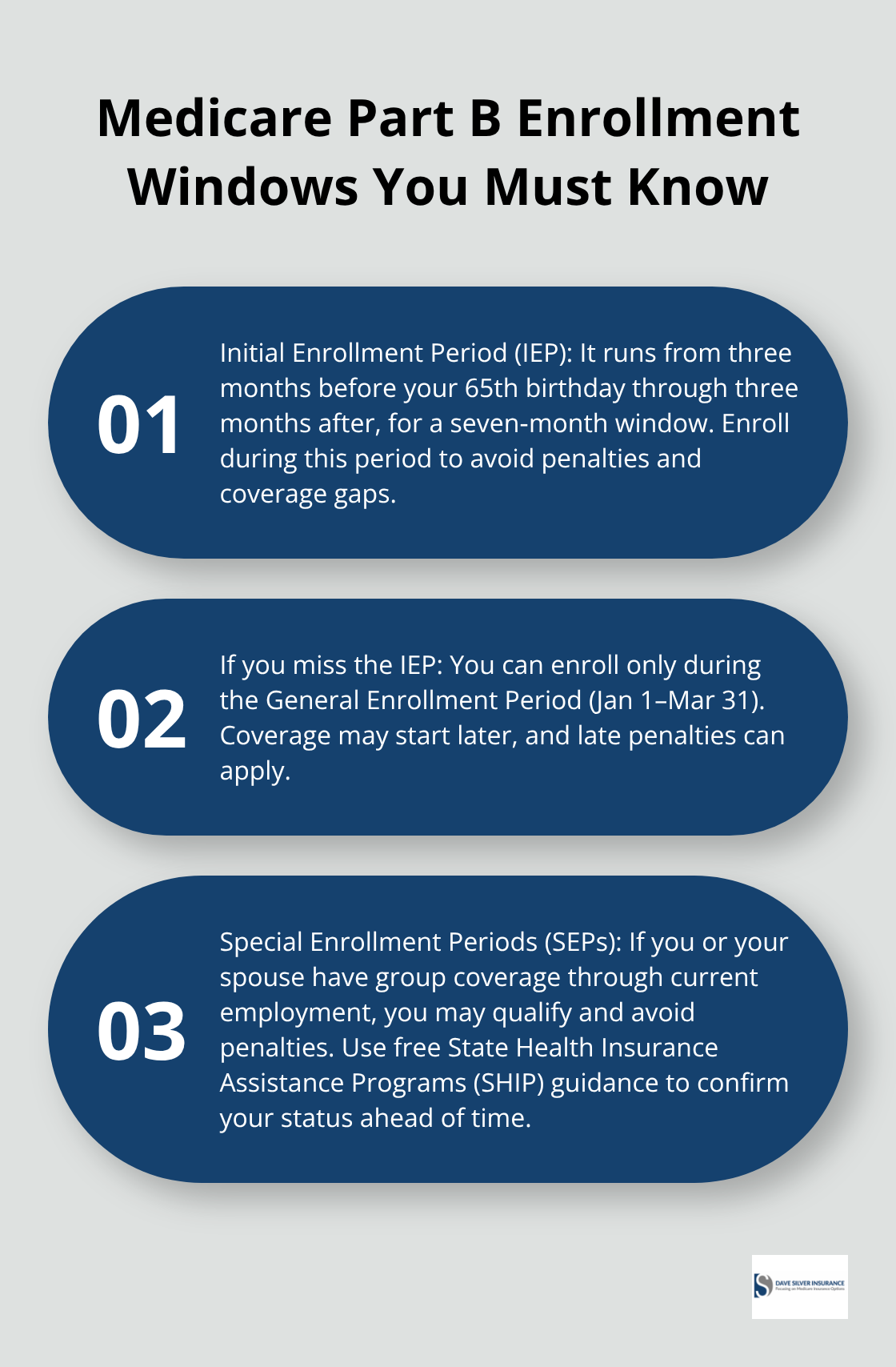
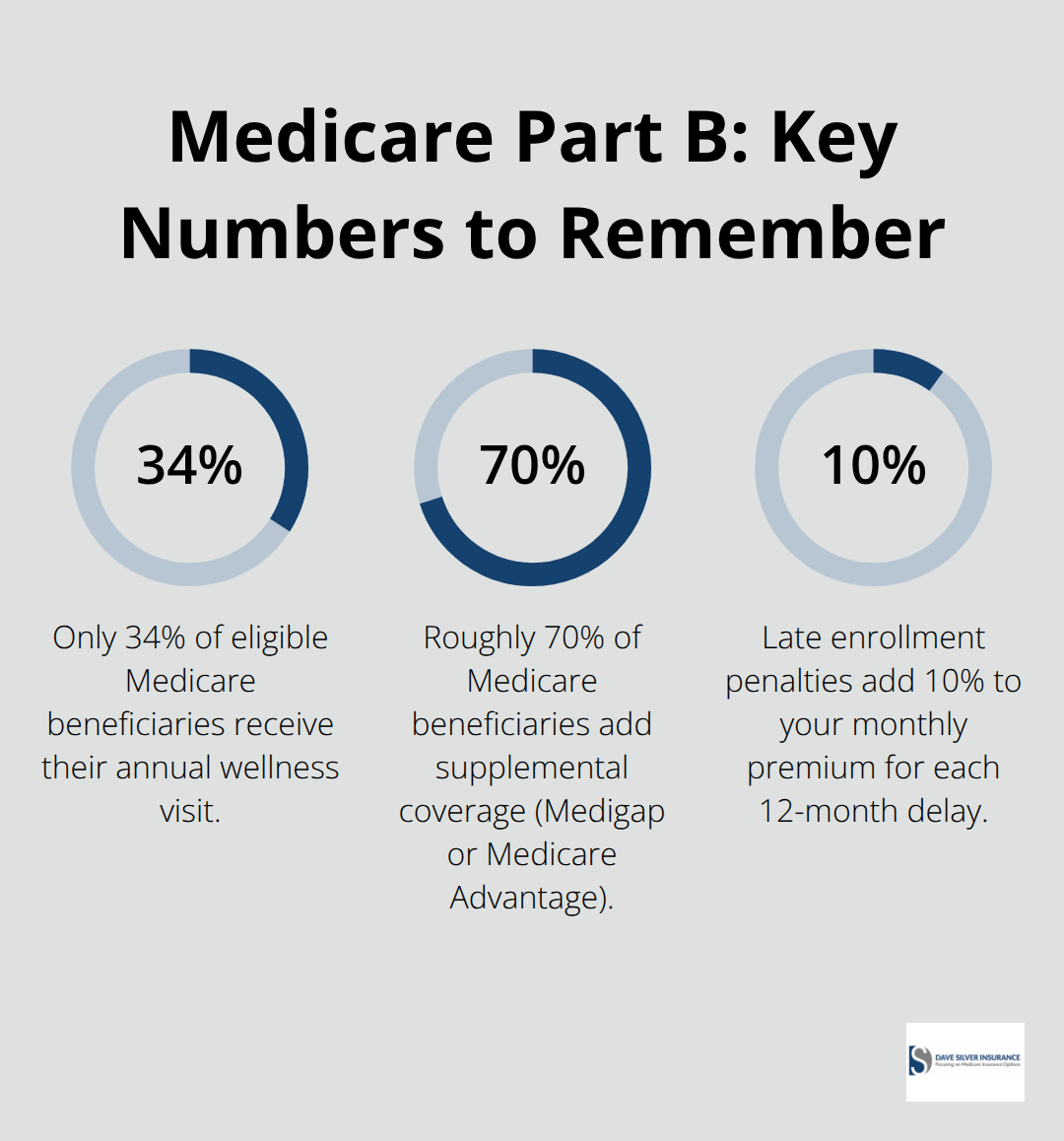
Medicare Part B eligibility starts at age 65 for U.S. citizens and permanent residents who have lived in the country for at least five years. Automatic enrollment occurs if you already collect Social Security benefits, but you must sign up manually during your Initial Enrollment Period if you haven’t claimed benefits yet. Part B covers your doctor visits, preventive screenings, lab work, and outpatient hospital services-missing your enrollment deadline can cost you significantly. Late enrollment penalties add 10% to your monthly premium for each 12-month period you delay, and these penalties remain with you permanently.
Your Enrollment Window and Deadlines
Your Initial Enrollment Period runs from three months before your 65th birthday through three months after the month you turn 65, giving you a seven-month window total. If you miss this window, you can only enroll during the General Enrollment Period from January 1 through March 31 each year, though penalties apply if you wait. Some people qualify for Special Enrollment Periods if they have group health coverage through current employment or if a spouse’s plan covers them, which waives the penalties entirely. State Health Insurance Assistance Programs help you navigate these deadlines without charge, and confirming your enrollment status three months before your birthday prevents surprises.
The 2025 Part B monthly premium is $188.20 for most beneficiaries, though high-income earners pay more through Income-Related Monthly Adjustment Amounts that can reach $560 monthly depending on your tax filing status from two years prior.
Premium Costs and Payment Flexibility
Most people pay Part B premiums directly from their Social Security checks, but you can choose to pay Medicare monthly or quarterly if you prefer a different arrangement. The annual Part B deductible for 2025 sits at $240, meaning you pay this amount out-of-pocket before Medicare starts covering services at 80%. After you meet your deductible, you typically pay 20% of approved charges for doctor visits, specialist consultations, and outpatient procedures, while preventive services like annual wellness visits and cancer screenings receive full coverage with no copayment. Income-Related Monthly Adjustment Amounts apply if your modified adjusted gross income exceeds $97,000 for single filers or $194,000 for married couples filing jointly, pushing some seniors into higher premium brackets without warning. Understanding this income threshold matters because tax-free interest, municipal bonds, and non-taxable Social Security income count toward these thresholds, potentially triggering surcharges you didn’t anticipate.
What Part B Actually Covers
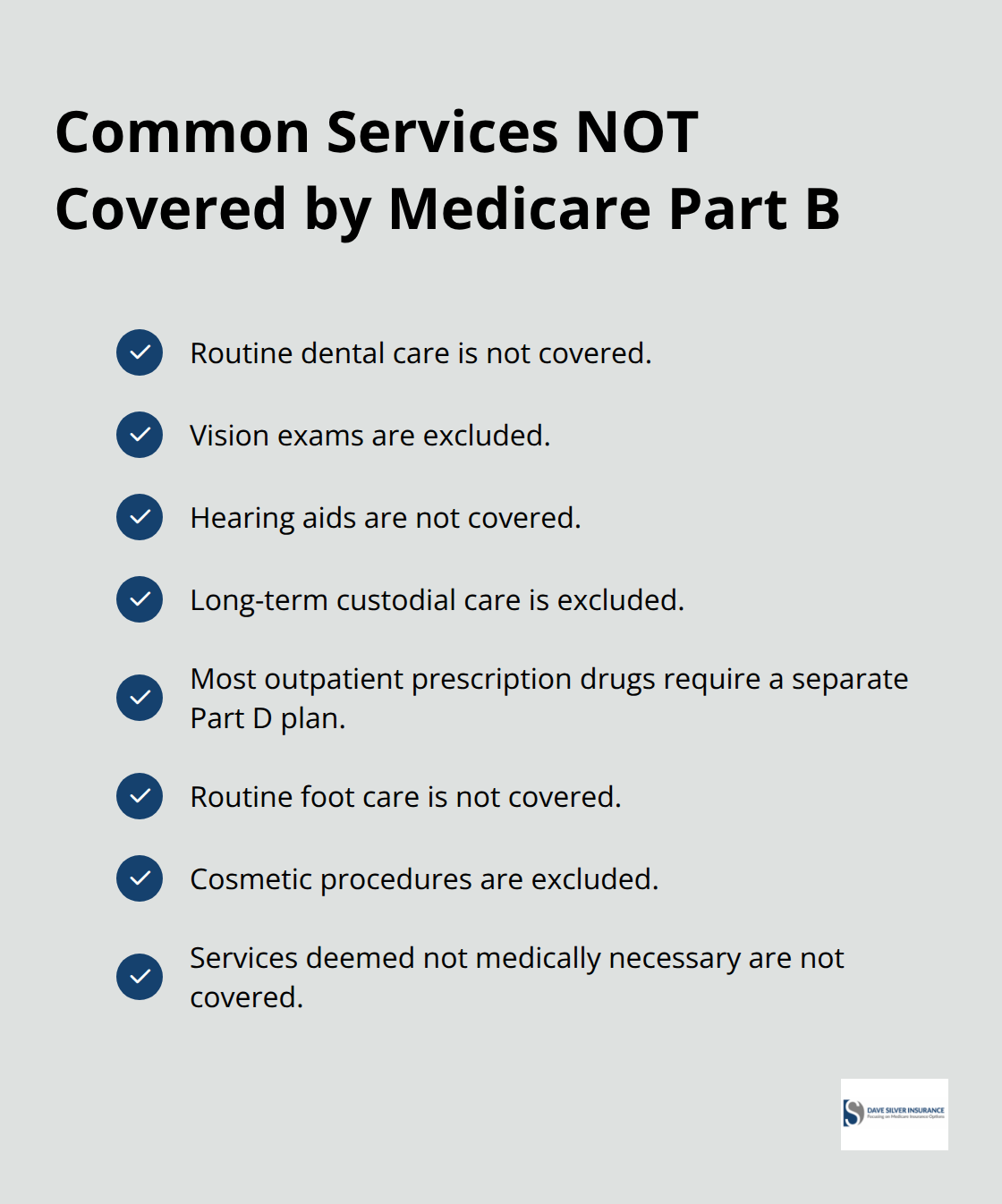
Part B covers medically necessary services that your doctor orders, including office visits, emergency room care, and diagnostic tests. Preventive services receive special treatment-Medicare covers them at no cost when you visit an in-network provider, including your annual wellness visit, cancer screenings, and cardiovascular disease screenings. Outpatient hospital services, ambulatory surgery centers, and durable medical equipment like wheelchairs and oxygen supplies all fall under Part B coverage. However, Part B does not cover routine dental care, vision exams, hearing aids, or long-term care, which is why many beneficiaries add supplemental coverage. Understanding these boundaries helps you plan for additional insurance needs and avoid unexpected out-of-pocket costs when you need specific services.
What Part B Actually Pays For
Doctor Visits and Preventive Care
Medicare Part B covers medically necessary services that your doctor orders, and knowing the specific breakdown prevents costly surprises. Doctor visits to your primary care physician or specialists fall under Part B coverage, with you paying 20% of the approved amount after meeting your annual deductible. Preventive services receive full coverage at no cost when you use an in-network provider, including your annual wellness visit, colorectal cancer screenings, mammograms, and cardiovascular disease screenings through electrocardiograms or stress tests. The Centers for Medicare and Medicaid Services reports that preventive services save money over time, yet only 34% of eligible Medicare beneficiaries receive their annual wellness visit, leaving significant preventive care on the table.
Diagnostic Tests and Outpatient Services
Lab work and diagnostic imaging like X-rays and ultrasounds are covered, though some advanced imaging such as MRIs require prior authorization from Medicare to avoid unexpected denials. Outpatient hospital services, including emergency room visits and same-day surgery at ambulatory surgery centers, count as Part B benefits. Durable medical equipment such as wheelchairs, walkers, oxygen concentrators, and diabetic testing supplies receive coverage at 80% after your deductible, though suppliers must be Medicare-approved to qualify.
What Part B Excludes
Part B explicitly excludes routine dental care, vision exams, hearing aids, and long-term custodial care, which explains why roughly 70% of Medicare beneficiaries add supplemental coverage through Medigap or Medicare Advantage plans. Prescription drugs fall outside Part B unless administered as part of an outpatient hospital visit, making Part D enrollment essential for medication costs. Routine foot care, cosmetic procedures, and services deemed not medically necessary receive no coverage.
Managing Out-of-Pocket Expenses
Out-of-pocket expenses accumulate quickly without additional insurance because Part B requires you to pay the annual deductible plus 20% coinsurance on most services, potentially reaching thousands annually for chronic conditions requiring frequent specialist visits. If you have significant out-of-pocket medical expenses, exploring Medigap plans makes financial sense since they cover your coinsurance and deductible amounts, capping your annual expenses predictably. These supplemental plans transform your healthcare costs from unpredictable to manageable, allowing you to budget with confidence. The choice between Medigap and Medicare Advantage depends on your health needs, preferred doctors, and financial situation-factors that shift as your circumstances change.
How to Maximize Your Medicare Part B Benefits
Choose In-Network Providers to Control Costs
In-network providers are your financial lifeline with Part B because Medicare pays them directly at approved rates, leaving you responsible only for your deductible and 20% coinsurance. Out-of-network providers can bill you for amounts above Medicare’s approved fee, a practice called balance billing that can add hundreds to your annual costs. The Medicare.gov provider search tool lets you verify in-network status before scheduling appointments-a five-minute step that prevents billing surprises. If your preferred doctor isn’t in-network, call their office and ask about their Medicare participation status, since some physicians switch networks annually.
Specialists are where out-of-network costs hurt most. A cardiologist visit to an out-of-network provider might cost $400 when approved by Medicare, but the provider bills $600, leaving you responsible for that $200 difference. Preventive services offer full coverage only with in-network providers, so schedule your annual wellness visit and cancer screenings at participating facilities to eliminate copayments entirely.
Understand Your Deductible and Coinsurance Structure
Your $240 annual deductible gets met quickly if you see specialists or need diagnostic imaging. After you meet it, you pay 20% coinsurance on every subsequent visit, and these costs add up fast. Someone managing diabetes with quarterly endocrinologist visits, lab work, and eye exams easily reaches $2,000 to $3,000 in annual out-of-pocket costs. Part B alone leaves significant gaps in coverage for people with chronic conditions.
This financial reality explains why roughly 70% of Medicare beneficiaries add supplemental coverage through either Medigap or Medicare Advantage. Your deductible and coinsurance structure makes additional insurance a practical necessity rather than an optional luxury for most beneficiaries.
Compare Medigap and Medicare Advantage Plans
Medigap plans cover your Part B deductible and coinsurance amounts, transforming unpredictable healthcare costs into fixed monthly premiums (though these plans cost $100 to $300 monthly depending on your age and location). Medicare Advantage plans cap your out-of-pocket expenses at specific amounts, typically between $3,000 and $7,000 annually, but they restrict you to in-network providers and require prior authorization for specialists.
The choice between these options depends on whether you value predictability and provider flexibility (favoring Medigap) or lower monthly premiums with managed care (favoring Advantage). Your health needs should drive this decision rather than cost alone, since chronic conditions benefit from Medigap’s predictable structure while healthy beneficiaries may prefer Advantage’s lower premiums.
Final Thoughts
Medicare Part B covers essential healthcare services, but the coverage gaps are real and expensive. This Medicare Part B overview shows that Part B alone leaves you vulnerable to significant out-of-pocket costs, especially if you manage chronic conditions or see specialists regularly. The $240 annual deductible plus 20% coinsurance structure means your healthcare expenses remain unpredictable without supplemental coverage. Someone with diabetes, heart disease, or arthritis easily spends $2,000 to $3,000 annually on Part B services alone.
Enrollment deadlines carry permanent financial consequences through late penalties, making timing critical. Missing your Initial Enrollment Period costs you 10% extra on your monthly premium forever, a penalty that compounds over years of retirement. Your seven-month enrollment window around age 65 is your only penalty-free opportunity to sign up. Adding Medigap or Medicare Advantage transforms these variable costs into manageable, predictable expenses that fit your budget.
We at Dave Silver Insurance help beneficiaries navigate these decisions with personalized guidance tailored to individual health and financial situations. Schedule a consultation with our Medicare experts to review your specific situation and determine whether Part B alone meets your needs or if additional coverage makes financial sense. Your healthcare decisions deserve more than generic information.
Disclaimer: The information provided in this blog is for general informational purposes only and does not constitute legal, financial, or insurance advice. Coverage options, terms, and availability may vary. Please consult with a licensed professional for advice specific to your situation