

Medicare Open Enrollment happens once a year, and scammers know it. They’re counting on confusion and urgency to steal your personal information and money during this critical window.
At Dave Silver Insurance, we’ve seen the damage these scams cause. This guide walks you through the most common Medicare open enrollment scams, how to spot them, and exactly what to do to protect yourself.
The Three Scams Targeting You Right Now
Scammers attack hard during Medicare open enrollment. They use three main tactics, and they refine them constantly. Federal Trade Commission reports that Medicare fraud spikes during open enrollment season, with scammers specifically targeting beneficiaries during this period. Understanding exactly how these scams work gives you the best chance of avoiding them.
Fake Medicare Calls and Impersonators
Unsolicited phone calls claiming to be from Medicare or your health plan represent the most common scam during open enrollment. These callers use professional language, possess some of your personal data already, and create artificial urgency by claiming you need a new or updated Medicare card. Real Medicare cards arrive free and automatically in the mail. If someone calls you out of the blue asking for your Medicare number, Social Security number, or bank details, hang up immediately. Caller ID cannot verify legitimacy because scammers spoof phone numbers easily.

Instead, hang up and call 1-800-MEDICARE (1-800-633-4227) directly to verify whether the call was legitimate. This two-minute step protects you completely. Legitimate insurance agents may contact you, but only if you requested information first or maintain an existing relationship with them. Door-to-door visits about Medicare plans fall outside official Medicare outreach, so treat any in-person solicitation with extreme suspicion.
Emails, Texts, and Fake Enrollment Forms
Phishing emails and texts that mimic official communications sometimes use Medicare logos and direct you to fake websites designed to harvest your personal information. These messages often claim you need to update your information, verify your enrollment, or claim a benefit. You should never click any links in suspicious emails or texts about Medicare plans. Instead, navigate directly to Medicare.gov or your plan’s official website by typing the address yourself. Counterfeit mailers and fake enrollment forms also circulate during open enrollment, requesting sensitive information under the guise of official Medicare documents. Before you respond to any mailed enrollment form, verify it comes from your current plan provider using the phone number on your actual plan card. High-pressure sales tactics that force you to act immediately signal a scam. Legitimate Medicare enrollment allows you time to review options. If an agent or email insists you must decide today or lose coverage, treat it as a scam. Scammers use limited-time offers and guaranteed savings claims without reviewing your actual health and financial situation. Real Medicare guidance takes time and considers your specific needs.
Why Scammers Target Open Enrollment
Open enrollment creates the perfect storm for fraud. The surge of legitimate marketing activity masks scammer tactics, and beneficiaries feel rushed to make decisions. Scammers exploit this window because they know you’re actively thinking about your coverage and may be more willing to share information. They count on confusion about which calls and emails are real. The combination of urgency, official-sounding language, and your own legitimate need to review options makes you vulnerable. Recognizing this timing helps you stay alert and question unsolicited contact more aggressively.
Now that you understand the specific scams targeting you, the next section shows you exactly which red flags appear before you fall victim.
What Red Flags Show Up Before the Scam Strikes
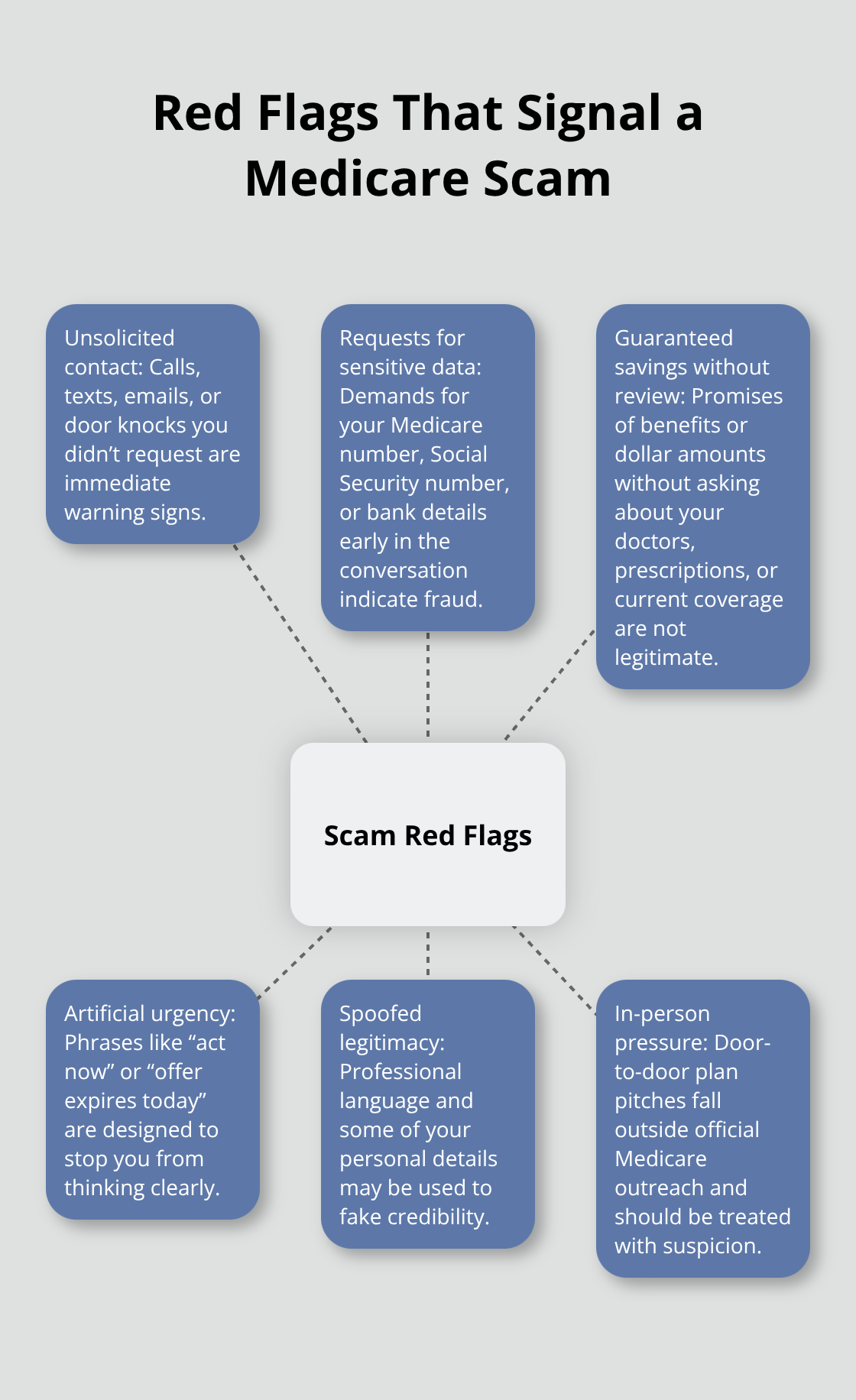
Scammers telegraph their intentions if you know what to watch for. The moment someone contacts you without your request, your guard should rise immediately. Unsolicited calls about Medicare plans are not normal. Medicare will never call you first to sell a plan, ask for payment, or request your personal information.
Unsolicited Contact Signals Danger
If a caller claims you need to update your Medicare card, verify the claim by hanging up and calling 1-800-MEDICARE directly. This two-minute step stops fraud completely. Door-to-door visits about Medicare represent another immediate red flag. Medicare does not conduct in-person outreach at your home, so anyone showing up at your door claiming to represent Medicare or pushing you toward a specific plan operates outside legitimate channels.
Licensed insurance agents may contact you, but only if you initiated the conversation first. If someone arrives at your door unsolicited, politely decline and close the door. Do not let them inside, do not accept any documents they offer, and do not engage with their pitch.
Requests for Sensitive Information Arrive Too Fast
The second major warning sign appears when anyone asks for sensitive information before you have had time to research them. Scammers request your Medicare number, Social Security number, or bank details within the first few minutes of contact. Real Medicare enrollment does not work this way. Your current plan provider already possesses your information.
If an agent you did not call asks for these details immediately, that is a scam. Hang up. Scammers count on your confusion about what information is safe to share. They use professional language and may already possess some of your personal data, which creates false credibility.
This tactic pressures you to act before you think clearly.
Guaranteed Savings Without Your Health Details
Watch for guaranteed savings claims presented without reviewing your actual health situation. Scammers promise specific dollar amounts or claim you qualify for benefits without asking about your medications, doctors, or current coverage. Real Medicare guidance requires understanding your specific needs. A legitimate agent will ask detailed questions about your prescriptions, preferred hospitals, and specialists before recommending a plan.
If someone skips this step and guarantees savings anyway, they are lying. They have no way to know whether a plan fits your situation without this information.
Artificial Urgency Demands Immediate Action
High-pressure language demanding immediate action signals fraud as well. Phrases like “act now,” “limited-time offer,” or “this deal expires today” are classic scammer tactics. Legitimate Medicare plans do not disappear overnight. You have time to compare options, ask questions, and make an informed decision.
If an agent insists you must enroll right now or lose coverage, treat that urgency as a serious red flag and end the conversation. Scammers create false deadlines because they know you will question their offer if you have time to think. These red flags appear consistently across scams, which means you can spot trouble before it costs you money or exposes your identity. The next section shows you exactly how to protect yourself when you encounter these warning signs.
How to Verify and Protect Your Information
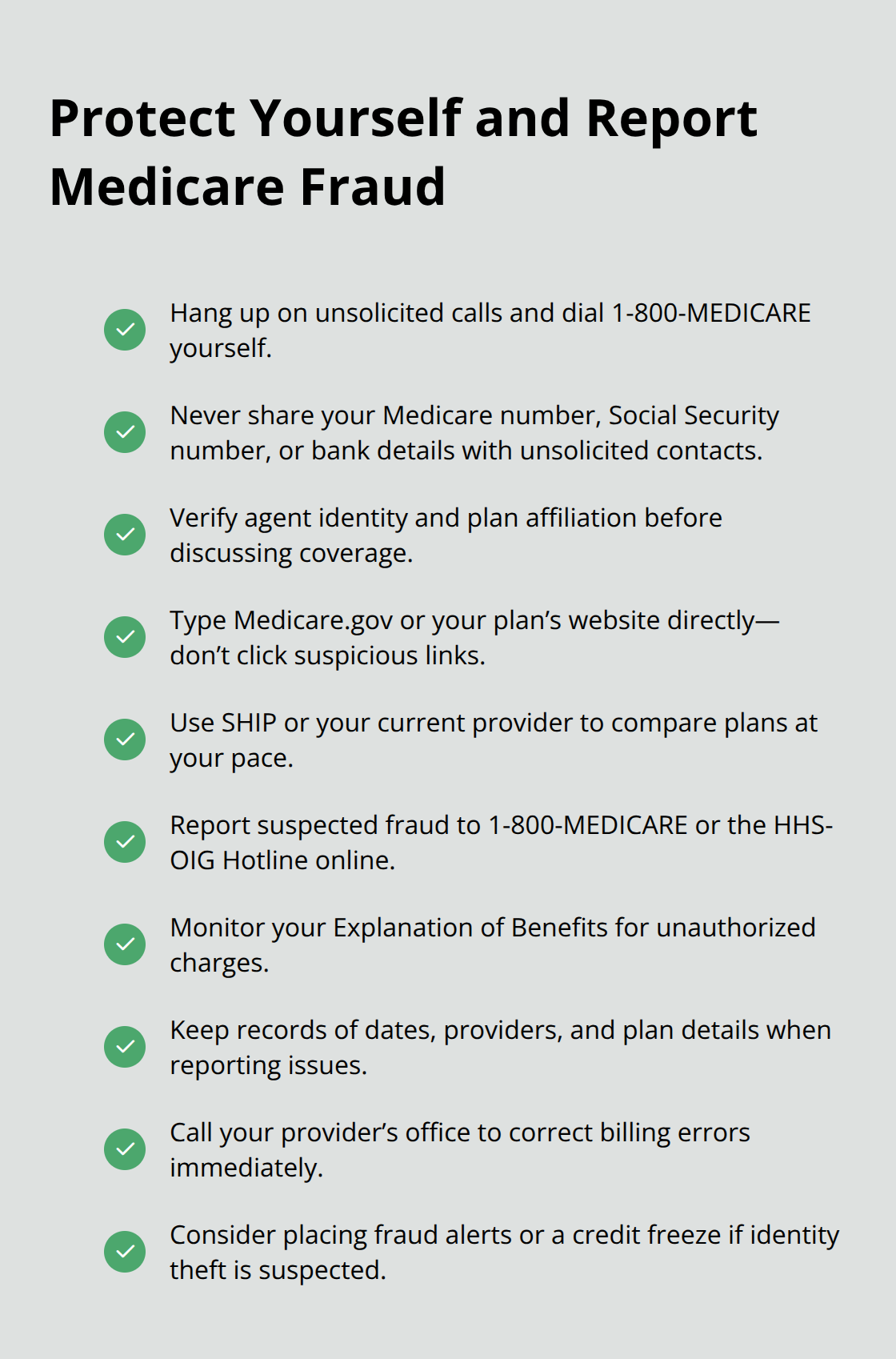
Hang up immediately if someone calls you about Medicare without your request, then call 1-800-MEDICARE directly to verify whether the contact was legitimate. This single action stops most scams cold. The HHS-OIG Hotline receives thousands of fraud complaints annually, and unsolicited calls rank among the most reported scams during open enrollment.
Never Share Sensitive Information With Unsolicited Callers
You should never provide your Medicare number, Social Security number, or bank details to anyone who contacted you first. Real Medicare representatives will not ask for this information during unsolicited calls. Your current plan already has your Medicare number on file, so any agent requesting it immediately operates a scam. If you must share sensitive information, you initiate the call using the phone number on your Medicare card or from Medicare.gov.
Scammers possess some of your personal data already, which creates false credibility. Professional-sounding language and partial information about you should not lower your guard. The moment someone asks for sensitive details before you have verified their identity, you should end the conversation immediately.
Verify Legitimate Agent Contact
Licensed insurance agents may contact you legitimately, but only if you requested information first or maintain an existing relationship with them. These agents must clearly disclose which plan they represent and cannot pressure you into immediate enrollment. If an agent claims you must decide today to avoid losing coverage, that pressure tactic signals fraud.
Real Medicare enrollment allows you time to review options, compare plans, and consult trusted sources like your State Health Insurance Assistance Program before making any changes. You should work directly with your current plan provider using the phone number on your plan card when you decide to make changes during open enrollment. This approach eliminates the risk of contacting a scammer posing as your plan.
Take Time to Compare Plans and Seek Trusted Advice
You should take your time comparing plans and seeking trusted advice from SHIP or your current provider rather than accepting unsolicited offers. Do not let anyone rush your decision. Scammers create false deadlines because they know you will question their offer if you have time to think.
Report Fraud Immediately and Monitor Your Statements
If you suspect fraud has already occurred, you should report it to 1-800-MEDICARE or to the HHS-OIG Hotline online, where you can file complaints about Medicare fraud, waste, and abuse across all HHS programs. Have ready your receipts, statements from providers, dates of service, and details about any plan you joined when you report suspicious activity. The more specific information you provide, the better equipped investigators are to stop the scammer from targeting other beneficiaries.
Medical identity theft is serious, and detecting it early prevents thousands in fraudulent charges. You should check your Medicare Explanation of Benefits regularly and compare the dates and services with your own records to catch unauthorized charges. If a charge seems incorrect, you should call your provider’s office to fix it before the scammer causes further damage.
Final Thoughts
Unsolicited calls, phishing emails, and door-to-door visits exploit the confusion that Medicare open enrollment creates. You now understand how scammers attack, which red flags signal danger, and exactly how to protect yourself from Medicare open enrollment scams. Hang up on unsolicited contact, verify through official channels, and never share your Medicare number, Social Security number, or bank details with anyone who contacts you first.
Report suspicious activity immediately to 1-800-MEDICARE or the HHS-OIG Hotline online so investigators can stop scammers from targeting other beneficiaries. Medical identity theft causes serious financial damage, so catching fraud early prevents thousands in unauthorized charges. Your State Health Insurance Assistance Program offers free, unbiased guidance during open enrollment without sales pressure or hidden agendas.
We at Dave Silver Insurance help you navigate Medicare enrollment safely with personalized recommendations on Part A, B, C, and D coverage options. Our team answers your questions seven days a week and helps you find the right coverage without falling victim to scams. Contact Dave Silver Insurance to get expert support during open enrollment and protect yourself while making confident decisions about your Medicare coverage.