

Turning 65 doesn’t mean you have to stop working. Many people continue their careers past this milestone, but work after Medicare eligibility creates real complications with enrollment, benefits, and taxes.
At Dave Silver Insurance, we’ve seen firsthand how working longer can trigger unexpected penalties and premium increases if you don’t understand the rules. This guide walks you through exactly what happens to your Medicare when you keep working.
How Working Past 65 Affects Your Medicare Enrollment
The 65-Year-Old Enrollment Deadline That Doesn’t Wait
The moment you turn 65, Medicare starts its clock on enrollment deadlines, and working past this age doesn’t pause it. If you have group health coverage through your employer, you might think you can skip Medicare enrollment and address it later. This assumption costs real money. The Social Security Administration states that for every 12-month period you delay Part B enrollment without qualifying coverage, you pay a 10 percent penalty on your premium for life.
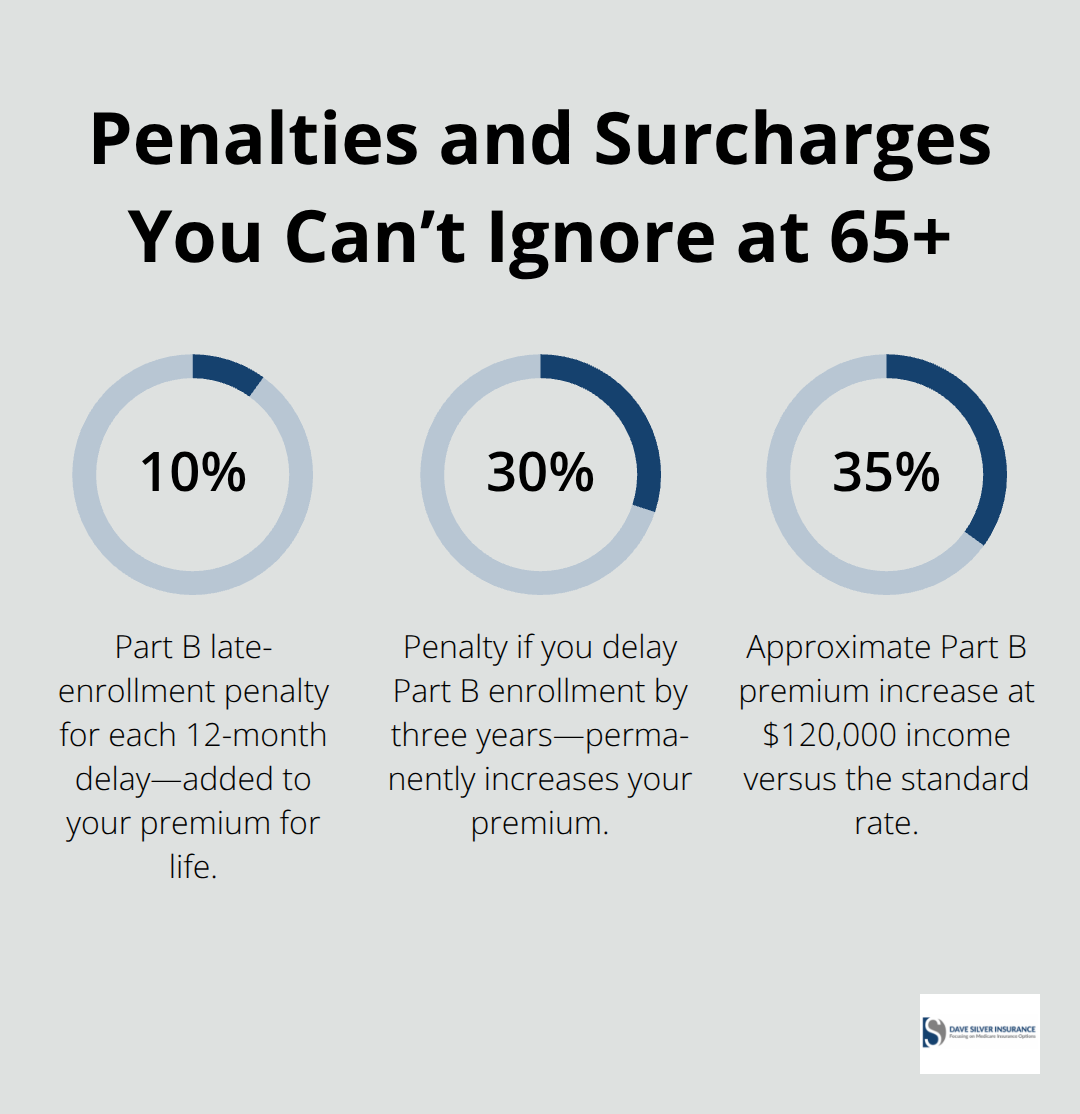
That penalty sticks with you permanently, not just for a few years.
Someone who delays Part B enrollment by three years pays a 30 percent penalty forever. In 2026, the standard Part B premium sits around $185 monthly. A 30 percent penalty adds approximately $55 to your bill every month for the rest of your life. Over a decade, that’s $6,600 in additional costs that you’ll never recover.
Creditable Coverage Doesn’t Protect Part A
Your employer group health plan matters here, but only if it qualifies as creditable coverage. Creditable coverage means your plan covers at least as much as Medicare Part A and Part B combined. Many employers offer plans that technically qualify, but the coverage details vary significantly. The Centers for Medicare and Medicaid Services requires your employer to send you a notice explaining whether your coverage qualifies, though not all employers follow this requirement consistently.
If your employer coverage qualifies, you can delay Medicare Part B without penalty. Part A enrollment, however, is mandatory at 65 if you receive Social Security benefits, regardless of your employment status or coverage situation. This distinction matters enormously when you stop working.
The Coverage Gap That Triggers Retroactive Penalties
Your employer coverage typically ends on your last day of employment or at the end of that month. If Medicare Part B hasn’t been activated by then, you face a gap in coverage that triggers the late enrollment penalty retroactively. This gap creates financial exposure that most working people don’t anticipate until it’s too late.
Enrolling in Medicare Part B during your Initial Enrollment Period (even if you have employer coverage) protects you from this permanent penalty trap. Your employer plan will coordinate as secondary coverage, paying what Medicare doesn’t cover. This approach gives you the strongest financial protection while working and eliminates the risk of retroactive penalties when your employment ends.
The coordination between your work insurance and Medicare becomes critical the moment you stop working, which is why understanding these rules now-before you leave your job-matters far more than waiting until coverage actually ends. You won’t pay the Part D late enrollment penalty as long as you don’t go more than 63 days without creditable drug coverage.
How Work Income Reduces Your Social Security Check
The Earnings Test and Your Monthly Payment
Working past 65 while collecting Social Security triggers an immediate financial consequence through the earnings test. The Social Security Administration reduces your benefits by one dollar for every two dollars you earn above the annual threshold. For 2026, that threshold sits at $23,400 per year. If you earn $33,400, you lose $5,000 in Social Security benefits that year. The reduction applies only to wages and net self-employment income, not to investment returns, pensions, or other passive income sources.
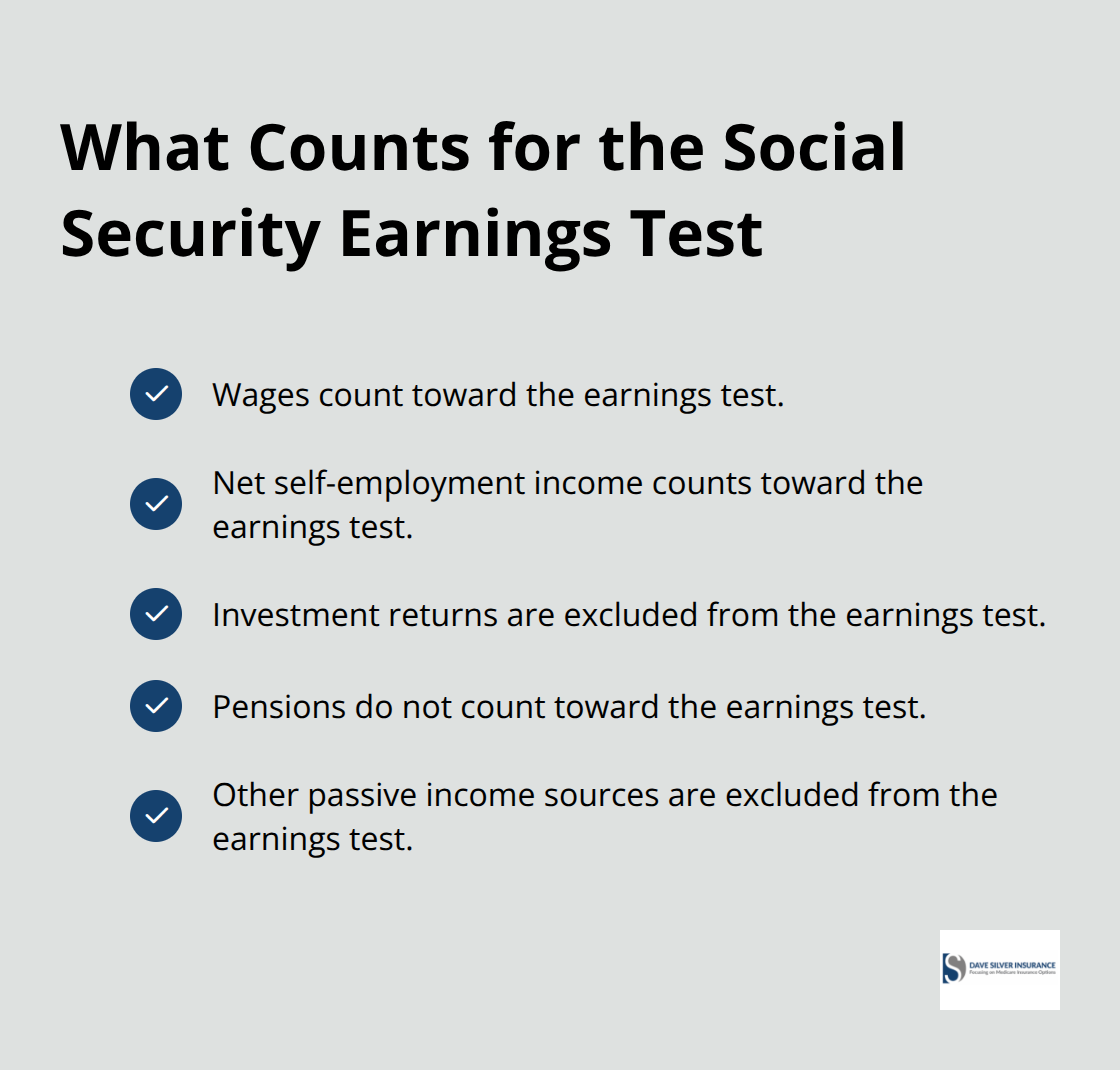
This distinction matters significantly if you plan your work strategy around benefit reductions.
When the Earnings Test Stops
The earnings test disappears the month you reach your full retirement age, which ranges from 66 to 67 depending on your birth year. Until that month arrives, however, every dollar you earn beyond the threshold directly reduces your monthly payment. Someone earning $50,000 annually at age 66 (with a full retirement age of 67) faces substantial benefit cuts throughout that year.
Calculate your specific earnings threshold before accepting additional work or taking on consulting projects. The math often reveals that earning extra income during this narrow window costs more in lost benefits than the new income generates. A spreadsheet comparing your gross earnings against lost Social Security payments typically shows whether continued full-time work makes financial sense. Some people discover they’d be better off reducing hours or retiring temporarily, then restarting work after reaching full retirement age when the penalty disappears entirely.
Income-Related Premium Surcharges on Medicare
Medicare benefits themselves don’t change based on work income, but your out-of-pocket costs absolutely do. Your Part B and Part D premiums increase through Income-Related Monthly Adjustment Amounts if your modified adjusted gross income exceeds certain thresholds. For 2026, single filers earning over $97,000 annually pay higher premiums than those earning less. The premium surcharges scale upward, with the highest earners paying roughly triple the standard Part B premium.
Someone earning $250,000 pays approximately $560 monthly for Part B instead of the standard $185. These surcharges apply based on your income from two years prior, so 2026 premiums reflect your 2024 earnings. If you received a large bonus or sold property in 2024, your 2026 Medicare premiums will spike accordingly. This lag creates planning opportunities-timing significant income events before or after peak earning years can substantially reduce your Medicare costs, particularly if you approach retirement anyway.
Strategic Income Planning Before Retirement
The two-year lookback period for Medicare premiums offers a real advantage if you plan ahead. High earners who anticipate retirement can sometimes reduce their reported income in the years before Medicare enrollment begins, which lowers their premium surcharges for years to come. This strategy works best when you control the timing of major income events (bonuses, investment sales, consulting contracts). Work with a tax professional to model different income scenarios and their Medicare premium consequences before you make final decisions about your employment timeline.
How Income Thresholds Spike Your Medicare Costs
Understanding the Two-Year Income Lookback
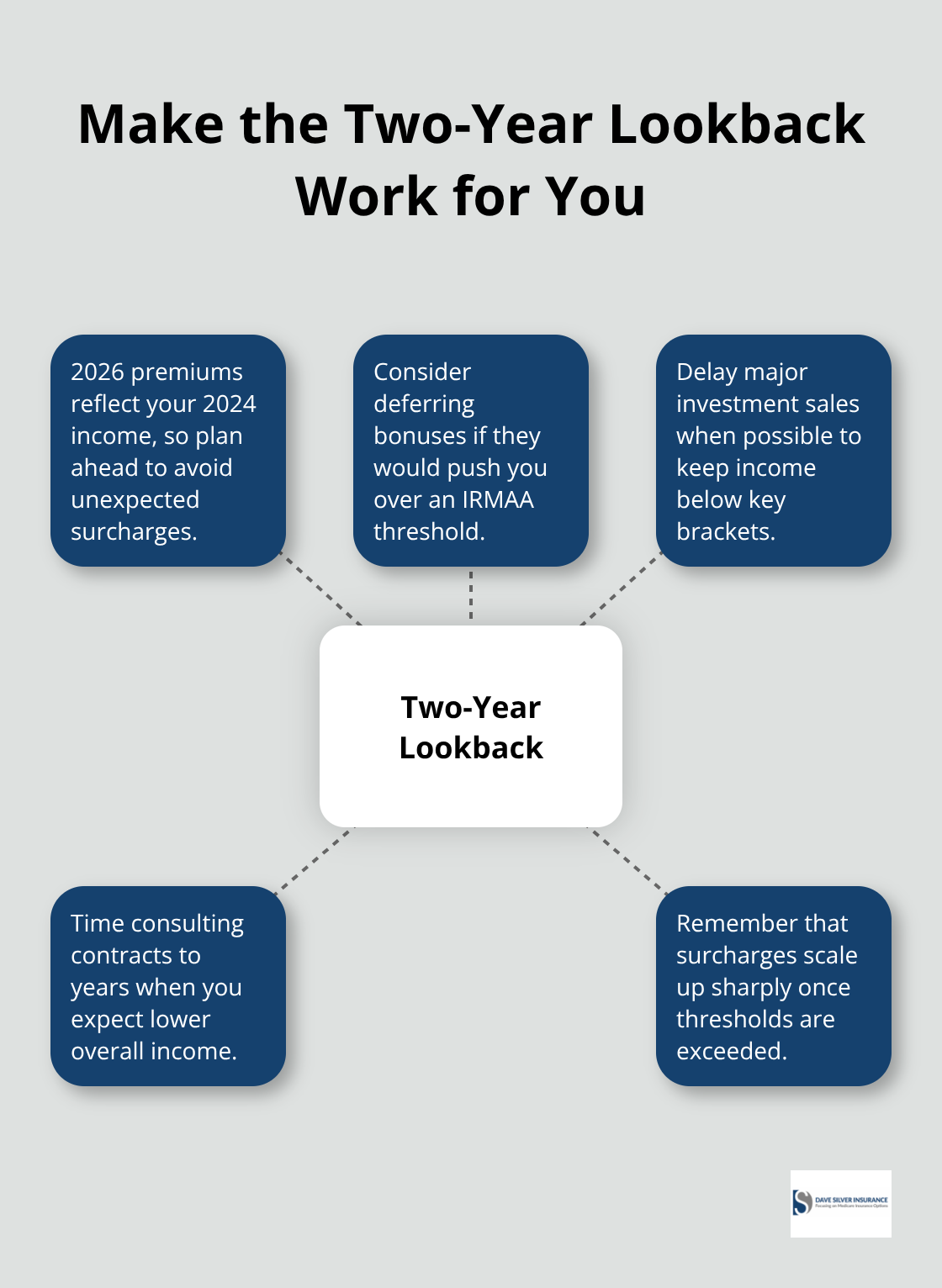
Your income from two years ago determines what you pay for Medicare today, and this lag creates both problems and opportunities that most working people never see coming. The Centers for Medicare and Medicaid Services applies Income-Related Monthly Adjustment Amounts to your Part B and Part D premiums whenever your modified adjusted gross income exceeds specific thresholds. For 2026, single filers earning over $97,000 annually face premium increases that scale upward sharply. Someone earning $120,000 pays roughly 35 percent more than the standard Part B premium of $185 monthly.
How High Earners Face Compounding Surcharges
At $250,000 in income, you pay approximately $560 monthly for Part B alone, nearly triple the base rate. These surcharges compound across all your Medicare parts, turning your total monthly costs into a significant expense that catches most working people off guard when their first bills arrive. Part D prescription drug coverage follows identical premium surcharge rules as Part B, so high earners face compounding increases across both categories.
Timing Major Income Events Strategically
The two-year lookback period works against you if you don’t plan strategically, but it also creates real advantages if you do. Your 2026 Medicare premiums reflect your 2024 income, which means a major bonus, consulting contract, or investment sale in 2024 will inflate your premiums for an entire year even if your 2025 income drops significantly. This timing problem deserves serious attention before you finalize any major income events.
If you’re approaching retirement and anticipate leaving full-time work, consider whether you can defer bonuses or delay large income recognition into years after your peak earning period. Conversely, if you’re still several years from Medicare enrollment, timing a significant income event to occur after you’ve already turned 65 and established your premium tier can save thousands annually. A tax professional can model your specific income trajectory and show whether adjusting when you recognize income makes financial sense relative to your Medicare premium consequences.
Working With a Tax Professional on Premium Planning
The difference between smart planning and reactive enrollment often amounts to hundreds of dollars monthly over your retirement years. A tax professional can calculate your exact surcharge amounts based on your projected income and show you concrete savings from different timing strategies. This analysis proves particularly valuable if you control the timing of major income events (bonuses, investment sales, consulting contracts). Your tax advisor can coordinate with your Medicare planning to ensure both strategies work together rather than against each other.
Final Thoughts
Work after Medicare eligibility creates three major financial risks that most people don’t anticipate until penalties and surcharges arrive in their bills. The permanent 10 percent annual Part B penalty for late enrollment, the earnings test that reduces Social Security benefits dollar-for-dollar, and the income-related premium surcharges that triple your Medicare costs all compound together to create substantial financial damage lasting decades. Your Initial Enrollment Period runs from three months before you turn 65 through three months after, and missing this window triggers penalties that never disappear.
If you have employer coverage, enroll in Medicare Part B anyway during this period-your work insurance will coordinate as secondary coverage, protecting you from retroactive penalties when employment eventually ends. Income planning matters more than most people realize, since your Medicare premiums two years from now depend entirely on what you earn today (a strategic approach to bonus timing, investment sales, or consulting contracts can save thousands annually). Work with a tax professional to model your specific income trajectory before you make final decisions about your employment timeline.
Work after Medicare requires coordination across multiple systems, and mistakes in one area cascade into problems in others. Contact Dave Silver Insurance to get clarity on your exact situation and confidence in your decisions.
Disclaimer: The information provided in this blog is for general informational purposes only and does not constitute legal, financial, or insurance advice. Coverage options, terms, and availability may vary. Please consult with a licensed professional for advice specific to your situation