

Picking the right Medicare plan is one of the biggest decisions you’ll make about your healthcare. With multiple options available, the process can feel overwhelming without proper guidance.
We at Dave Silver Insurance created this Medicare plan selection guide to walk you through each option step by step. By the end, you’ll know exactly which plan fits your health needs and budget.
The Four Parts of Medicare Explained
How Part A and Part B Form the Foundation
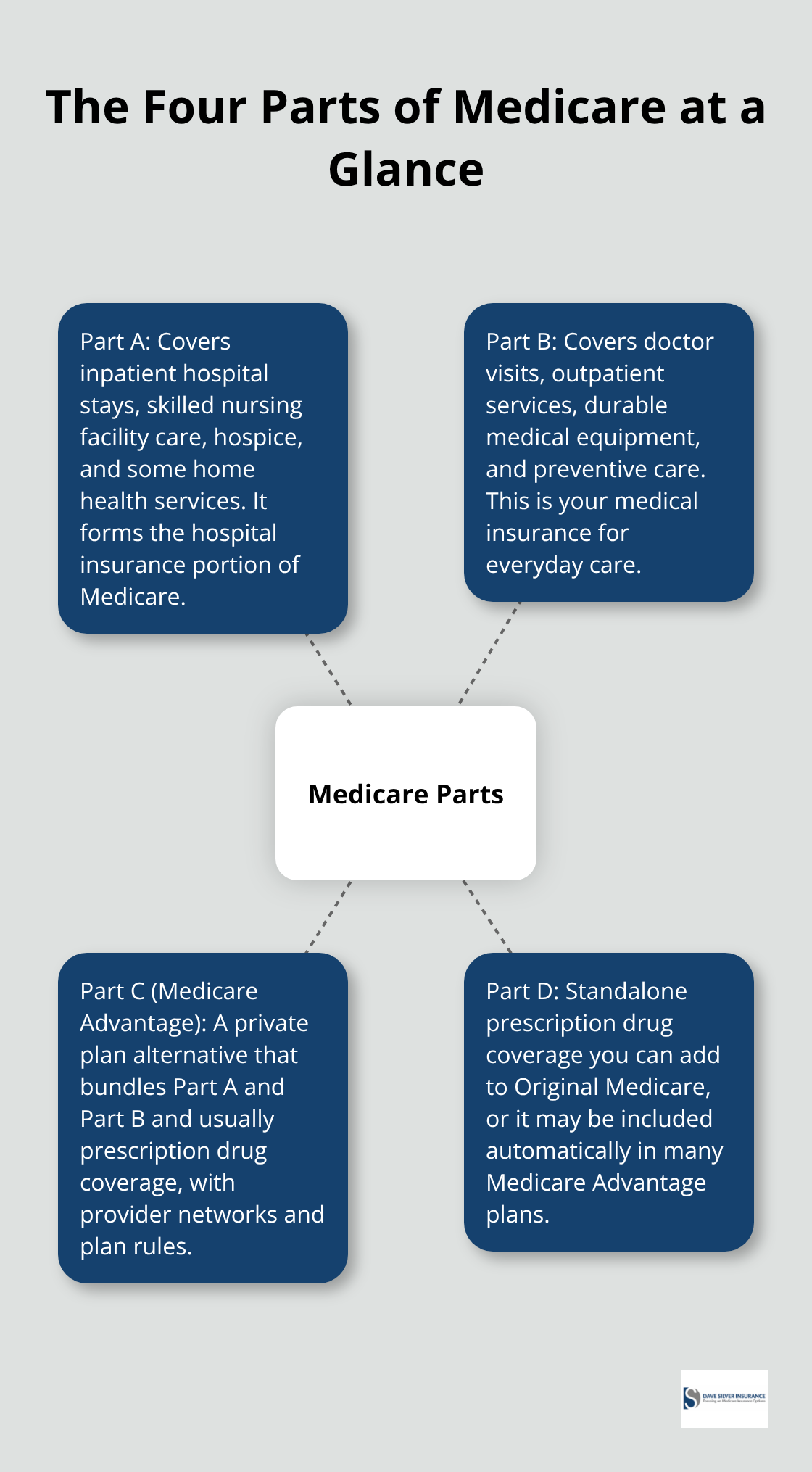
Medicare consists of four distinct parts, and understanding what each covers is the foundation of selecting the right plan. Part A covers hospital stays, skilled nursing facility care, hospice, and home health services. Part B handles doctor visits, outpatient services, medical equipment, and preventive care. Together, Original Medicare covers inpatient hospital care, doctors’ services and tests, and preventive services, leaving you responsible for additional costs plus deductibles.
Where Supplemental Coverage Fits In
This gap in coverage is where supplemental insurance becomes important. Part C, also called Medicare Advantage, is a private alternative that bundles Part A, Part B, and usually prescription drug coverage into a single plan offered by insurance companies. Part D is prescription drug coverage that you add separately if you stay with Original Medicare, though many Medicare Advantage plans include it automatically.
Original Medicare Offers Maximum Flexibility
With Original Medicare plus Part D, you can see any doctor or hospital nationwide that accepts Medicare, giving you maximum flexibility. However, you’ll face additional costs on Part B services, hospital deductibles, and potential gaps in coverage that Medigap insurance addresses. This unrestricted access appeals to people who want to maintain relationships with specific providers or who travel frequently.
Medicare Advantage Prioritizes Lower Premiums
Medicare Advantage plans typically have little or no extra premium beyond your Part B premium-about two-thirds of enrollees pay zero additional monthly cost according to 2024 data. The tradeoff is significant: Medicare Advantage uses provider networks, meaning you may pay more or receive no coverage if you see an out-of-network doctor, and many services require prior authorization or referrals. Federal rules cap out-of-pocket costs for Medicare Advantage at $8,850 for in-network care and $13,300 combined in-network and out-of-network for 2024, providing a spending ceiling that Original Medicare doesn’t have.
Making Your Decision Based on Your Priorities
Your choice between these structures depends entirely on whether you prioritize unrestricted provider access or lower upfront costs with network restrictions. The next step involves assessing your personal health situation and medical history to determine which approach aligns with your actual healthcare needs.
What Does Medicare Really Cost You
The Hidden Costs Beyond Monthly Premiums
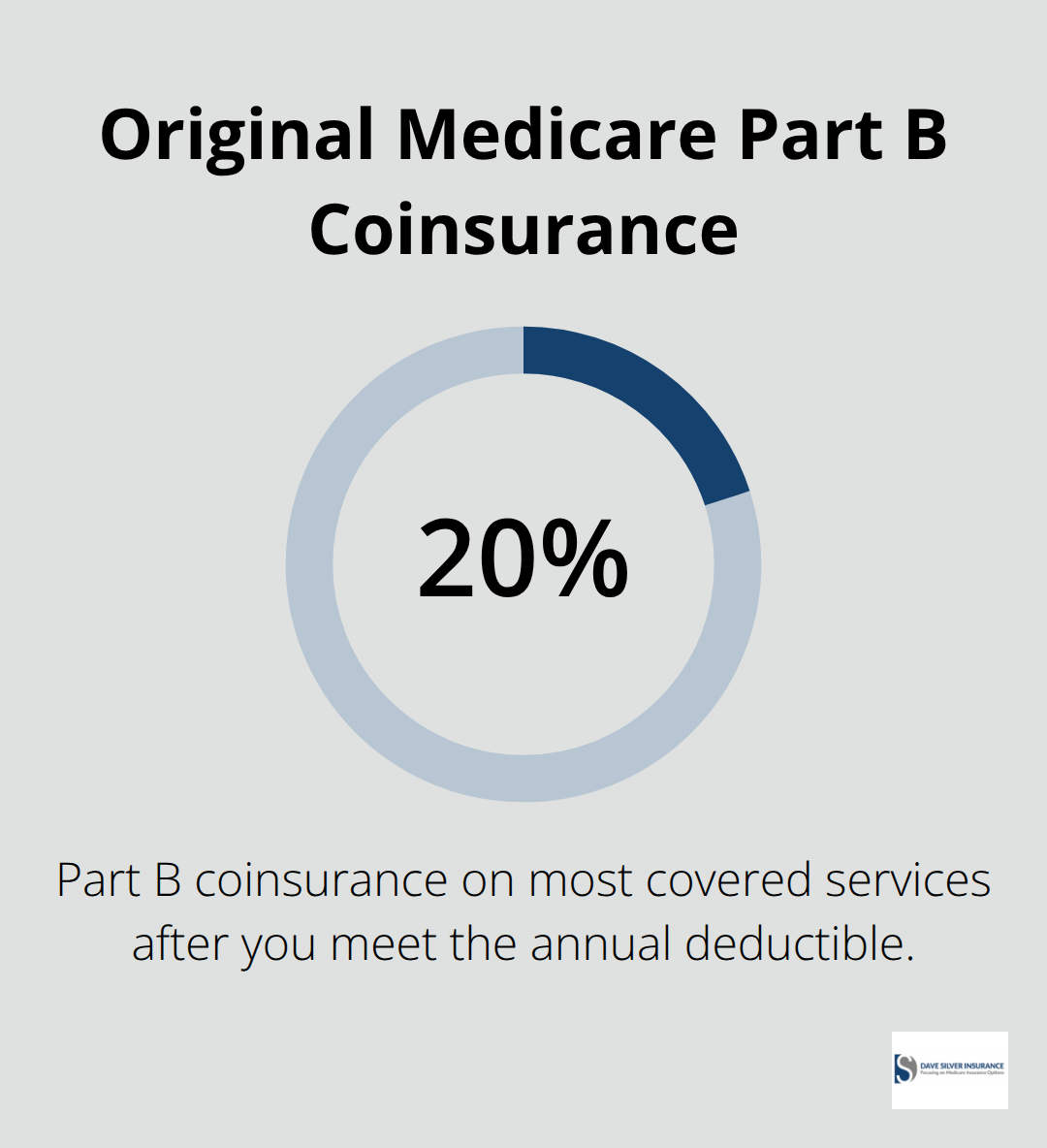
The sticker price of Medicare tells only half the story. Original Medicare carries no monthly premium beyond what you already pay into Social Security, but you’ll face a Part B deductible of $240 in 2024, plus 20% coinsurance on most services and hospital deductibles that can reach $1,632 per stay.
Medicare Advantage plans advertise zero or minimal premiums-about two-thirds of enrollees pay nothing extra beyond their Part B premium of $174.70 monthly according to 2024 data-but this low entry cost masks what you actually spend when you need care.
Understanding Out-of-Pocket Maximums
The federal government caps out-of-pocket spending for Medicare Advantage at $8,850 for in-network services and $13,300 combined in-network and out-of-network in 2024. This spending ceiling sounds protective until you realize that’s the maximum you could owe in a single year. Original Medicare has no such cap, meaning catastrophic illness could drain your savings without limit. Medigap coverage addresses this gap by covering the 20% coinsurance, hospital deductibles, and daily copayments that accumulate quickly. Medigap premiums vary by insurer and location, but they’re transparent upfront-you know exactly what you’re paying each month with no surprises when you see a doctor.
Calculating Your Total Annual Healthcare Spending
The real cost comparison requires calculating your total annual healthcare spending, not just premiums. If you use Original Medicare with a Medigap policy and Part D prescription drug coverage, you’re paying three separate premiums but gaining predictable costs and access to any provider nationwide. If you choose Medicare Advantage, you’re betting that staying in-network and respecting prior authorization requirements will keep your spending low, which works well if your doctors participate in that plan’s network and you take medications covered under their formulary.
How Chronic Conditions Affect Your True Costs
The difference matters most for people with chronic conditions or complex medication regimens. Someone managing diabetes, heart disease, or multiple prescriptions faces higher out-of-pocket costs under Medicare Advantage if their preferred specialists fall outside the network or if their medications require prior authorization delays. Conversely, someone generally healthy with no regular specialists and minimal medications might find Medicare Advantage’s low premiums genuinely cheaper over twelve months. The Medicare Plan Finder lets you compare specific plans, premiums, and out-of-pocket costs to run actual numbers for your situation rather than relying on assumptions.
Moving Forward With Your Cost Analysis
Understanding these cost structures positions you to assess your personal health situation and medical history. Your actual healthcare needs-not general assumptions about Medicare-will determine which plan structure delivers real savings for your circumstances.
How to Pick Your Plan Without Guessing
Verify Your Doctors and Hospitals First
Start by listing every doctor, specialist, and hospital you’ve used in the past two years. This matters far more than general health assumptions because your actual healthcare pattern determines which plan saves you money. If you see an endocrinologist for diabetes, a cardiologist for heart disease, and a physical therapist for arthritis, you need to verify whether these specific providers participate in any Medicare Advantage plan you’re considering.
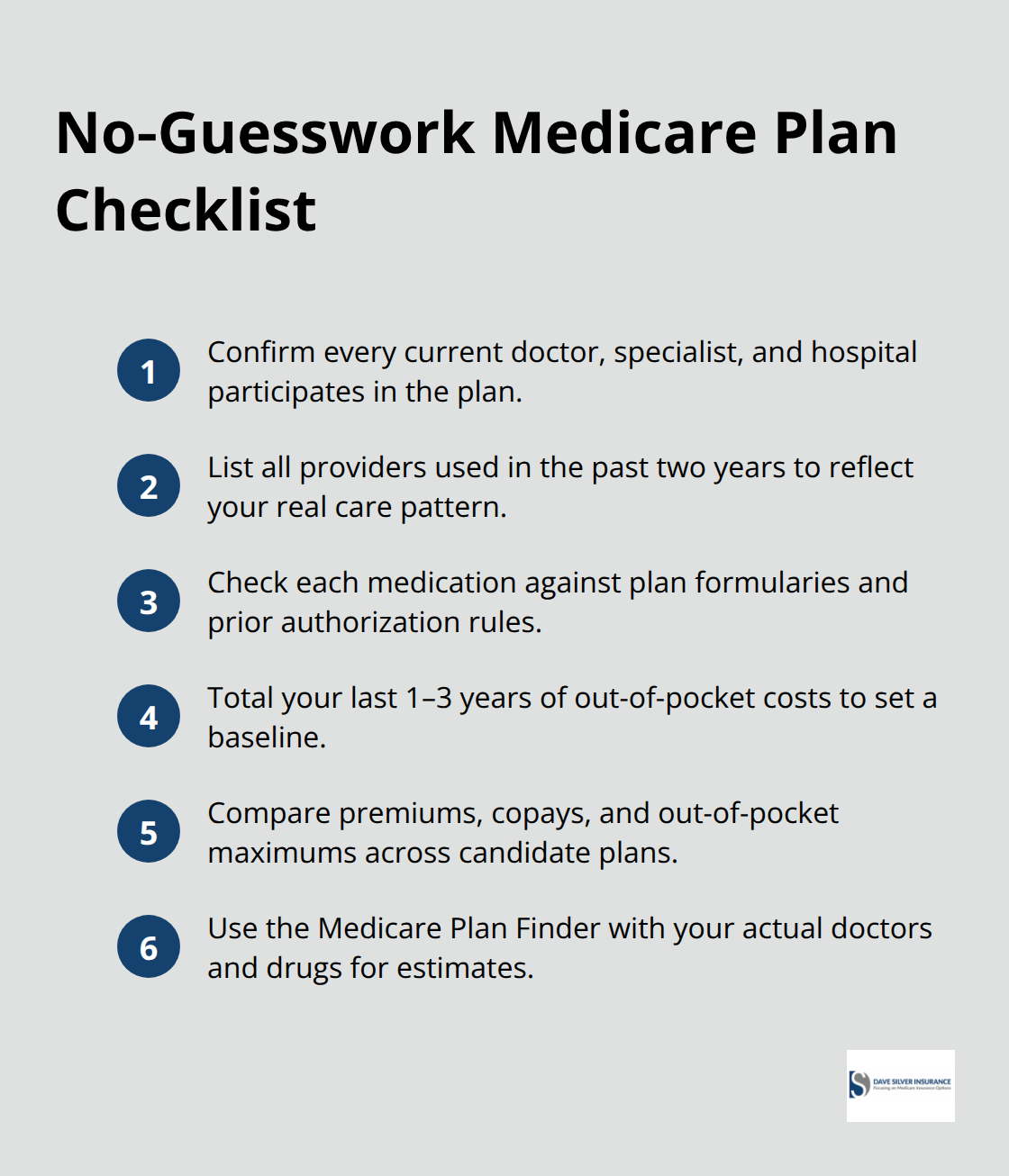
Call each provider’s office directly and ask for their Medicare Advantage participation list, or use the Medicare Plan Finder to cross-reference your doctors against specific plans. Many people skip this step and discover too late that their longtime doctor doesn’t participate in the plan they chose, forcing them to switch providers mid-year or pay out-of-network rates.
Check Your Medications Against Plan Formularies
Next, gather your medications and check each plan’s formulary, which lists covered drugs and their cost-sharing tiers. Prior authorization requirements matter significantly here because some Medicare Advantage plans require approval before covering certain medications, which can delay treatment for chronic conditions.
If you take five or more medications, the formulary differences between plans can easily amount to hundreds of dollars annually. The Medicare Plan Finder lets you enter your specific medications to see estimated annual costs under each plan, which gives you concrete numbers rather than estimates.
Calculate Your Historical Spending Pattern
Your budget calculation should start with your annual out-of-pocket spending from the past few years. Add up what you paid for doctor visits, specialist appointments, medications, and any hospital or emergency room visits. Then compare this historical spending against what each plan would have charged under the same circumstances.
Original Medicare with a Medigap policy typically costs more upfront in combined premiums but protects you from surprise bills and out-of-network charges because you can see any provider. Medicare Advantage costs less upfront but forces you to manage network restrictions and prior authorization processes, which works only if you stay disciplined about remaining in-network and checking coverage before seeking care.
Account for Year-to-Year Spending Variation
If your spending history shows significant variation year to year, the out-of-pocket maximum under Medicare Advantage provides useful protection. Original Medicare with Medigap offers more predictability because your total costs don’t spike unexpectedly when you face major health events.
Run these numbers through the Medicare Plan Finder using your actual doctors, actual medications, and actual spending patterns rather than making assumptions about how often you’ll need care. This comparison reveals which plan structure genuinely fits your financial situation and healthcare needs.
Final Thoughts
Your Medicare plan selection guide now gives you the framework to make a decision that actually fits your life. The three factors that matter most are your specific doctors and hospitals, your current medications, and your historical spending patterns-not generic advice that works for someone else but costs you thousands annually. The enrollment timeline also matters significantly: if you’re turning 65 or losing employer coverage, you have a guaranteed-issue window in most states where preexisting conditions cannot be denied or priced higher, but outside this window, open enrollment runs from October 15 through December 7 each year with coverage beginning January 1.
We at Dave Silver Insurance work with you seven days a week to review your specific doctors, medications, and budget, then recommend the plan that actually fits your circumstances. Our team handles Medicare Part A, B, C, and D guidance, plus Medigap insurance to reduce out-of-pocket expenses when Original Medicare makes sense for your situation. The difference between choosing correctly and choosing wrong often amounts to hundreds or thousands of dollars annually, plus the stress of discovering mid-year that your doctor isn’t covered or your medication requires prior authorization.
Schedule a consultation with Dave Silver Insurance to review your specific situation with someone who understands Medicare regulations and can answer your actual questions rather than providing generic information. Your healthcare decisions deserve personalized guidance, not guesswork.
Disclaimer: The information provided in this blog is for general informational purposes only and does not constitute legal, financial, or insurance advice. Coverage options, terms, and availability may vary. Please consult with a licensed professional for advice specific to your situation