

Medicare quotes for seniors often reveal hundreds of dollars in potential savings that most people miss. At Dave Silver Insurance, we’ve seen firsthand how comparing multiple quotes can expose coverage gaps and unnecessary costs in your current plan.
The difference between a rushed quote review and a thorough one typically amounts to real money in your pocket each year. This guide walks you through exactly what to look for in your quotes and how to use them to cut your healthcare expenses.
What Your Medicare Quote Actually Shows You
Breaking Down the Numbers That Matter
Medicare quotes contain far more than just premium numbers. When you request a quote, you get a snapshot of your total annual healthcare costs broken down into distinct categories. The most important figure isn’t the monthly premium-it’s your out-of-pocket maximum, which caps what you’ll spend on covered services in a given year. For 2026, Medicare Advantage plans have a maximum out-of-pocket limit of $8,550 for in-network care, according to Centers for Medicare and Medicaid Services guidelines. This means a plan with a $200 monthly premium, $1,500 deductible, and $4,000 out-of-pocket maximum exposes you to $8,800 annually in the worst-case scenario, not $2,400.
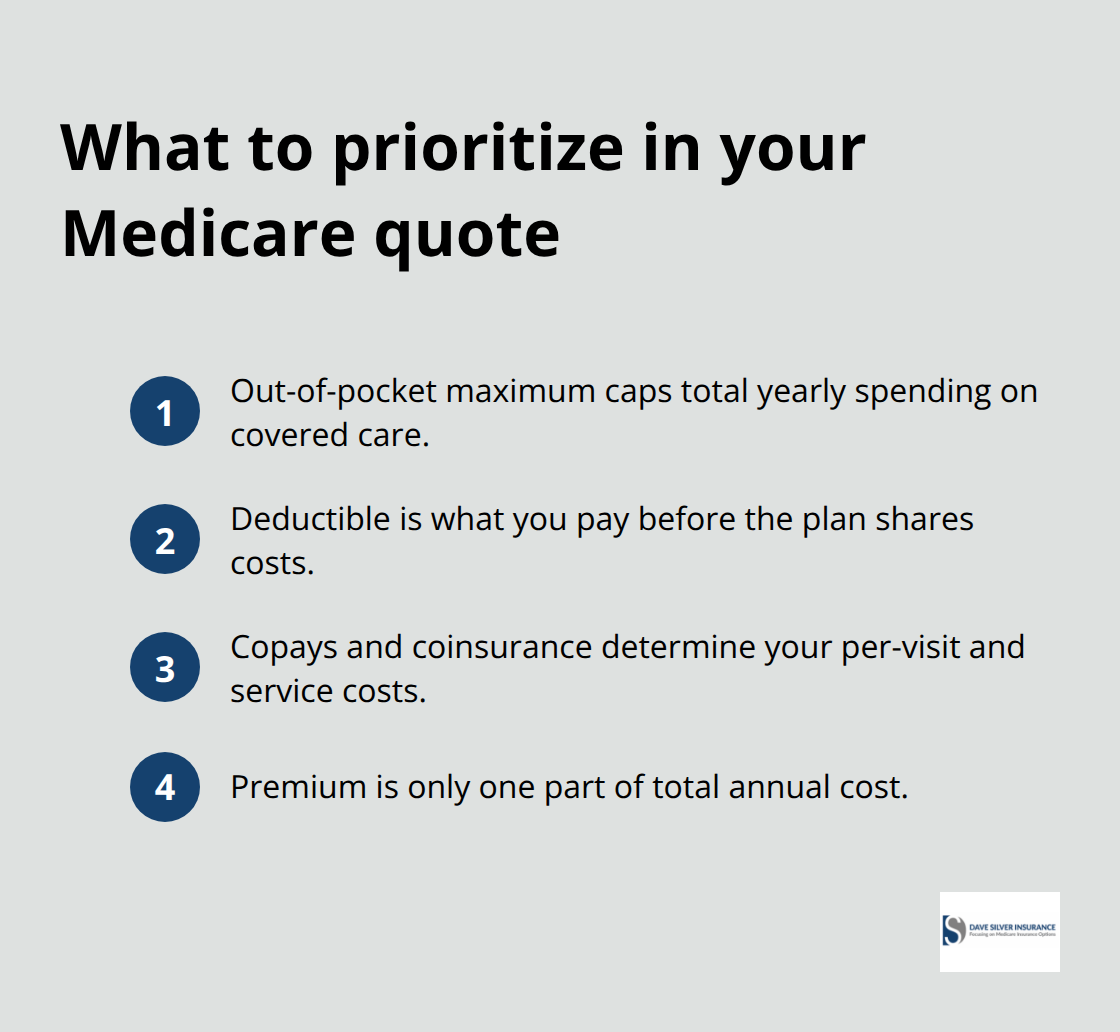
Most seniors focus only on the premium and miss this distinction entirely.
Understanding the Prescription Drug Coverage Gap
Part D prescription drug coverage appears separately in your quote and shows your coverage gap, also known as the donut hole. In 2026, once you and your plan spend $6,550 on covered drugs, you enter the coverage gap where you pay a higher percentage until your out-of-pocket costs reach $8,550. If you take multiple medications, this gap costs you hundreds or thousands of dollars annually. Your quote lists which tier each drug falls into-generic drugs typically cost $10–$15 per prescription, while specialty drugs cost $200 or more. For someone taking three or more regular medications, Part D details matter enormously.
Comparing Part C and Part D Options
Part C Medicare Advantage plans bundle hospital, medical, and often prescription drug coverage into one plan, while traditional Medicare (Parts A and B) requires separate Part D coverage. Your quote shows whether adding a standalone Part D plan to traditional Medicare costs less than enrolling in an all-in-one Advantage plan. Network restrictions appear in your quote as well, and switching plans often means changing doctors. Verify that your current doctors participate before selecting a plan from your quote.
Maximums That Protect Your Wallet
Out-of-pocket maximums vary significantly between plans; a quote showing a $3,000 maximum is substantially better than one showing $6,500, even if the premium runs $20 higher monthly. This $240 annual premium difference could save you thousands if you have significant healthcare needs. Your quote reveals these trade-offs clearly, allowing you to calculate which plan actually costs less over the full year. The real cost of coverage extends far beyond what you pay each month.
Mistakes That Cost Seniors Real Money on Medicare Quotes
Most seniors reviewing Medicare quotes focus on the wrong numbers and miss savings opportunities worth hundreds or thousands annually. The premium amount captures attention because it appears first on every quote, but this single figure masks the true cost of coverage. Seniors often choose plans based purely on low premiums, only to face unexpected costs later. The problem isn’t that seniors lack intelligence-it’s that Medicare quotes present information in ways that obscure what actually matters for your wallet.
Why Prescription Drug Details Get Overlooked
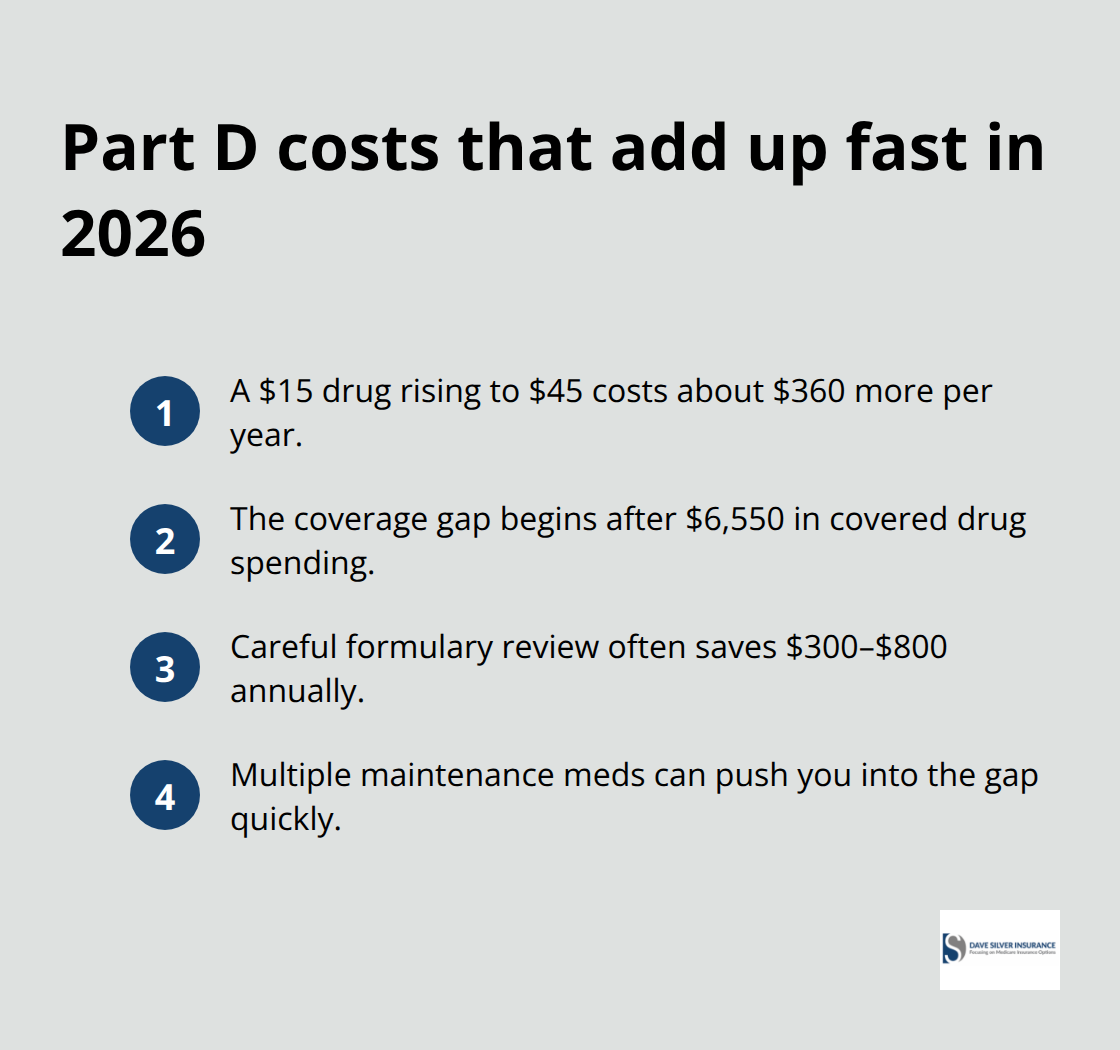
Seniors frequently scan the Part D section of a quote without understanding how their specific medications fall into coverage tiers. Your quote lists each drug on your current regimen, but many people fail to verify whether their medications remain in the same tier under a new plan. A drug costing $15 monthly under your current plan might cost $45 monthly under a different plan’s formulary, creating $360 in annual overspend that a careful quote review would have caught. Your quote shows the coverage gap threshold for 2026 at $6,550 in drug spending, but if you take multiple maintenance medications, you’ll hit that gap quickly and face significantly higher costs. Cross-reference your current medications against the formulary in each quote you review-this single step typically saves $300 to $800 annually.
Network Changes That Force New Doctors
Switching Medicare plans frequently means your doctors no longer participate in the network, a detail that appears in your quote but doesn’t convey the full disruption. Many seniors verify that their primary care doctor participates but fail to check whether their cardiologist, orthopedist, or other specialists are in-network. If your specialist isn’t covered, you either pay out-of-network rates or change doctors mid-treatment. Your quote should list participating providers by name and location, but you must actively confirm this rather than assuming continuity.
How Life Changes Alter Your Quote Needs
Life changes like retirement relocation, new diagnoses requiring specialist care, or changes in family health situations alter which plan actually serves you best, yet most people review quotes using the same criteria they used last year. A quote that looked perfect when you were healthy might create network gaps once you need ongoing treatment from a specific medical center or physician group. Your healthcare situation today differs from your situation last year, and your quote comparison should reflect those differences. The plans that worked for you previously may no longer align with your current medical reality, making a fresh review of your options essential before the next enrollment period begins.
How to Use Quotes to Cut Your Healthcare Costs
Your Medicare quote sits in front of you, but the numbers only matter if you connect them to your actual medical situation. Most seniors treat quotes as static documents rather than negotiation tools, which wastes the primary advantage quotes provide. Start by listing every doctor visit, medication, and procedure you anticipate over the next year, then match those specifics against what each quote covers. If you see a cardiologist quarterly, that’s four visits annually at a specific copay amount shown in your quote.
Multiply that copay by four and add it to your deductible, then compare this against other quotes covering the same specialist visits. A quote showing a $50 copay per specialist visit costs $200 more annually than one showing a $30 copay, a difference most seniors miss entirely because they focus on premiums instead. Your actual healthcare needs should determine your plan choice, not the marketing language or the lowest advertised premium.
Request Quotes Early During Open Enrollment
Open Enrollment for Medicare runs from October 15 through December 7 each year, and this window is your only opportunity to switch plans without penalty. Many seniors wait until November or December to request quotes, leaving themselves minimal time to compare options and make an informed decision before the December 7 deadline. Request your quotes by late October instead, giving yourself four to six weeks to analyze coverage details without rushing.
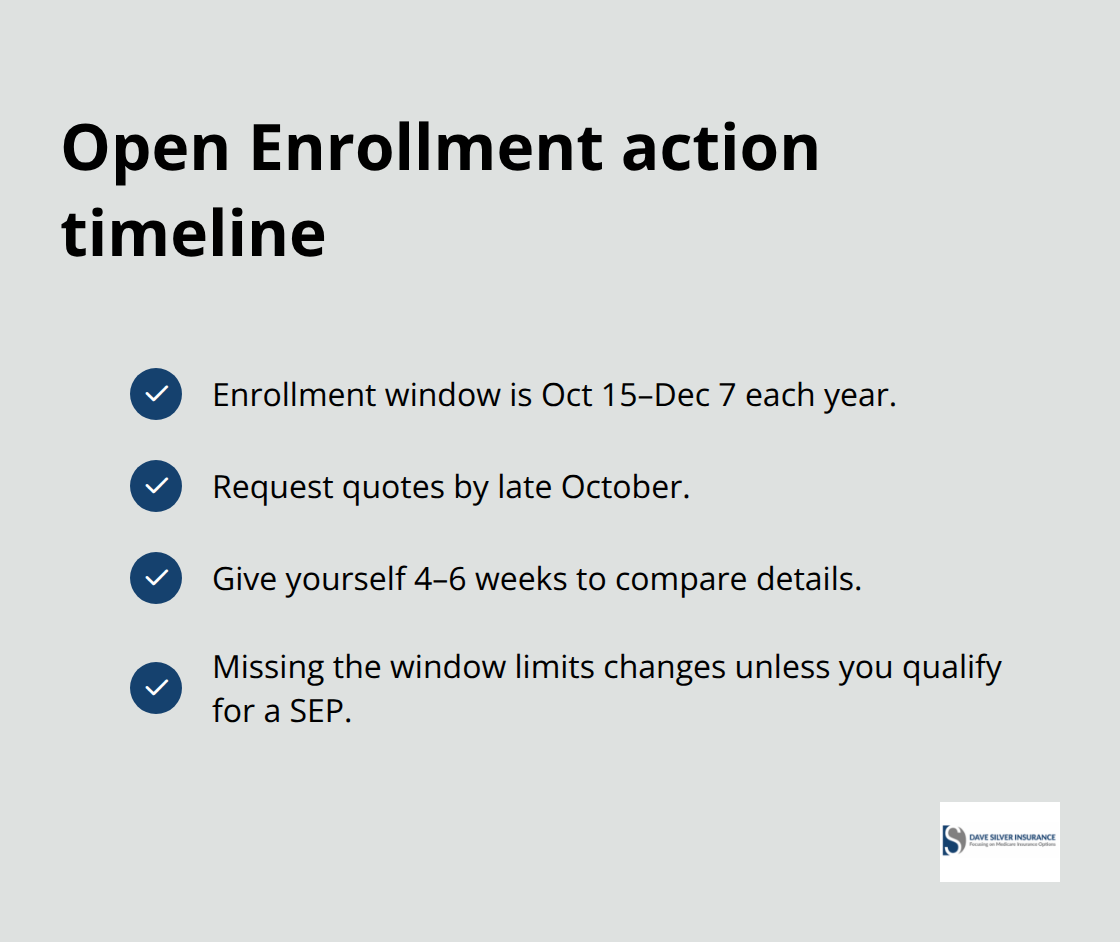
If you miss this window, you cannot switch to a different plan until the following year except in specific circumstances. Seniors who experience major life changes such as relocating across state lines, losing employer coverage, or experiencing significant income changes can qualify for a Special Enrollment Period outside the standard dates. Contact Medicare directly at 1-800-MEDICARE to confirm whether your situation qualifies, as missing this opportunity means staying in an unsuitable plan for an entire year.
Compare Medigap Premiums Across Multiple Carriers
Medigap insurance fills gaps that Original Medicare leaves behind, and your quotes should show side-by-side comparisons of Medigap premiums alongside your Medicare coverage options. A quote showing Original Medicare plus a Medigap Plan G might total $250 monthly, while a Medicare Advantage quote shows $180 monthly with similar coverage. The Medigap option costs $840 more annually but typically offers broader provider networks and no referral requirements.
Request quotes from multiple Medigap insurers simultaneously rather than accepting the first quote you receive, as premiums vary significantly between carriers for identical coverage. Compare quotes from at least three Miegap insurers before selecting your plan, and verify that each quote covers the same Plan letter (G, N, or whichever you’re considering) to ensure accurate comparison.
Final Thoughts
Comparing Medicare quotes for seniors transforms abstract coverage options into concrete dollar amounts you’ll actually pay. The difference between selecting a plan based on premium alone versus analyzing your complete annual costs typically ranges from $500 to $2,000 yearly. When you match your quote details to your actual healthcare needs-your specific doctors, medications, and anticipated visits-you stop overpaying for coverage you don’t use and underpaying for protection you do need.
Your Medicare quotes reveal exactly where costs hide: in deductibles, out-of-pocket maximums, prescription drug tiers, and network restrictions. Armed with this information, you can calculate which plan genuinely costs less over twelve months, not which one advertises the lowest premium. An expert reviews your quotes against your medical history, identifies coverage gaps you might miss, and explains trade-offs in language that makes sense (this guidance prevents costly mistakes like selecting a plan that doesn’t cover your cardiologist).
Request quotes from multiple carriers by late October, then schedule a consultation with Dave Silver Insurance to review them with someone who understands the details. We’re accessible seven days a week because Medicare decisions shouldn’t wait for business hours. Your next step transforms your quotes into a clear plan that protects your health and your wallet.
Disclaimer: The information provided in this blog is for general informational purposes only and does not constitute legal, financial, or insurance advice. Coverage options, terms, and availability may vary. Please consult with a licensed professional for advice specific to your situation