

Medicare enrollment can feel overwhelming, especially when you’re facing tight deadlines and complex plan options. Missing a single deadline can lock you into permanent penalties that follow you for years.
We at Dave Silver Insurance have helped thousands of people navigate Medicare enrollment guidance and avoid costly mistakes. This guide walks you through enrollment periods, plan comparisons, and the decisions that matter most for your coverage.
When Must You Enroll in Medicare
Your enrollment window determines whether you pay penalties for the rest of your life or avoid them entirely. The Social Security Administration sets three primary periods when you can enroll without facing permanent surcharges, and missing these windows costs you thousands in extra premiums over time.
Your Initial Enrollment Period: The Seven-Month Window
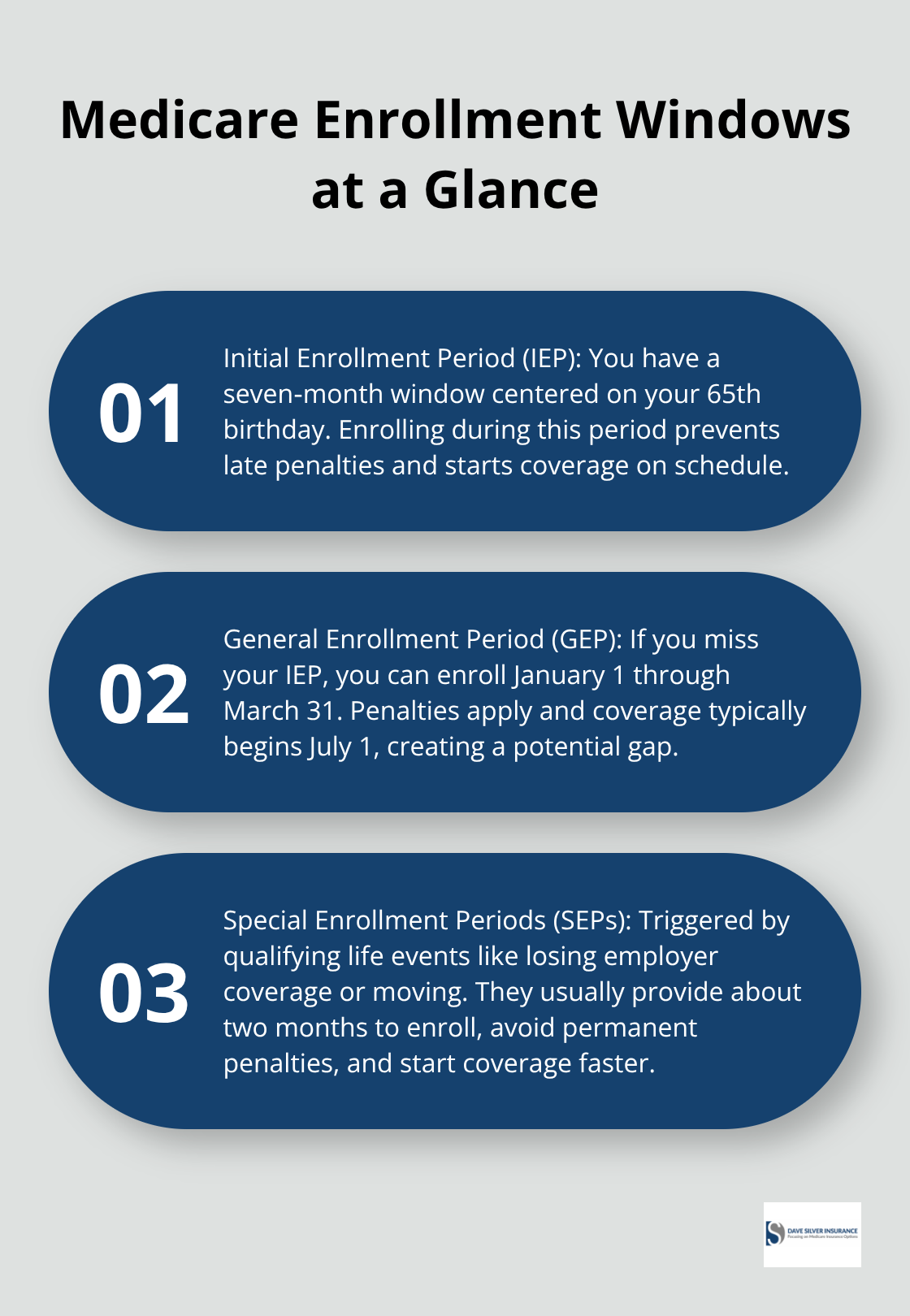
Your Initial Enrollment Period spans seven months centered on your 65th birthday: three months before you turn 65, your birth month itself, and three months after. If you were born in June, your window runs from March through September. Enrollment early in this period activates your coverage sooner-Part A typically starts the first day of your birth month if you enroll before it arrives, while Part B coverage begins the following month. The Social Security Administration emphasizes that signing up during this seven-month window prevents any late enrollment penalties from attaching to your record.
If you’re still employed at 65 with active employer coverage from a company with 20 or more employees, you can delay Part B enrollment without penalty. However, you must act within eight months after leaving that job. Waiting beyond eight months triggers a permanent penalty for each full year you delayed, according to Social Security Administration guidance. Delaying Part B by just three years results in a higher monthly premium for life-a decision that compounds into tens of thousands of dollars in extra costs.
You enroll by visiting SSA.gov, calling 1-800-772-1213, or visiting your local Social Security office in person.
General Enrollment: Your Costly Safety Net
If you miss your Initial Enrollment Period entirely, the General Enrollment Period runs January 1 through March 31 each year. This period serves as your safety net, but it comes with real financial consequences. Enrollment penalties for missing enrollment deadlines apply during this period. Your coverage doesn’t start until July 1, creating a gap in protection.
Special Enrollment Periods for Life Changes
Special Enrollment Periods exist for specific life events-losing employer coverage, gaining Medicaid, moving to a new state, or other qualifying changes-and these typically allow two months to enroll without penalties. You must prove the qualifying event occurred to use a Special Enrollment Period. This option differs significantly from General Enrollment because it avoids permanent penalties and activates coverage faster.
The distinction matters: missing your Initial Enrollment Period means you either accept permanent penalties or wait until the next General Enrollment Period with a delayed start date. Understanding which enrollment window applies to your situation shapes your entire Medicare cost structure.
Your next decision involves comparing the actual plans available to you and determining which coverage structure-Original Medicare or Medicare Advantage-aligns with your health needs and budget.
Original Medicare or Medicare Advantage: Which Path Fits Your Budget
How Original Medicare Works
Original Medicare consists of Part A and Part B, operating as a fee-for-service model where Medicare pays providers directly and you cover your share of approved costs. Part A covers hospital stays with a deductible of $1,676 per benefit period in 2026, while Part B covers doctor visits and outpatient services with a deductible of $283 and a 20% coinsurance rate after you meet it. This structure means your out-of-pocket costs depend entirely on how much healthcare you actually use.
You can see any doctor who accepts Medicare nationwide without network restrictions. Medigap Plan G pairs well with Original Medicare, covering the Part B deductible and 80% of costs Medicare doesn’t pay, though you still need Part D separately for prescription drugs. This combination provides predictable costs and broad provider access across the country.
Medicare Advantage: Built-In Benefits and Network Limits
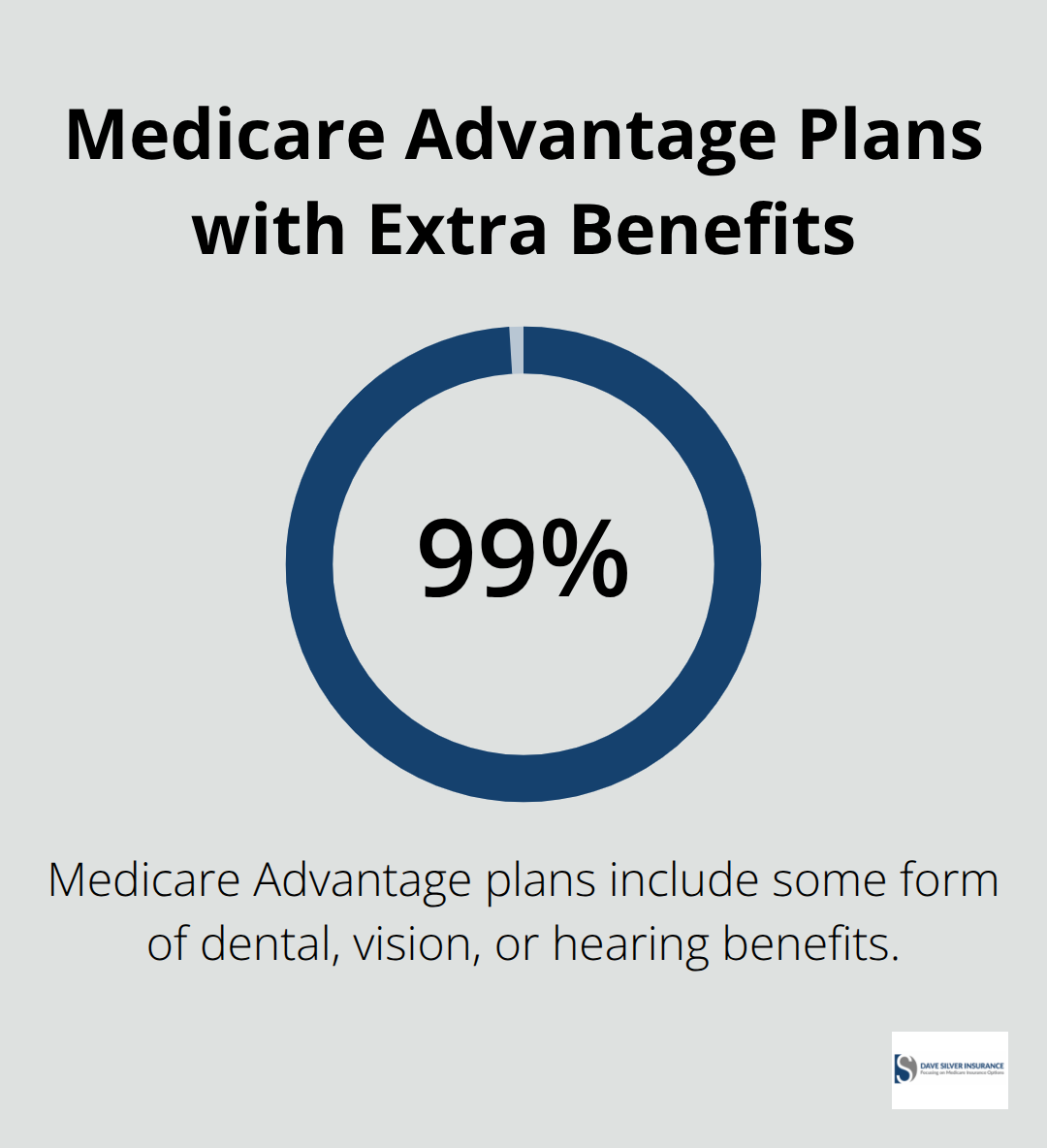
Medicare Advantage, known as Part C, bundles Part A and B into a single private plan operated by insurance companies under contract with Medicare. These plans often include prescription drug coverage built in and frequently add benefits like dental, vision, and hearing-services Original Medicare simply doesn’t cover. About 99% of Medicare Advantage plans include some form of dental, vision, or hearing benefits, making them attractive for people who need these services.
However, Medicare Advantage requires using in-network providers, and out-of-network care costs substantially more. If you see doctors outside the plan’s network, you face balance billing and higher out-of-pocket costs that Original Medicare wouldn’t impose. Medicare Advantage plans vary dramatically by region-a plan excellent in one state may not exist in another, so your location directly determines available options.
Matching Your Health Needs to the Right Plan
The financial reality shifts based on your health situation and medication needs. Medicare Advantage plans work best if you have limited doctor visits and use medications covered by the plan’s formulary at reasonable costs. In 2026, the Part D out-of-pocket cap sits at $2,100 annually for covered medications, and the donut hole coverage gap was eliminated, simplifying drug cost planning significantly.
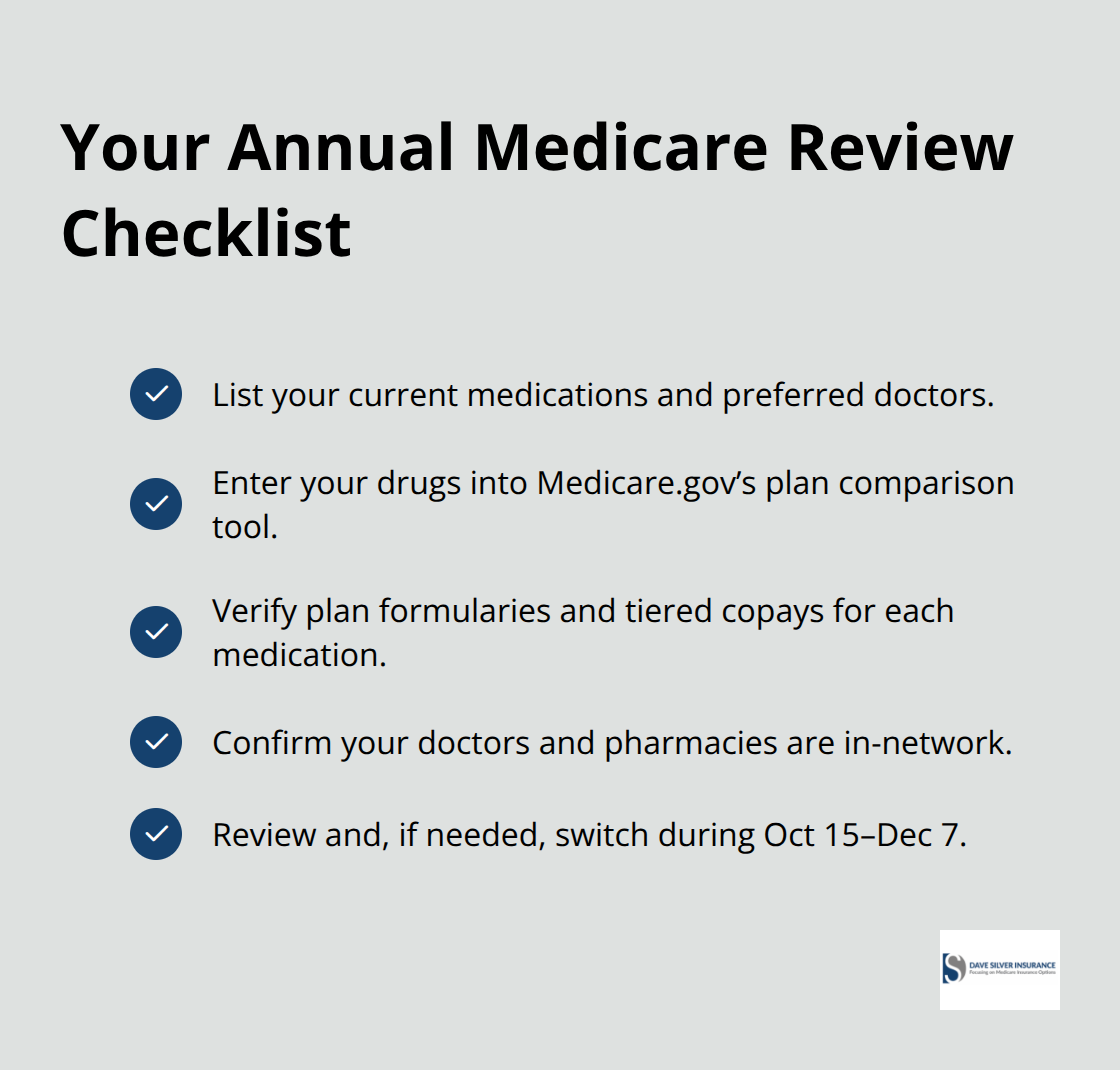
Start by listing your current medications and preferred doctors, then compare whether these are covered and in-network for any plan you’re considering. If you take expensive medications or see specialists frequently, verify the actual copays and coinsurance amounts rather than assuming plans are comparable. Medicare.gov’s plan comparison tool lets you enter your specific drugs to see estimated costs across plans in your area.
Calculate Total Costs, Not Just Premiums
Spend time calculating total expected out-of-pocket costs for the next year, not just comparing monthly premiums, because a plan with lower premiums often carries higher deductibles and copays that offset the savings for people with chronic conditions. A plan costing $50 monthly but requiring $3,000 in annual deductibles and copays will cost you far more than a $150 monthly plan with minimal out-of-pocket expenses if you use healthcare regularly.
Your medication list and doctor preferences reveal which plan structure actually saves you money. Once you identify which approach-Original Medicare and Medicare Advantage-aligns with your health profile, the next step involves recognizing the enrollment mistakes that trap people into poor coverage decisions.
Mistakes That Cost You Thousands in Permanent Penalties
The Social Security Administration imposes a 10% increase in your monthly premium, and you’ll have to pay it for twice the number of years you delayed enrolling after your Initial Enrollment Period ends. Delay Part B by three years, and you pay penalties for six years, costing significantly more every month for years to come. A person paying $180 monthly for Part B in 2026 would pay more monthly permanently after a three-year delay. Part D prescription drug penalties work similarly at 1% of the national base premium monthly for each month you went without coverage, and these penalties also stick with you permanently.
The enrollment window for Part B lasts seven months, yet thousands of people miss it annually because they assume their employer will handle the transition or Social Security will automatically enroll them. Automatic enrollment only happens if you already receive Social Security benefits at 65. If you’re still working or haven’t claimed benefits yet, enrollment is entirely your responsibility. Waiting until you have a health crisis to sign up means you’ve already triggered permanent penalties that will follow you for years.
Your Medication List Matters More Than Plan Premiums
Overlooking prescription drug coverage ranks second among costly mistakes because people compare monthly premiums without checking whether their specific medications are actually covered. A plan might advertise low premiums but exclude your blood pressure medication or arthritis treatment from its formulary, forcing you to pay full retail price or switch to medications your doctor didn’t prescribe. The 2026 Part D out-of-pocket cap of $2,100 annually provides a ceiling, but reaching that cap happens fastest when your drugs aren’t covered efficiently.
Enter your exact medications into Medicare.gov’s plan comparison tool before you choose any plan, not after enrollment closes. Many people discover coverage gaps only when they fill their first prescription and learn their copay is $150 instead of $20. Additionally, failing to review your plan annually during the October 15 through December 7 enrollment window means you miss opportunities to switch if your medications, doctors, or health needs change.
Insurance companies adjust formularies, drop doctors from networks, and modify copays every year. A plan that worked perfectly in 2025 might cover your medications poorly in 2026.
The Annual Review That Saves Thousands
Your healthcare spending patterns shift as you age, and plans that matched your needs last year often fail to match them today. Review what you actually spent last year across deductibles, copays, and coinsurance, then project those same services for the next year under different plans. If you visited specialists four times last year, calculate what those visits would cost under each plan you’re considering rather than guessing.
A Medicare Advantage plan with a $500 deductible might seem cheaper than Original Medicare until you realize your preferred rheumatologist isn’t in-network, forcing you to either switch doctors or pay out-of-network rates. The comparison tool at Medicare.gov shows estimated yearly costs for different scenarios, so use it to model your actual healthcare spending. Starting in early October gives you two months to contact plans, ask questions, and make confident choices without deadline pressure. Your health circumstances matter more than any single plan feature, so honest assessment of your medication needs, doctor preferences, and anticipated healthcare usage drives better decisions than focusing on marketing promises about extra benefits.
Final Thoughts
Medicare enrollment guidance requires honest assessment of your health, medications, and financial situation because missing enrollment windows costs you permanent penalties, overlooking drug coverage creates unexpected expenses, and skipping annual reviews locks you into plans that no longer fit your needs. Start by gathering your current medications, listing your preferred doctors, and calculating what you actually spent on healthcare last year. Then use Medicare.gov’s comparison tool to model your costs under different plans rather than relying on premium prices alone, and mark October 15 on your calendar every year as your reminder to review whether your current plan still matches your health situation.
We at Dave Silver Insurance have guided thousands of people through these decisions over our 17 years of experience, and we understand that Medicare enrollment isn’t one-size-fits-all because your health needs, medications, and budget are uniquely yours. Our team provides personalized guidance on Medicare Part A, B, C, and D, plus Medigap insurance options designed to reduce your out-of-pocket expenses. Available seven days a week, we work with you to align your coverage with your actual healthcare situation and financial goals.
The difference between confident enrollment and costly mistakes often comes down to having someone in your corner who knows the rules, understands your circumstances, and answers your specific questions without pressure. Schedule a consultation with Dave Silver Insurance to discuss your Medicare options and build a coverage plan that protects your health and your wallet.
Disclaimer: The information provided in this blog is for general informational purposes only and does not constitute legal, financial, or insurance advice. Coverage options, terms, and availability may vary. Please consult with a licensed professional for advice specific to your situation