

Medicare Supplement insurance fills the gaps that Original Medicare leaves behind. With dozens of providers competing for your business, finding the right one requires careful research.
We at Dave Silver Insurance have analyzed the top rated Medigap insurance companies to help you make an informed choice. This guide breaks down the best providers, key selection factors, and plan comparisons you need to know.
Which Providers Offer the Best Medigap Coverage
AARP/UnitedHealthcare Leads the Market
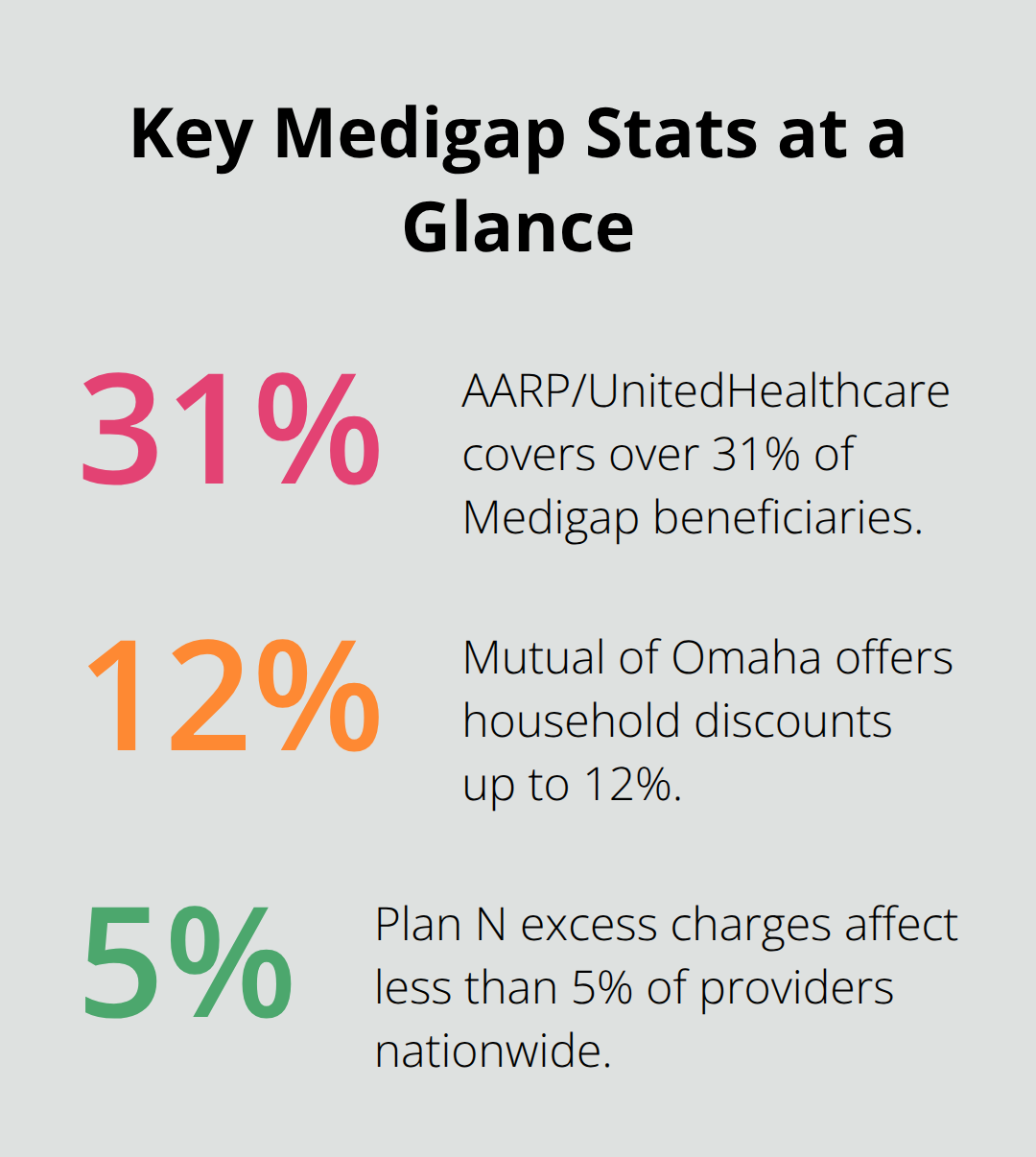
AARP/UnitedHealthcare dominates the Medigap market with a 5.0 rating from NerdWallet and covers over 31% of all Medigap beneficiaries. Their partnership delivers digital tools, member discounts, and comprehensive Plan G coverage that keeps out-of-pocket costs predictable. Premium rates remain competitive across all 50 states, with household discounts that reach 5-10% for eligible members.
Mutual of Omaha Excels in Customer Service
Mutual of Omaha earns recognition for exceptional customer service and offers household discounts up to 12% for members who live with others. Their complaint rates fall significantly below industry averages, and they maintain steady rate increases rather than deceptive introductory prices. Plan G and Plan N options provide solid coverage, though their online tools lag behind competitors.
Blue Cross Blue Shield Delivers Local Expertise
Blue Cross Blue Shield operates through independent state companies, which creates strong local presence and broad Medicare provider acceptance. Each state company sets its own rates, so premium costs vary dramatically by location. State Farm (part of the Blue Cross network) maintains complaint rates nearly 50% below market average. Their local expertise helps navigate state-specific Medicare rules, but you must compare rates carefully since prices differ significantly between states.
Anthem Adds Unique Coverage Options
Anthem provides unique dental and vision coverage options with their Medigap plans, which sets them apart from most competitors. This additional coverage appeals to beneficiaries who want comprehensive health benefits beyond standard Medigap protection.
These provider differences highlight why financial stability, customer service quality, and premium costs matter when you select your Medigap coverage.
What Makes a Medigap Provider Worth Your Money
Financial Strength Protects Your Future Claims
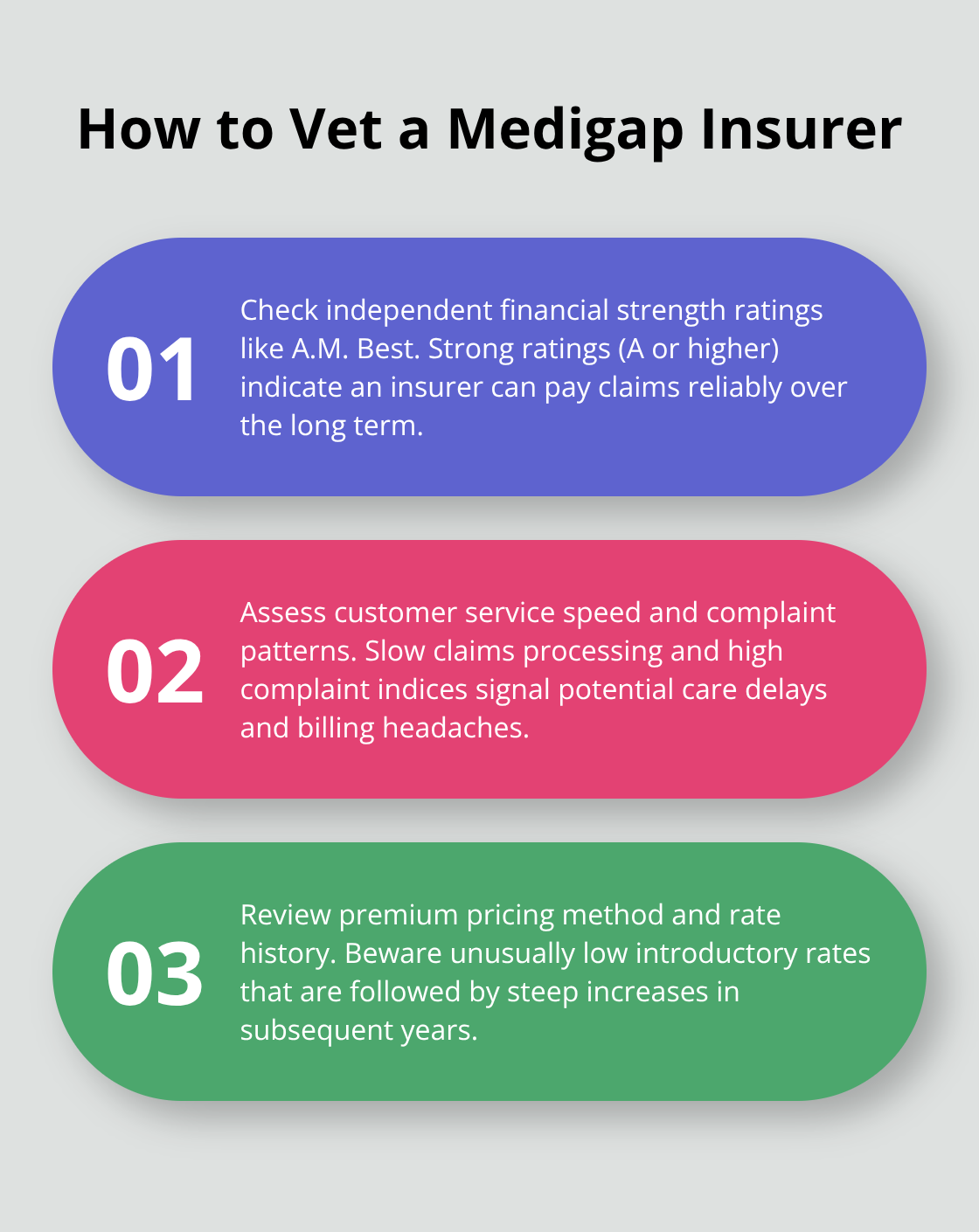
A.M. Best ratings are based on a comprehensive quantitative and qualitative evaluation of a company’s balance sheet strength and operating performance, revealing which Medigap insurers can pay claims decades from now. UnitedHealthcare maintains an A+ rating, while Mutual of Omaha holds an A rating from A.M. Best. Companies with B+ ratings or lower present real risks when you need expensive medical care. Financially weak insurers often delay claim payments or impose restrictions during market downturns. Check the A.M. Best rating before you sign any policy, because switching later becomes expensive and medically complicated.
Customer Service Speed Determines Your Healthcare Access
Claims processing speed directly affects your medical care quality. State Farm processes most claims within 30 days, while some competitors take 60-90 days for routine approvals. The National Association of Insurance Commissioners complaint index shows Cigna receives more complaints than the industry average, particularly for delayed crossover claims processing. Mutual of Omaha consistently ranks well for customer satisfaction, with short average phone wait times. Poor service creates billing problems with your doctors and can delay necessary treatments. Test customer service quality by calling during business hours before you purchase any policy.
Premium Rate History Reveals Hidden Costs
Insurance companies use three pricing strategies that dramatically affect your long-term costs. Community-rated plans charge everyone the same premium regardless of age, while attained-age plans increase costs as you get older. Issue-age plans lock in your premium based on your enrollment age. Wellabe offers some of the lowest initial premiums for Plan G, but their rate increases have been significant in recent years. AARP/UnitedHealthcare maintains more stable rate increases across most states. Companies that offer suspiciously low introductory rates often implement double-digit increases within 2-3 years to compensate for losses.
These provider selection factors become even more important when you compare specific Medigap plan types and their coverage differences.
Which Medigap Plan Fits Your Healthcare Budget
Plan F Offers Maximum Coverage at Premium Prices
Plan F provides the most comprehensive Medigap coverage available, including the Part B deductible of $283 in 2026, but remains restricted to individuals who became Medicare-eligible before January 1, 2020. This plan covers 100% of Medicare Part A and Part B coinsurance, copayments, and deductibles, which leaves you with zero out-of-pocket costs for Medicare-approved services. Premium costs for Plan F typically run $150-300 per month (depending on your location and insurer), which makes it the most expensive standardized option. Plan G delivers nearly identical coverage without the Part B deductible, saves $20-50 monthly in premiums while it requires you to pay the $283 annual deductible yourself.
High Deductible Plans Cut Premiums by 40-60 Percent
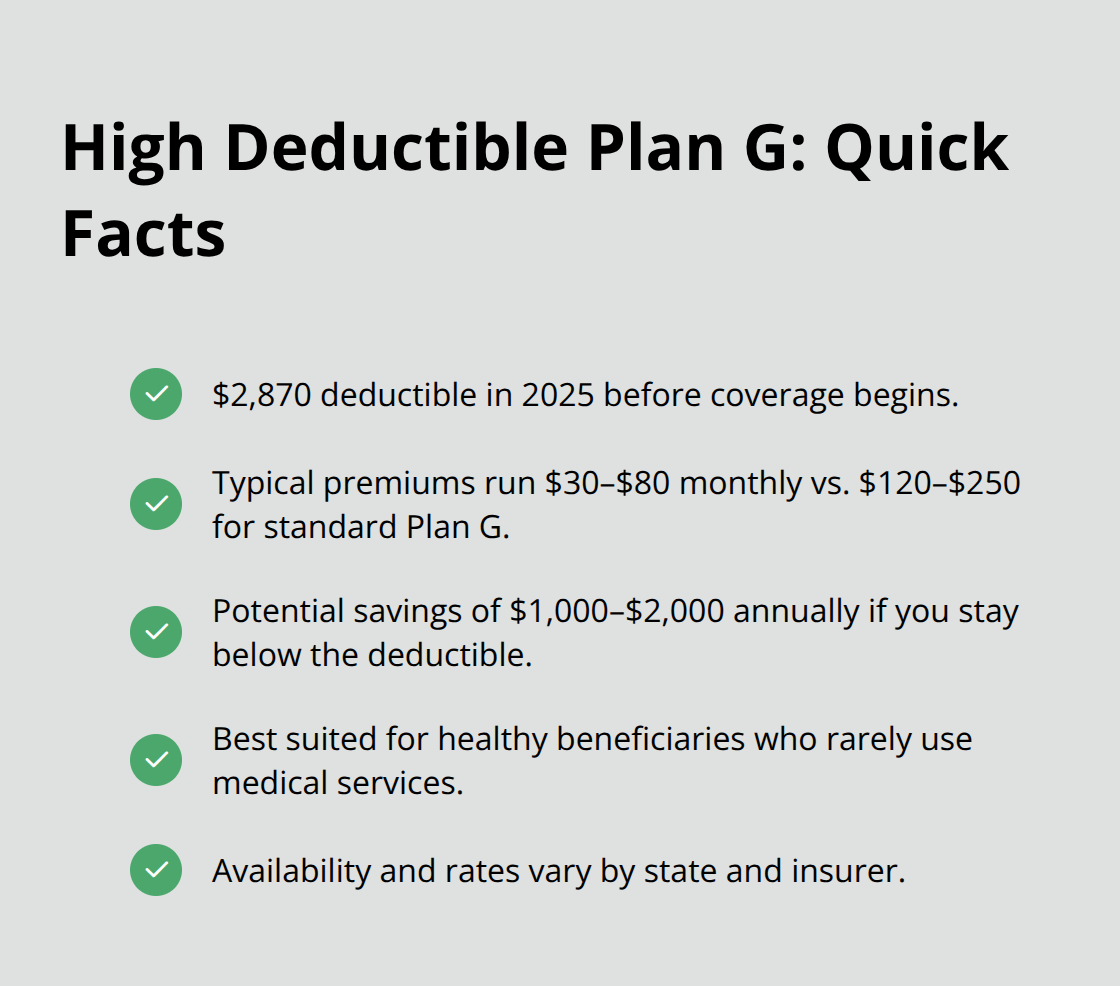
High Deductible Plan G requires you to pay $2,870 in out-of-pocket costs during 2025 before coverage begins, but monthly premiums drop to $30-80 compared to $120-250 for standard Plan G. This option works well for healthy individuals who rarely use medical services, as you save $1,000-2,000 annually in premiums if you stay below the deductible threshold. Mutual of Omaha and AARP offer competitive high deductible rates, though availability varies by state.
Plan N Provides Middle Ground Coverage
Plan N provides a middle ground with $20 copays for office visits and $50 for emergency room visits that don’t result in admission, plus monthly premiums that fall $30-60 below Plan G rates. The American Medical Association data shows Plan N saves $400-720 annually compared to Plan G, which makes it ideal for beneficiaries who visit doctors 2-4 times yearly. Plan N also requires you to pay Medicare Part B excess charges, which affect less than 5% of providers nationwide but can reach $500-1,500 per incident in states like New York and Florida (where excess charges occur more frequently).
Final Thoughts
AARP/UnitedHealthcare leads top rated Medigap insurance companies with its 5.0 rating and comprehensive Plan G coverage. Mutual of Omaha excels in customer service with household discounts up to 12%, while Blue Cross Blue Shield provides strong local expertise across all states. Your decision should prioritize financial stability through A.M. Best ratings of A or higher, proven customer service quality with complaint rates below industry averages, and transparent rate increase history.
Plan G offers the best value for most beneficiaries, while Plan N works well for healthy individuals who visit doctors infrequently. Compare quotes from multiple providers since premiums vary significantly for identical coverage (sometimes by $100+ monthly for the same plan). Check each company’s complaint index and claims processing speed before you make your final choice.
Switching Medigap plans later requires medical underwriting in most cases, which makes your initial choice important. We at Dave Silver Insurance provide personalized Medicare guidance to help you select the right Medigap coverage. Our team offers tailored recommendations based on your unique health and financial needs, available seven days a week for consultations.