

Navigating the world of Medicare can be complex, especially when it comes to understanding enrollment periods for different plan types. At Dave Silver Insurance, we often receive questions about Medicare Cost Plans and when individuals can sign up for them.
This blog post will guide you through the Medicare Cost Plan enrollment periods, eligibility requirements, and key differences from other Medicare options. We’ll provide clear, actionable information to help you make informed decisions about your healthcare coverage.
What Are Medicare Cost Plans?
Unique Medicare Coverage Option
Medicare Cost Plans offer a distinctive approach to healthcare coverage. These plans are a fee-for-service health insurance program that has 2 parts: Part A and Part B. You typically pay a portion of the costs for covered services as you get them.
How Medicare Cost Plans Operate
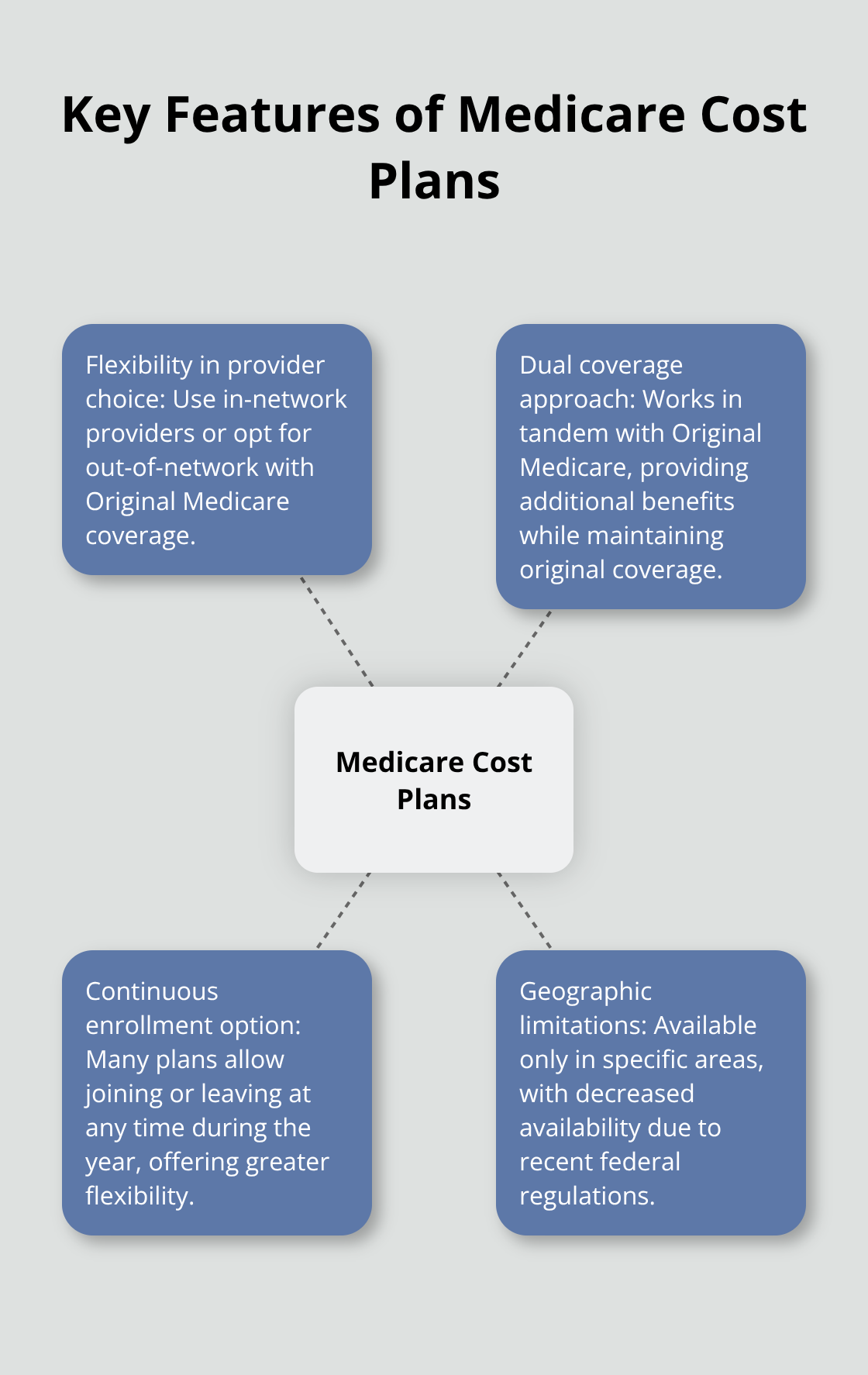
Medicare Cost Plans provide flexibility in healthcare provider choices. When you use in-network providers, the plan covers your care. If you opt for an out-of-network provider, Original Medicare takes over to cover your services. This dual approach (in-network and out-of-network coverage) allows for greater freedom in selecting healthcare providers.
Distinct Features from Other Medicare Options
Unlike Medicare Advantage plans that replace Original Medicare, Cost Plans work in tandem with it. This means you maintain your Original Medicare coverage while enjoying additional benefits. A notable difference is the ability to join or leave a Cost Plan at any time during the year (provided the plan accepts new members). This flexibility stands out from most other Medicare options.
Geographic Limitations
Medicare Cost Plans are not universally available. These plans are offered only in specific areas, and their availability has decreased in recent years due to federal regulations. A 2019 law change resulted in the discontinuation of Cost Plans in counties with two or more competing Medicare Advantage plans.
Assessing Your Medicare Options
If a Medicare Cost Plan interests you, it’s important to determine its availability in your area. While Cost Plans offer unique benefits, they may not suit everyone’s healthcare needs and financial situation. A thorough evaluation of the pros and cons will help ensure you make an informed decision about your Medicare coverage.
As we move forward, let’s explore the specific enrollment periods for Medicare Cost Plans and how they differ from other Medicare options.
When Can You Enroll in a Medicare Cost Plan?
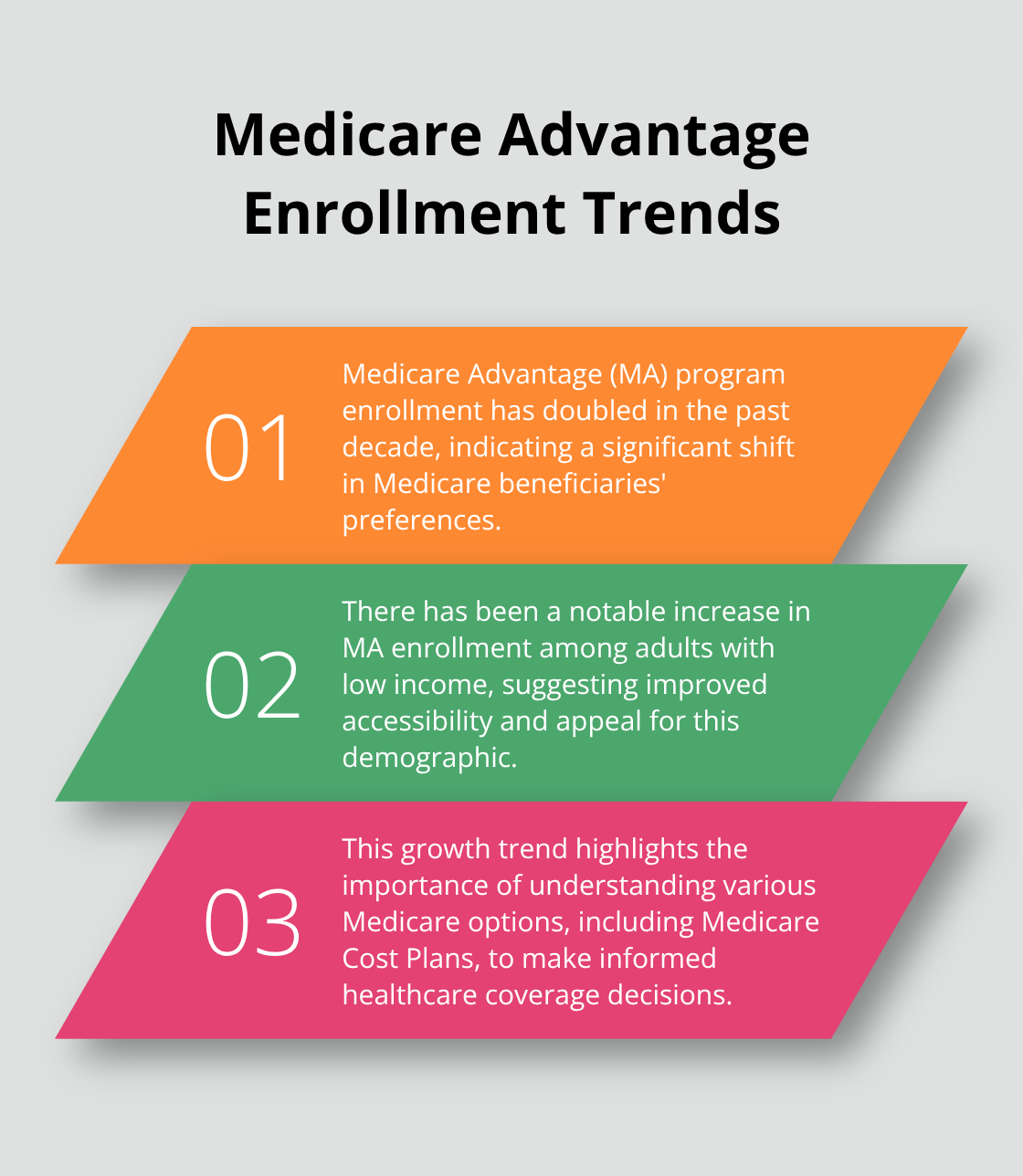
Medicare Advantage (MA) program enrollment has doubled in the past decade, with a significant increase among adults with low income. Let’s explore the specific enrollment periods and how they differ from other Medicare options.
Initial Enrollment Period
Your Initial Enrollment Period (IEP) for Medicare Cost Plans aligns with your eligibility for Original Medicare. This seven-month window starts three months before the month you turn 65, includes your birth month, and extends three months after. For example, if your 65th birthday falls in July, your IEP runs from April 1 to October 31.
During this time, you can enroll in a Medicare Cost Plan without penalties. It’s important to act within this period to avoid gaps in coverage or potential late enrollment fees. Starting the process early in your IEP ensures a seamless coverage transition.
Annual Enrollment Period
The Annual Enrollment Period (AEP), also known as Open Enrollment, occurs from October 15 to December 7 each year. This period allows you to make changes to your Medicare coverage, including enrolling in a Medicare Cost Plan (if available in your area).
During the AEP, you can:
- Switch from Original Medicare to a Cost Plan
- Change from one Cost Plan to another
- Return to Original Medicare from a Cost Plan
Any changes made during this period take effect on January 1 of the following year.
Special Enrollment Periods
Life doesn’t always align perfectly with standard enrollment periods. Special Enrollment Periods (SEPs) allow you to enroll in or make changes to your Medicare Cost Plan outside of regular enrollment times due to specific life events.
Common qualifying events for SEPs include:
- Moving out of your plan’s service area
- Losing other health coverage
- Changes in Medicaid eligibility
- Qualifying for Extra Help with Medicare prescription drug costs
SEPs typically last for two full months following the month of the qualifying event. Prompt action is essential when you experience a qualifying event to avoid any lapse in coverage.
Continuous Enrollment Feature
One of the most appealing aspects of Medicare Cost Plans is their continuous enrollment feature. Unlike most Medicare Advantage plans, many Cost Plans allow you to enroll or disenroll at any time throughout the year (as long as the plan accepts new members).
This flexibility proves particularly beneficial if your healthcare needs change unexpectedly or if you’re dissatisfied with your current coverage. However, it’s important to note that not all Cost Plans offer this feature, and availability can vary by location and plan provider.
The continuous enrollment option provides peace of mind to many beneficiaries, allowing them to adjust their coverage as their needs evolve without being tied to specific enrollment periods.
As we move forward, let’s examine the eligibility requirements for Medicare Cost Plans to ensure you meet the necessary criteria for enrollment.
Who Can Enroll in a Medicare Cost Plan?
Medicare Cost Plans have specific eligibility criteria that individuals must meet to enroll. Let’s explore these requirements to help you make informed decisions about your healthcare coverage.
Age and Medicare Enrollment
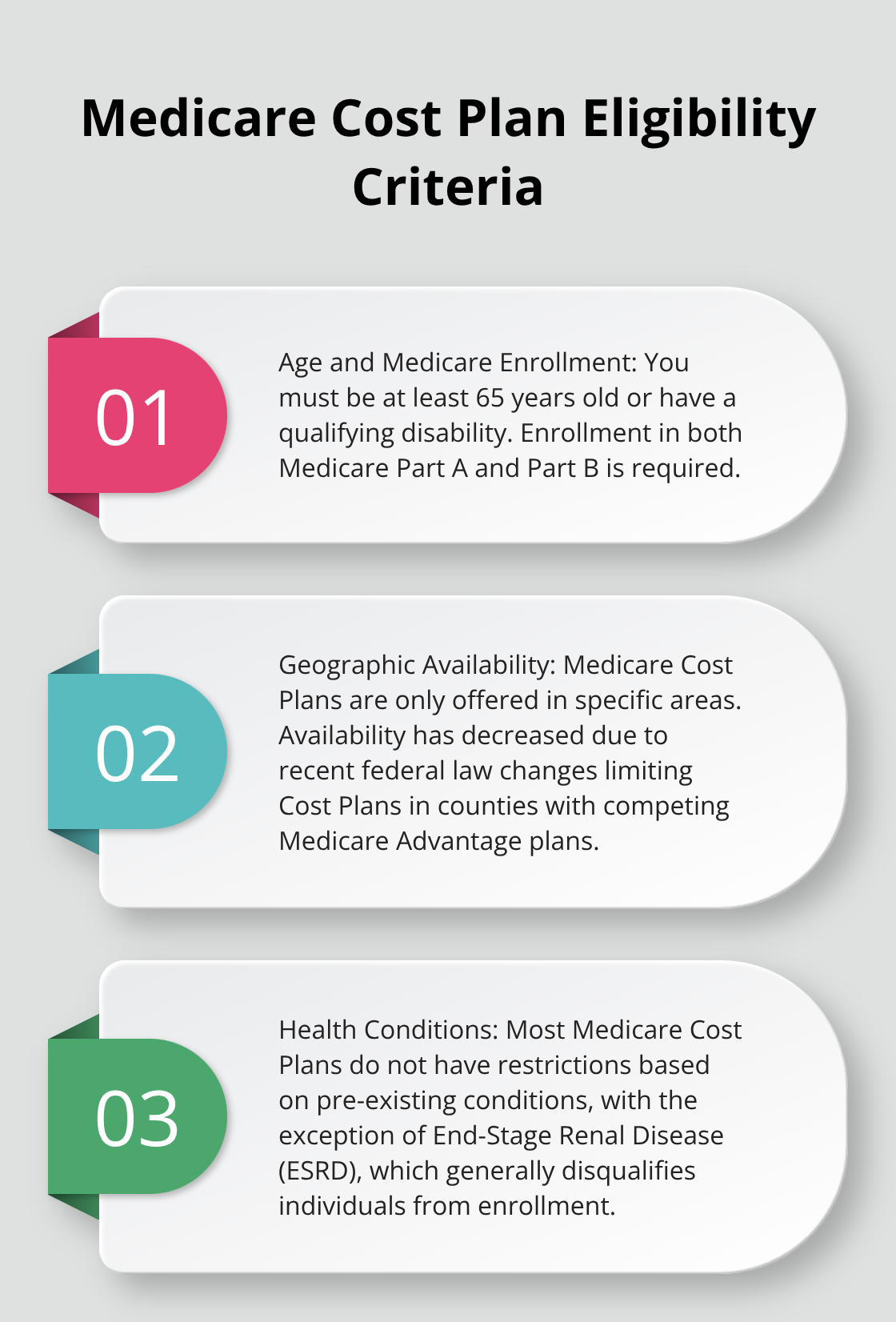
To qualify for a Medicare Cost Plan, you must be at least 65 years old or have a qualifying disability. You also need to enroll in both Medicare Part A and Part B. This dual enrollment is essential, as Cost Plans work in conjunction with Original Medicare.
Geographic Availability
Medicare Cost Plans are not available everywhere. These plans are offered only in specific areas, and their availability has decreased in recent years. A 2019 federal law change discontinued Cost Plans in counties with two or more competing Medicare Advantage plans.
To find out if a Cost Plan is available in your area, you can use the Medicare Plan Finder tool on the official Medicare website. Enter your zip code to see a list of available plans in your region.
Health Conditions and Eligibility
Most Medicare Cost Plans do not have restrictions based on pre-existing conditions. However, there’s one notable exception: individuals with End-Stage Renal Disease (ESRD) generally cannot enroll in Medicare Cost Plans.
It’s worth noting that this restriction for ESRD patients changed for Medicare Advantage plans in 2021, allowing these individuals more coverage options. However, the restriction still applies to most Cost Plans.
Consultation with Medicare Experts
If you’re unsure about your eligibility or need guidance on choosing the right Medicare option for your situation, you should contact a Medicare expert. They can provide personalized advice based on your specific circumstances and help you navigate the complexities of Medicare enrollment.
Final Thoughts
Medicare Cost Plan enrollment periods offer various opportunities to join or switch plans. The Initial Enrollment Period, Annual Enrollment Period, and Special Enrollment Periods provide specific windows for action. Many Medicare Cost Plans also feature continuous enrollment, which allows changes throughout the year if the plan accepts new members.
Eligibility for Medicare Cost Plans depends on several factors. Age requirements, Medicare Part A and B enrollment, geographic availability, and health conditions all influence eligibility. Recent changes have limited Cost Plan accessibility in certain regions, so it’s important to verify availability in your area.
We at Dave Silver Insurance specialize in simplifying the Medicare enrollment process. Our team offers personalized advice tailored to your specific health and financial needs (with over 17 years of experience). For expert guidance on Medicare Cost Plan enrollment periods, contact us today to make informed decisions about your healthcare coverage.