

Medicare enrollment guidance 2026 doesn’t have to be overwhelming. We at Dave Silver Insurance know that choosing the right coverage involves understanding your options, deadlines, and costs.
This guide walks you through enrollment windows, plan comparisons, and supplemental coverage so you can make a decision that fits your health and budget.
Medicare Enrollment Windows and Deadlines in 2026
Initial Enrollment Period for First-Time Beneficiaries
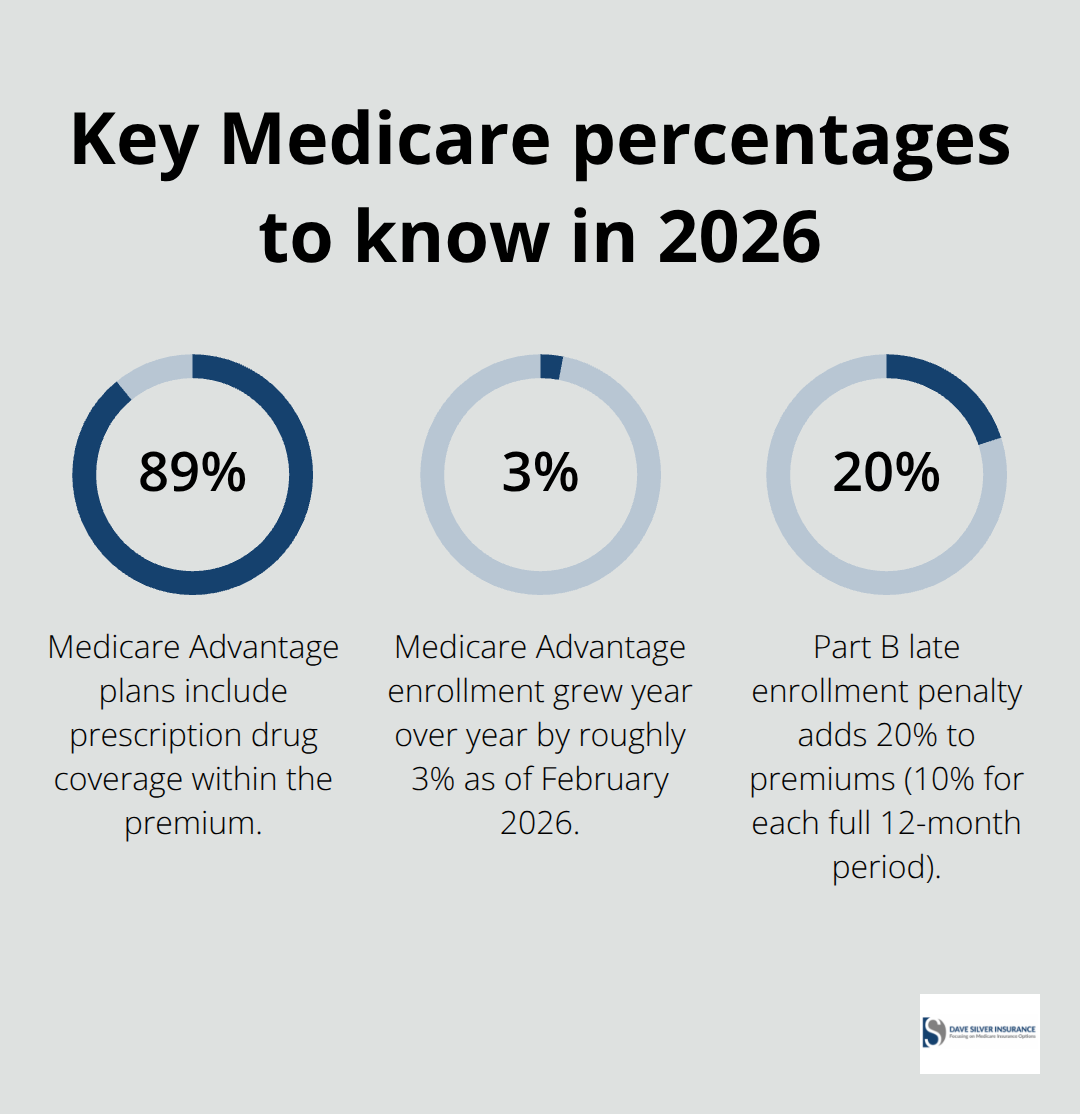
Timing matters more than most people realize when it comes to Medicare enrollment. Miss a deadline and you face late penalties that stick with you permanently, or worse, go without coverage. The Initial Enrollment Period for first-time beneficiaries runs three months before you turn 65, the month you turn 65, and three months after. If you have Part A but not Part B, you get a separate two-month window after both become available. Enroll during your Initial Enrollment Period and you avoid penalties entirely. Wait until after and Original Medicare Part B premium penalties for late enrollment carry a 20% late enrollment penalty (10% for each full 12-month period that you could have signed up), according to Medicare.gov. For Medicare Advantage plans specifically, you must have both Part A and Part B active before enrollment takes effect, so timing your applications matters.
Annual Enrollment Period and Medicare Advantage Open Enrollment
The Annual Enrollment Period, running October 15 through December 7, applies to everyone already on Medicare. During this window you can switch between Original Medicare and Medicare Advantage, drop your current plan, or change drug coverage.
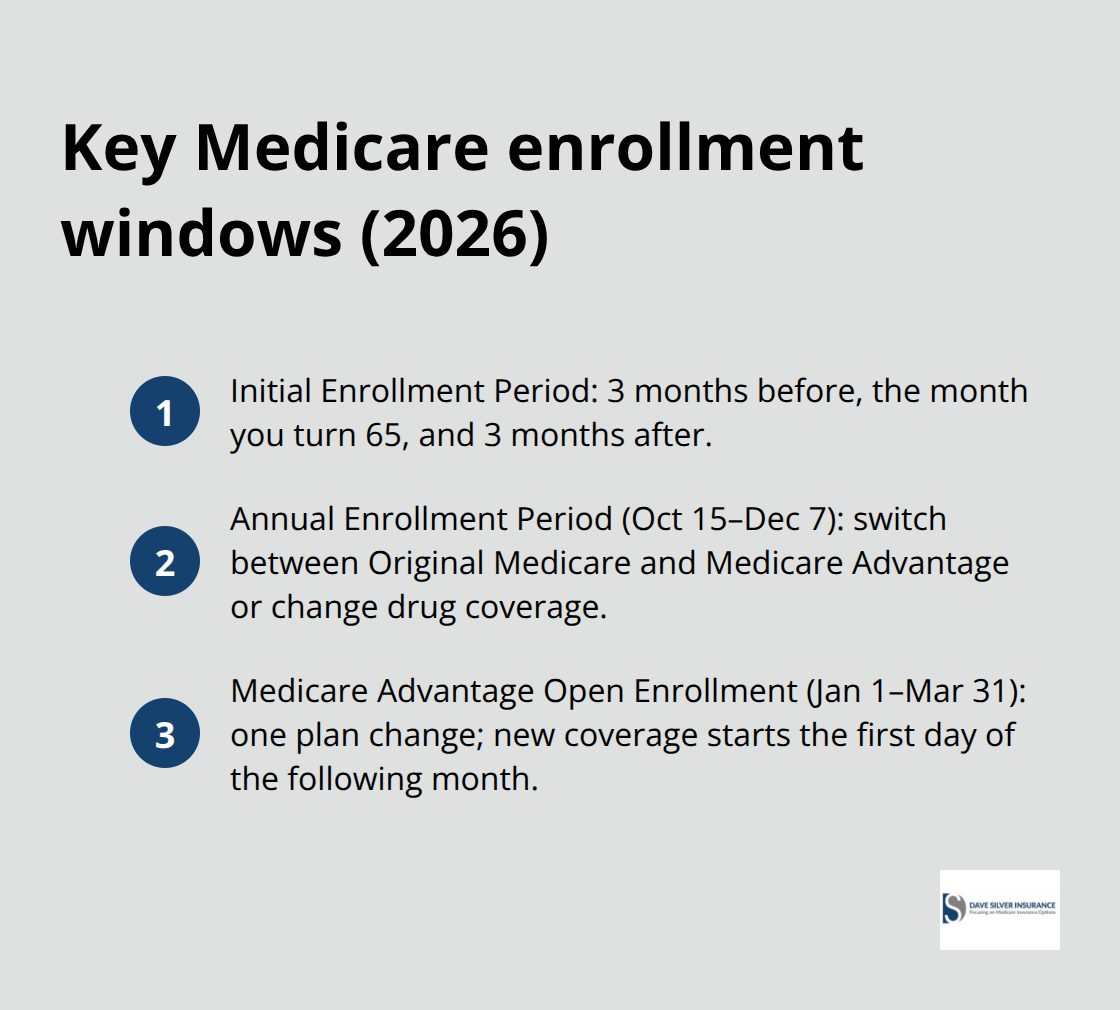
The Medicare Advantage Open Enrollment Period operates separately for those already in MA plans, running January 1 through March 31, with one important restriction: you can make only one change during this period, and it takes effect the first day of the following month. This timing requirement (coverage changes take effect on the first day of the following month) demands careful planning to avoid gaps in your protection.
Special Enrollment Periods and Qualifying Events
Special Enrollment Periods activate when life events occur-moving to a new state, losing employer coverage, becoming eligible for Medicaid, or experiencing other qualifying circumstances. Most Special Enrollment Periods give you two months to act. Document any life event that triggers a Special Enrollment Period and contact your plan or Medicare immediately, because these windows close fast. If you enroll online through Medicare.gov and discover the plan data was incorrect, you may qualify for an additional Special Enrollment Period to correct the mistake.
Getting Help With Enrollment Timing
Call 1-800-MEDICARE to verify your eligibility and timing. State Health Insurance Assistance Programs, found at shiphelp.org, offer free personalized counseling and clarify state-specific rules without bias toward any particular insurer. When you enroll online, verify plan information directly with the plan and document the conversation (record the date, representative name, and outcomes) to protect against misinformation.
Understanding these enrollment windows positions you to make informed decisions about your coverage options. The next section explores the fundamental differences between Original Medicare and Medicare Advantage plans so you can evaluate which structure aligns with your health needs and financial situation.
Original Medicare vs Medicare Advantage: Which Structure Works for Your Budget
Understanding the Cost Structures
The structural difference between Original Medicare and Medicare Advantage fundamentally shapes your costs, network flexibility, and how you pay for care. Original Medicare consists of Part A (hospital insurance) and Part B (medical insurance), where you pay a monthly premium for Part B, an annual deductible of $1,674 for Part A hospital stays in 2026, and 20% coinsurance for most services after you meet deductibles. Medicare Advantage (Part C) bundles Part A and B into a single plan with a different cost structure: lower or zero premiums in many regions, but fixed copayments for doctor visits, urgent care, and emergency room visits that range from $10 to $75 depending on the plan. According to KFF data, Medicare Advantage enrollment reached approximately 35.5 million people by February 2026, up roughly 3% year over year, which signals that cost-conscious beneficiaries choose the predictability of fixed copays over the variable coinsurance model of Original Medicare.
Network Flexibility and Provider Access
The trade-off between these structures centers on provider choice and network restrictions. Original Medicare offers unlimited choice of providers nationwide with no network restrictions, while Medicare Advantage plans restrict you to in-network doctors and hospitals. About 89% of Medicare Advantage plans now include prescription drug coverage bundled into the monthly premium, eliminating the need to shop separately for Part D. If you have specific doctors or hospitals you want to use, verify they accept Medicare and whether they participate in your chosen plan’s network before enrolling, because out-of-network care in Medicare Advantage typically costs significantly more or isn’t covered at all unless it’s an emergency.
Managing Prescription Drug Costs
Drug costs represent the second major decision point between these structures. Under Original Medicare, you purchase a separate Part D prescription drug plan with costs that vary dramatically by plan and pharmacy, with the 2026 out-of-pocket threshold sitting at $2,000 annually before catastrophic coverage kicks in. Medicare Advantage plans with drug coverage integrate pharmacy benefits into one premium, offering simplified billing but less flexibility in plan switching outside the annual enrollment windows. For insulin specifically, the 2026 cost-sharing cap is the lesser of $35, 25% of the maximum fair price under the Medicare Drug Price Negotiation Program, or 25% of the negotiated price, and this applies across both Original Medicare Part D and Medicare Advantage drug plans. Additionally, all Part D plans starting in 2025 must offer the Medicare Prescription Payment Plan, which caps your monthly out-of-pocket costs instead of requiring full payment at the pharmacy counter-a feature that matters significantly if you take expensive medications.
Planning for Supplemental Coverage
Your decision to stay in or leave Medicare Advantage affects your supplemental coverage options down the road. If you switch from Medicare Advantage back to Original Medicare during the Medicare Advantage Open Enrollment Period (January 1 through March 31), you can join a standalone Part D plan. Outside federally protected enrollment periods, Medigap policies that supplement Original Medicare can be denied or priced higher due to underwriting. This means your initial choice between Original Medicare and Medicare Advantage carries long-term implications for your ability to add supplemental coverage later.
Understanding these structural differences positions you to evaluate which model aligns with your health needs and financial situation. The next section explores Medigap insurance and supplemental coverage options so you can see how additional protection layers work with your primary Medicare choice.
Medigap Coverage and When It Makes Financial Sense
How Medigap Reduces Your Out-of-Pocket Costs
Medigap policies fill the gaps that Original Medicare leaves behind, and the decision to purchase one hinges on timing and your specific health situation. If you choose Original Medicare over Medicare Advantage, you face the 20% coinsurance on most services, hospital deductibles, and potentially unlimited out-of-pocket costs in a single year. Medigap insurance reduces these expenses by covering copayments, coinsurance, and deductibles that Medicare does not pay, which means predictable healthcare costs instead of surprise bills. The catch is enrollment timing. You get a guaranteed issue right during your Initial Enrollment Period (three months before you turn 65 through three months after), meaning insurers cannot deny you or charge more based on pre-existing conditions. Miss this window and your options shrink dramatically.
The Cost of Missing Your Enrollment Window
Outside your protected period, Medigap insurers can deny your application entirely, charge 20 to 50 percent higher premiums, or impose a six-month waiting period for pre-existing conditions, according to Medicare Rights Center guidance. This penalty structure makes your Initial Enrollment Period decision consequential.
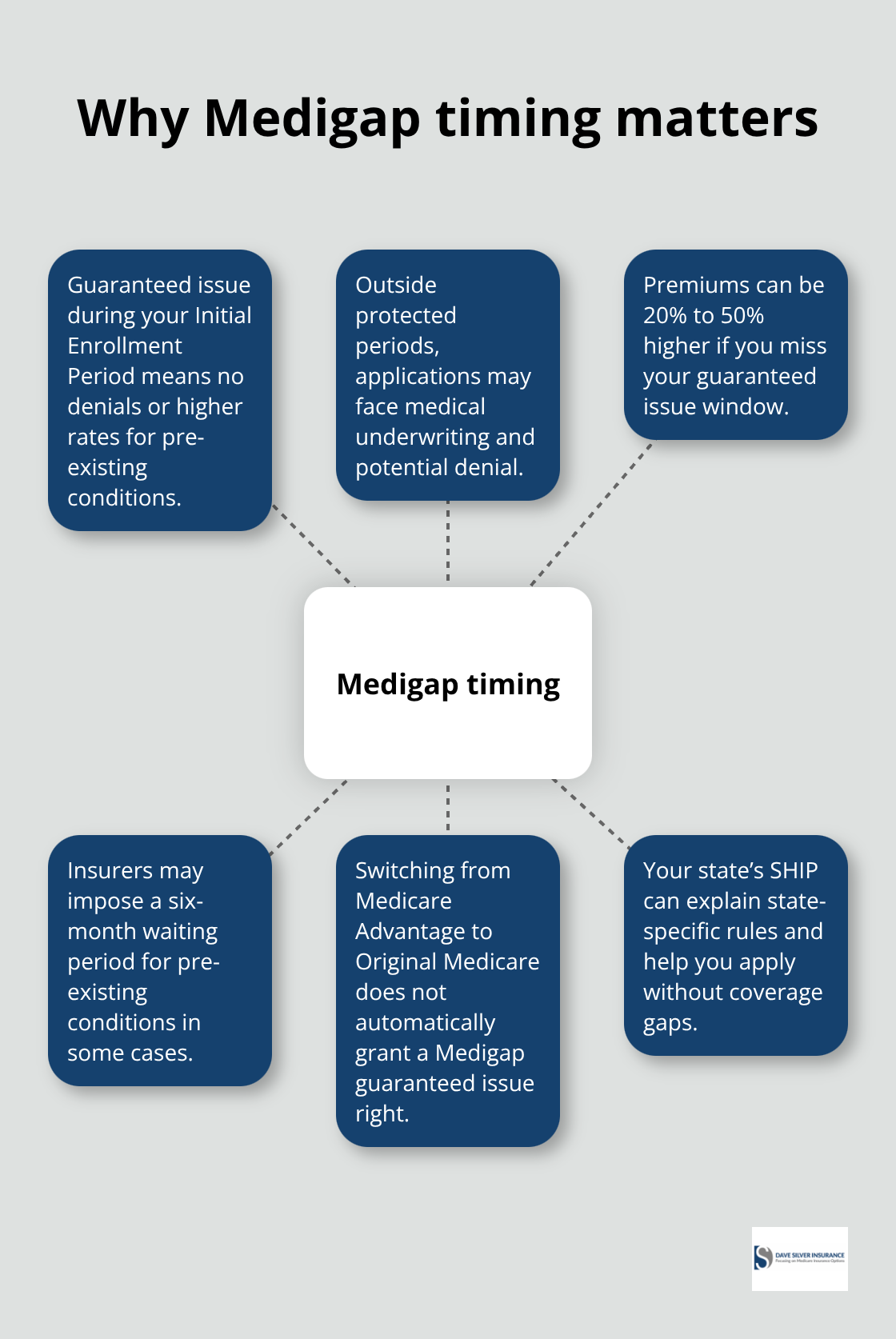
If you enroll in Original Medicare during your three-month initial window, you can also enroll in Medigap during the same period without underwriting obstacles. Waiting even one month after that window closes exposes you to medical underwriting and potential denial.
Comparing Medigap Plans and Premiums
Your state determines which Medigap plans are available and what they cost. Ten standardized Medigap plans exist nationwide (Plan A through Plan N), and each plan covers the same benefits regardless of which insurer sells it, so Plan G from one company covers identical services as Plan G from another. The differences lie in premium pricing and customer service. Plan G covers the Part B deductible and is the most comprehensive option for new enrollees in 2020 and later, while Plan F (the previous gold standard) closed to new beneficiaries in 2020. Plans A, B, D, and G offer strong coverage for most people, with Plan G commanding the highest premiums but eliminating the Part B deductible ($240 in 2026). Plans C, H, I, and J are no longer available to new enrollees.
Your state health insurance assistance program at shiphelp.org can help you compare rates across insurers in your area, since premiums vary significantly even for identical coverage. Contact multiple Medigap insurers directly and request quotes for your age and zip code. Some insurers offer 5 to 10 percent discounts for paying annually instead of monthly, which compounds savings over time.
Transitioning from Medicare Advantage to Medigap
If you switch from Medicare Advantage back to Original Medicare during the Medicare Advantage Open Enrollment Period (January 1 through March 31), you do not automatically receive a guaranteed issue right for Medigap, so you must apply for Medigap coverage during that same window or risk underwriting delays and denials. Document the exact date you disenroll from Medicare Advantage and immediately contact Medigap insurers, because some states recognize a limited guaranteed issue right in this transition, while others do not. Your local SHIP can clarify your state’s specific rules and help you navigate the application process without losing coverage.
Final Thoughts
Your Medicare enrollment guidance for 2026 starts with three honest questions about your health and finances. Do you have chronic conditions requiring specific doctors, can you afford variable out-of-pocket costs, and which plan structure offers better drug pricing for your prescriptions? Your answers determine whether Original Medicare with Medigap or Medicare Advantage serves you better-if you see the same cardiologist and want unlimited provider choice, Original Medicare makes sense, but if you take multiple medications and want one predictable premium, Medicare Advantage likely fits better.
We at Dave Silver Insurance have spent over 17 years helping people cut through the complexity and find coverage that matches their needs. Our team works with you to understand your health situation, review your medications, and calculate real costs across your options, and we remain accessible seven days a week because Medicare decisions don’t follow a nine-to-five schedule. Contact Dave Silver Insurance to get personalized recommendations backed by someone who knows the rules and won’t push you toward a plan that doesn’t fit your situation.
After you select your coverage, act immediately during your eligible window and document everything with written confirmation from your plan. Verify your coverage starts on the correct date, and if you’re switching plans, submit disenrollment and enrollment requests simultaneously to avoid gaps. Mark your calendar for next year’s enrollment period so you don’t miss the deadline-your Medicare enrollment guidance for 2026 ends with action, not just information.
Disclaimer: The information provided in this blog is for general informational purposes only and does not constitute legal, financial, or insurance advice. Coverage options, terms, and availability may vary. Please consult with a licensed professional for advice specific to your situation