

Mental health is a critical part of your overall wellbeing, yet many Medicare beneficiaries don’t fully understand what their plans actually cover. Medicare mental health services vary significantly depending on which plan you choose, and gaps in coverage can leave you paying thousands out of pocket.
At Dave Silver Insurance, we’ve helped countless seniors navigate these confusing coverage options. This guide breaks down exactly what Medicare Part A and Part B cover, how Medicare Advantage and Medigap plans fill the gaps, and what you might be missing.
Mental Health Coverage Under Medicare Part A and Part B
Part A’s Limited Psychiatric Coverage
Medicare Part A covers inpatient mental health treatment, but with a significant catch that most beneficiaries don’t realize. If you’re admitted to a hospital for psychiatric care, Part A covers up to 190 lifetime days in a psychiatric facility, according to the Centers for Medicare and Medicaid Services. After that, you’re on your own financially. This limitation exists nowhere else in Medicare, making it one of the most restrictive mental health provisions in the entire program.
Part A also covers mental health services delivered during skilled nursing facility stays following a hospital admission, though this typically lasts no more than 100 days per benefit period. The reality is that Part A’s mental health coverage works well for acute crisis situations but falls apart for anyone needing extended inpatient psychiatric care.
Part B’s Outpatient Mental Health Benefits
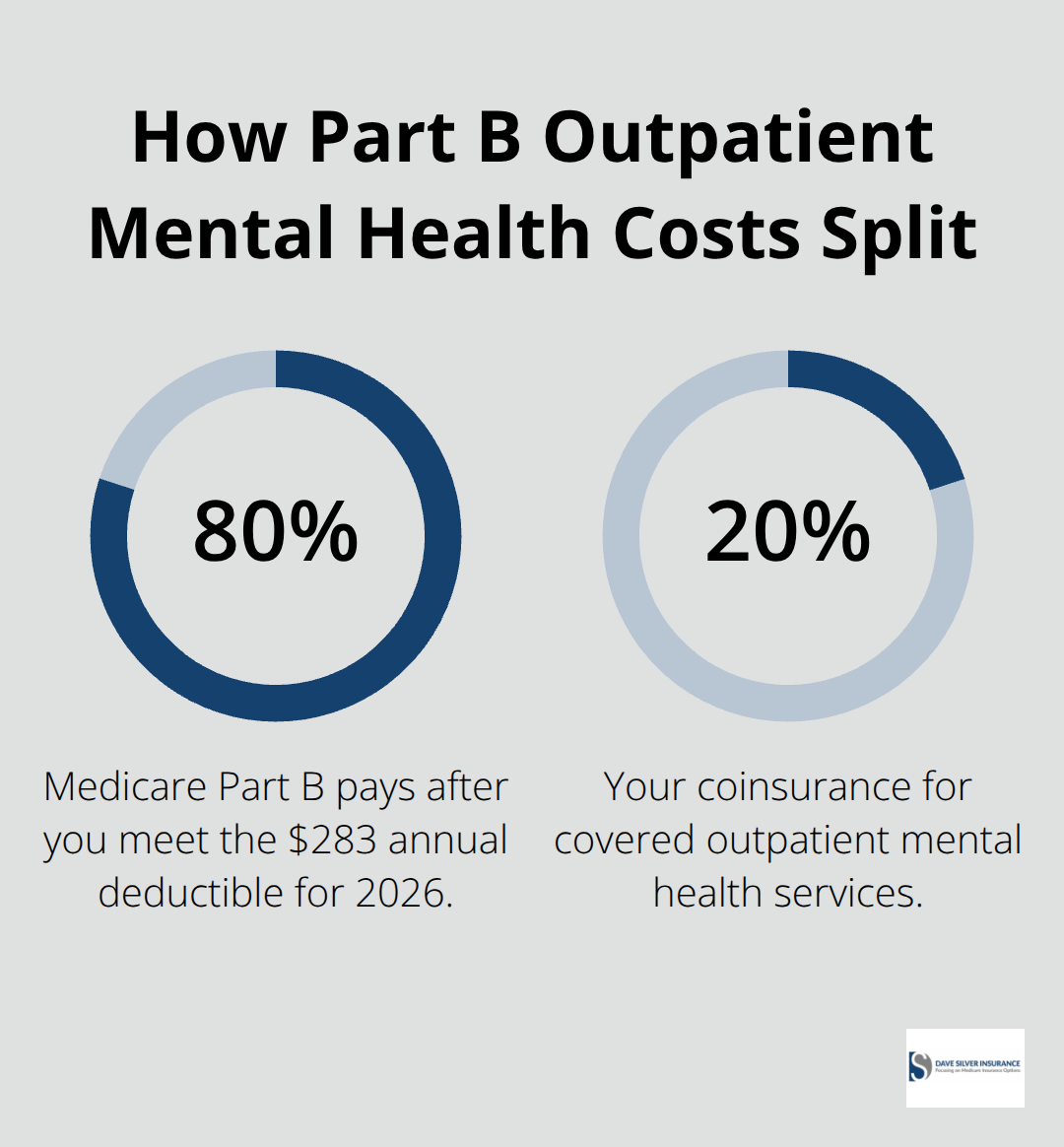
Part B is where most of your outpatient mental health coverage lives, and it’s substantially more generous than Part A. Part B covers psychiatrist visits, psychologist sessions, clinical social worker therapy, and nurse practitioner mental health services at 80 percent after you meet your annual deductible of $283 for 2026. You’ll pay the remaining 20 percent out of pocket for covered services.
However, Part B imposes annual limits on certain mental health providers. Clinical social workers and other non-physician mental health professionals face restrictions that psychiatrists and psychologists don’t encounter, creating perverse incentives to see more expensive doctors for the same therapy.
The Out-of-Pocket Reality
Medicare requires you to pay the full cost upfront for services, then submit claims for reimbursement, which strains many seniors on fixed incomes. The out-of-pocket costs add up quickly, especially if you need weekly therapy sessions. At 20 percent coinsurance, a $120 therapy session costs you $24 each visit, totaling nearly $1,250 annually for weekly treatment before accounting for psychiatry visits or medication management appointments.
These gaps in Part A and Part B coverage explain why many beneficiaries turn to supplemental plans that fill the holes Medicare leaves behind.
Mental Health Coverage Under Medicare Advantage and Medigap Plans
Medicare Advantage Plans Expand Mental Health Coverage
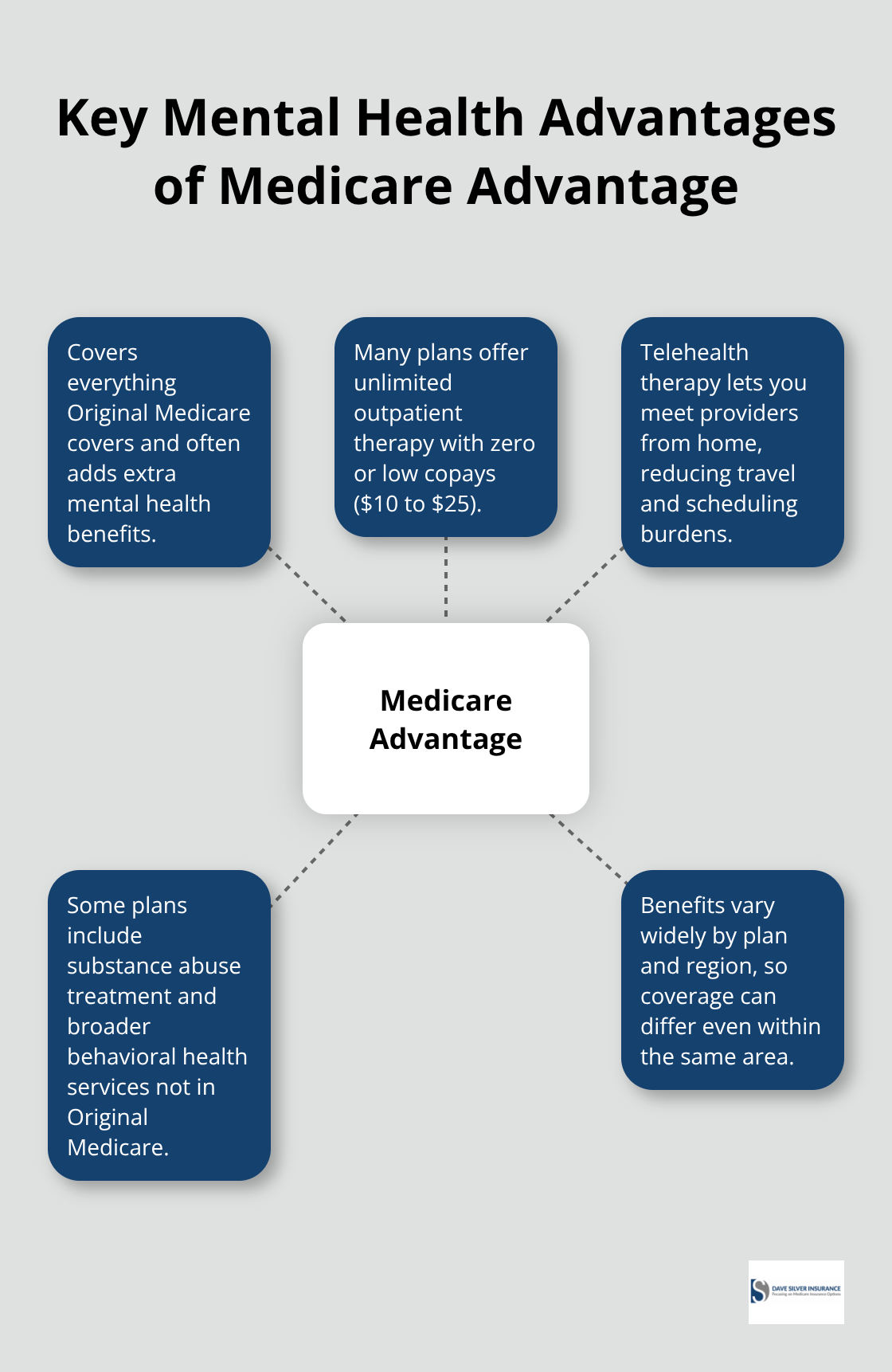
Medicare Advantage plans consistently outperform Original Medicare when it comes to mental health coverage, and the numbers prove it. These plans, also called Part C, must cover everything Original Medicare covers, but they frequently add mental health benefits that go far beyond the baseline. Many Medicare Advantage plans cover unlimited outpatient mental health visits with zero copay or copays as low as $10 to $25 per visit, compared to the 20 percent coinsurance you’d pay under Part B.
Plans from major insurers like Humana and UnitedHealthcare often include telehealth mental health services, allowing you to see therapists from home without travel costs or scheduling headaches. Some plans even cover substance abuse treatment and behavioral health services that Original Medicare doesn’t touch. The catch is that these benefits vary dramatically between plans and between regions, so two Medicare Advantage plans in your area might offer completely different mental health coverage.
You need to compare the specific mental health provisions in each plan’s Summary of Benefits and Coverage document before enrolling, because choosing based on prescription drug coverage alone could cost you thousands in therapy expenses.
Medigap Insurance for Additional Mental Health Protection
Medigap plans take a different approach by filling the 20 percent coinsurance gap that Original Medicare leaves behind. If you have Medigap coverage, you pay nothing out of pocket for Part B mental health services after meeting the annual deductible, which means those weekly therapy sessions become completely free. Plans C and F offer the most comprehensive coverage, handling both the deductible and coinsurance, while Plans D, G, and M cover coinsurance only.
The tradeoff is that Medigap premiums range from $100 to $300 monthly depending on your age and location, according to data from the Centers for Medicare and Medicaid Services, so you pay predictable monthly costs instead of per-visit expenses. Medigap doesn’t add new mental health services the way Medicare Advantage does, but it eliminates the financial friction that keeps seniors from seeking care they need.
Comparing Your Coverage Options
If you’re already comfortable with your Original Medicare providers and therapists, Medigap offers the simpler path forward. Medicare Advantage works better if you want expanded mental health networks and don’t mind switching providers to access lower copays. The choice between these two approaches depends entirely on your current provider relationships and how much flexibility you’re willing to sacrifice for lower out-of-pocket costs.
These coverage differences matter significantly when you face actual mental health challenges. Understanding which plan structure fits your situation prevents costly surprises when you need therapy most, which is why the next section examines the specific gaps that still exist even with these supplemental options.
Common Gaps in Mental Health Coverage
The 190-Day Psychiatric Hospital Limit
Medicare Part A imposes a 190-day lifetime limit on psychiatric hospital stays, a restriction that applies to no other medical condition. Once you exhaust those days, Medicare stops paying entirely, leaving you responsible for thousands in facility costs. This limitation creates a genuine crisis for seniors with serious mental illness who require extended inpatient treatment. The punitive nature of this rule stands out as the most restrictive mental health provision in the entire Medicare program, affecting beneficiaries with conditions requiring long-term psychiatric hospitalization.
Uncovered Mental Health Assessments
Medicare refuses to cover routine mental health screenings, psychological testing, or neuropsychological evaluations that psychiatrists often need to diagnose conditions accurately. If your doctor orders cognitive testing to evaluate dementia or other conditions affecting mental health, you pay out of pocket because Medicare classifies these assessments as non-covered services. Many beneficiaries face unexpected bills for several hundred dollars following an evaluation they assumed would be covered. This gap forces seniors to choose between paying for diagnostic testing or proceeding without the clinical information their doctors need.
Psychiatric Medication Costs
Part D covers psychiatric medications, but formularies vary wildly between plans, and many antidepressants or antipsychotics land on higher cost tiers requiring $50 to $100 monthly copays. The Centers for Medicare and Medicaid Services data shows that seniors with mental health conditions take an average of 4.5 medications daily, meaning psychiatric drug costs easily exceed $200 monthly for those on multiple medications.
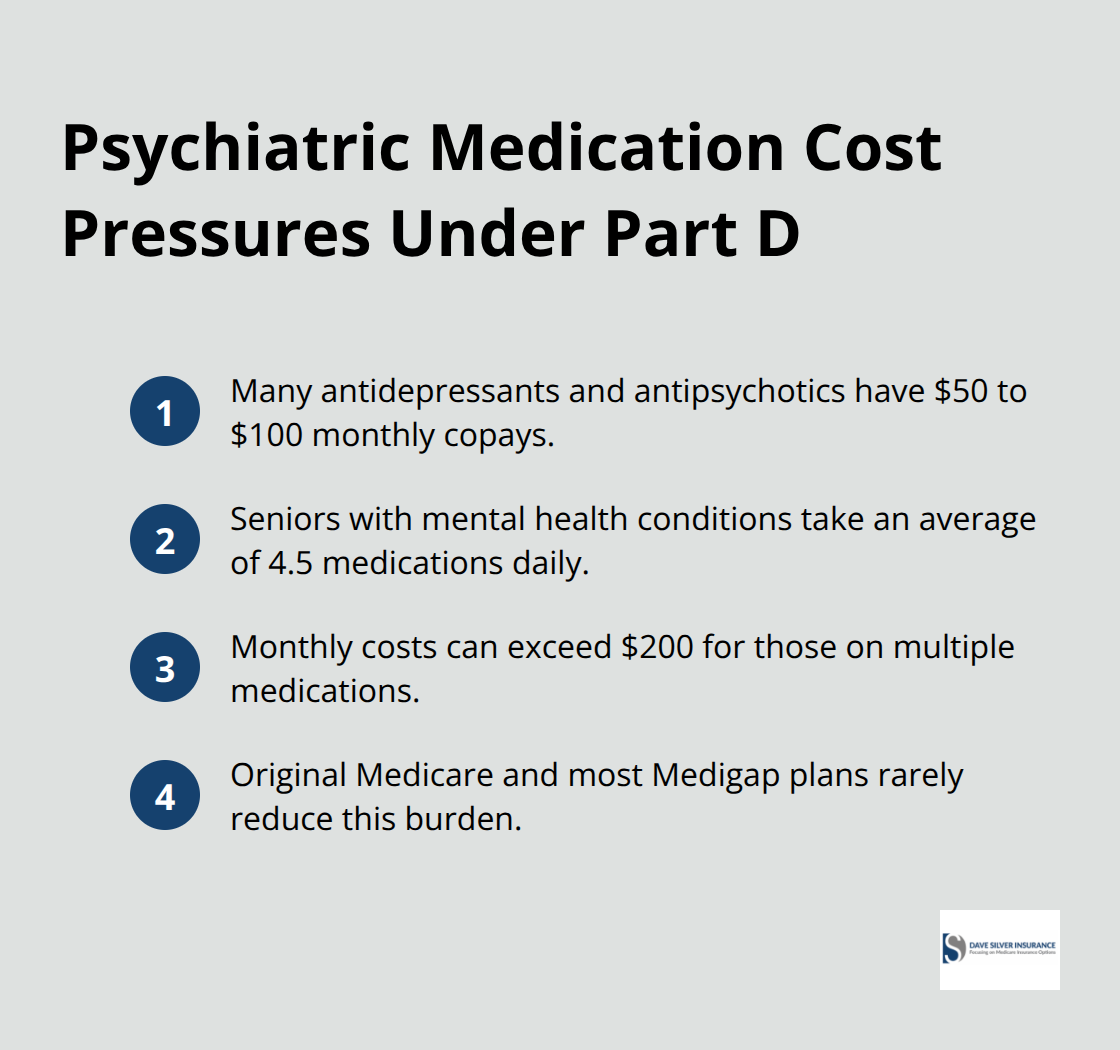
Neither Original Medicare nor most Medigap plans adequately address this medication burden. Seniors often struggle to afford the psychiatric medications they need while managing other chronic conditions.
Finding In-Network Mental Health Providers
Psychiatrist shortages in rural areas mean some beneficiaries travel 60 miles or more for appointments. Even in urban areas, many therapists don’t accept Medicare or accept only a handful of Medicare plans, forcing you to either pay cash upfront or search extensively for available providers. Online directories frequently list outdated or inaccurate information about whether providers actually accept your specific plan. Call your plan’s mental health provider line directly to verify current provider networks rather than relying on online resources.
Final Thoughts
Your Medicare mental health coverage directly affects whether you’ll seek treatment when you need it most. Start by requesting your plan’s Summary of Benefits and Coverage document and read the mental health section carefully, noting copay amounts, visit limits, and in-network providers. If you have Original Medicare with Part B, calculate what weekly therapy actually costs you at 20 percent coinsurance to understand your true financial burden.
Contact your current mental health providers directly and ask which Medicare plans they accept rather than relying on outdated online directories. If you’re considering Medicare Advantage, compare mental health benefits across at least three plans in your area before enrolling, since the differences between plans are substantial. Switching to a plan with better coverage could save you hundreds annually and remove the financial barriers that prevent you from accessing care.
We at Dave Silver Insurance have spent over 17 years helping seniors navigate these exact decisions about Medicare mental health coverage. Contact Dave Silver Insurance today for a personalized consultation, and we’ll show you exactly what different plans cover and help you choose the option that keeps mental health care affordable and accessible.
Disclaimer: The information provided in this blog is for general informational purposes only and does not constitute legal, financial, or insurance advice. Coverage options, terms, and availability may vary. Please consult with a licensed professional for advice specific to your situation