

Moving to a new state doesn’t mean losing your Medicare coverage-but it does require understanding how Medigap portability rules work in your new location. We at Dave Silver Insurance know that relocating brings enough stress without worrying about gaps in your health insurance.
The good news is that your Medigap coverage can follow you across state lines. However, each state has different plans available, different insurers, and different enrollment rules that could affect your coverage timeline and costs.
How Medigap Plans Differ Across State Lines
Your Medigap plan does not automatically transfer when you cross state lines. Each state regulates its own Medigap plans, sets its own rates, and approves which insurers can operate within its borders. This means the Plan G you have in Florida might not exist in California, or a different company might offer it at vastly different prices. The Centers for Medicare and Medicaid Services standardizes Medigap plans and labels them A through N, but not every state offers all of them. Some states like New York and Connecticut have their own unique Medigap plans that fall outside the standard federal framework. Your current plan might simply vanish once you relocate, forcing you to switch to whatever options are available in your new state.
Your Coverage Ends When You Leave
Your Medigap policy ties to the state where you purchased it and where you currently live. Most insurers will terminate your coverage on the last day of the month when you move out of state. If you move on March 15th, your coverage typically ends March 31st. The 60 days following your move represent a critical window because federal law grants you a guaranteed issue right in most states during this period. This protection allows you to enroll in a new Medigap plan without medical underwriting or pre-existing condition exclusions.
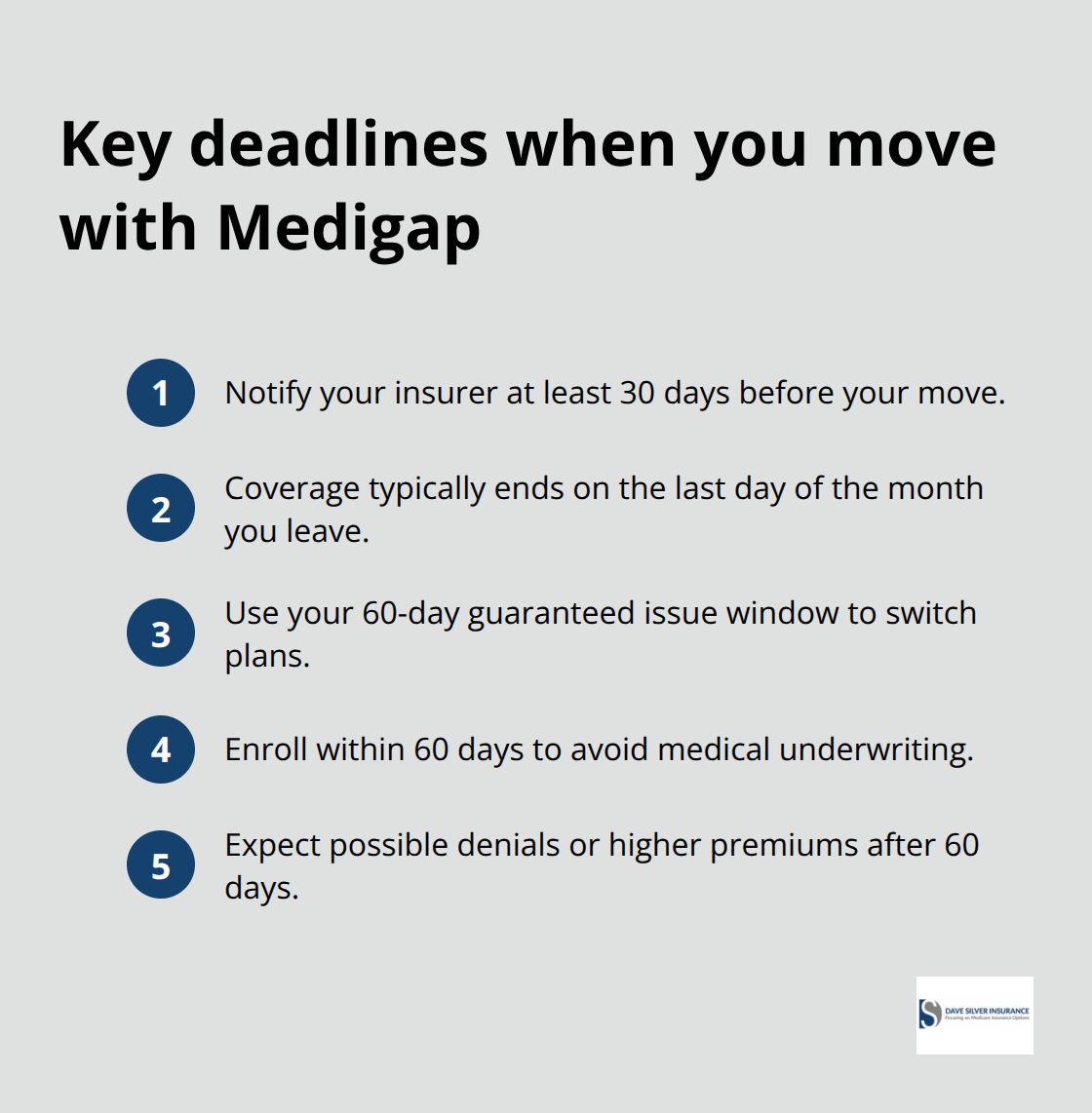
After those 60 days expire, insurers can deny you coverage or charge significantly higher premiums based on your health status. Notify your current insurer at least 30 days before your move to understand your exact termination date and coverage options in your destination state.
State Rates and Premiums Vary Dramatically
The same Medigap plan costs completely different amounts depending on where you live. Three states use community rating, meaning everyone pays the same price regardless of age. Most other states use age-based rating, where premiums increase as you get older. Some states allow issue-age rating, where your premium locks based on your age when you first enroll (this protects you from future age-related increases).
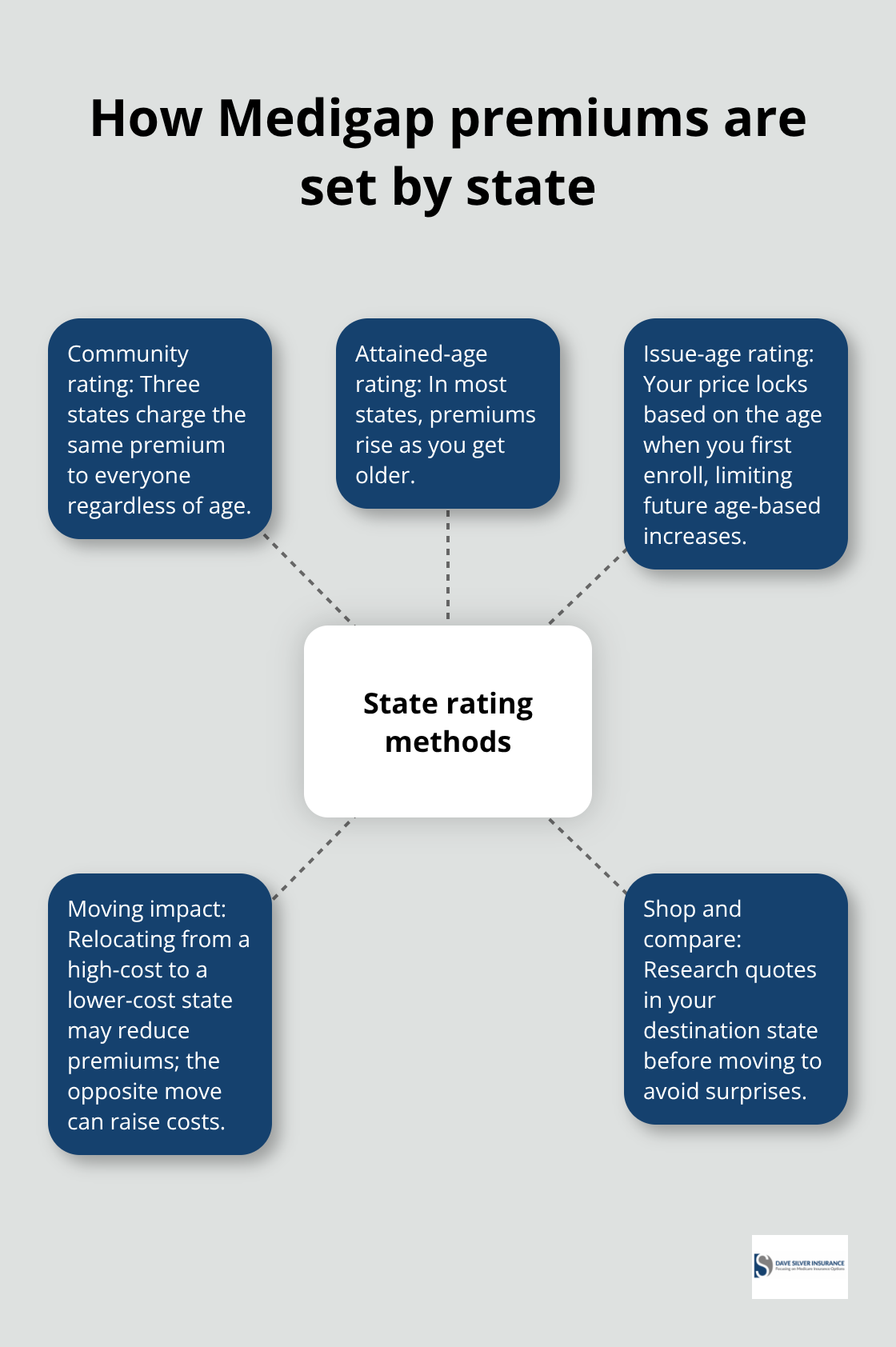
Moving from a high-cost state to a lower-cost state could reduce your premiums significantly, while the opposite move could shock your finances. Research the actual premium costs in your new state before you move, not after. Contact insurers directly or use the Medicare Plan Finder to see real quotes based on your age and the specific plans available in your destination state.
Understanding these state-level differences shapes your entire relocation strategy. The next section walks you through the specific steps to transfer your Medigap policy and avoid coverage gaps during the transition.
How to Transfer Your Medigap Coverage When Moving
Start Your Transfer Process Early
Contact your current Medigap insurer at least 60 days before your move, not after you’ve already packed the boxes. Confirm your exact coverage end date and request documentation of your current plan details. Most insurers require written notice 30 days before your move, though some accept phone notification. Ask specifically about any coverage lapses that might occur between your old policy terminating and a new one activating in your destination state. Many people assume their coverage automatically continues, then discover a gap only when they need medical care. Get everything in writing, including your termination date and any confirmation numbers. This documentation becomes critical if you need to prove continuous coverage later, especially since Medicare tracks these records for Part B premium calculations.
Research Plans in Your New State
Visit the Medicare Plan Finder on Medicare.gov to see real quotes based on your age and zip code in your destination state. Don’t rely on your current plan name or your insurer’s national reputation-many major carriers don’t operate in all states, and regional insurers often offer better rates. Call two to three insurers directly in your new state and request quotes for comparable Medicare supplement insurance plans before you move. Pay attention to enrollment deadlines: while your 60-day guaranteed issue period protects you from medical underwriting, it doesn’t extend enrollment deadlines. Some insurers have specific application windows, and missing them means waiting for the next open enrollment period in the fall.
Submit Your Application on Time
Apply for your new coverage at least 30 days before your old policy ends to avoid any gaps. Submit applications online or by mail, but follow up with a phone call to confirm receipt-applications get lost more often than you’d think, and you can’t afford delays when your coverage termination date approaches. Your new state’s plans may differ significantly from what you had before (different insurers, different premiums, different coverage options), so comparing options now prevents surprises later. Once you complete your application and receive confirmation, you’ll want to understand what happens if gaps still occur during your transition-and what protections exist to cover you.
What Happens if Your Coverage Lapses During the Move
Coverage Gaps Create Real Financial Consequences
Coverage gaps during relocation occur far more often than most people realize, and they create serious financial consequences. If your old policy terminates on March 31st and your new coverage doesn’t activate until April 15th, you have no Medigap protection during those two weeks. Any medical services you receive fall entirely on your shoulders, and Medicare Part B and Part D still require you to pay your share. The federal government doesn’t track these gaps automatically, so you won’t receive a warning or reminder. You only discover the problem when you submit a claim and the insurer rejects it because you weren’t covered.
How to Prevent Coverage Gaps
The solution is straightforward: overlap your coverage by applying for your new Medigap plan at least 45 days before your old policy ends, not 30 days. This gives you time to resolve application problems, receive approval, and confirm your new start date before your old coverage terminates.
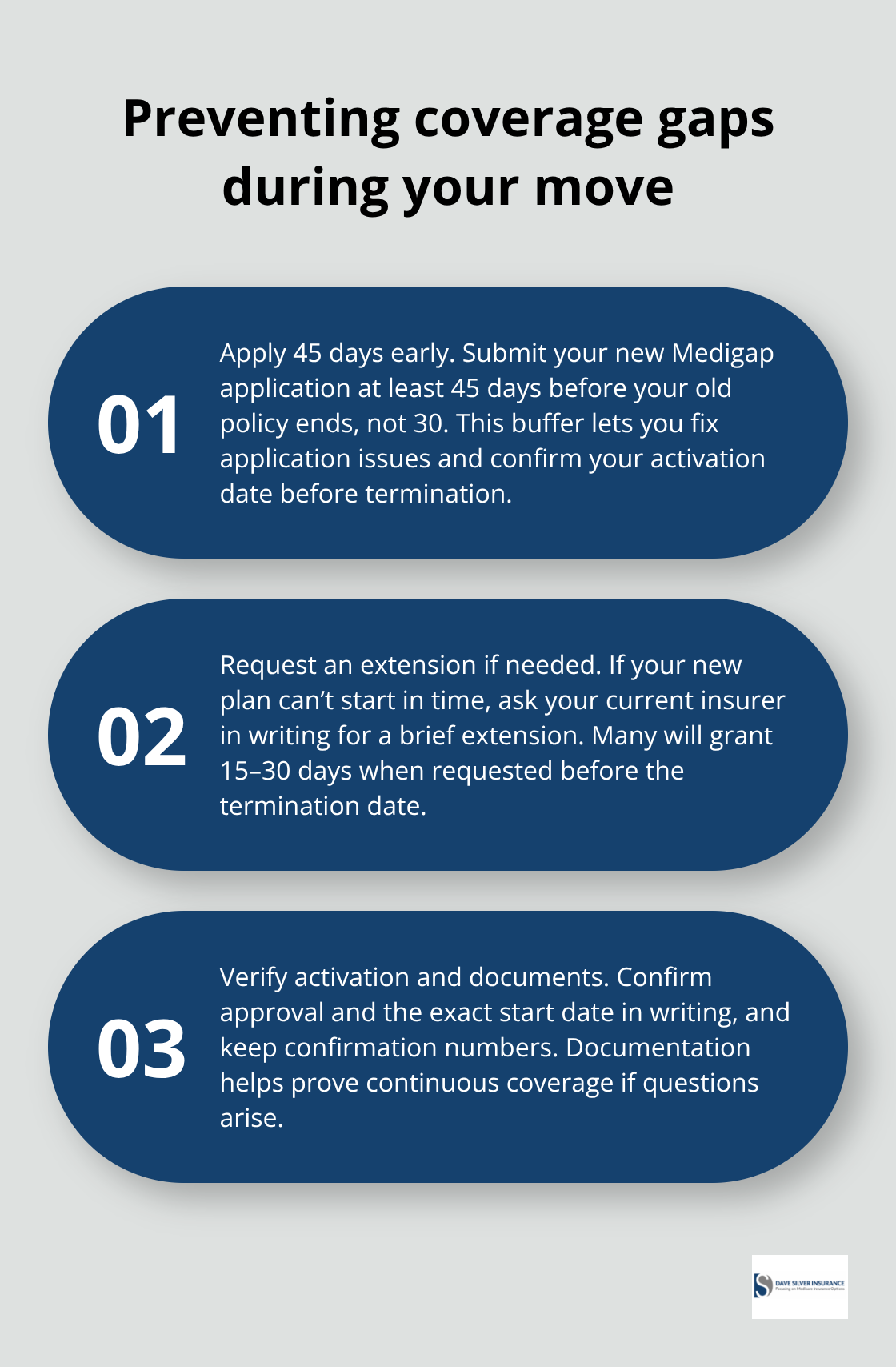
If your new insurer can’t activate your coverage before your old policy ends, request a brief extension from your current insurer in writing. Most will grant 15 to 30 days if you ask before your termination date, though they won’t volunteer this option.
Pre-existing conditions and the 60-Day Window
Pre-existing conditions present a second trap that catches people who miss their 60-day guaranteed issue window. Outside this protected period, insurers in most states can deny you coverage entirely or impose waiting periods up to six months. If you move on March 1st and don’t apply until May 15th, you’ve lost your guaranteed issue protection and an insurer can reject your application because of diabetes, heart disease, or any other chronic condition. Some states like Connecticut and New York have stronger protections that limit pre-existing condition exclusions, but most states allow them.
Bridge Your Gap With Temporary Coverage
The only reliable alternative during gaps is temporary coverage through your spouse’s employer plan (if one exists) or short-term health insurance plans that bridge the gap until your Medigap coverage activates. Short-term plans typically cost between $50 and $150 per month and cover basic medical services, though they won’t replicate your full Medigap benefits. Don’t wait to apply in your new state. The guaranteed issue period is your shield against medical underwriting, and once it expires, your health history becomes a weapon insurers use against you.
Final Thoughts
Moving states requires action, not anxiety. Start your transfer process 60 days before you move, apply for new coverage 45 days before your old policy ends, and confirm everything in writing. Your 60-day guaranteed issue window protects you from medical underwriting and pre-existing condition exclusions, but only if you act before that window closes-missing this deadline costs real money through higher premiums or outright denials.
The state-by-state differences in available plans, premium rates, and enrollment rules make Medigap portability rules complex enough that working with a Medicare specialist makes financial sense. We at Dave Silver Insurance have spent over 17 years helping people navigate exactly these situations, and our team understands the specific rules in your destination state, knows which insurers offer the best rates for your situation, and handles the paperwork that trips up most people moving on their own. We’re available seven days a week to answer questions about your coverage options and timeline.
Contact your current insurer this week to confirm your termination date, then research plans in your new state using Medicare.gov’s Plan Finder. If the process feels overwhelming or you’re unsure about your options, schedule a consultation with Dave Silver Insurance to get personalized guidance based on your health needs and budget.
Disclaimer: The information provided in this blog is for general informational purposes only and does not constitute legal, financial, or insurance advice. Coverage options, terms, and availability may vary. Please consult with a licensed professional for advice specific to your situation