

Medicare denials are frustrating, but they’re not final. We at Dave Silver Insurance know that thousands of claims get rejected each year for fixable reasons-and many can be overturned.
The Medicare appeals process gives you multiple chances to challenge a denial and get the coverage you deserve. This guide walks you through each level, from your initial redetermination request to federal court review.
Why Medicare Denials Happen
Duplicate claims top the list of denials we see repeatedly. A claim gets lost in processing, you resubmit it immediately, then both versions hit Medicare’s system and one gets rejected as a duplicate. The fix is simple but most people miss it: wait about 30 days before you resubmit, then check the status through the Medicare Administrative Contractor portal or IVR before you file anything again. Clerical errors compound this problem-a wrong referring provider name, incorrect NPI, mismatched dates, or wrong procedure code will trigger a denial every single time.
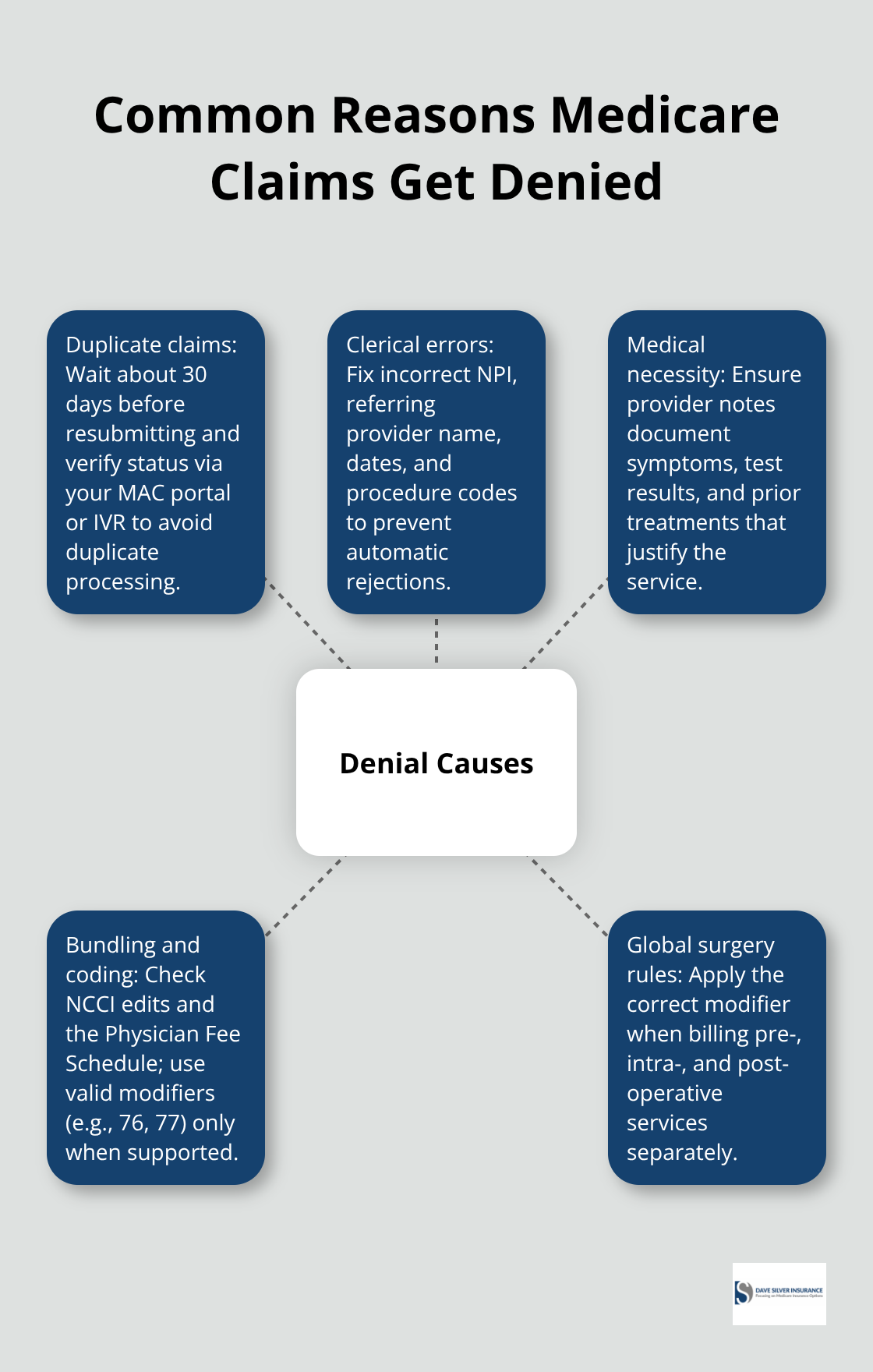
These aren’t judgment calls; they’re mechanical rejections that should never reach an appeal stage if you catch them early.
Medical Necessity Denials Demand Documentation
Medicare won’t pay for services it considers medically unnecessary, and this is where your medical records become your strongest weapon. Local Coverage Determination rules define what Medicare will cover in your area, but the decision ultimately rests on whether your doctor’s notes clearly show why the service was needed. If your provider didn’t document the clinical reasoning-the symptoms, test results, or prior treatments that justified the service-Medicare will deny it. You should request your complete medical record from your provider before you file any appeal; ask specifically for notes that explain the medical reasoning behind the service. Many denials reverse at Level 1 simply because the appeal includes documentation that Medicare never received with the original claim.
Bundling and Coding Issues Create Preventable Denials
Some services are always bundled into other procedures and cannot be billed separately. The Medicare Physician Fee Schedule lists which codes bundle together, and the National Correct Coding Initiative Edits prevent improper code pairings. If your claim includes two codes that NCCI flags as non-separately billable, Medicare automatically denies one of them. Your provider should know this before billing, but mistakes happen. When you receive a bundling denial, ask your provider whether the codes could be unbundled with valid modifiers like 76 or 77 for repeat procedures. This is a technical fix that often succeeds on resubmission if the clinical documentation supports separate billing.
Global Surgery Rules Add Another Layer
Pre-operative, intra-operative, and post-operative care may be bundled into a single surgical code unless the provider uses the correct modifier to bill them separately. These denials are frustrating because they stem from billing rules, not medical judgment, yet they still require an appeal to overturn. Understanding these technical distinctions (and catching them before they become denials) puts you ahead of most beneficiaries who simply accept the first rejection. The appeal process itself has five distinct levels, each with its own timeline and requirements-and knowing which level applies to your situation determines how quickly you can move forward.
The Five Levels of Medicare Appeals
Level 1: Redetermination by Your MAC
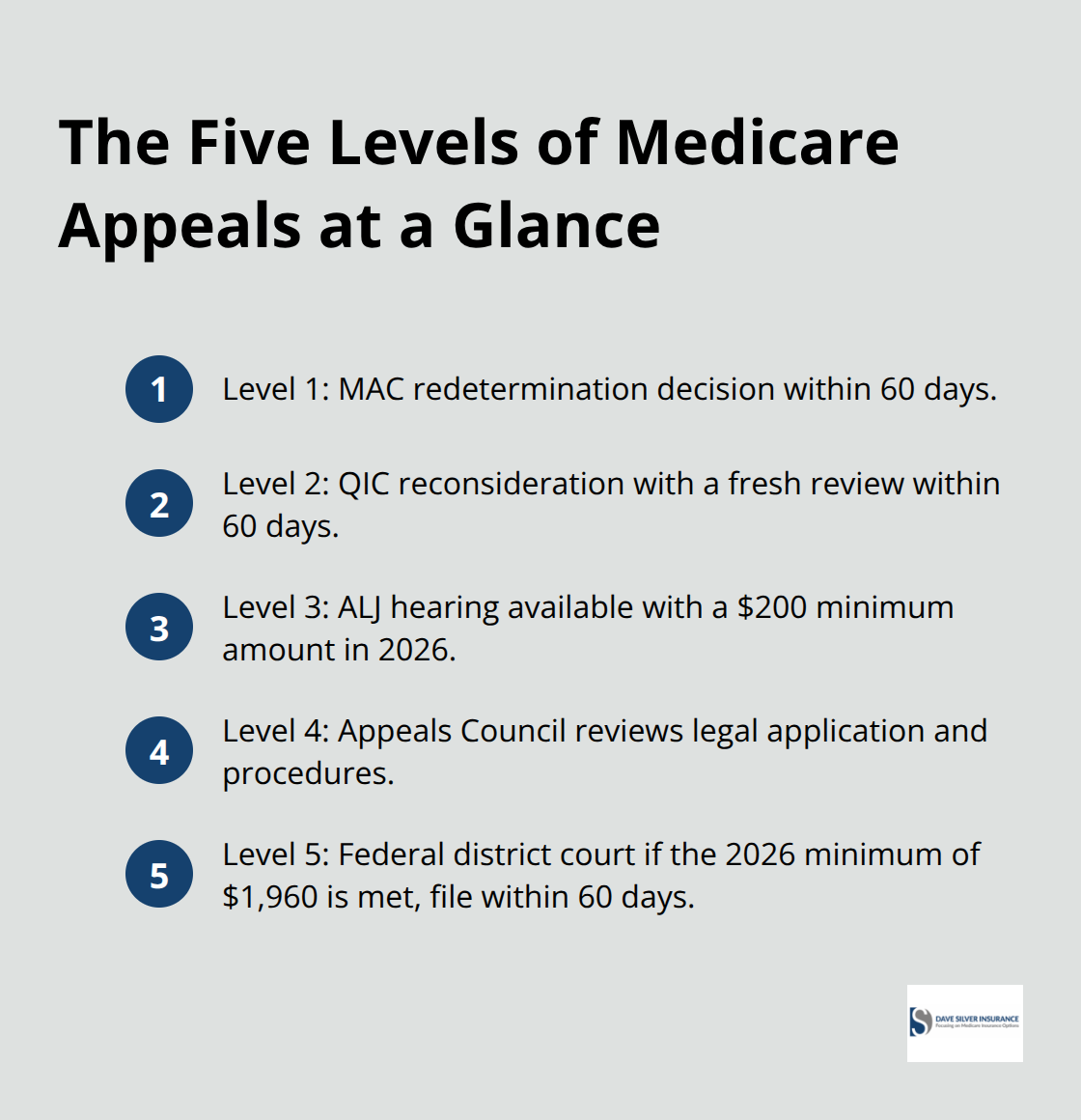
You file a Redetermination Request with your Medicare Administrative Contractor at Level 1, and the MAC issues a decision within 60 days. This is your fastest path to reversal, especially for claims involving clerical errors or missing documentation. The MAC reviews the same medical records and coding that triggered the denial, so your job is to submit what Medicare didn’t receive the first time around.
File your Level 1 appeal by the deadline shown on your Medicare Summary Notice. If you miss it, you can still appeal if you demonstrate good cause like illness or disability. Address your appeal to the MAC listed on your notice, circle the items you dispute on the MSN, explain why you disagree, and attach your supporting documentation.
There are 5 levels of appeal. If you disagree with the decision made at any level of the process, you can usually go to the next level. This structure should motivate you to build an ironclad case at Level 1 rather than assuming you’ll win at a higher level.
Level 2: Reconsideration by a Qualified Independent Contractor
If the MAC denies you at Level 1, Level 2 brings in a Qualified Independent Contractor who reviews your case fresh within 60 days. This reviewer has no connection to the original decision, which gives you a genuine second opinion. Request Level 2 within 180 days of your Level 1 denial and include a copy of the MAC’s decision letter, your explanation of disagreement, and any new evidence that strengthens your position.
Levels 3 Through 5: Escalation to Higher Review
If you still lose at Level 2, Level 3 escalates to an Administrative Law Judge hearing, and for 2026 the minimum dollar amount required is $200. You can request an in-person, phone, or video hearing before the ALJ, or you can waive the hearing and request an on-the-record decision based on written evidence. Many beneficiaries skip the hearing and submit documentation instead, which works if your case is straightforward.
Level 4 involves the Medicare Appeals Council, which reviews whether the ALJ followed proper procedures and applied the law correctly; this level rarely overturns an ALJ decision on the merits alone. Level 5 is federal district court, available only if your claim meets the 2026 minimum of $1,960, and you can combine multiple claims to reach this threshold. File within 60 days of the Appeals Council decision if you proceed to court.
Documentation and Organization Throughout the Process
Throughout all five levels, you must keep organized records of every submission, confirmation, and notice. Maintain copies of your MSN, denial letters, dates of service, and all supporting documents to track deadlines and reference prior decisions. This organizational discipline prevents missed deadlines and strengthens your position at each subsequent level. The next step-gathering the specific evidence and documentation that wins appeals-requires you to understand exactly what Medicare needs to see in your case file.
Building Your Appeal Case with the Right Evidence
Start with Your Complete Claim File
Your Medicare Summary Notice arrived with a denial, and now you face a choice: accept it or fight back. The difference between a successful appeal and a rejected one almost always comes down to documentation. Medicare did not deny your claim because of a judgment call-it denied it because something in the claim file did not match Medicare’s requirements, or something Medicare needed never arrived in the first place.
Request your complete claim file in writing from the Medicare Administrative Contractor. The MAC can tell you exactly what they received, what they did not receive, and which specific rule triggered the denial. Keep copies of everything; the MAC processes thousands of claims daily, so a phone call alone will not create the paper trail you need for an appeal. Your Medicare Summary Notice shows the denial reason in code, but the MAC’s detailed explanation letter will tell you whether the issue was medical necessity, bundling, duplicate processing, or documentation gaps. If the denial reason remains vague, call the MAC and ask them to clarify which Local Coverage Determination or coding rule applied to your specific claim.
Collect the Right Medical Records
Medical records form your appeal’s foundation, and most beneficiaries collect the wrong ones. You do not need every note from your provider’s file-you need the specific documentation that proves medical necessity for the denied service. If Medicare denied a procedure as medically unnecessary, your appeal must include the clinical notes showing your symptoms, the test results that justified the service, and any prior treatments you had already tried.
Ask your provider’s office to pull records from the date you sought the service, not from months before or after. Include the physician’s notes that explain the reasoning, any imaging or lab results that supported the decision, and letters from specialists if they were involved. Many providers will not volunteer this information, so you must ask directly: request the documentation that your provider used to justify ordering this specific service. Before filing an appeal, ask your provider or supplier for information that could strengthen your case, and this is the single most actionable step most beneficiaries skip. If your provider documents poorly, your appeal fails-not because Medicare was wrong, but because the medical record does not support what you are claiming. This is why Level 1 reversals happen so frequently: the documentation existed all along, but the original claim never included it.
Document Your Timeline and Communications
Timeline documentation matters equally to your medical records. Create a simple record showing when you received the service, when you submitted the claim, when the denial arrived, and when you appeal by requesting a reconsideration and submitting additional medical evidence. Include dates of any phone calls to Medicare or your provider, names of representatives you spoke with, and what they told you. This timeline protects you if deadlines become disputed and demonstrates that you acted promptly rather than sitting on a denial for months before appealing. A clear chronology also helps you identify whether the MAC missed a deadline or whether you missed one yourself-a critical distinction when you request reconsideration at higher levels.
Final Thoughts
Medicare denials feel permanent, but the Medicare appeals process gives you real leverage to overturn them. The five-level structure exists because Medicare recognizes that denials happen for fixable reasons. Your job is to identify which reason applies to your claim, collect the specific documentation that addresses it, and submit your appeal before the deadline passes.
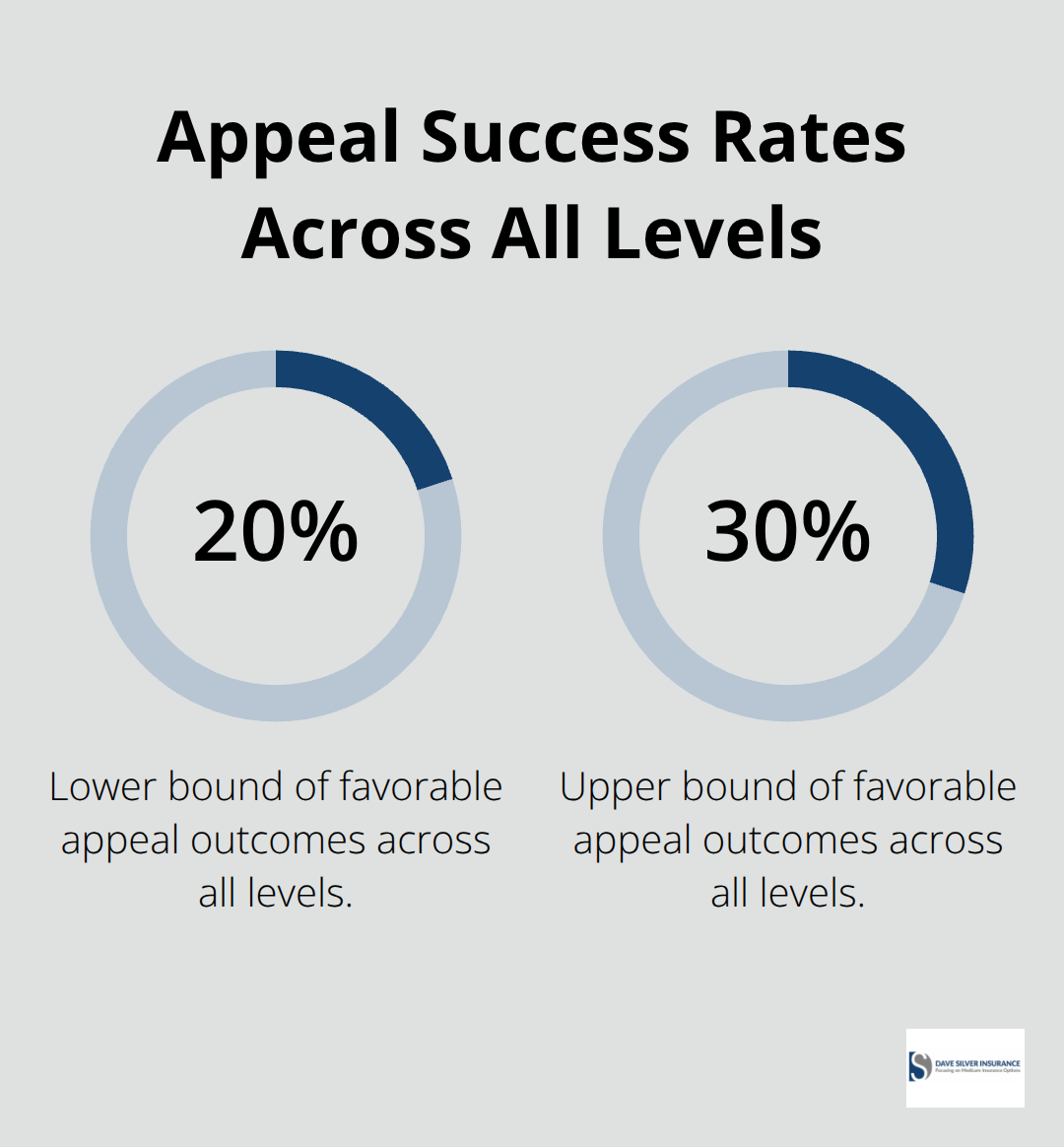
Success at Level 1 depends on one thing: submitting what Medicare never received the first time. Most reversals happen here because beneficiaries finally include the medical records, coding corrections, or clerical fixes that should have been there originally. If you lose at Level 1, Level 2 brings a fresh reviewer with no stake in the original decision. The data shows that favorable appeal outcomes range from 20 to 30 percent across all levels, which means most denials stick-not because Medicare is wrong most of the time, but because most beneficiaries either do not appeal at all or appeal without the documentation needed to win.
When your case involves complex coding rules, bundling disputes, or medical necessity questions that your provider cannot clearly answer, professional assistance becomes worthwhile. Dave Silver Insurance offers personalized guidance on Medicare coverage and appeals, backed by over 17 years of expertise in helping beneficiaries navigate the Medicare appeals process. Their team understands which documentation Medicare actually needs and can help you build a stronger case before you file.
Disclaimer: The information provided in this blog is for general informational purposes only and does not constitute legal, financial, or insurance advice. Coverage options, terms, and availability may vary. Please consult with a licensed professional for advice specific to your situation