

Turning 65 is a deadline that most people miss, and it costs them thousands of dollars. At Dave Silver Insurance, we see this mistake repeatedly-people delay Medigap enrollment and then face medical underwriting, higher premiums, or outright denials.
Medigap at age sixty-five gives you guaranteed issue rights that disappear after your six-month window closes. This blog post shows you exactly why acting now protects your finances for decades to come.
Your Six-Month Window to Lock In Medigap Coverage
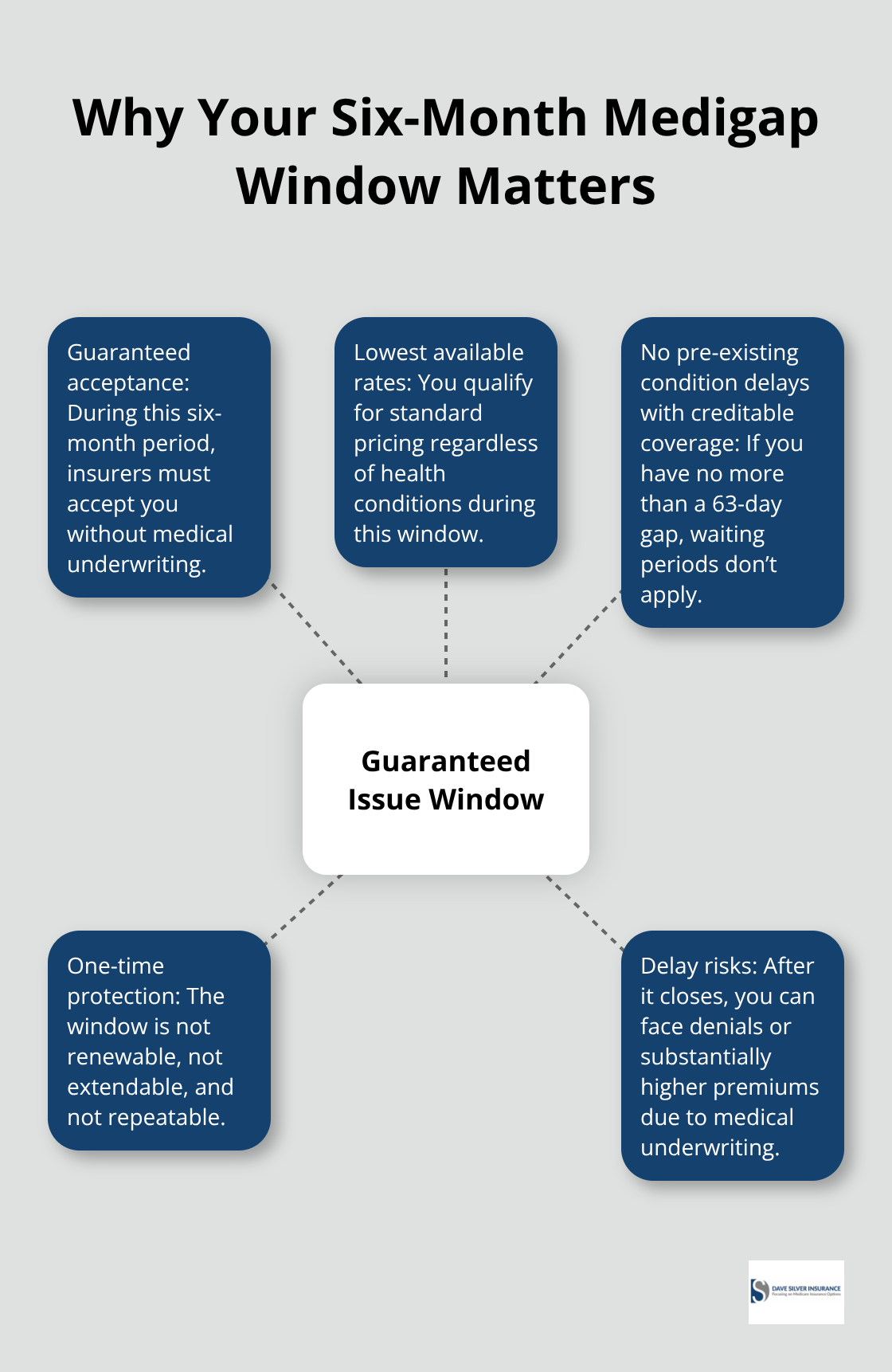
The moment you turn 65 and enroll in Medicare Part B, a six-month clock starts ticking. This window is not renewable, not extendable, and not repeatable. During these 180 days, insurance companies cannot deny you coverage, cannot charge you more for pre-existing conditions, and must offer you their lowest available rates. After this period closes, the rules change dramatically. Outside the Open Enrollment Period, insurers can require medical underwriting, reject your application, or charge substantially higher premiums based on your health history. According to Medicare.gov and CMS guidelines, this one-time protection is the single most important enrollment deadline you face in retirement. Missing it means accepting either higher costs for the rest of your life or potentially losing access to coverage altogether.
Why Guaranteed issue rights Protect Your Finances
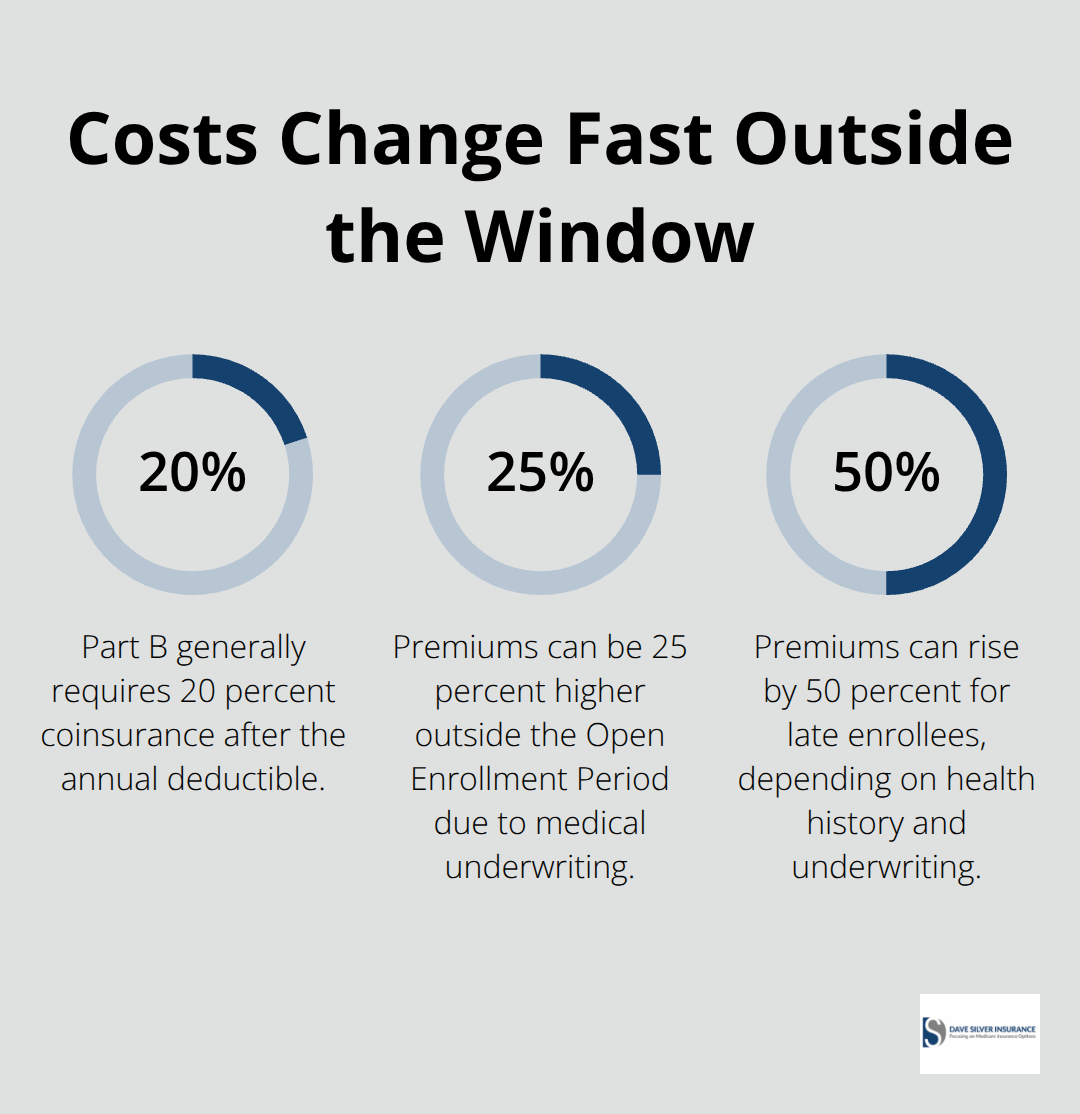
During your six-month window, guaranteed issue means insurers cannot use your medical history against you. If you have diabetes, heart disease, arthritis, or any other condition, it makes no difference to the insurer. They must accept you at the standard rate. Outside this window, a single health issue can disqualify you or trigger premium increases of 25 to 50 percent or more. The data from KFF shows that in 2023, Plan G averaged $164 monthly for current policyholders, but those same plans would cost significantly more if purchased outside the Open Enrollment Period due to medical underwriting. The difference between enrolling at 65 versus delaying often reaches $3,000 to $5,000 annually in premiums alone over a decade. The guaranteed issue protection also means pre-existing condition waiting periods do not apply if you have creditable coverage with no more than a 63-day gap before applying. This timing advantage applies only during the initial six-month window when you turn 65.
How the Timing Works in Practice
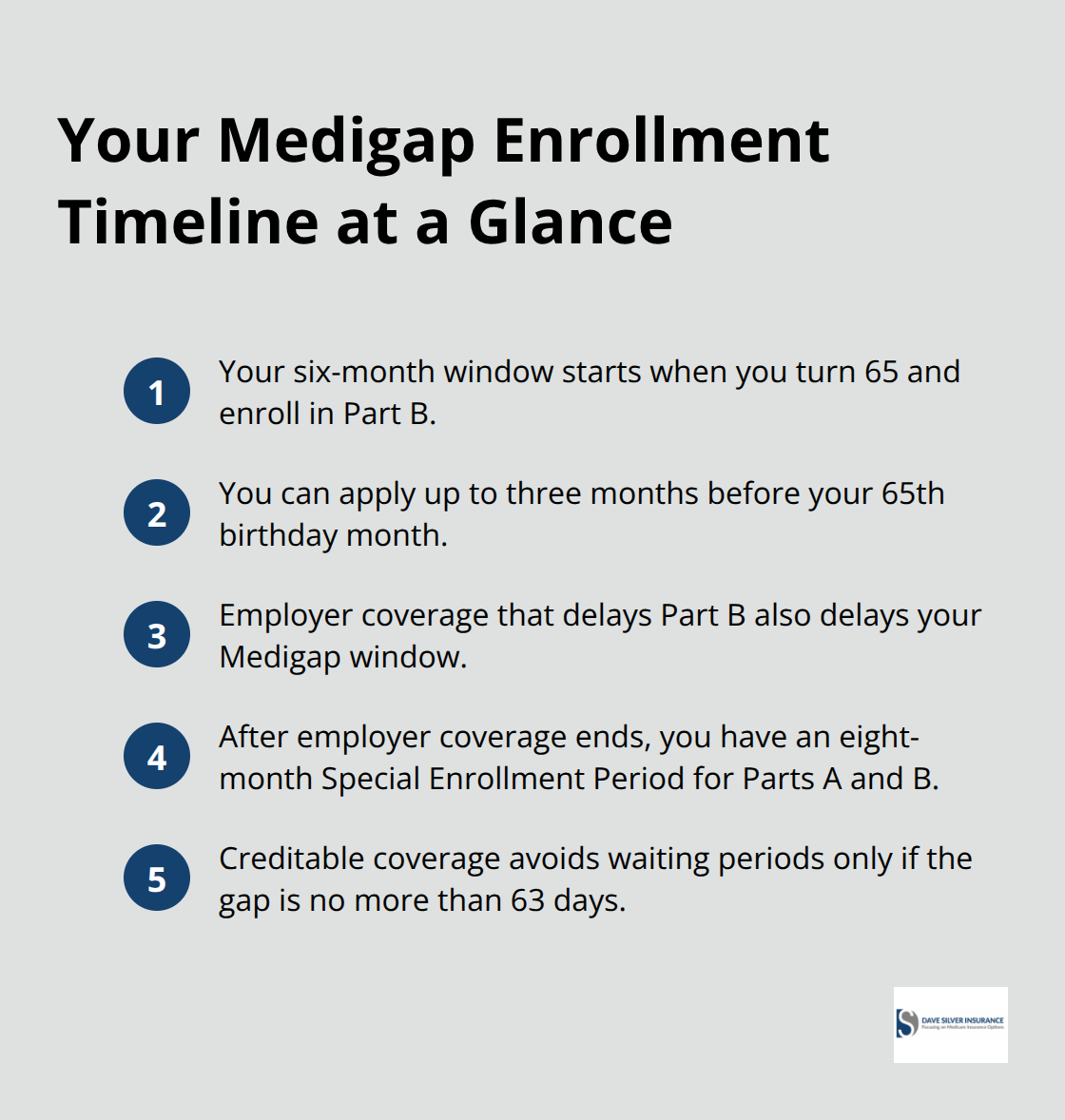
Your six-month Open Enrollment Period begins the first month you are 65 or older and enrolled in Medicare Part B. You can apply up to three months before your 65th birthday month if you want coverage to start immediately when Medicare begins. If you are working at 65 with employer coverage, delaying Part B enrollment also delays your Medigap Open Enrollment Period, which means your window starts when you first enroll in Part B, not when you turn 65. Once your employer coverage ends, you have an eight-month Special Enrollment Period to join Parts A and B, and your Medigap window begins that same month. This alignment matters because every month you wait outside the Open Enrollment Period increases your risk of facing medical underwriting or denial. The six-month deadline is absolute and applies to everyone at age 65 without exception.
What Happens When You Miss the Window
Outside the Open Enrollment Period, insurers shift from guaranteed issue to medical underwriting. They review your health history, request medical records, and make decisions about whether to accept or reject your application. Some applicants face outright denials. Others receive approval but at premiums 25 to 50 percent higher than what they would have paid at 65. A few states offer limited protections through guaranteed issue rights tied to specific life events (such as loss of employer coverage), but these protections vary widely and do not apply everywhere. Federal law does not require insurers to sell Medigap to people under 65, and coverage options for younger disabled beneficiaries remain extremely limited. The stakes of missing your window extend far beyond a single year of higher premiums-they affect your entire retirement budget.
Taking Action Before Your Window Closes
Your Open Enrollment Period runs for exactly six months starting the first month you turn 65 and enroll in Part B. You have 63 days from the start of that month to submit your application. If you are turning 65 soon, contact an insurance advisor now to review your options and understand which Medigap plan fits your health needs and budget. The sooner you act, the sooner you lock in guaranteed issue protection and avoid the underwriting gauntlet that awaits those who delay. Your next step is to understand how different Medigap plans reduce your out-of-pocket costs and fit into your retirement budget.
How Medigap Cuts Your Healthcare Costs in Retirement
What Medicare Leaves You Paying
Original Medicare covers a lot, but not everything. You still pay deductibles, coinsurance, and copayments that add up fast. In 2024, the Part A deductible sits at $1,556 per hospital stay, and Part B carries a $240 annual deductible plus 20 percent coinsurance on most services after that. If you need multiple hospital visits or ongoing specialist care, those percentages become real money out of your pocket every single year.
How Medigap Fills the Gaps
Medigap fills these gaps by covering what Medicare leaves behind. Plan G, the most popular option among the 12.5 million traditional Medicare beneficiaries who carry Medigap according to KFF data, covers your Part B deductible, coinsurance, and copayments. This means your healthcare costs shift from unpredictable and variable to fixed and manageable. Instead of wondering whether a hospital stay will cost you $2,000 or $5,000, you know exactly what you pay each month in premiums and nothing more when you receive care. That predictability matters enormously when you live on a fixed retirement income.
The Real Difference in Healthcare Access
The financial protection becomes clearer when you compare Medigap holders to those without supplemental coverage. People with Medigap report far fewer cost-related problems accessing healthcare compared to those in Medicare Advantage or those with no supplemental coverage at all, according to KFF research. This translates to real behavior: Medigap enrollees actually use their benefits instead of skipping doctor visits or delaying prescriptions because they fear the bill. For someone with arthritis, diabetes, or heart disease who needs regular specialist appointments, this difference compounds over years.
The Math of Protection
A single hospitalization can trigger thousands in out-of-pocket costs without Medigap, while Plan G holders face only their monthly premium regardless of how many days they spend in the hospital. The average monthly Plan G premium in 2023 was $164, which equals roughly $1,968 annually. Compare that to the potential cost of a three-day hospital stay with Part A coinsurance alone, and the math becomes obvious. Your retirement budget stops being hostage to health emergencies the moment Medigap coverage begins. Understanding which plan fits your specific health needs and budget requires looking at the mistakes people make when they delay enrollment-mistakes that cost them thousands.
What Really Happens When You Wait Too Long
Medical Underwriting Replaces Guaranteed Acceptance
The biggest mistake people make is waiting until age 66, 67, or later to enroll in Medigap, thinking time remains on their side. It does not. Once your medical underwriting period closes, insurance companies shift into medical underwriting mode, and the cost difference becomes staggering. Someone who waits just one year often pays 25 to 50 percent higher premiums for the rest of their life according to industry data. If you apply for Plan G at age 67 with a history of heart disease or diabetes, you face medical underwriting that can take weeks or result in outright denial. The insurer requests medical records, reviews your health history, and decides whether to accept you. Some applicants receive rejection letters. Others get approval at premiums that far exceed what they would have paid at 65. A person who could have locked in Plan G at $164 monthly during their Open Enrollment Period might face $220 to $250 monthly rates just two years later due to medical underwriting adjustments.
The Real Cost of Waiting
That $600 to $900 annual difference compounds over a decade or two of retirement, adding up to $6,000 to $18,000 in unnecessary costs. Outside the Open Enrollment Period, state protections vary dramatically. Some states offer limited guaranteed issue rights tied to specific life events like loss of employer coverage, but these protections do not apply everywhere and do not cover pre-existing conditions the way your initial six-month window does. Federal law provides no guaranteed issue rights for people under 65, and for those over 65 who missed their window, the options narrow significantly. The practical reality is this: waiting moves you from a guaranteed acceptance scenario into a medical underwriting scenario where insurers hold all the power.
How Health Changes Affect Your Application
Your health status at age 67 matters far more than it would have at 65. If you develop arthritis, high blood pressure, or kidney issues between 65 and 67, those conditions will increase your premiums or trigger denials. Creditable coverage, which can eliminate pre-existing condition waiting periods, only applies during your Open Enrollment Period if you had no more than a 63-day gap in coverage before applying. After your window closes, that protection disappears. The six-month deadline is not negotiable, not flexible, and not something you can recover from once it passes.
Your Enrollment Timeline and Next Steps
Your enrollment clock starts the first month you turn 65 and enroll in Medicare Part B, and you have exactly 180 days to act. If you work at 65 with employer coverage and delay Part B enrollment, your Medigap window does not start until you actually enroll in Part B, which means waiting costs you twice by pushing back both your Medicare and Medigap timelines.
Contact an insurance advisor before your 65th birthday to understand your options and lock in your coverage while guaranteed issue rights still apply.
Final Thoughts
Enrolling in Medigap at age sixty-five protects your retirement finances in ways that waiting simply cannot match. The six-month Open Enrollment Period hands you a one-time advantage: guaranteed acceptance, no medical underwriting, and the lowest available rates regardless of your health history. Miss this window and you face decades of higher premiums, potential denials, or severely limited coverage options that cost thousands of dollars you could have avoided.
The math proves the point. Someone who locks in Plan G at $164 monthly during their Open Enrollment Period pays roughly $1,968 annually, while that same person waiting until age 67 could pay $220 to $250 monthly due to medical underwriting, adding $600 to $900 per year in unnecessary costs. Over twenty years of retirement, that difference reaches $12,000 to $18,000 in extra spending. Beyond the premium advantage, Medigap provides the predictability your retirement budget demands-you know exactly what you pay each month instead of facing variable out-of-pocket costs tied to hospital stays and specialist visits.
Contact an insurance advisor before your 65th birthday to review your options and understand which Medigap plan fits your health needs and budget. We at Dave Silver Insurance help people navigate Medicare enrollment with personalized guidance on Medigap and all Medicare parts, and our team remains accessible seven days a week to answer your questions. Schedule a consultation with us today to lock in your coverage while your guaranteed issue rights still apply.
Disclaimer: The information provided in this blog is for general informational purposes only and does not constitute legal, financial, or insurance advice. Coverage options, terms, and availability may vary. Please consult with a licensed professional for advice specific to your situation