

Being self-employed means you’re responsible for your own health insurance. Medicare for self-employed workers can feel overwhelming, especially when you’re juggling business costs and personal finances.
At Dave Silver Insurance, we’ve helped countless self-employed professionals navigate Medicare options and find plans that actually fit their budgets. This guide walks you through the real strategies that work.
Understanding Medicare Parts and Income Impact for Self-Employed Workers
How Medicare Parts A, B, C, and D Work
Medicare Part A covers hospital stays, skilled nursing care, hospice, and home health services after you meet your deductible of $1,676 per benefit period in 2026. Part B handles doctor visits, outpatient care, and preventive services with a $185 monthly premium for most people, though higher earners pay more through Income-Related Monthly Adjustment Amounts. Part C, also called Medicare Advantage, bundles Parts A and B into one plan offered by private insurers, often including dental and vision coverage that Original Medicare doesn’t provide. Part D covers prescription drugs through standalone plans if you choose Original Medicare, or it’s sometimes embedded in Medicare Advantage plans.
Eligibility Requirements for Self-Employed Workers
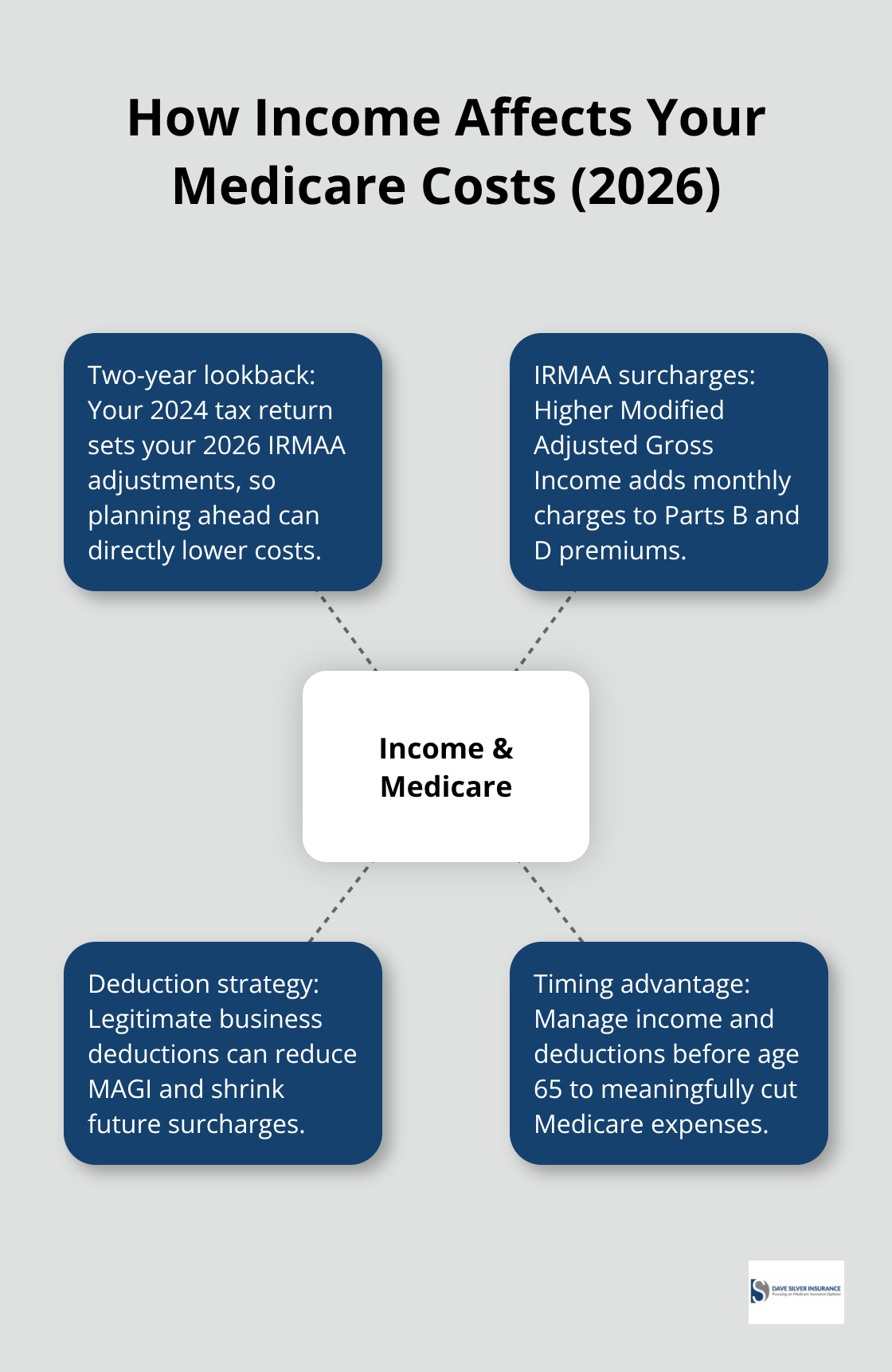
Self-employed workers typically become eligible for Medicare at 65, but you need 40 credits of Social Security contributions to qualify-most self-employed people accumulate this through paying self-employment taxes. Your self-employment income directly affects your Medicare premiums through the Income-Related Monthly Adjustment Amounts system, meaning higher earners pay substantially more for Parts B and D. If your Modified Adjusted Gross Income exceeds $97,000 as an individual in 2026, you’ll face surcharges that can add $70 to $560 monthly depending on your income level.
How Your Income Determines Your Premiums
The government uses your tax return from two years prior to calculate these adjustments, so your 2024 return determines your 2026 premiums. This creates a timing advantage for self-employed workers who can strategically manage business income and deductions, potentially lowering their Medicare costs through legitimate tax planning before they turn 65.
Comparing Original Medicare and Medicare Advantage
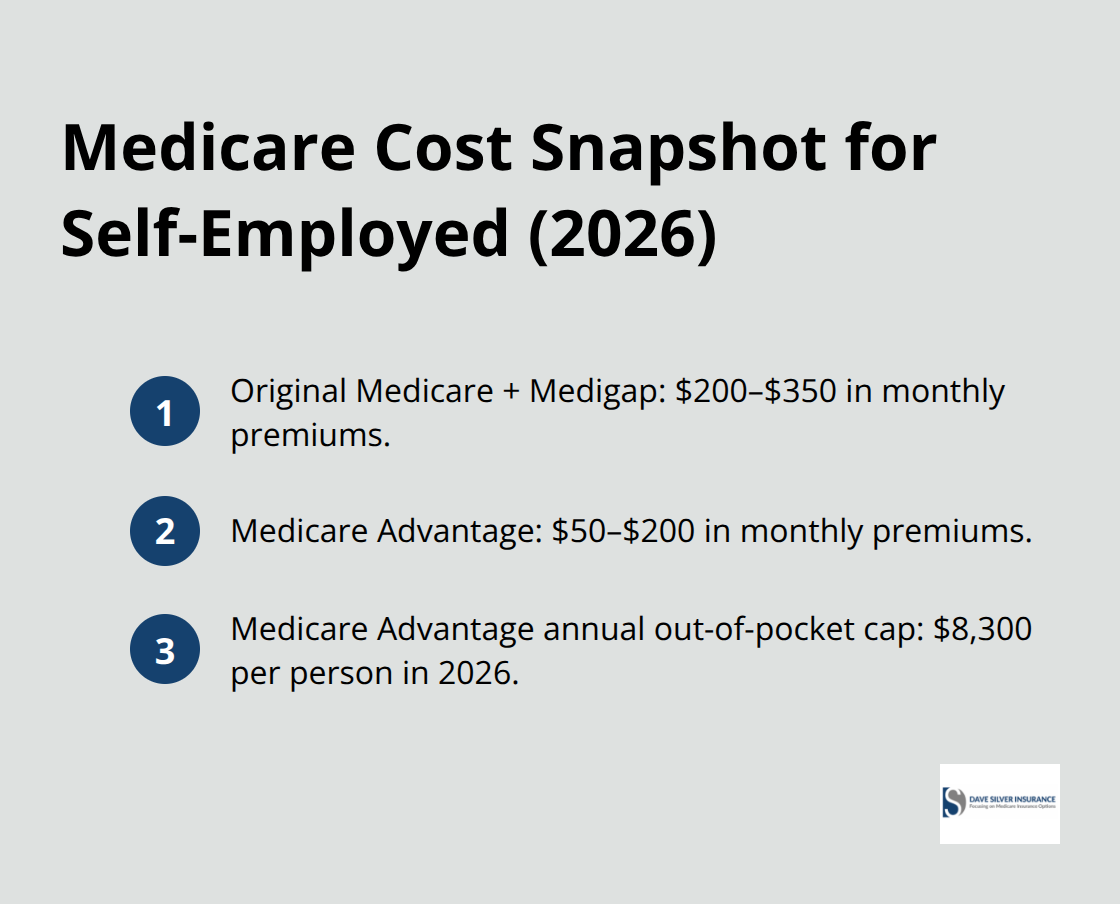
Healthcare.gov lets you compare Original Medicare versus Medicare Advantage plans side-by-side, showing exact out-of-pocket costs for your specific medications and doctors. Most self-employed workers find Medicare Advantage plans attractive because they cap annual out-of-pocket spending at $8,300 per person in 2026, whereas Original Medicare has no spending cap. However, Medicare Advantage plans restrict you to in-network providers, which matters if you travel frequently or have doctors outside their networks. Self-employed professionals earning over $200,000 annually often prefer Original Medicare plus Medigap coverage despite higher premiums because Medigap plans eliminate provider networks and offer more flexibility.
Enrollment Deadlines and Penalties
The enrollment window opens three months before your 65th birthday and closes three months after-missing this deadline costs you a 10% penalty per year of delayed enrollment, permanently increasing your Part B premiums. Understanding these deadlines now positions you to make informed decisions about which coverage type actually works for your practice and lifestyle, which we’ll explore in the next section on finding affordable plans without employer support.
How to Find Your Best Medicare Plan Without Employer Support
Self-employed workers face a stark reality: you shop for Medicare without the guidance employers typically provide. The difference between picking the right plan and settling for the wrong one costs you thousands annually in unnecessary out-of-pocket expenses. Most self-employed professionals make their initial choice based on premium alone, then regret it when they hit coverage gaps or network restrictions that weren’t obvious upfront. The solution requires comparing plans methodically using actual out-of-pocket costs for your specific situation, not just sticker price.
Your Real Out-of-Pocket Costs Matter More Than Monthly Premiums
Original Medicare with Medigap coverage typically costs $200 to $350 monthly in premiums but covers 80 to 100 percent of approved services with no annual spending cap. Medicare Advantage plans average $50 to $200 monthly but cap your spending at $8,300 per person annually, meaning catastrophic illness protection exists but networks restrict your doctor choices. The critical move involves comparing your actual prescriptions and preferred doctors against each plan’s formulary and network before enrollment, not after. Healthcare.gov’s plan comparison tool lets you enter your medications and see exact copay amounts for each option, eliminating guesswork about which plan truly costs less for your health profile.
Medigap Coverage Fills the Gaps Original Medicare Creates
Medigap policies cover the 20 percent coinsurance and deductibles that Original Medicare doesn’t pay, effectively eliminating your out-of-pocket ceiling. Plans range from basic coverage reducing your exposure by roughly 50 percent to comprehensive plans covering nearly everything except dental and vision. Plan G, the most popular choice for self-employed workers, costs $150 to $250 monthly and covers your Part B deductible plus all coinsurance, making healthcare costs predictable.
The trade-off involves accepting Original Medicare’s provider networks, which function differently than Medicare Advantage-you can see any doctor accepting Medicare nationwide without prior authorization. Self-employed professionals earning over $150,000 annually consistently choose Medigap because the flexibility justifies the higher premium, particularly those maintaining multiple business locations or traveling frequently.
Timing Your Medigap Enrollment Correctly
Enrollment timing matters significantly: you have just 63 days after turning 65 and enrolling in Part B to lock in Medigap rates without medical underwriting. Missing this window means insurers can deny coverage or charge substantially more based on health history. This enrollment deadline creates urgency that many self-employed workers overlook while managing business operations, yet it directly impacts your long-term healthcare costs and coverage options. Understanding these plan mechanics positions you to make strategic decisions about which coverage type fits your practice, which leads directly into managing your healthcare expenses throughout the year.
How Self-Employed Workers Cut Healthcare Costs
Maximize Tax Deductions to Lower Current and Future Expenses
The self-employed health insurance deduction lets you deduct 100 percent of premiums you pay for yourself, your spouse, and your dependents on your Schedule C, reducing your taxable income dollar-for-dollar. This deduction works even if you take the standard deduction on your personal return, making it one of the few business expenses that functions independently from itemization. More importantly, these deductions lower your Modified Adjusted Gross Income, which the government uses to calculate your Income-Related Monthly Adjustment Amounts starting two years after you claim them.
A self-employed professional earning $180,000 who deducts $8,400 in annual Medicare premiums reduces their MAGI to $171,600, potentially saving $70 to $140 monthly in Part B and D surcharges once they turn 65. This creates a compounding benefit: you save taxes today while simultaneously lowering your future Medicare costs through legitimate income reduction.
Enroll During Your Initial Period to Avoid Permanent Penalties
Your enrollment timing determines whether you pay penalties that compound for life or lock in standard rates from day one. Most self-employed workers delay enrolling in Part B because they maintain employer coverage through a spouse or continue working past 65, but this creates a permanent 10 percent penalty per year of delayed enrollment that increases your Part B premium forever.
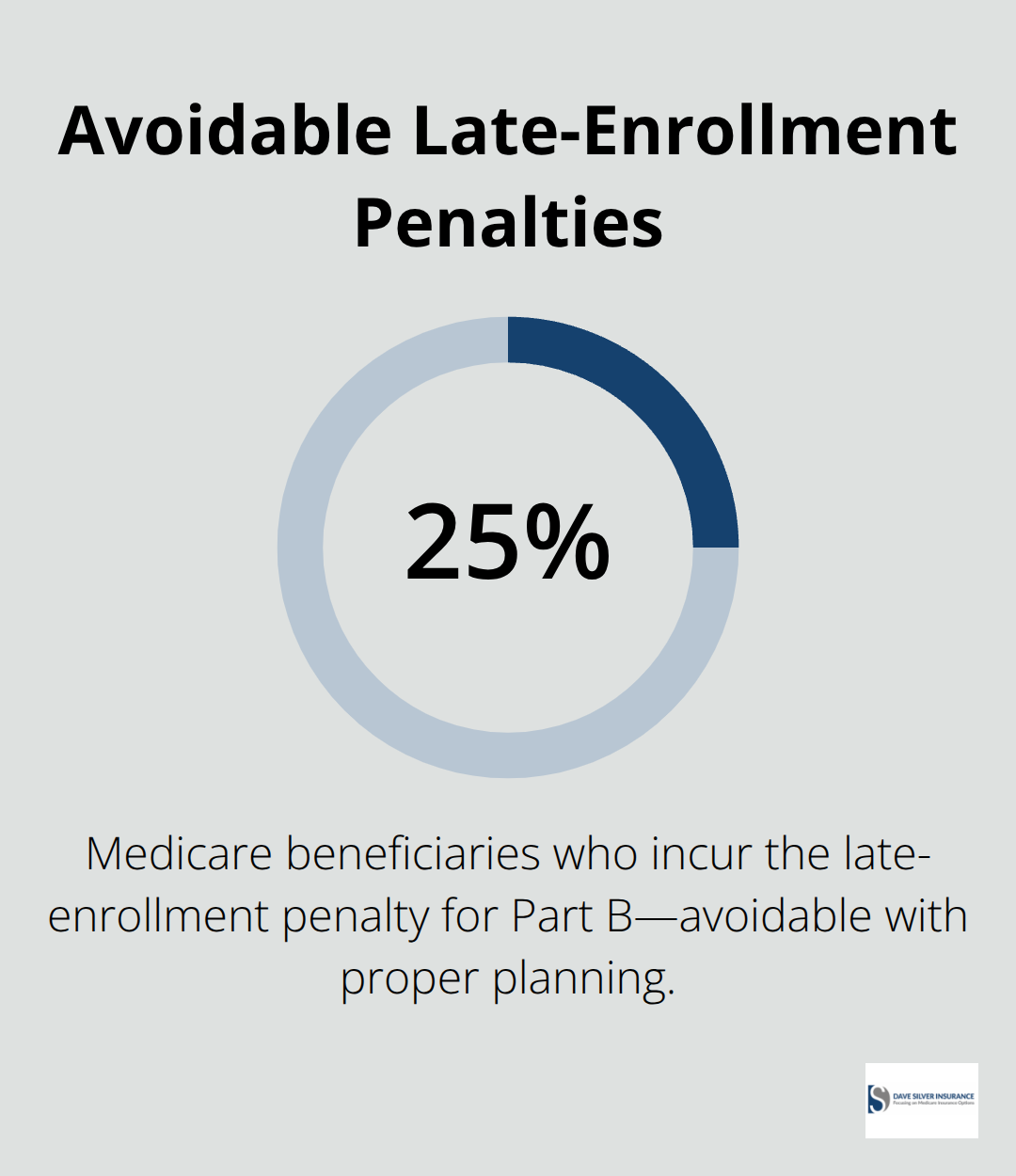
Roughly 25 percent of Medicare beneficiaries face this penalty, yet it remains entirely avoidable through proper planning. If you’re still working at 65 with employer coverage through your business, you must actively enroll in Part B during your Initial Enrollment Period anyway, then request a Special Enrollment Period later when coverage ends to avoid penalties.
Budget Healthcare Expenses Separately Throughout the Year
Healthcare costs throughout the year become predictable only when you calculate your actual out-of-pocket maximum upfront and reserve those funds monthly in a separate account. Self-employed professionals typically budget $300 to $400 monthly for Medicare-related expenses when choosing Original Medicare plus Medigap, or $150 to $250 monthly with Medicare Advantage, yet most fail to separate these costs from operational business expenses.
Tracking Medicare spending independently prevents the common trap of overspending in high-cost months and underpreparing in others, particularly important when you manage irregular business income throughout the year. This separation also clarifies which coverage type actually fits your financial situation versus which one simply appears cheaper on paper.
Final Thoughts
Self-employed workers who approach Medicare strategically save thousands annually compared to those who wait until after turning 65. Higher earnings trigger Income-Related Monthly Adjustment Amounts that increase your Part B and D costs, yet legitimate tax deductions for health insurance premiums lower your Modified Adjusted Gross Income and reduce those surcharges two years later. This timing advantage exists only if you plan ahead, making it worth discussing with your accountant before year-end.
The plan comparison process separates successful Medicare decisions from regrettable ones. Original Medicare with Medigap offers flexibility and predictable costs for professionals earning over $150,000 annually or those who travel frequently, while Medicare Advantage works better for self-employed workers prioritizing lower monthly premiums and willing to accept network restrictions. Healthcare.gov’s comparison tool eliminates guesswork by showing your exact out-of-pocket costs for each option based on your prescriptions and preferred doctors.
Enrollment deadlines matter permanently-missing your Initial Enrollment Period at 65 costs you a 10 percent penalty per year that increases your Part B premium forever. The 63-day window for Medigap enrollment without medical underwriting closes quickly, and missing it restricts your coverage options significantly. Contact Dave Silver Insurance to review your Medicare for self-employed situation and move forward with confidence in your healthcare coverage.
Disclaimer: The information provided in this blog is for general informational purposes only and does not constitute legal, financial, or insurance advice. Coverage options, terms, and availability may vary. Please consult with a licensed professional for advice specific to your situation