

Diabetes management on Medicare requires understanding your coverage options and making strategic choices about your plan. At Dave Silver Insurance, we know that navigating these decisions can feel overwhelming, especially when you’re managing a chronic condition.
The right Medicare plan can significantly reduce your out-of-pocket costs and give you access to the specialists and medications you need. This guide walks you through the key factors to consider when selecting a plan that truly fits your diabetes care needs.
What Medicare Covers for Diabetes Care
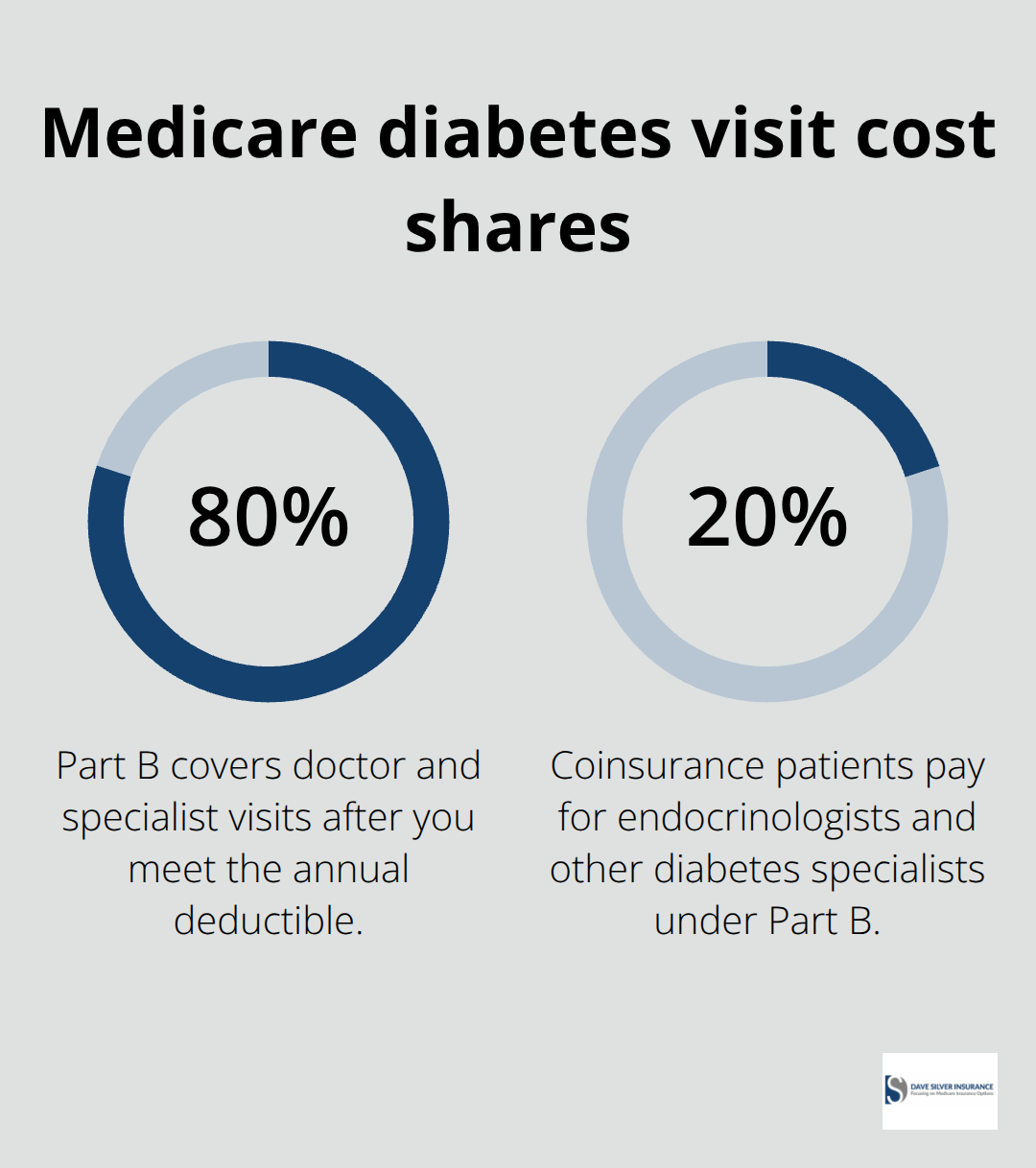
Medicare covers diabetes management through multiple pathways, but the specifics depend on which plan you choose and how you use your benefits. Part B covers doctor visits and specialist appointments at 80 percent after you meet your annual deductible of $226 in 2026. Endocrinologists and other diabetes specialists fall under this coverage, though you’ll pay 20 percent coinsurance for their services. Part D prescription drug coverage operates separately and varies significantly by plan-some plans charge as little as $5 for common diabetes medications like metformin while others charge substantially more.
The Centers for Medicare and Medicaid Services reports that approximately 7.4 million Medicare beneficiaries have diabetes, and most find that their out-of-pocket costs drop considerably once they understand their specific coverage limits.
Preventive Screenings You Won’t Pay For
Medicare covers diabetes screening at no cost if your doctor suspects you’re at risk, which includes blood glucose tests and other diagnostic services. Annual wellness visits are completely free under Part B, and these visits often include discussions about diabetes prevention or management depending on your health status. Eye exams for diabetic retinopathy occur once yearly at no charge-this matters because the American Academy of Ophthalmology emphasizes that 33 percent of people with diabetes develop this complication. Foot exams for diabetic neuropathy are also covered, and many podiatrists accept Medicare assignment, meaning you pay nothing if they’re in-network. Kidney function tests and A1C screenings are covered as part of routine diabetes monitoring, with no copay required when performed during preventive care visits.
Part D Phases and Deductible Strategies
Part D plans require you to navigate four distinct phases: the deductible stage, initial coverage, the coverage gap, and catastrophic coverage. Most plans have deductibles ranging from zero to $505 in 2026, and selecting a plan with zero deductible makes sense if you take multiple diabetes medications regularly. Once you enter the coverage gap, you’re responsible for 25 percent of drug costs until you reach out-of-pocket maximums around $8,550. Generic diabetes medications consistently cost less than brand-name versions, and the FDA confirms that generic metformin, glipizide, and other common diabetes drugs have identical active ingredients and effectiveness.
Reducing Your Medication Costs
Extra Help, a federal program, reduces Part D costs for beneficiaries with limited income and resources, potentially lowering copays to just $1 or $3 per prescription. Comparing plans during open enrollment using Medicare.gov’s plan finder tool typically reveals savings of $500 to $1,500 annually for people taking multiple diabetes medications. Your choice of plan directly affects how much you’ll spend on the medications that keep your blood sugar stable throughout the year. With these coverage details in mind, the next step involves evaluating which specific Medicare plan structure-Original Medicare or Medicare Advantage-aligns best with your diabetes care needs and financial situation.
Choosing Between Original Medicare and Medicare Advantage for Diabetes
How Each Plan Structure Works
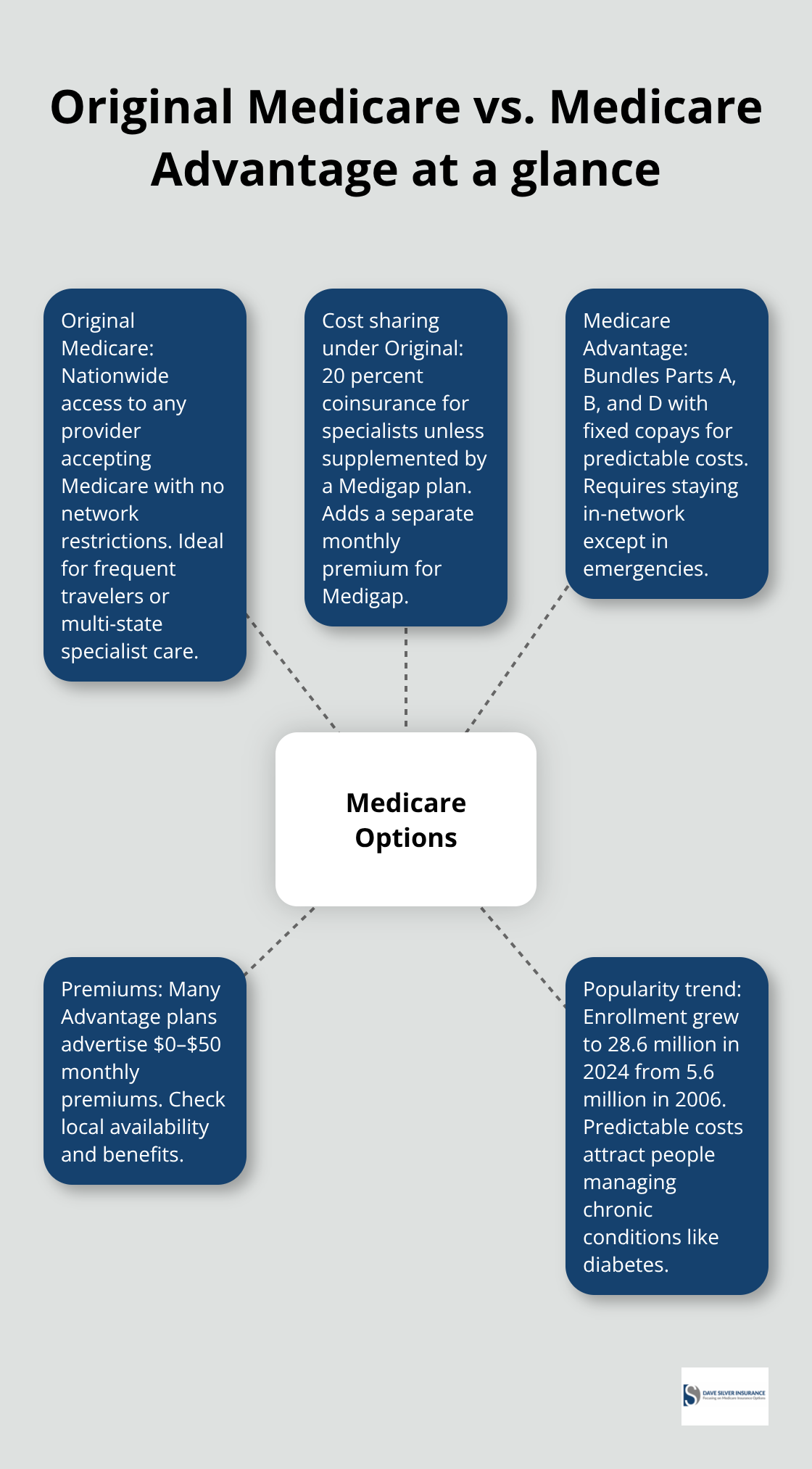
Original Medicare gives you access to any provider nationwide who accepts Medicare, which matters significantly when you manage diabetes because you face no network restrictions. The tradeoff is that you pay 20 percent coinsurance on specialist visits and need a separate Medigap policy to cover those costs, adding another monthly premium to your budget. Medicare Advantage plans bundle Parts A, B, and D into one plan with fixed copays, so you know exactly what you’ll pay at the endocrinologist or pharmacy each month. Most Advantage plans charge between $0 and $50 monthly premiums, but they restrict you to in-network providers except for emergencies. The Kaiser Family Foundation found that Medicare Advantage enrollment reached 28.6 million beneficiaries in 2024, up from just 5.6 million in 2006, largely because people with chronic conditions like diabetes appreciate predictable costs.
Medication Costs: Where the Real Difference Emerges
Your diabetes medications create the actual cost difference between these approaches. With Original Medicare and Part D, you navigate the coverage gap where your costs spike, whereas most Medicare Advantage plans charge flat copays that never change regardless of the coverage phase. If you take insulin, metformin, and a GLP-1 medication for weight management, a Medicare Advantage plan often saves $1,200 to $2,400 annually compared to Original Medicare with standard Part D coverage. However, this advantage disappears if your preferred endocrinologist or diabetes educator sits outside the Advantage plan’s network. Original Medicare paired with a Medigap plan typically costs more upfront through premiums but eliminates surprise bills and gives you maximum provider flexibility.
Network Restrictions and Specialist Access
Check whether your current specialists participate in each plan’s network before you enroll, because switching doctors mid-year disrupts your diabetes management continuity. Original Medicare works best if you travel frequently, see specialists in multiple states, or require experimental diabetes treatments not yet approved in your area. Medicare Advantage makes sense if your key providers are in-network and you want predictable monthly costs without managing multiple insurance pieces. Your endocrinologist’s participation status often determines which plan structure actually saves you money over twelve months. The decision between these two approaches hinges on whether you prioritize provider choice or cost predictability-and that choice shapes everything about your diabetes care experience going forward.
Maximizing Your Diabetes Benefits Without Overspending
Understanding Your Plan’s Cost Structure
Your out-of-pocket costs for diabetes care depend entirely on how your specific plan charges for services. Most people with diabetes on Medicare don’t realize they can reduce their annual spending by taking advantage of preventive services they’ve already paid for through their premiums. The difference between paying full coinsurance on specialist visits versus using preventive care checkups that cost nothing comes down to one thing: knowing your plan’s structure and acting on it before you need emergency care.
Navigating Original Medicare’s Coverage Phases
If you’re on Original Medicare with Part D, you face three distinct cost zones throughout the year, and your medication strategy should change depending on which zone you’re in. During the coverage gap, many people stop taking medications to avoid costs, which leads to more emergency room visits among people with diabetes. Instead, use the months before you hit the coverage gap to stock up on preventive screenings that won’t trigger your deductible, then switch to lower-cost generic alternatives or patient assistance programs once you enter the gap phase.
Maximizing Medicare Advantage Plan Benefits
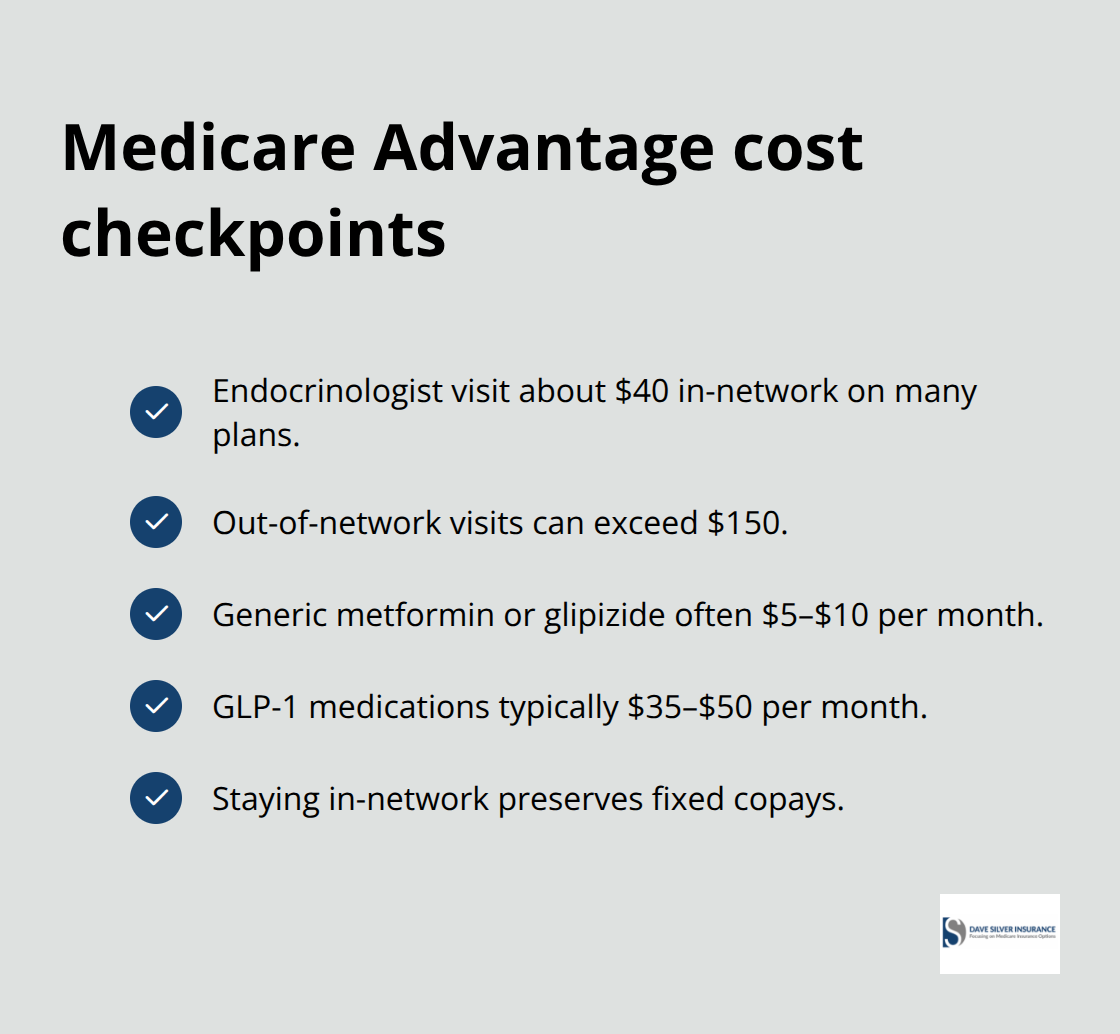
Medicare Advantage plans eliminate the coverage gap problem entirely, but they create a different challenge: you must stay strictly in-network to access those fixed copays you’re counting on. Your endocrinologist visit costs $40 in-network but could cost $150 or more out-of-network, so verify network participation before your plan year starts, not after you’ve already scheduled appointments. Generic diabetes medications like metformin and glipizide typically cost $5 to $10 monthly on most plans, while newer GLP-1 medications can run $35 to $50 per month even with good coverage, which means your medication choices directly affect whether you hit your out-of-pocket maximum early in the year.
Strategic Medication Management
The American Diabetes Association recommends quarterly A1C checks if you’re adjusting medications, and Medicare covers these tests at no cost during preventive services, so schedule them strategically to avoid paying lab fees. If you take multiple medications, use Medicare’s plan finder tool to run your exact drug list through each available plan before open enrollment ends, because the difference between plans for the same medications often exceeds $1,000 annually. Coordinate your medications by ordering refills in the right month to avoid the coverage gap spike, using mail-order pharmacy options that often charge less per dose, and asking your doctor about therapeutic substitutions when a lower-cost alternative works equally well for your blood sugar control.
Final Thoughts
Selecting the right Medicare plan for diabetes management comes down to three concrete decisions: understanding your medication costs, confirming specialist access, and calculating your total annual out-of-pocket expenses across all scenarios. Most people focus only on monthly premiums and miss the bigger picture-a plan with a higher premium but lower drug copays often saves thousands annually if you take insulin or GLP-1 medications. Your choice between Original Medicare and Medicare Advantage should reflect your actual spending patterns, not theoretical best practices, which means running your specific medications and doctors through Medicare’s plan finder tool before open enrollment closes.
Medicare.gov’s plan comparison tool lets you enter your exact prescriptions and see side-by-side costs for every available plan in your area. Your state’s Health Insurance Assistance Program offers free counseling from trained advisors who understand local plan networks and can answer questions about coverage details. The American Diabetes Association provides diabetes-specific Medicare guidance that addresses medication access and specialist coordination.
We at Dave Silver Insurance recognize that diabetes management on Medicare involves more than just picking a plan-it requires ongoing support and expert guidance tailored to your health situation. Contact Dave Silver Insurance to review your specific situation and confirm you’re not leaving money on the table during your next enrollment period. Our team works seven days a week to provide personalized recommendations based on your unique health and financial needs, so your plan actually covers the care you depend on.
Disclaimer: The information provided in this blog is for general informational purposes only and does not constitute legal, financial, or insurance advice. Coverage options, terms, and availability may vary. Please consult with a licensed professional for advice specific to your situation