

Medicare Part D prescription drug tiers determine what you pay for medications every time you fill a prescription. The tier your drug falls into directly affects your copayment or coinsurance amount, which means understanding these tiers can save you hundreds of dollars annually.
At Dave Silver Insurance, we’ve helped thousands of beneficiaries navigate their Part D plans and reduce medication costs. This guide breaks down how tiers work and shows you practical strategies to keep your out-of-pocket expenses manageable.
How Medicare Part D Tiers Actually Work
The Five-Tier System and What You Pay
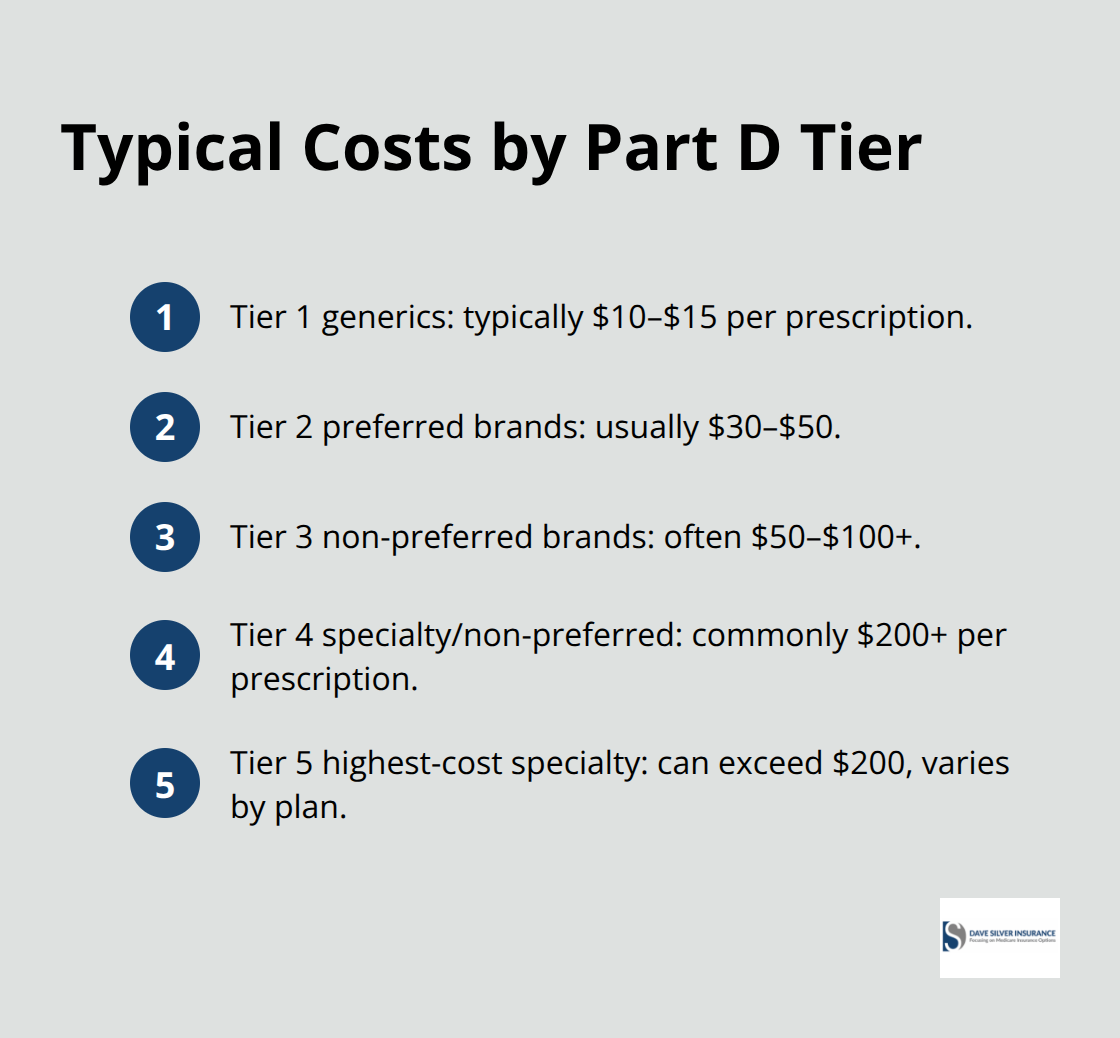
Medicare Part D plans organize medications into five tiers, and your drug’s placement directly determines what you pay at the pharmacy. Tier 1 covers the cheapest generic drugs, typically costing $10 to $15 per prescription. Tier 2 includes preferred brand-name medications, usually ranging from $30 to $50. Tier 3 covers non-preferred brand-name drugs, often costing $50 to $100 or more. Tier 4 and Tier 5 represent the most expensive options, with some specialty medications exceeding $200 per prescription. Insurance companies don’t randomly assign medications to tiers-they negotiate prices with pharmaceutical manufacturers and pharmacies, then place drugs based on cost and clinical effectiveness.
How Insurers Decide Which Tier Gets Your Medication
The tier your medication lands in depends on several factors that insurers evaluate. First, insurance companies assess whether a generic version exists. If your doctor prescribes a brand-name medication when an identical generic is available, the brand version typically falls into a higher tier. Second, insurers consider clinical value and whether the drug treats common conditions or rare diseases. A blood pressure medication used by millions lands in a lower tier than a specialty cancer drug. Third, negotiated rebates matter significantly-if a manufacturer offers substantial discounts to the insurer, that drug moves to a lower tier, saving you money at the counter.
Step Therapy and Its Impact on Your Costs
Some insurers use step therapy, meaning you must try a lower-tier medication first before accessing a higher-tier option. This practice affects a significant portion of Part D plans. Step therapy can delay access to your preferred medication, but it also protects you from unnecessary out-of-pocket spending on expensive drugs when cheaper alternatives work just as well.
Requesting Tier Exceptions for Your Current Medications
If your current medication sits in a higher tier, your pharmacist can request a tier exception from your plan, potentially moving it to a lower tier if your doctor documents medical necessity. This process takes 24 to 72 hours and costs nothing to attempt, making it worth pursuing for expensive medications you’ve taken successfully for years. Understanding how your specific medications fall into these tiers sets the stage for exploring concrete strategies that can reduce what you actually pay at the pharmacy counter.
How Drug Tiers Affect Your Out-of-Pocket Costs
What You Pay at the Pharmacy for Each Tier
Your out-of-pocket cost at the pharmacy depends entirely on which tier your medication lands in, and the difference between tiers can be substantial. Tier 1 generics typically cost you $10 to $15 per prescription, while Tier 2 preferred brand medications run $30 to $50. Move to Tier 3 non-preferred brands and you’re looking at $50 to $100 or more per fill. Tier 4 and Tier 5 specialty drugs can exceed $200 per prescription, which means a single monthly refill could cost more than your rent. Some plans use coinsurance instead of flat copayments, meaning you pay a percentage of the drug’s cost-often 20 to 33 percent-rather than a fixed dollar amount. This matters because a specialty medication priced at $1,000 with 33 percent coinsurance means you pay $330 out of pocket, not a predictable $50 copay. The Medicare Payment Advisory Commission reported that beneficiaries taking multiple medications across different tiers regularly spend $100 to $200 monthly on prescriptions alone. Your plan documents show your exact copay or coinsurance rate for each tier, so review yours now to calculate what your current medications actually cost you each month.
The Donut Hole Still Hits Your Wallet Hard
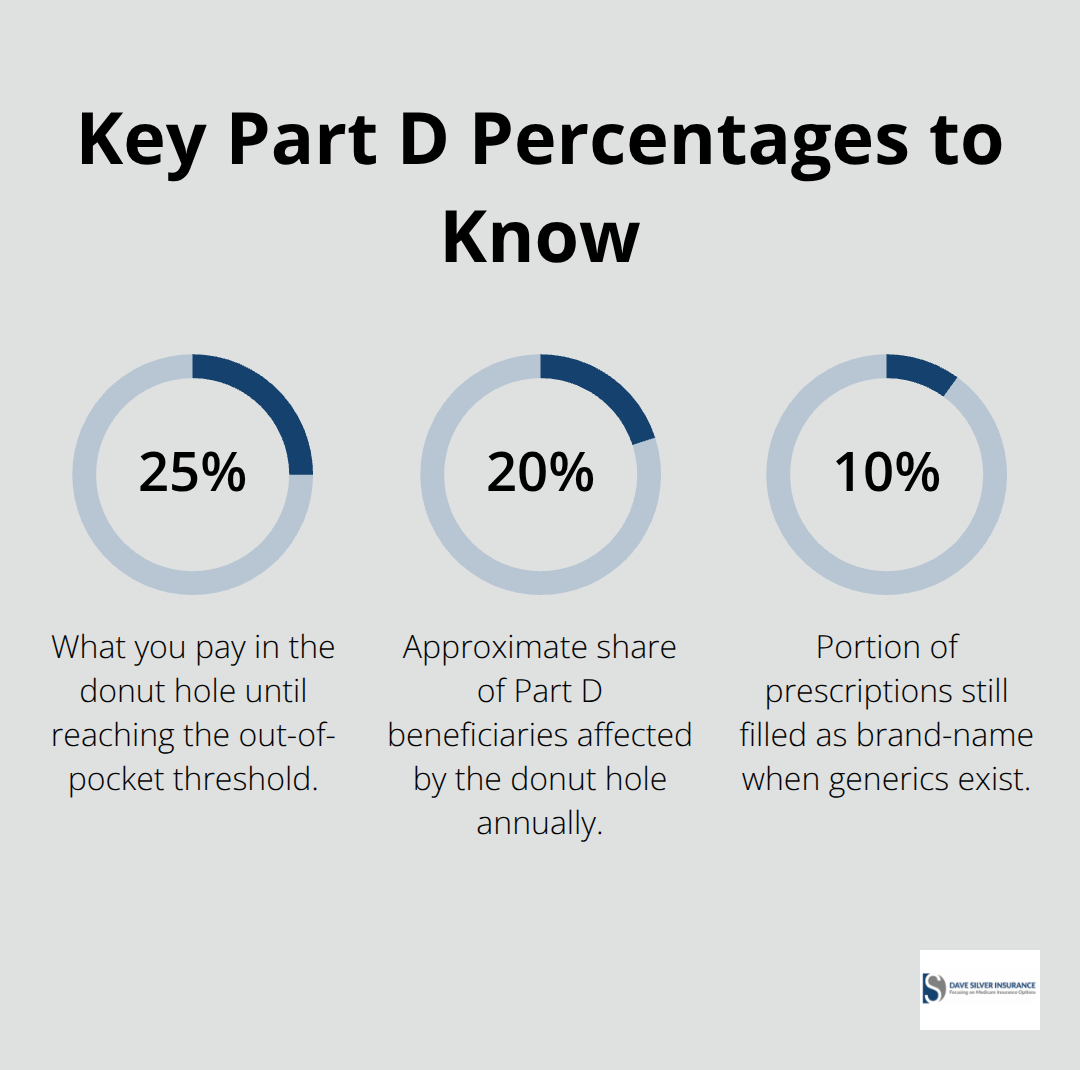
The coverage gap, commonly called the donut hole, activates once you and your plan combined spend $5,850 on covered drugs in 2026. Once you enter the donut hole, you jump from your regular copay or coinsurance to paying 25 percent of the drug’s cost out of pocket until your out-of-pocket spending reaches $8,550. This gap affects roughly 20 percent of Part D beneficiaries annually according to CMS data. As of 2025, the Medicare Part D donut hole no longer exists – meaning there is no longer a coverage gap during which Part D enrollees face the full cost of medications. Once inside the donut hole, that Tier 1 generic you’ve been paying $10 for suddenly costs you 25 percent of the actual drug price, sometimes jumping to $30 or $40. Manufacturers offer copay assistance programs that can cover your donut hole costs, but these programs vary by drug and aren’t guaranteed to continue year to year. The donut hole closes once your out-of-pocket costs hit $8,550, at which point catastrophic coverage kicks in and you pay only five percent coinsurance for the remainder of the year. Tracking your spending throughout the year prevents surprises-most plans offer online portals showing exactly where you stand toward the donut hole threshold.
Annual Deductibles and Maximum Out-of-Pocket Limits Shape Your Total Costs
Most Part D plans charge an annual deductible between $100 and $550, which you must pay before your plan covers any medications at all. Some plans waive deductibles for generic drugs, meaning you start getting copay coverage immediately for Tier 1 medications while still owing the full deductible for brand names. After meeting your deductible, you pay your regular copay or coinsurance until you enter the donut hole. Your plan’s maximum out-of-pocket limit caps your total spending at $8,550 for 2026, but this only applies to covered drugs-uncovered medications don’t count toward this limit. Once you hit that cap, your plan covers 95 percent of remaining drug costs, leaving you with just five percent coinsurance. Tier placement directly affects both how quickly you meet your deductible and how fast you approach the donut hole. Someone taking a single Tier 5 medication at $200 monthly hits the donut hole by month three, while someone on three Tier 1 generics might never reach it. Understanding these cost structures helps you anticipate your annual medication expenses and plan your budget accordingly. The next section explores practical strategies that can lower your actual out-of-pocket costs, even within your current tier placement.
How to Lower Your Medication Costs Right Now
Tier placement feels permanent, but it isn’t. Beneficiaries save hundreds of dollars annually by taking three concrete actions that most people never attempt. Your pharmacist and insurance company have tools specifically designed to reduce what you pay, and using them costs nothing. Start with your current medications and work through each strategy systematically, because the difference between Tier 1 and Tier 5 costs can reach $190 per prescription.
Request a Tier Exception for Medications You’ve Taken Long-Term
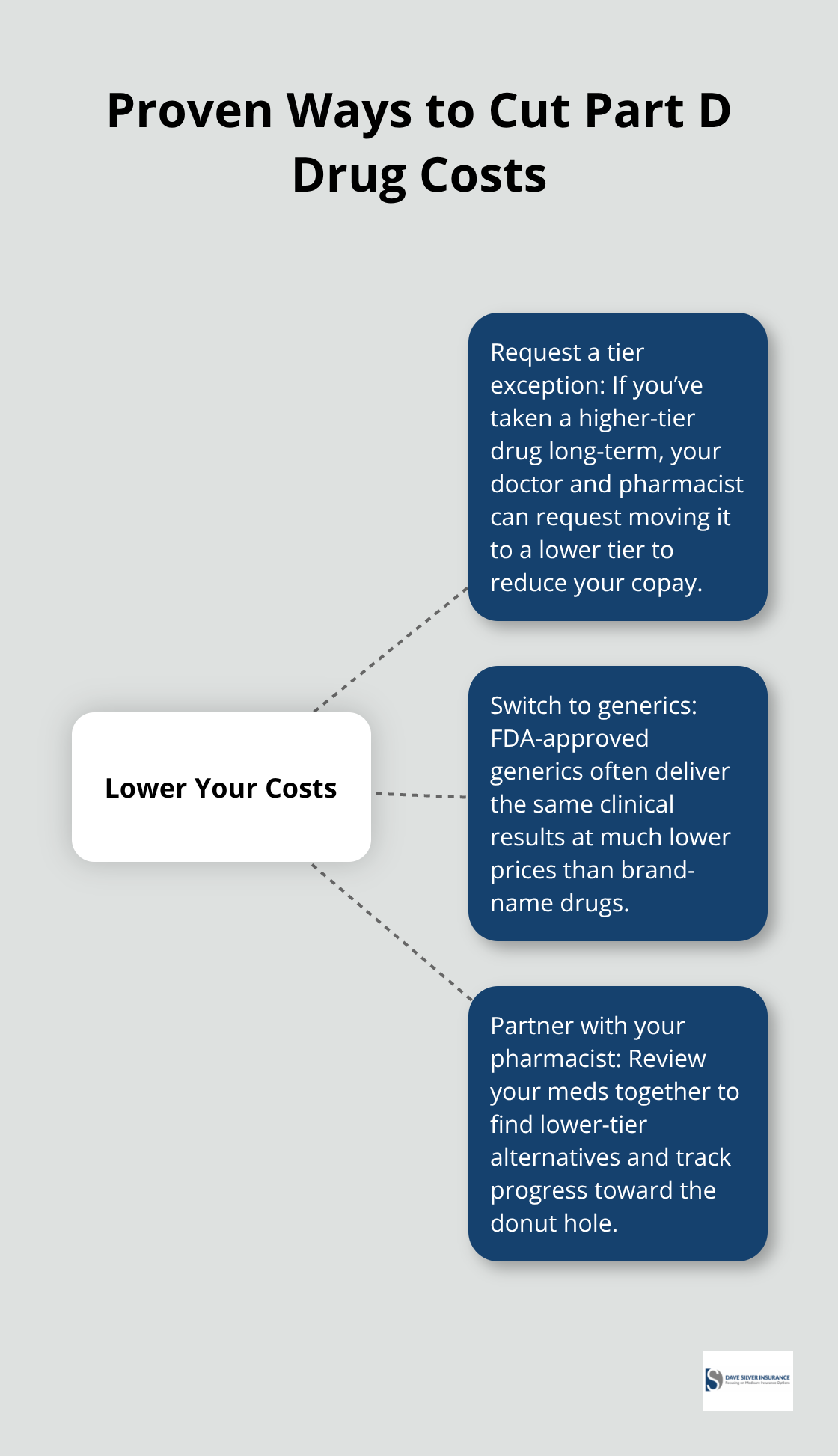
If you take a medication in Tier 3, 4, or 5 that you’ve used successfully for years, request a tier exception immediately. Your doctor writes a letter stating medical necessity, your pharmacist submits it to your plan, and within 24 to 72 hours your insurer either approves moving the drug to a lower tier or denies it. Denials are rare for medications you’ve taken long-term without problems. A beneficiary taking a Tier 4 blood pressure medication at $80 monthly can request an exception and potentially drop to Tier 2 at $35, saving $540 annually.
Understand Prior Authorization as a Separate Process
Prior authorization works differently from tier exceptions and serves a separate purpose. Your plan may require prior authorization before covering certain medications, particularly for conditions where cheaper drugs exist. This isn’t a tier exception-prior authorization simply confirms your doctor believes this specific drug is medically necessary before your plan pays its share. Don’t confuse the two processes, because they operate on different timelines and require different documentation. Ask your pharmacist whether your medications require prior authorization before your first fill, not after your plan denies coverage.
Switch to Generic Medications When Possible
Generic medications consistently cost 50 to 70 percent less than brand-name equivalents, according to FDA data, yet roughly 10 percent of prescriptions filled are brand-name when generics exist. Ask your doctor directly whether a generic version is available for every medication you take. If your doctor insists on a brand name, ask specifically why a generic won’t work for your condition. Many doctors prescribe brand names out of habit rather than medical necessity. Your pharmacist can also suggest lower-tier generic alternatives that treat the same condition. Someone taking a Tier 3 brand-name cholesterol medication at $75 monthly might switch to a Tier 1 generic at $12, saving $756 per year.
Partner with Your Pharmacist for Tier Optimization
Work with your pharmacist as your first line of defense for tier optimization. Pharmacists understand your plan’s tier structure better than most beneficiaries and can recommend medications in lower tiers that work equally well for your condition. Ask your pharmacist to review all your medications and identify which ones fall into the highest tiers, then ask whether lower-tier alternatives exist. This conversation takes 15 minutes and costs nothing, yet it’s where real savings happen. Your pharmacist can also monitor when you approach the donut hole and alert you to manufacturer copay assistance programs specific to your drugs (which can cover costs during the coverage gap).
Final Thoughts
Prescription drug tiers directly control what you pay for medications, and understanding this system transforms your ability to manage healthcare costs. The tier your medication lands in determines whether you pay $10 or $200 per prescription, making tier knowledge worth hundreds of dollars annually. Three concrete actions reduce your costs immediately: request tier exceptions for medications you’ve taken successfully long-term, switch to generic alternatives when medically appropriate, and work with your pharmacist to identify lower-tier options that treat your condition equally well.
Your annual medication expenses depend on multiple factors working together-your deductible, copay or coinsurance rates, donut hole timing, and out-of-pocket maximum all interact with tier placement to shape your total spending. Beneficiaries who track these numbers throughout the year avoid surprises and catch opportunities to lower costs before they spiral. Review your plan documents now to identify which tier each of your current medications falls into, then calculate what you actually spend monthly.
The right Medicare Part D plan matches your specific medications and spending patterns, not someone else’s. Schedule a consultation with Dave Silver Insurance to review your current coverage and explore whether a different plan would save you money this year.
Disclaimer: The information provided in this blog is for general informational purposes only and does not constitute legal, financial, or insurance advice. Coverage options, terms, and availability may vary. Please consult with a licensed professional for advice specific to your situation