

Medicare covers a lot, but it doesn’t cover everything. Most beneficiaries face unexpected out-of-pocket costs that can strain their budgets.
At Dave Silver Insurance, we help people understand Medicare coverage gaps and find solutions that work for their situation. This guide walks you through what’s not covered, how to fill those gaps, and how to evaluate your personal needs.
What Medicare Parts A and B Leave Uncovered
The Hard Limits of Part A and Part B Coverage
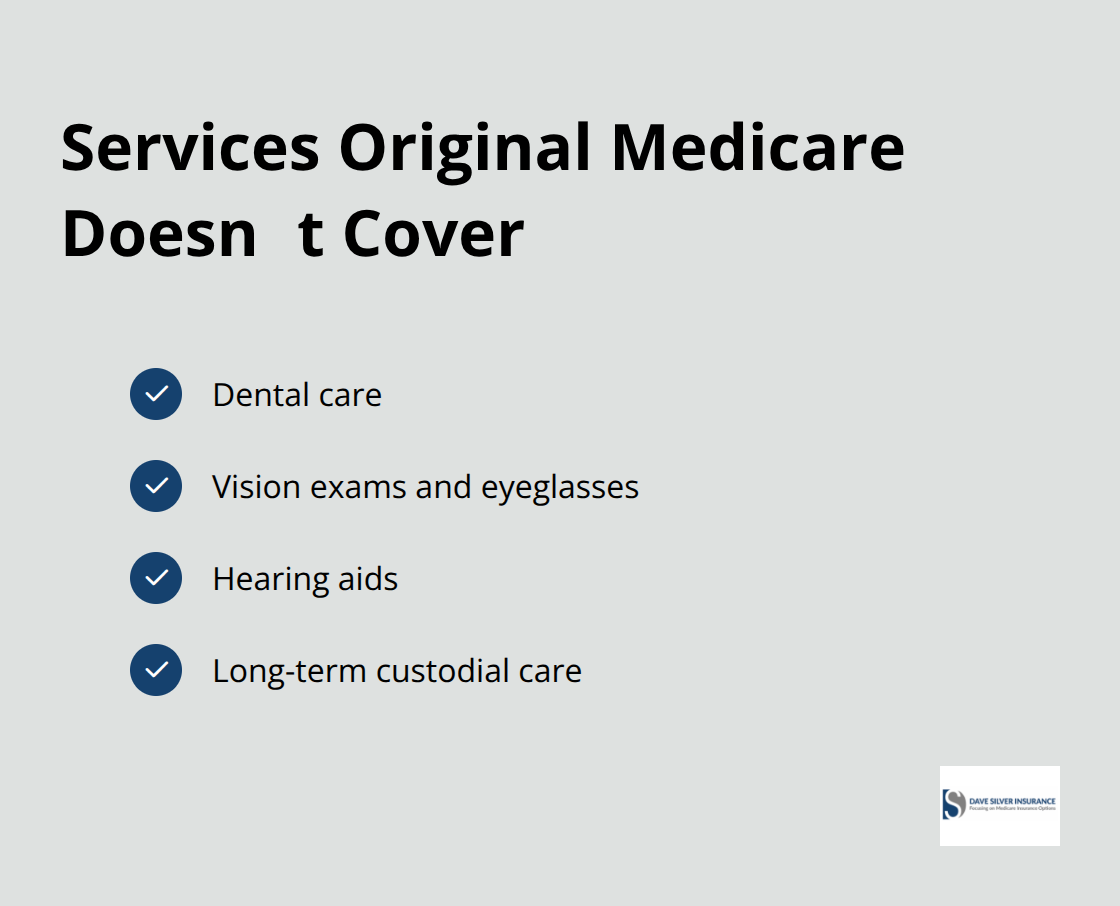
Medicare Part A covers hospital stays, skilled nursing facilities, hospice, and some home health services. Part B handles doctor visits, outpatient care, and medical equipment. The moment you step outside these boundaries, you pay out of your own pocket. Dental work, vision care, hearing aids, and long-term custodial care receive no coverage at all. The average Medicare beneficiary spent money out of pocket on uncovered services, and that number climbs significantly for those with chronic conditions.
Deductibles and Coinsurance Add Up Fast
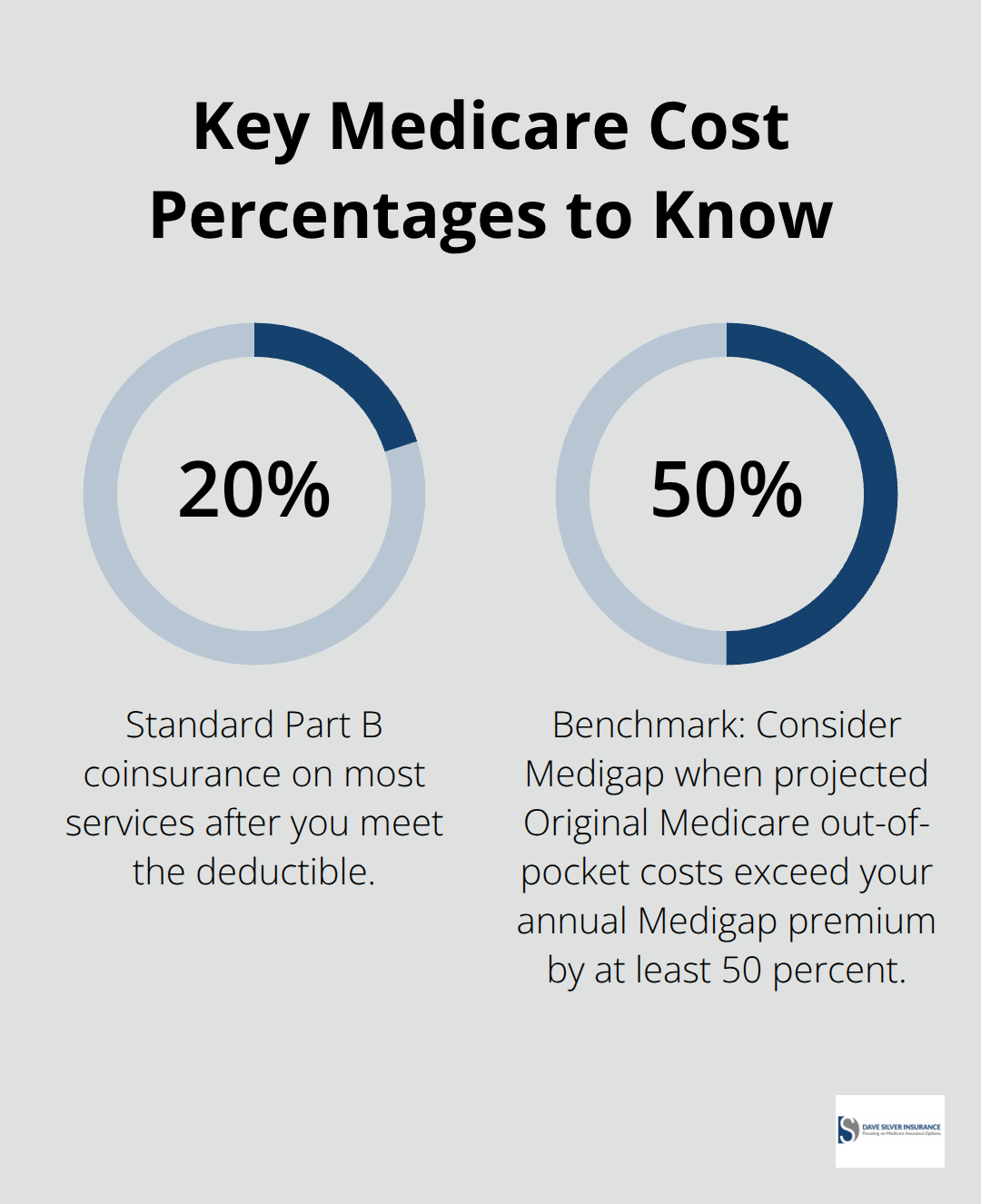
Part A requires a deductible per hospital stay in 2024, and Part B carries an annual deductible plus 20 percent coinsurance on most services. Physical therapy, occupational therapy, and speech therapy have visit limits that force many beneficiaries to continue paying after their benefits max out. Prescription medications fall under Part D, which operates separately and has its own deductibles, copayments, and coverage gaps.
When Multiple Gaps Collide
The real damage happens when you combine multiple gaps. A beneficiary needing hip replacement surgery pays the Part A deductible, then 20 percent of the surgeon’s fee under Part B. If that person also takes four prescription medications, they manage separate deductibles and coverage phases under Part D. Routine eye exams and glasses receive no coverage, so vision problems go unaddressed. Hearing loss affects nearly one in three people over 65, yet hearing aids cost thousands of dollars per pair with zero Medicare coverage.
Preventive Care Gaps Lead to Expensive Problems
Dental cleanings, extractions, and crowns come entirely from your wallet, even though poor dental health links directly to heart disease and diabetes complications. These gaps create a domino effect where people skip preventive care to save money, leading to more expensive emergency treatments later. Understanding exactly where your coverage ends allows you to plan strategically and avoid financial surprises when health issues arise. This knowledge becomes your foundation for exploring solutions that actually fill these gaps.
How to Actually Fill Your Medicare Gaps
Medigap Insurance Closes the Coverage Holes
Medigap policies pay the deductibles, coinsurance, and copayments that Original Medicare leaves behind. When you visit your doctor under Original Medicare Part B, you normally pay 20 percent coinsurance after meeting your deductible. A Medigap Plan F or Plan G policy covers that 20 percent entirely, eliminating surprise bills. The Council for Medicare Education reports that beneficiaries with Medigap coverage pay significantly less out of pocket annually compared to those relying on Original Medicare alone.
Plans vary by letter designation, with Plan G covering nearly everything except the Part B deductible, and Plan N offering lower premiums while maintaining substantial protection. Medigap premiums range from roughly $100 to $300 monthly depending on your age, location, and health status, but this fixed cost becomes predictable compared to the variable expenses of uncovered services. Enrollment timing matters because insurers can reject applicants or charge higher premiums outside the initial enrollment window following Medicare Part B eligibility.
Medicare Advantage Plans Replace Original Medicare Entirely
Medicare Advantage plans replace Original Medicare with a private insurance alternative that bundles Part A, Part B, and often Part D coverage into one package, typically with zero or low monthly premiums. However, they impose network restrictions, meaning you must use in-network providers or face substantial out-of-pocket costs. The Kaiser Family Foundation found that Medicare Advantage plans averaged $3,500 in annual out-of-pocket maximums in 2024, though some beneficiaries with minimal healthcare needs pay nothing.
Advantage plans often include dental, vision, and hearing benefits that Original Medicare never covers, which appeals to many people. The trade-off involves prior authorization requirements for specialist visits and potential coverage denials that don’t exist with Original Medicare.
Understanding the Part D Prescription Coverage Difference
Part D prescription coverage operates identically under both systems, with a coverage gap phase where you pay the full medication cost before catastrophic coverage kicks in. This gap affects your total out-of-pocket expenses regardless of whether you choose Medigap or Advantage plans. Beneficiaries taking multiple medications should calculate their annual drug costs carefully when comparing options.
Choosing Between Your Two Main Paths
Medigap works best for people with established relationships with specific doctors outside large networks, offering predictable costs and maximum provider flexibility. Medicare Advantage plans suit those willing to accept network limitations in exchange for broader benefits and lower premiums. Your health status, medication needs, and preferred providers should drive this decision. At Dave Silver Insurance, we help you evaluate both paths based on your unique situation, with over 17 years of expertise guiding people through these complex choices.
Steps to Evaluate Your Personal Coverage Needs
Start With Your Prescription Medications
Your prescription medications represent the most predictable part of your healthcare spending. List every medication you take, including the strength and quantity you use monthly, then visit the Medicare Plan Finder tool and enter each drug to see exactly where costs fall within Part D coverage phases. The donut hole, or coverage gap, no longer exists as of 2025, meaning there is no longer a coverage gap during which Part D enrollees face increased costs. If you take insulin or other high-cost medications, understanding your Part D coverage phases remains important when selecting any plan.
Project Your Hospital and Specialist Visits
Calculate your projected hospital and specialist visits based on your current health conditions. If you have diabetes, you likely need quarterly endocrinologist appointments plus regular lab work. If you’ve had a heart attack, cardiology visits become routine. The Centers for Medicare and Medicaid Services data shows beneficiaries with three or more chronic conditions average over $14,000 in annual out-of-pocket spending under Original Medicare without supplemental coverage. Write down your typical annual visits to each specialist, multiply by the 20 percent coinsurance you’d pay under Part B, then add the Part A deductible if you expect any hospital stays. This number reveals whether Medigap insurance makes financial sense for your situation.
For someone expecting minimal healthcare needs, paying $150 monthly for Medigap may waste money. For someone with multiple conditions and frequent specialist visits, Medigap premiums often pay for themselves within a few months. The sweet spot occurs when your projected out-of-pocket costs under Original Medicare exceed your annual Medigap premium by at least 50 percent.
Time Your Decision During Open Enrollment
Open enrollment runs from October 15 through December 7 each year, giving you seven weeks to change plans. However, your decision window actually starts much earlier because you need time to gather information about your medications, upcoming procedures, and provider networks. If your doctor is leaving Medicare or your prescription drug costs are rising, waiting until November means you might miss the optimal plan for your situation.
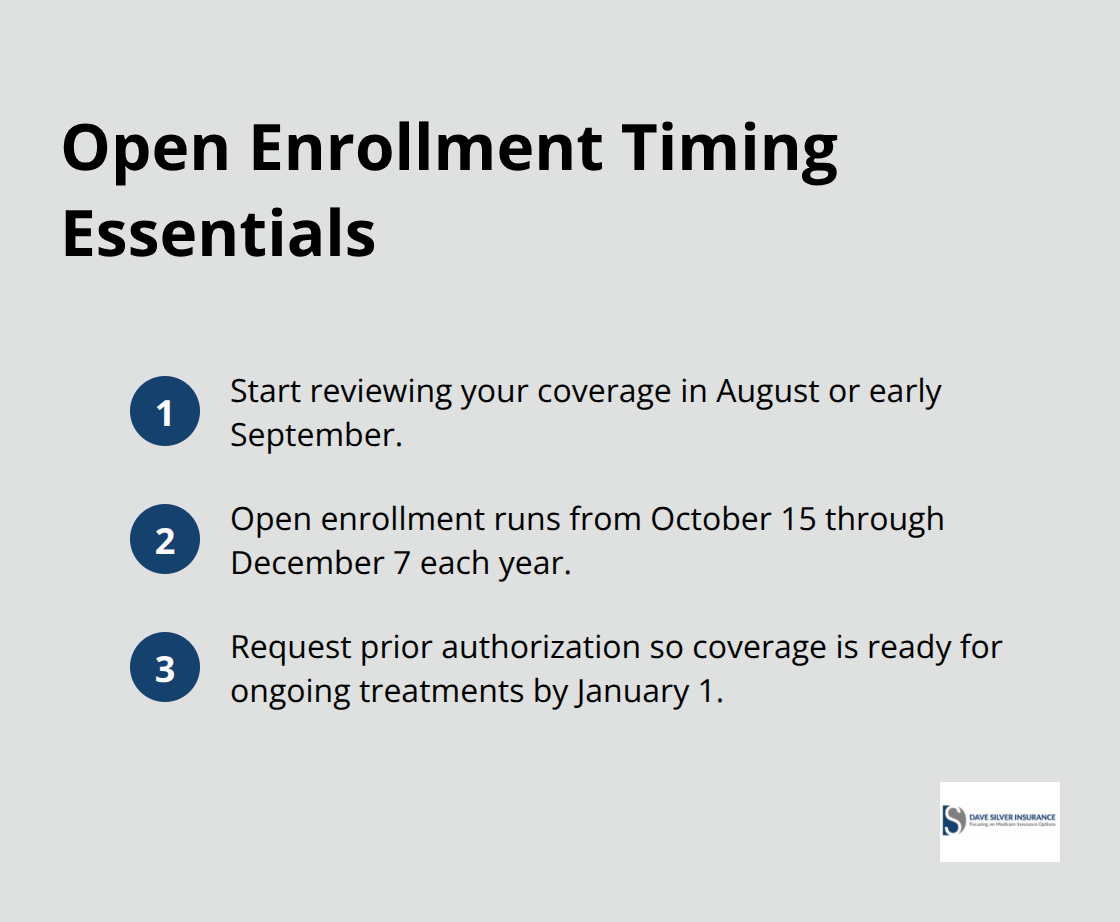
Start reviewing your coverage in August or early September to avoid rushed decisions. This timing also lets you request prior authorization from your new plan before your coverage begins January 1, preventing gaps in care for ongoing treatments.
Verify Network Participation for Advantage Plans
Medicare Advantage plans require you to verify that your current doctors participate in the network before you enroll. Call your primary care physician’s office and ask directly whether they accept each specific plan you’re considering, then do the same for any specialists you see regularly. The plan’s website search tool often contains outdated information, so verbal confirmation from the doctor’s office matters far more. If your oncologist, cardiologist, or rheumatologist is out of network, that plan doesn’t work for you regardless of its premium or benefits. Some beneficiaries switch to Advantage plans only to discover their current doctors aren’t included, forcing them to change providers mid-treatment or pay out-of-network costs that exceed what they’d spend with Original Medicare plus Medigap.
Final Thoughts
Medicare coverage gaps create real financial consequences that affect your ability to afford necessary care. The deductibles, coinsurance, and excluded services combine to produce substantial out-of-pocket expenses that most beneficiaries underestimate when they first enroll. Understanding exactly where your coverage ends and calculating your projected costs transforms this complexity into actionable decisions about Medigap insurance or Medicare Advantage plans.
Professional guidance matters because your specific health conditions, medications, and provider relationships demand personalized analysis rather than generic recommendations. We at Dave Silver Insurance have spent over 17 years helping people navigate Medicare enrollment and identify solutions that actually fit their circumstances. Our team works seven days a week to provide tailored guidance on Medicare Parts A, B, C, and D, ensuring you understand how each option affects your out-of-pocket expenses.
Rather than leaving your Medicare coverage gaps to chance, schedule a consultation with our team to receive recommendations backed by thorough analysis of your health and financial needs. We help you secure the right protection for your situation without the confusion that typically surrounds Medicare decisions.
Disclaimer: The information provided in this blog is for general informational purposes only and does not constitute legal, financial, or insurance advice. Coverage options, terms, and availability may vary. Please consult with a licensed professional for advice specific to your situation