

Picking the right Medigap insurance carrier can feel overwhelming when you’re comparing dozens of plans and premiums. At Dave Silver Insurance, we’ve helped thousands of people navigate these choices and find coverage that actually fits their budget and health needs.
The good news is that understanding your options doesn’t require a medical degree. This guide walks you through the major carriers, their plan differences, and the real costs you’ll pay.
Top Medigap Carriers and How to Pick the Right One for Your Situation
The Five Carriers Leading the Market Today
Five carriers dominate the Medigap market in 2025–2026: UnitedHealthcare/AARP, Mutual of Omaha, State Farm, Wellabe, and Anthem, according to NerdWallet’s analysis. UnitedHealthcare/AARP reaches all 50 states plus Washington D.C. and offers eight plan types, though premiums tend to run higher and you’ll need an AARP membership. Mutual of Omaha stands out for aggressive premium discounts, including household discounts that cut your costs significantly, and operates in every state except Massachusetts. State Farm delivers complaint rates nearly 50 percent lower than the market average, making them exceptionally reliable for claims handling, and covers roughly 45 states.
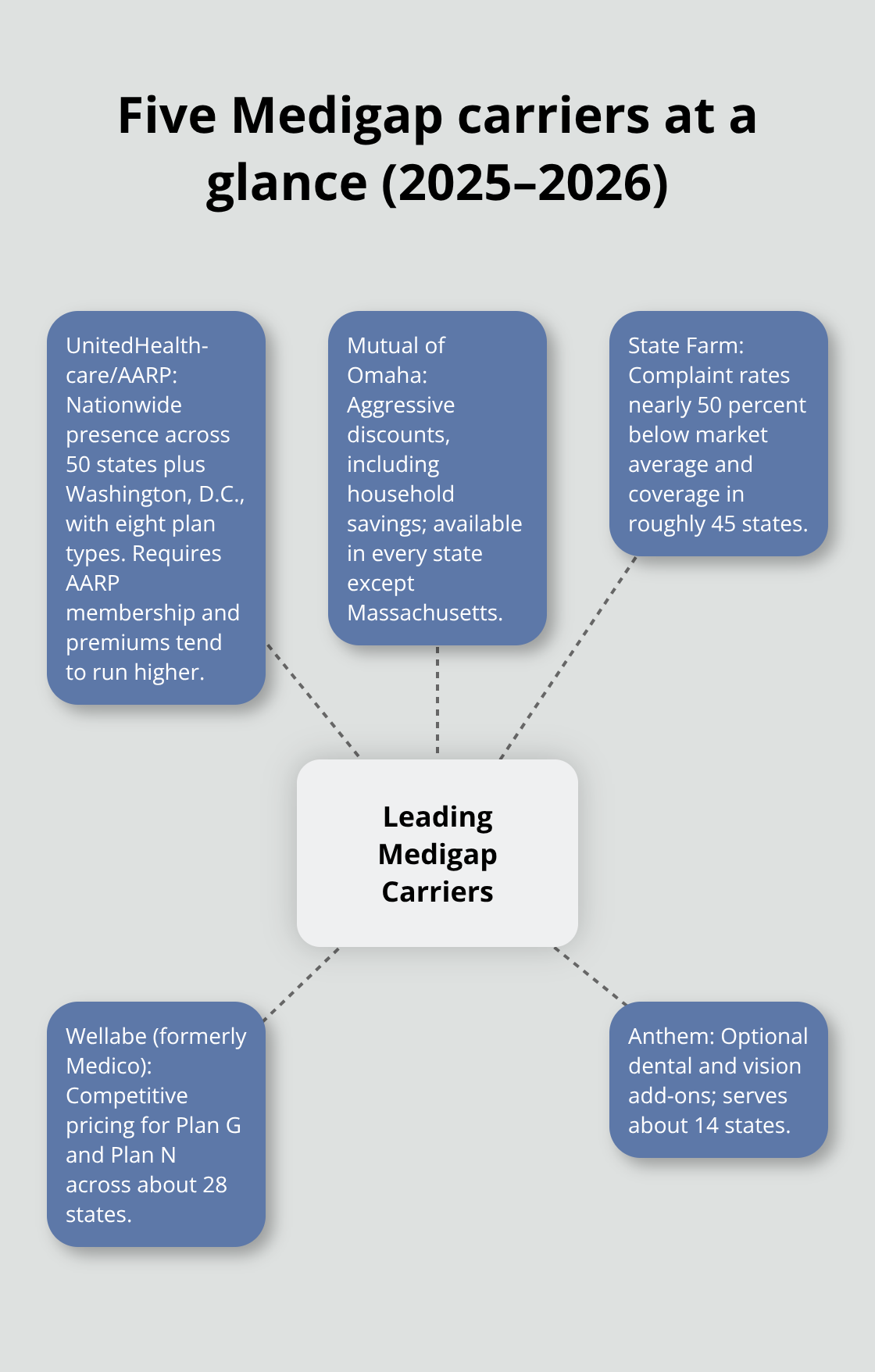
Wellabe (formerly Medico) competes hard on price, especially for Plan G and Plan N, across about 28 states. Anthem differentiates itself by offering optional dental and vision add-ons to your Medigap coverage, though they only serve about 14 states.
Beyond these five, Cigna, Humana, and Aetna round out the major national players, each with A-rated financial strength from A.M. Best and broad state availability. The carrier you select matters far less than the plan type you choose and the premium you pay in your specific ZIP code. Medigap benefits are federally standardized, meaning Plan G from UnitedHealthcare delivers identical coverage to Plan G from Wellabe-the only difference is the premium amount and how the insurer handles customer service.
Plan G: The Default Choice for Most New Enrollees
Plan G dominates the market for new Medicare enrollees because it covers virtually everything except the Medicare Part B deductible, which runs $240 in 2025. This plan type offers near-total protection against unexpected medical bills while keeping premiums reasonable compared to older Plan F options. Most people find Plan G strikes the right balance between comprehensive coverage and affordability.
Plan N: Lower Premiums With Built-In Copays
Plan N appeals to people who expect minimal doctor visits because it charges copays of up to $20 for office visits and up to $50 for emergency room visits that don’t result in admission, allowing premiums to drop by 30 to 40 percent compared to Plan G in many areas. This plan works well if you rarely visit doctors or specialists and want to keep monthly costs down. The trade-off is straightforward: you pay less upfront but contribute at the point of care.
Plan F and High-Deductible Options
Plan F, the most comprehensive option, is locked away from anyone who became eligible for Medicare in 2020 or later, so don’t waste time comparing it if you’re newly eligible. High-deductible versions of Plan F and Plan G exist for budget-conscious people with good health; you’ll hit a $2,950 deductible in 2026 before coverage kicks in, but your monthly premium shrinks substantially. These options work best for people who rarely need medical care and want to minimize their monthly obligations.
Calculate Your Total Annual Costs, Not Just Monthly Premiums
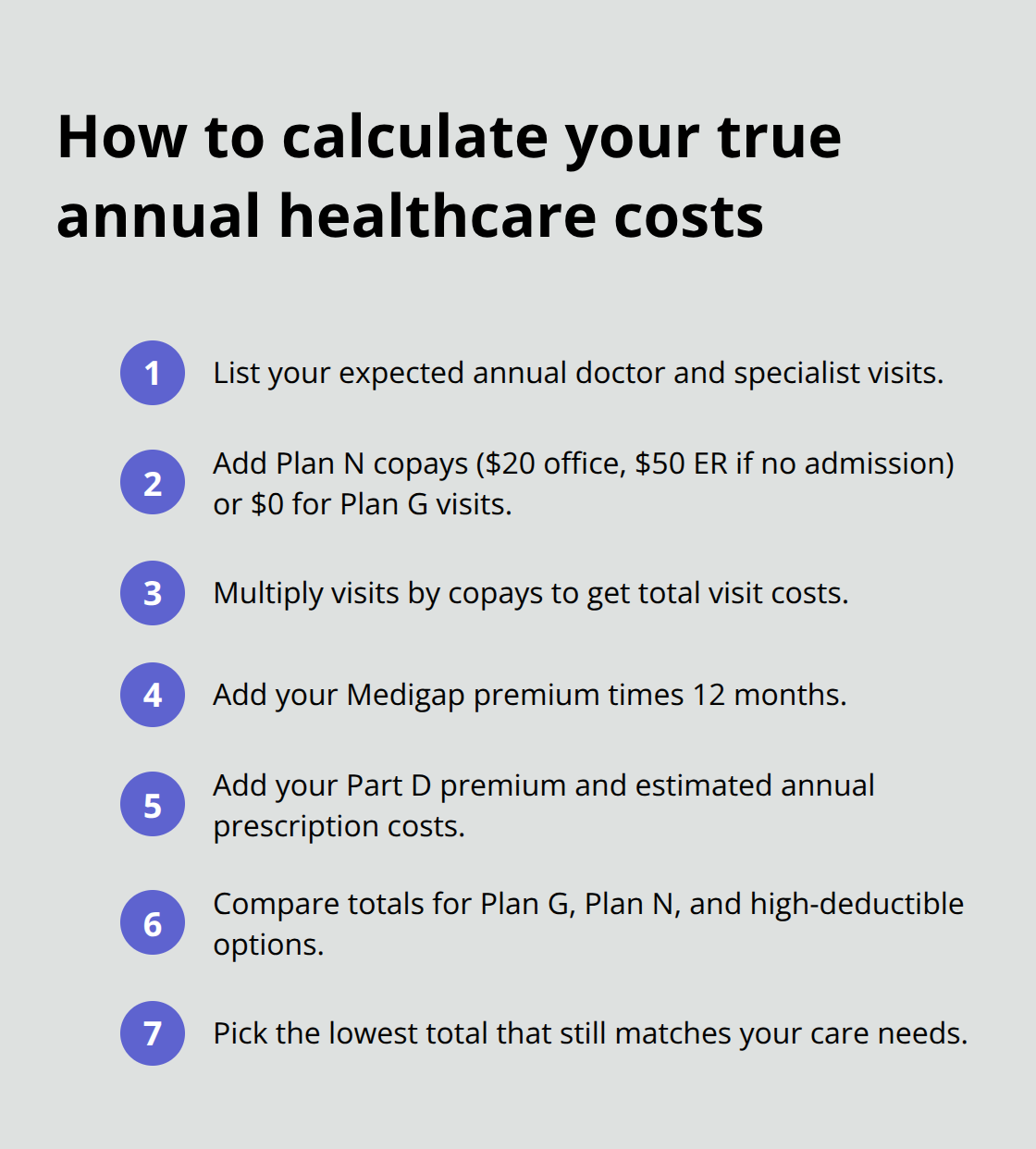
The mistake most people make is fixating on the lowest monthly premium without calculating total annual costs. A Plan G with a $150 monthly premium costs $1,800 per year, while a Plan N at $110 per month costs $1,320 annually-but if you visit the doctor six times yearly, those $20 copays add another $120, pushing Plan N closer to Plan G’s total cost. Run the actual numbers for your expected healthcare usage rather than picking a plan based on the headline price alone. Use a rate quote tool to compare what you’ll actually pay across different scenarios and carriers in your area, then move forward with the plan that fits both your health needs and your budget.
How to Choose the Right Medigap Carrier for Your Needs
Match Your Healthcare Usage to the Right Plan
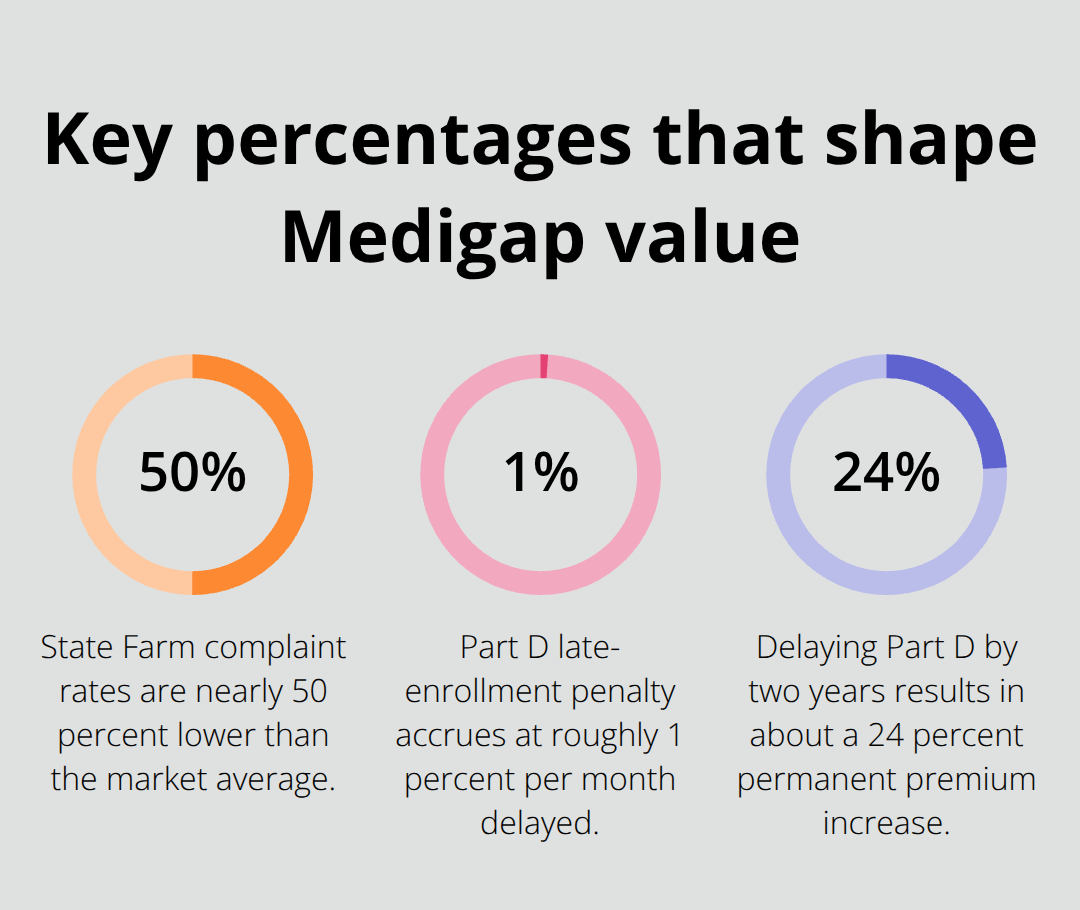
Your healthcare usage determines which carrier and plan combination actually saves you money. If you visit doctors frequently, have multiple chronic conditions, or take several medications, Plan G from a stable carrier like Mutual of Omaha or State Farm will cost less overall than Plan N, despite the higher monthly premium. State Farm’s complaint rates run nearly 50 percent below the market average according to NAIC data, meaning you’ll spend less time fighting with your insurer when claims arrive.
Conversely, if you rarely see doctors and maintain good health, Plan N’s $20 office visit copay and $50 emergency room copay create real savings-premiums run 30 to 40 percent lower than Plan G in many areas.
Calculate Your True Annual Costs
The critical step is calculating your actual annual costs based on your specific health patterns. If you visited your primary care doctor six times last year and a specialist twice, multiply those visits by Plan N’s copays ($140 total) and add the monthly premium to get your true annual cost. Compare that figure against Plan G’s full premium with zero visit costs. Most people discover Plan G wins after running real numbers, not guesses about future healthcare needs.
Evaluate Financial Strength and Service Quality
Financial strength and customer service quality separate carriers that pay claims quickly from those that delay. UnitedHealthcare/AARP holds an A-rated financial strength rating from A.M. Best, Cigna and Humana both carry A ratings, and Mutual of Omaha earns A+ Superior-the highest designation. These ratings reflect their ability to pay claims during market downturns or unexpected healthcare surges. When evaluating customer service, check if a carrier offers household discounts that cut 5 to 10 percent from premiums when you bundle multiple policies, which Mutual of Omaha advertises heavily. Verify whether the carrier’s online tools let you check claim status, update information, and compare plans without calling an agent-features that save time and frustration.
Shop Multiple Carriers in Your ZIP Code
You can obtain personalized quotes from multiple carriers through brokers, comparing plan options across UnitedHealthcare, Mutual of Omaha, Cigna, and Aetna for your specific ZIP code in under 15 minutes. This comparison reveals whether a lower-priced carrier in your area truly offers the best value or whether a slightly higher premium from a carrier with superior complaint ratings justifies the extra cost. Once you’ve narrowed your options to two or three carriers that fit your budget and health needs, the next step involves understanding how age, health history, and prescription drug coverage gaps affect your long-term costs.
Age, Health History, and Hidden Costs That Shape Your Real Expenses
Timing Your Enrollment: The Open Enrollment Advantage
Your age at enrollment and medical history determine which Medigap plan costs less over time, and most people overlook the variables that matter most. If you enroll during your initial six-month open enrollment period when you turn 65 and become eligible for Part B, carriers must offer you any plan at standard rates without medical underwriting, regardless of pre-existing conditions. Miss this window and everything changes. After open enrollment closes, insurers can reject your application, charge significantly higher premiums, or impose waiting periods based on your health history.
This timing advantage applies universally. Someone with diabetes, heart disease, or a history of cancer who enrolls at 65 during open enrollment pays the same rate as a healthy person for the identical plan. Wait until 67 or 70, and underwriting kicks in-potential denials or premiums 20 to 40 percent higher become real possibilities. Your decision to act during open enrollment matters far more than which carrier you select.
How Age Affects Your Long-Term Premiums
Your age also affects pricing through attained-age-rated plans, which increase annually as you grow older. A 65-year-old paying $140 monthly for Plan G might see that premium climb to $180 by age 75 with an attained-age-rated plan, while issue-age-rated plans lock your age at enrollment and increase only for inflation. State Farm and Mutual of Omaha both offer stable rate histories that minimize surprise increases, making them stronger choices if you plan to stay with one carrier for 10 or 15 years.
The Part D Prescription Drug Coverage Gap
Prescription drug coverage represents the second major cost gap people misunderstand. Medigap plans do not include Part D prescription drug coverage, which means you must enroll separately in a standalone Part D plan to cover medications. Many people assume their Medigap plan handles drugs, then face bills for prescriptions because they never selected Part D coverage.
If you skip Part D when first eligible and enroll later, Medicare charges a permanent penalty of roughly 1 percent per month of delayed enrollment, stacking permanently onto your Part D premiums. Someone who delays Part D enrollment by two years pays an extra 24 percent on premiums forever. This penalty never goes away, making early enrollment essential.
Calculate Total Annual Healthcare Spending
When calculating total annual healthcare costs, add your Part D premium, estimated out-of-pocket medication costs based on your current prescriptions, and your Medigap premium together to see the true picture. A Plan N at $110 monthly looks attractive until you factor in Part D at $35 monthly, six annual doctor visits at $20 copays, and estimated medication costs of $300 annually, bringing total annual healthcare spending to roughly $2,580. Compare that against Plan G at $160 monthly with the same Part D coverage and zero copays, totaling $2,280 annually before medication costs.
The numbers shift dramatically when you account for all variables.
Use the Medicare Plan Finder tool to estimate your actual medication costs based on your prescriptions, then run scenarios comparing Plan G, Plan N, and high-deductible options with your expected Part D plan to identify which combination minimizes spending. This approach requires 30 minutes of work but prevents thousands of dollars in preventable overpayment.
Final Thoughts
Selecting the right Medigap insurance carrier comes down to three concrete decisions: which plan type matches your healthcare patterns, which carrier offers the best premium in your ZIP code, and whether you enroll during your open enrollment window. Plan G remains the strongest choice for most new enrollees because it covers nearly all gaps in Original Medicare except the Part B deductible, while Plan N works for people who rarely visit doctors and want lower monthly costs. The five leading medigap insurance carriers-UnitedHealthcare/AARP, Mutual of Omaha, State Farm, Wellabe, and Anthem-all deliver identical plan benefits within their plan types, so your decision hinges on comparing actual premiums and evaluating financial strength ratings from A.M. Best.
Your age and health history matter far more than carrier selection. Enrolling during your initial six-month open enrollment period at 65 locks in standard rates regardless of pre-existing conditions, while delaying enrollment opens the door to medical underwriting, higher premiums, and potential denials. Additionally, Medigap plans exclude Part D prescription drug coverage, so you must enroll separately to avoid permanent penalties on your medication costs.
The final step involves running actual numbers for your situation using the Medicare Plan Finder tool, obtaining quotes from multiple carriers in your area, and calculating total annual costs including premiums, copays, and Part D expenses. This 30-minute investment prevents thousands in preventable overpayment and clarifies which plan truly fits your budget and health needs. Contact us at Dave Silver Insurance to receive personalized recommendations and move forward with confidence in your healthcare decisions.