
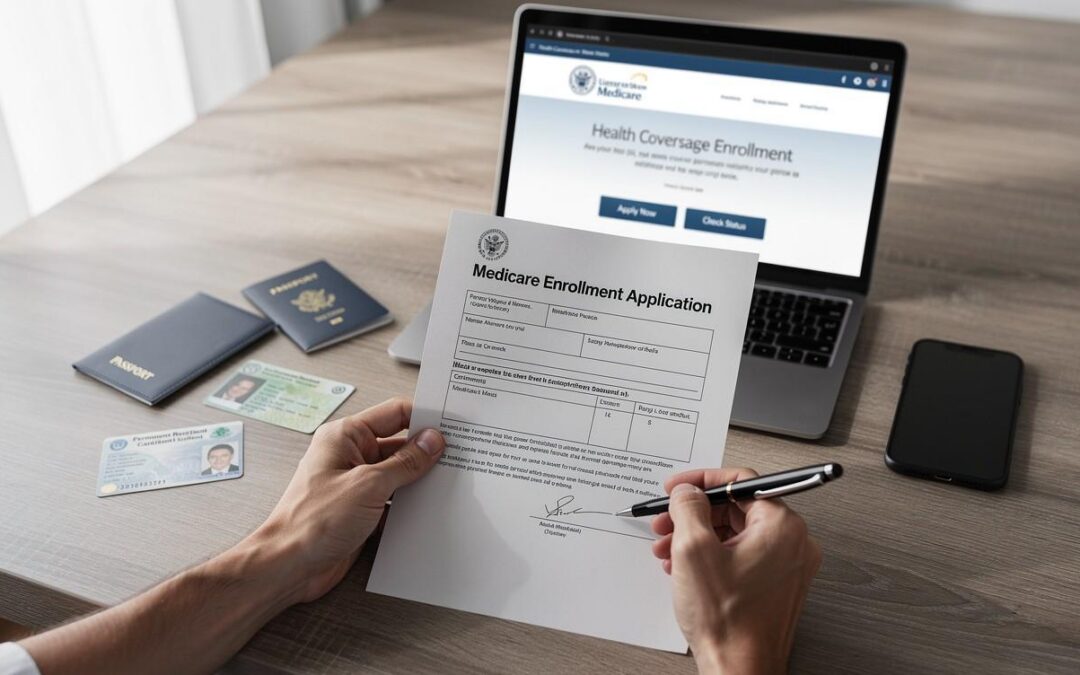
Moving to the United States brings exciting opportunities, but it also means learning new systems-including how healthcare works. Immigrant Medicare eligibility can feel confusing when you’re unfamiliar with the rules and requirements.
At Dave Silver Insurance, we’ve helped countless new immigrants understand their Medicare options and avoid costly mistakes. This guide walks you through what you need to know to get covered.
Understanding Medicare Eligibility Requirements for Immigrants
How the Work Credit System Works
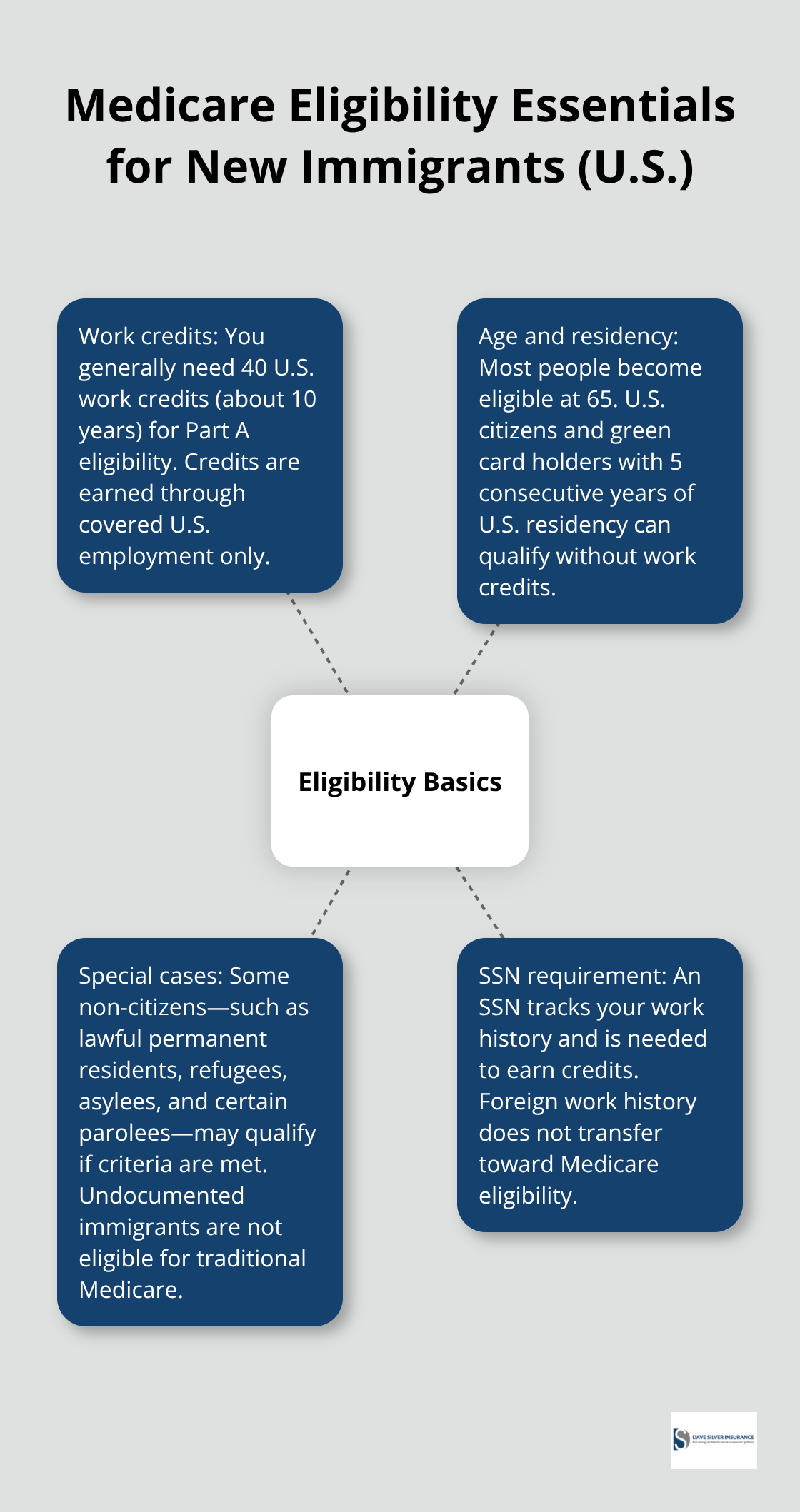
Medicare eligibility in the United States operates on a work-credit system that most new immigrants don’t immediately understand. You need 40 work credits to qualify for Medicare Part A, which covers hospital insurance. Each work credit represents a quarter of the year where you earned at least $1,550 in 2024 according to Social Security Administration standards. Most people earn four credits per year, meaning you typically need ten years of work history in the U.S. to become eligible.
Your Social Security number tracks your work history, so you must have one to build credits toward eligibility. If you worked in another country before immigrating, those years don’t count toward your Medicare eligibility-only U.S. employment counts. This strict rule catches many immigrants off guard who assumed their professional experience elsewhere would transfer.
Age and Citizenship Status Requirements
You must be 65 years old or older to enroll in Medicare, with very limited exceptions for people under 65 who have specific disabilities or end-stage renal disease. Citizenship and immigration status requirements are more nuanced than most people realize. You need to be a U.S. citizen or a permanent resident alien (green card holder) who has lived in the U.S. for at least five consecutive years to qualify for Medicare Part A without work credits.
This five-year rule applies specifically to permanent residents over 65 who lack sufficient work history. Certain non-citizens can qualify for Medicare if they meet specific criteria-lawful permanent residents, refugees, asylees, and individuals paroled into the U.S. for at least one year can all potentially access Medicare.
Special Cases and Limitations
Undocumented immigrants cannot qualify for traditional Medicare, though they may access emergency services through Medicaid in some states. Your exact immigration status directly impacts your Medicare timeline and options, making it worth clarifying your position early in the process. Understanding these distinctions now prevents confusion and delays later.
The next step involves preparing your documentation and learning exactly how to submit your application.
How to Apply for Medicare as a New Immigrant
Prepare Your Documentation First
Gathering the right paperwork before you apply saves weeks of delays and frustration. You’ll need your Social Security card or number, proof of U.S. citizenship or permanent resident status (such as a green card or passport), birth certificate, and proof of residency like a utility bill or lease agreement dated within the last two months. If you’re applying based on disability or end-stage renal disease rather than age, bring medical documentation from your healthcare provider. Having these documents ready prevents the Social Security Administration from requesting additional information later.
Submit Your Application Through the Right Channel
The Social Security Administration accepts applications online at ssa.gov, by phone at 1-800-772-1213, or in person at your local Social Security office. Online applications typically process faster than phone or in-person submissions, with most approvals taking 30 to 60 days according to Social Security timelines.
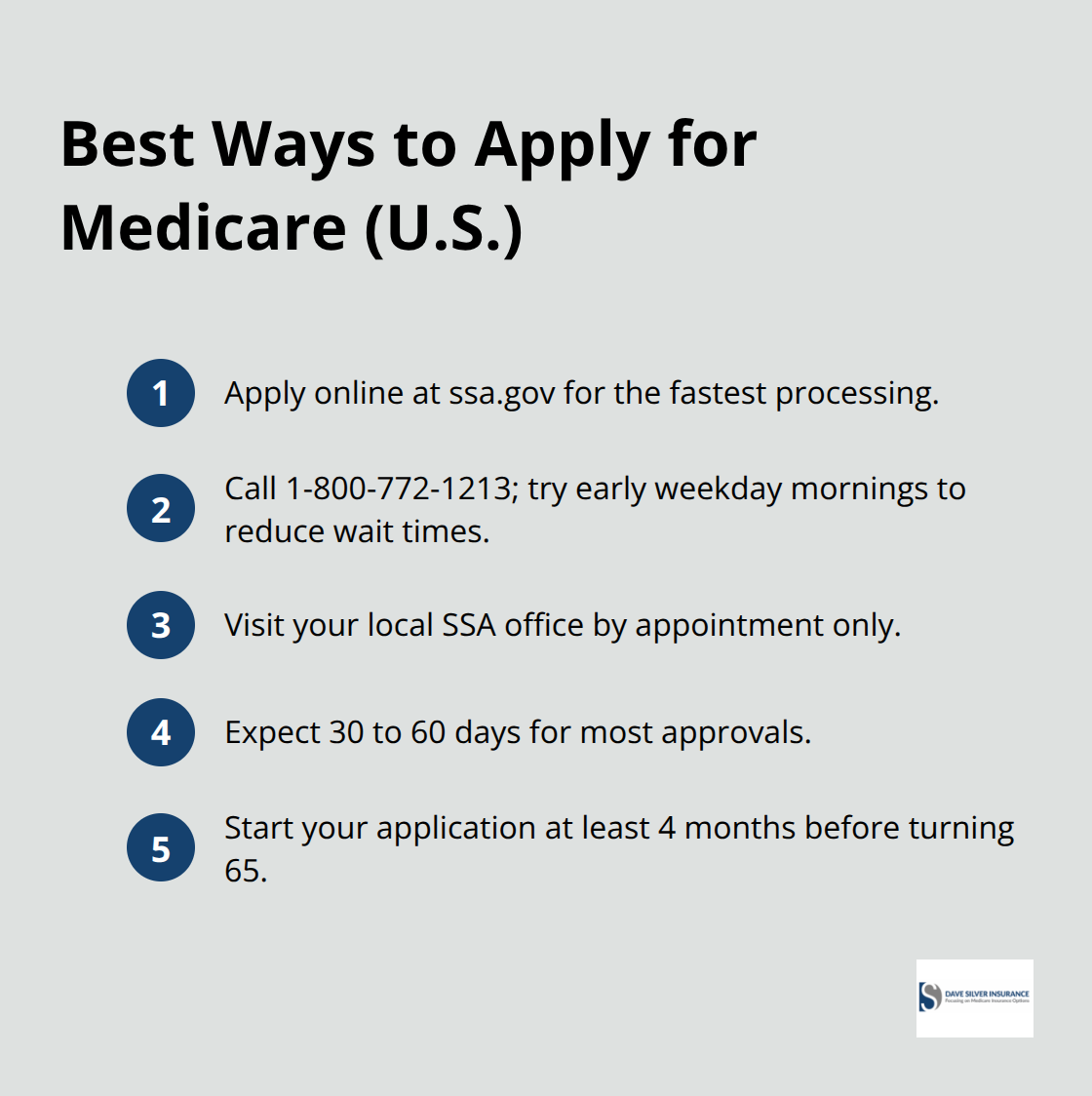
When you call, expect wait times of 15 to 30 minutes during peak hours, so early morning calls on weekdays yield shorter queues. In-person visits require scheduling an appointment in advance rather than walking in unannounced.
Complete Your Application Accurately
The application asks straightforward questions about your work history, immigration status, and current address, but accuracy matters enormously since errors trigger additional review periods. Many new immigrants miss the three-month enrollment window before their 65th birthday, which costs them permanent Medicare Part B premium late enrollment penalties added to their Part B premium for life according to Medicare guidelines. You can enroll three months before turning 65, during your birthday month, and for three months after.
Understand Your Coverage Timeline
Once approved, Medicare Part A typically begins on the first day of your birth month if you apply during the initial enrollment window. Part B coverage starts the month after approval unless you specifically delay it. Immigration verification can add extra days to standard timelines, so applying at least four months before your 65th birthday accounts for processing time and avoids penalties entirely.
Watch Out for Common Application Errors
Mistakes during enrollment create expensive consequences that follow you for years. The next section covers the specific errors that trip up new immigrants most often and how to sidestep them.
Common Mistakes Immigrants Make When Enrolling in Medicare
Missing Enrollment Deadlines Costs You Permanently
Immigrants miss Medicare enrollment deadlines far more often than native-born Americans, and the financial consequences are permanent. The Social Security Administration reports that approximately 30 percent of new Medicare beneficiaries enroll late, triggering lifelong premium penalties according to Medicare guidelines. For immigrants unfamiliar with U.S. healthcare systems, this percentage climbs higher because the three-month enrollment window before your 65th birthday arrives suddenly and without reminder notices.
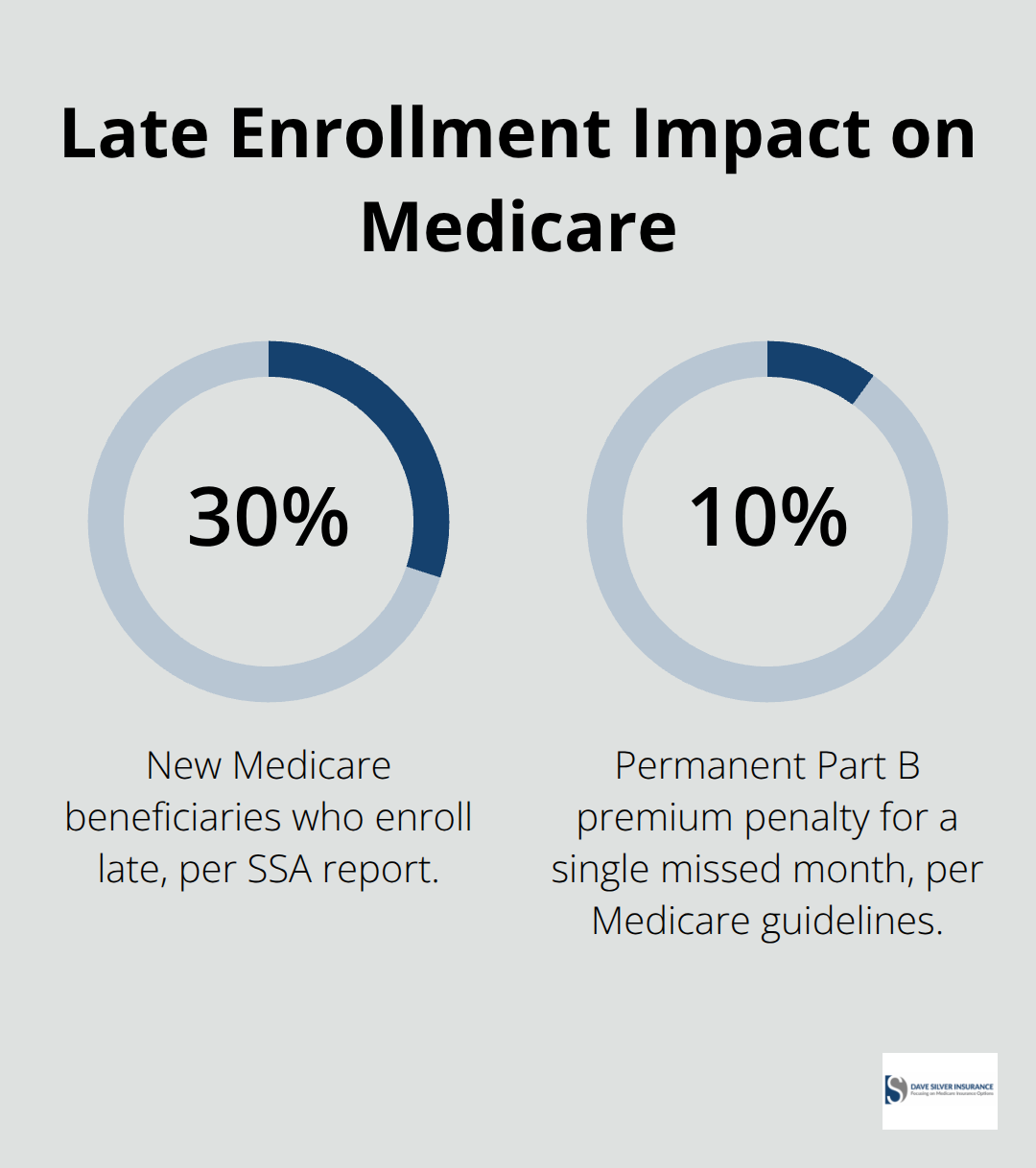
A single missed month costs you 10% of your Part B premium permanently added to every monthly bill for as long as you have Medicare. If your Part B premium sits at $174.70 monthly in 2024, that penalty equals $17.47 forever. Over a 20-year retirement, that missed deadline costs you more than $4,100 in unnecessary charges. Many immigrants incorrectly assume their green card automatically qualifies them immediately, which delays applications until after their birthday when penalties already apply.
Selecting Plans Based on Price Rather Than Your Health Needs
Selecting the wrong coverage plan represents the second major trap, where immigrants choose plans based on low monthly premiums rather than their actual healthcare usage patterns. Part C plans advertise $0 monthly premiums but restrict you to specific networks and charge substantial out-of-pocket maximums reaching $7,550 annually according to 2024 Medicare limits.
Immigrants with chronic conditions like diabetes or hypertension discover too late that their chosen Part C plan requires $50 per specialist visit, adding up to thousands yearly in preventive care costs. Part D prescription drug coverage gaps create another hidden expense immigrants overlook entirely, where coverage stops at $5,030 in annual drug spending before catastrophic coverage kicks in at $7,050, leaving a $2,020 gap where you pay full price for medications.
Medigap Insurance fills these gaps and reduces out-of-pocket expenses significantly. We at Dave Silver Insurance help immigrants evaluate coverage options based on their specific health profiles rather than price alone, ensuring your plan matches your actual medical needs.
Underestimating Out-of-Pocket Costs Drains Your Budget
The third mistake involves underestimating out-of-pocket costs entirely, where immigrants budget only for premiums and ignore deductibles, coinsurance, and copayments that accumulate rapidly during medical treatment. These hidden expenses (deductibles, coinsurance, and copayments) add up faster than most people anticipate, particularly for those managing multiple chronic conditions or requiring specialist care.
Final Thoughts
Immigrant Medicare eligibility requires you to understand work credits, citizenship requirements, and enrollment deadlines that differ significantly from what you experienced in your home country. A single missed enrollment deadline adds permanent penalties to your Medicare Part B premium, while selecting the wrong coverage plan leaves you vulnerable to unexpected medical expenses that drain your retirement savings. Start by gathering your documentation at least four months before your 65th birthday, apply through the Social Security Administration, and carefully evaluate coverage options based on your health needs rather than monthly premiums.
We at Dave Silver Insurance have spent over 17 years helping immigrants navigate Medicare with confidence. Our team works seven days a week to provide personalized guidance on Medicare Part A, B, C, and D, plus Medigap Insurance options that reduce your out-of-pocket expenses significantly. Schedule a consultation with our team to receive tailored recommendations based on your unique health and financial situation.
Disclaimer: The information provided in this blog is for general informational purposes only and does not constitute legal, financial, or insurance advice. Coverage options, terms, and availability may vary. Please consult with a licensed professional for advice specific to your situation