

Rural Medicare coverage works differently than it does in cities, and the differences matter. We at Dave Silver Insurance see firsthand how limited provider networks and specialist shortages create real obstacles for beneficiaries in rural areas.
The good news is that you have options-you just need to know what they are. This guide walks you through the gaps, compares your plan choices, and shows you concrete steps to get better coverage.
Why Rural Medicare Networks Fall Short
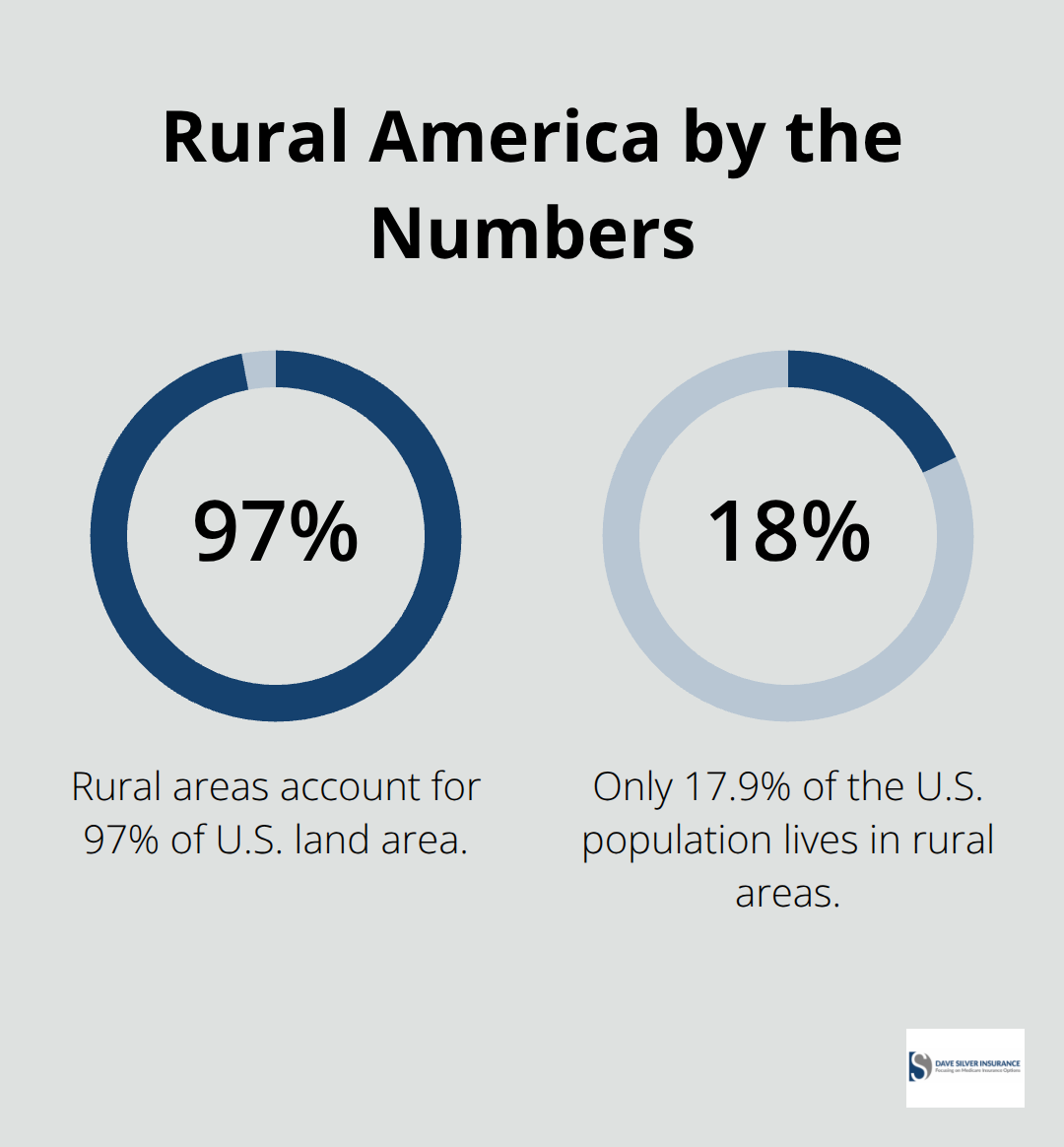
Rural Medicare beneficiaries face a stark reality: the provider networks available in cities simply do not exist in most rural counties. According to the U.S. Census Bureau, rural areas cover about 97% of U.S. land area but host only 17.9% of the population. This geographic spread means Medicare networks are thin and often fragmented.
When you live in a rural area, your in-network options may be limited to one or two hospitals and a handful of primary care physicians. Out-of-network care becomes expensive fast. A specialist 50 miles away might fall short of your network entirely, forcing you to either pay full price or travel even farther for covered services. This is not a minor inconvenience-it directly affects your healthcare decisions and your wallet.
The Specialist Shortage Reality
Finding a cardiologist, orthopedic surgeon, or oncologist in a rural county has become increasingly difficult. Rural-to-urban migration, sometimes called rural flight, has depleted the local healthcare workforce. Younger doctors practice in urban centers where resources, patient volumes, and infrastructure support their work better. This means rural beneficiaries often wait weeks or months for specialist appointments, and many specialists refuse to accept Medicare patients in rural areas due to lower reimbursement rates. Some rural counties have zero specialists in critical fields. If you need advanced care, you have no choice but to travel significant distances, which brings transportation costs and the burden of managing a health condition while commuting.
Transportation as a Hidden Barrier
The distance to medical care in rural areas creates a real problem that many people overlook. Longer travel distances complicate access to Medicare-covered services and can delay timely care. A routine follow-up appointment might require a 90-minute drive each way. For elderly beneficiaries or those with mobility issues, this is not feasible without outside help. Rural areas have limited public transportation, and many beneficiaries cannot drive, particularly after a health event. The costs add up: fuel, vehicle maintenance, and time away from work. Some beneficiaries skip appointments or delay care to avoid the burden and expense. This directly impacts health outcomes and can turn a manageable condition into a serious problem.
Why Telehealth Falls Short in Rural Areas
Telehealth services offer some relief, but rural internet access remains inconsistent in many regions (and not all specialists offer remote visits). Even in the United States, broadband coverage in rural counties lags significantly behind urban areas. A beneficiary without reliable internet cannot access virtual appointments, leaving them dependent on in-person care that may require hours of travel. This infrastructure gap means telehealth solutions, while valuable, do not solve the rural access problem for everyone.
These network gaps, specialist shortages, and transportation barriers combine to create a coverage crisis that demands a different approach. Understanding your specific plan options and how they address (or fail to address) rural realities is the first step toward protecting your health and finances.
Which Medicare Plan Actually Works in Rural Areas
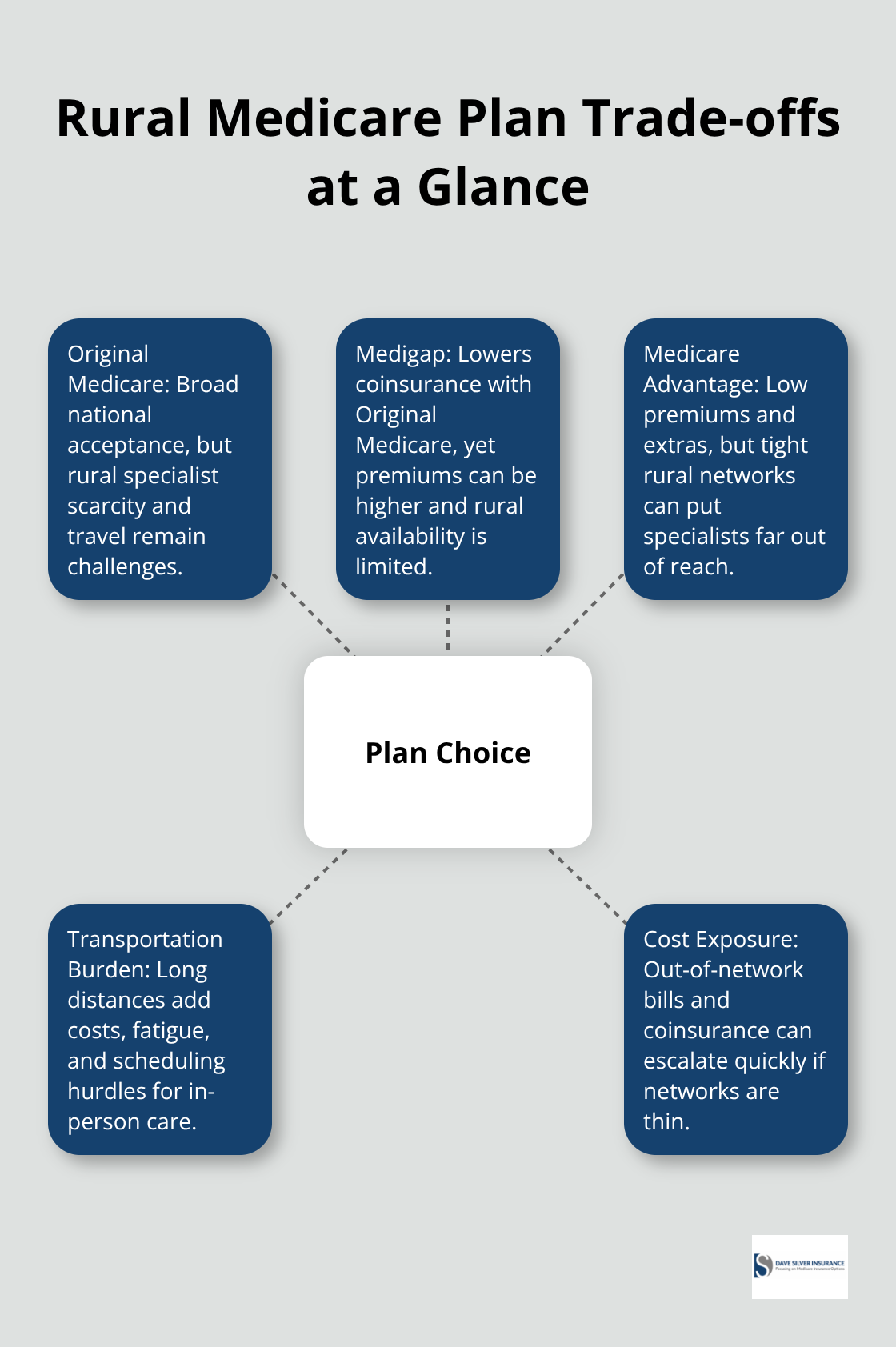
Original Medicare and Medicare Advantage operate under fundamentally different rules in rural settings, and the differences hit your wallet harder than you might expect. Original Medicare, also called Traditional Medicare, gives you access to any provider nationwide who accepts Medicare, which sounds ideal until you realize rural specialists are scarce regardless of what plan you hold. The real problem with Original Medicare in rural areas is that you still face the transportation burden and specialist shortage we covered earlier, plus you pay 20% coinsurance on services after your deductible. A surgery 100 miles away costs the same out-of-pocket percentage whether you live in a city or the countryside.
How Medicare Advantage Plans Restrict Rural Coverage
Medicare Advantage plans lock you into specific networks that vary greatly depending on geographic location. Many Advantage plans offer $0 copays for primary care visits and include prescription drug coverage, which sounds attractive until you discover your plan’s network has only one hospital and two primary care doctors within 50 miles. Out-of-network care under Advantage plans typically costs far more than Original Medicare’s standard coinsurance, sometimes requiring you to pay the full bill upfront. Some rural beneficiaries face situations where their Advantage plan’s nearest in-network specialist is 200 miles away, making the plan functionally useless for specialized care.
The low monthly premium often masks a network that cannot serve your actual healthcare needs.
Medigap Coverage Solves Some Problems, Creates Others
Supplemental insurance, commonly called Medigap, addresses some gaps but creates its own rural complications. Medigap policies cover Original Medicare’s coinsurance and copayments, reducing your out-of-pocket exposure significantly, but they only work with Original Medicare, not Advantage plans. A Medigap Plan G or Plan N can cut your costs substantially if you stick with Original Medicare, but premiums vary dramatically by location and age, and rural counties often have fewer insurers offering Medigap coverage. Some rural beneficiaries find only one or two Medigap insurers operating in their county, eliminating the ability to shop competitively.
Making the Right Plan Choice for Your Situation
The practical reality is this: if you live in a rural area and need specialist care, Original Medicare paired with a robust Medigap policy typically gives you more flexibility than an Advantage plan, despite higher monthly premiums. You pay more upfront but avoid the network trap. Conversely, if you rarely need care beyond primary prevention and have reliable transportation to one or two nearby clinics, an Advantage plan’s $0 premiums and included drug coverage might work. The critical decision hinges on your actual healthcare needs and the specific providers available within reasonable distance from your home, not on plan marketing materials.
Your coverage choice matters far less than understanding what your choice actually covers in your specific county. The next section shows you how to evaluate your options and identify which providers you can realistically access.
How to Actually Access Care in Your Rural Area
The gap between what Medicare covers and what you can realistically reach requires a different strategy than urban beneficiaries use. Rural coverage maximization starts with understanding which services work in your specific county and which ones demand compromise. Telehealth appears as the obvious solution, and it does help for many situations, but the infrastructure reality in rural America limits its effectiveness. According to the U.S. Census Bureau, rural areas cover 97% of U.S. land area, and broadband availability varies dramatically even within the same state. If your county lacks consistent high-speed internet, telehealth remains inaccessible no matter how many virtual specialists offer appointments. Test your actual internet speed and stability before assuming remote care is an option. Federal Communications Commission data shows that roughly 21 million Americans in rural areas lack access to broadband speeds of 25 Mbps download and 3 Mbps upload, which means video appointments often freeze or drop. If you have adequate internet, telehealth can reduce travel burdens significantly for routine follow-ups, medication adjustments, and mental health services. Schedule virtual appointments with specialists outside your immediate area rather than traveling to them in person when the option exists.
Telehealth Has Real Limits in Rural Settings
Telehealth cannot replace in-person surgery, imaging that requires physical examination, or complex diagnostic procedures. Do not let it become your only strategy. Many rural beneficiaries overestimate what remote care can accomplish and then face disappointment when they need hands-on evaluation. Virtual visits work well for chronic disease management and follow-up appointments, but they fail for acute problems that require physical assessment. Talk with your primary care provider about which of your conditions qualify for remote visits and which ones require in-person evaluation. This conversation prevents wasted time scheduling virtual appointments that cannot address your actual needs.
Community Health Centers Offer Practical Local Care
Community Health Centers and Federally Qualified Health Centers, known as FQHCs, operate in rural counties and often accept Medicare. These clinics frequently employ nurse practitioners and physician assistants rather than physicians, which means care quality depends on the specific center and provider, not on credentials alone. Visit your local FQHC to assess whether the available providers can manage your conditions before committing to a plan that forces you into their network exclusively. Some rural FQHCs offer sliding-scale fees for uninsured services and can navigate insurance complications that private practices avoid. Rural clinics also tend to have shorter wait times than distant specialist offices, making them practical for ongoing care management.
Coordinate Care Through Your Primary Provider
Your strategy should combine these accessible local providers with selective travel for specialized care you cannot receive locally. Coordinate all your care through your primary provider at the local clinic rather than attempting to manage multiple specialists across different locations. This coordination prevents duplicate testing, reduces medication conflicts, and gives your local provider context for your health decisions. When you need specialist input, ask your primary care provider for a recommendation and request that the specialist communicate findings back to your local clinic in writing. This creates a medical record trail and prevents your local provider from repeating work. If a specialist refuses to communicate with your primary care provider, that specialist creates more problems than they solve in a rural setting, regardless of their credentials or expertise.
Final Thoughts
Your Medicare rural coverage situation demands action now rather than waiting for networks to improve on their own. Pull your current plan documents and identify which providers you actually use within a 50-mile radius of your home, then write down their names, specialties, and whether they accept your plan. This exercise reveals whether your coverage matches your real healthcare needs or whether you pay for a plan that cannot serve you.
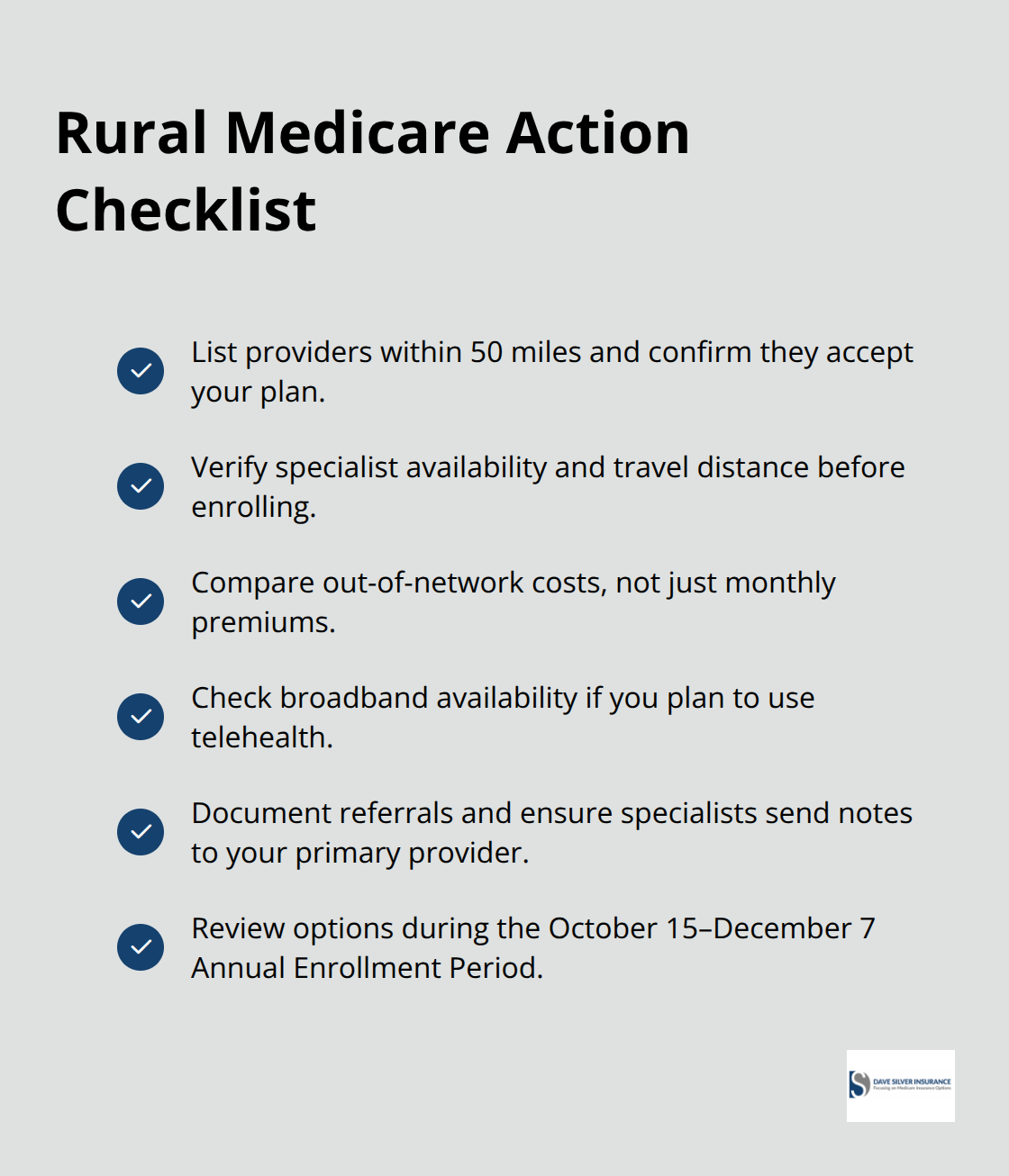
Compare your options during the annual enrollment period (October 15 through December 7 each year) and visit Medicare.gov to filter results by your county. Pay attention to out-of-network costs and specialist availability, not just monthly premiums, because a $0 premium plan becomes expensive fast if its network forces you to travel 200 miles for necessary care. Rural provider networks change frequently as doctors retire or relocate, so your previous plan choice may no longer fit your current situation.
We at Dave Silver Insurance understand how rural networks differ from urban plans and can identify which Medicare options actually work in your county. Contact Dave Silver Insurance to get clarity on your Medicare rural coverage options and confidence in your healthcare decisions.
Disclaimer: The information provided in this blog is for general informational purposes only and does not constitute legal, financial, or insurance advice. Coverage options, terms, and availability may vary. Please consult with a licensed professional for advice specific to your situation