
![Planning Your Medicare Coverage Before You Retire [Guide]](https://davesilverinsurance.com/wp-content/uploads/emplibot/Planning-Your-Medicare-Coverage-Before-You-Retire-_Guide__1785024554-1080x675.jpeg)
Retirement is closer than you think, and your healthcare decisions today will shape your financial security tomorrow. Pre-retirement Medicare planning isn’t something to handle at the last minute-the choices you make now determine your coverage, costs, and peace of mind for years to come.
At Dave Silver Insurance, we’ve helped countless people navigate Medicare before they retire. This guide walks you through eligibility rules, coverage options, and the key decisions that matter most to your situation.
When Can You Actually Enroll in Medicare
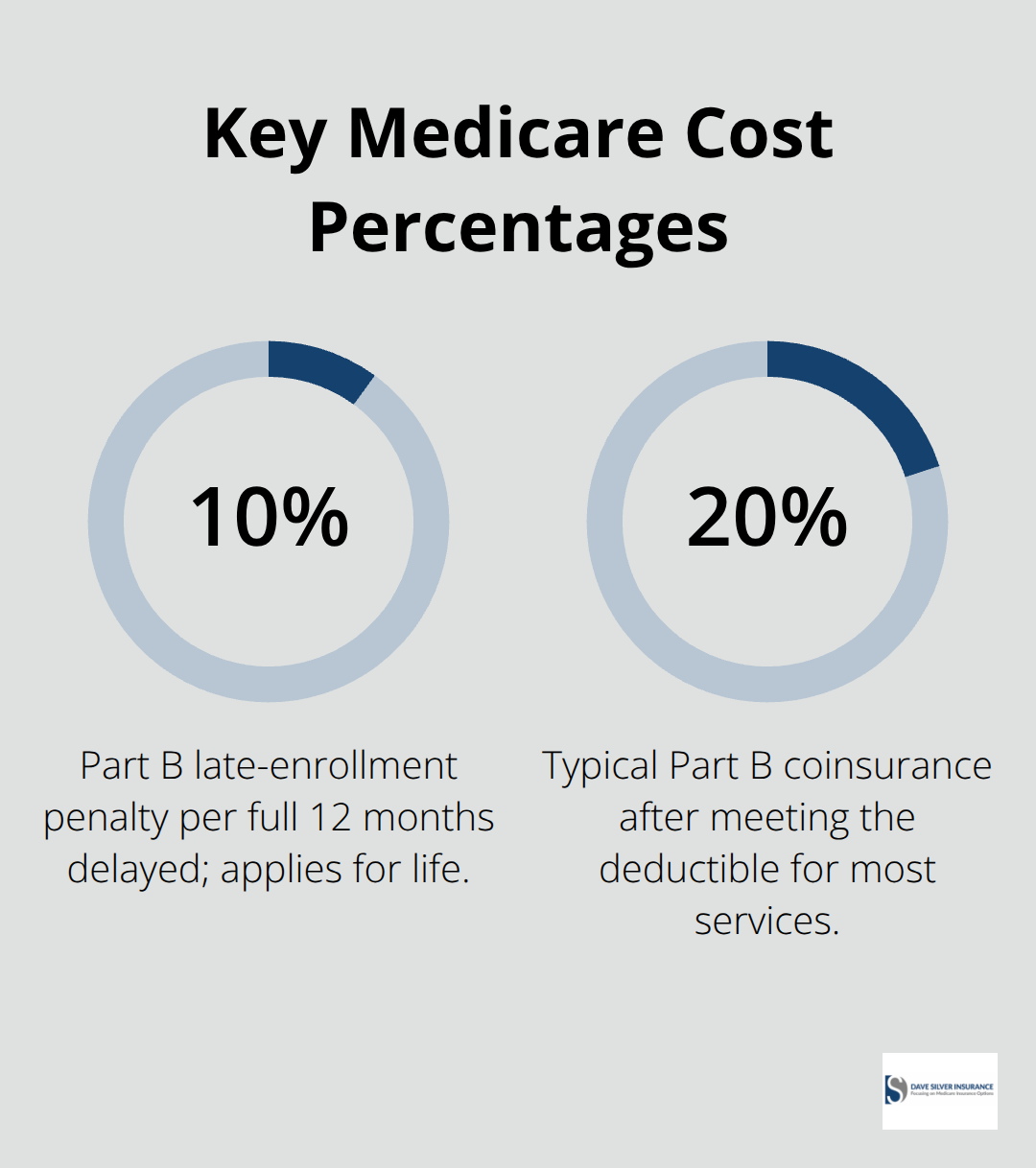
You become eligible for Medicare at 65, but the timing of when you sign up matters far more than most people realize. According to Social Security Administration guidance, your Initial Enrollment Period lasts for 7 months, starting 3 months before you turn 65 and ending 3 months after the month you turn 65. If your birthday falls on the first of the month, Part A coverage can start the month before you turn 65. Most people think they have unlimited time to enroll, but missing this window costs real money. A permanent late enrollment penalty attaches to Part B if you miss your Initial Enrollment Period and don’t qualify for a Special Enrollment Period, and that penalty grows the longer you wait. The penalty is 10% of the Part B premium for each full 12 months you delayed enrollment, and it stays with you for life.
Your Enrollment Window Is Narrow and Unforgiving
Sign up before or during the month you turn 65 and your Part B coverage starts that same month. Sign up in the three months after your birthday and coverage starts the following month instead. This timing difference matters if you have a medical event planned or anticipated healthcare costs. Premium-free Part A coverage starts the month you turn 65, but if you must pay a Part A premium, enrollment timing follows the same rules as Part B. The National Council on Aging emphasizes that you should apply about one month before employer coverage ends to prevent gaps. If you have Health Savings Account contributions, stop adding money about six months before you retire to avoid tax penalties when you enroll in Medicare. Social Security processes enrollments, and coverage generally starts the month after they receive and process your application, so don’t wait until the last day of your enrollment period.
Special Enrollment Periods Give You a Second Chance
Life doesn’t always cooperate with Medicare’s calendar. Special Enrollment Periods allow you to sign up for Part B and premium Part A without late penalties in specific situations. If you lose Medicaid on or after January 1, 2023, your SEP starts the day you’re notified Medicaid ends and lasts six months. Coverage begins the month after you sign up or when Medicaid ends, whichever is later. If your employer coverage ends, you have an eight-month SEP starting the first month after your Initial Enrollment Period closes. Coverage generally begins the month after you sign up, but if you’re still working or within the first full month after employer coverage ends, you can delay Part B up to three months. People released from incarceration get a 12-month SEP starting the day of release, with the option of retroactive coverage back to the release date. File form CMS-10797 with Social Security to document these Special Enrollment Periods and protect yourself from penalties.
How Coverage Dates Work Based on When You Sign Up
The month you sign up determines when your coverage actually starts. If you sign up before or during the month you turn 65, Part B coverage begins that same month. If you sign up in the three months after your birthday, coverage starts the following month. This distinction matters for your healthcare planning and budget projections. Social Security processes your application and notifies you of your coverage start date, so plan your sign-up timing with this processing lag in mind. The earlier you submit your enrollment, the more time Social Security has to process it before your coverage needs to start.
Protecting Yourself From Penalties and Gaps
Missing your Initial Enrollment Period without qualifying for a Special Enrollment Period triggers a permanent penalty that compounds over time. The 10% penalty per 12 months of delay stays attached to your Part B premium for life, making early enrollment a financial priority. If you have job-based coverage, your eight-month SEP after that coverage ends gives you flexibility to coordinate your Medicare start date with your employment transition. Document any Special Enrollment Period with form CMS-10797 filed with Social Security to create an official record that protects you from penalties. These enrollment windows exist for a reason-they prevent coverage gaps and ensure you have continuous healthcare protection as you transition into retirement.
Understanding these enrollment rules positions you to make informed decisions about your coverage start date. The next section examines the specific Medicare parts available to you and how each one works, so you can evaluate which combination fits your health needs and budget.
What Medicare Parts Actually Cover and Cost
Part A and Part B: The Foundation of Original Medicare
Original Medicare consists of Part A hospital insurance and Part B medical insurance. Part A covers inpatient hospital stays, skilled nursing facility care, and hospice services, while Part B covers outpatient doctor visits, diagnostic tests, and preventive care. The standard Part B premium in 2026 is at least $202.90 per month according to Medicare.gov, and you pay this premium regardless of which coverage path you choose. Part A is typically premium-free if you or your spouse paid Medicare taxes for at least 10 years, but if you must pay a Part A premium, it ranges based on your work history. After meeting your Part B deductible, you pay 20 percent coinsurance for most services, meaning your out-of-pocket costs scale directly with the medical care you receive.
Original Medicare has no annual out-of-pocket maximum, so a major illness or extended hospitalization can generate substantial costs that continue throughout the year. This financial exposure is why many people pair Original Medicare with Medigap supplemental insurance, which covers the gaps that Medicare leaves behind like coinsurance, copays, and deductibles.
Medicare Advantage Plans: All-in-One Coverage with Trade-Offs
Medicare Advantage plans, also called Part C, bundle Parts A, B, and usually D into a single plan offered by private insurers. These plans cap annual out-of-pocket spending at $9,250 for in-network services in 2026, providing financial predictability that Original Medicare cannot match. The trade-off is network restrictions-you must use in-network doctors and hospitals for routine care, and out-of-network services cost significantly more or aren’t covered at all.
Many Medicare Advantage plans charge $0 in plan premiums and may help pay your Part B premium, making them financially attractive upfront. However, you should verify whether your current doctors participate in the plan’s network before enrolling. Medicare Advantage plans frequently include extras like dental, vision, hearing, gym memberships, and nutrition support that Original Medicare doesn’t provide, which can add real value depending on your needs.
Part D and Medigap: Filling Coverage Gaps
Part D prescription drug coverage comes separately if you choose Original Medicare, and formularies vary dramatically between plans. Confirm your medications are covered and check which pharmacies participate, including mail-order options. If you have limited income, explore Medicare Savings Programs to help with premiums and cost-sharing. The Low Income Subsidy program reduces drug costs by an estimated annual value around $5,700 according to the National Council on Aging.
Medigap policies complement Original Medicare by covering costs that Parts A and B don’t, reducing your out-of-pocket burden significantly. These supplemental plans work alongside Original Medicare rather than replacing it, giving you flexibility in provider choice while protecting your finances.
Comparing Total Costs Across Your Options
Use Medicare.gov’s plan comparison tools to calculate your estimated total yearly costs across premiums, deductibles, and out-of-pocket maximums before choosing between Original Medicare with Medigap and a Medicare Advantage plan. Your decision hinges on three factors: whether your preferred doctors accept Medicare or participate in a specific plan’s network, how much you spend on prescription medications annually, and your tolerance for predictable versus potentially unlimited out-of-pocket costs. Original Medicare offers nationwide provider flexibility but requires separate enrollment in Part D and Medigap. Medicare Advantage provides bundled coverage and extra benefits but restricts you to in-network providers and requires network verification before enrollment.
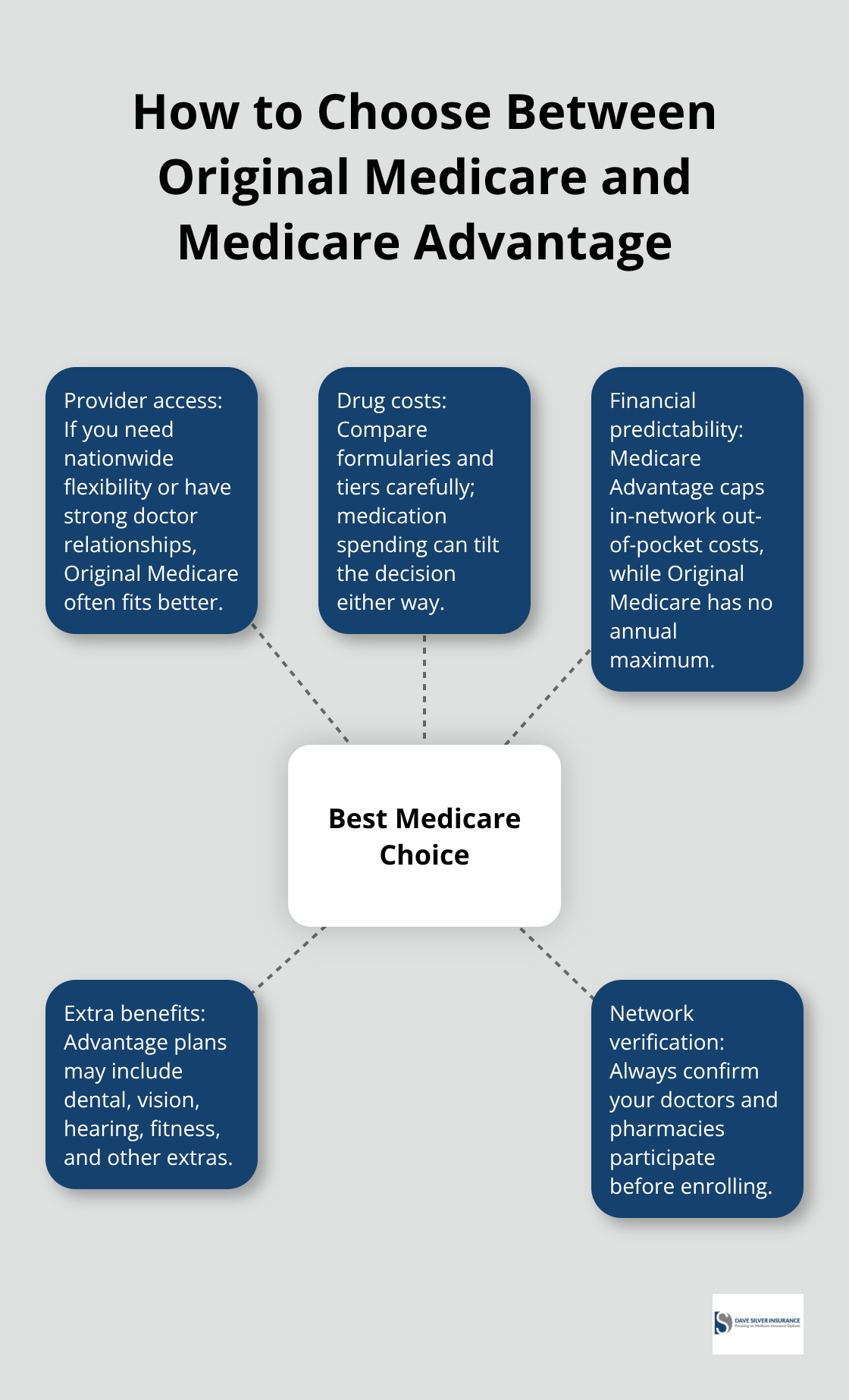
The coverage option you select shapes not only your monthly expenses but also your access to doctors, hospitals, and pharmacies throughout your retirement. Your next decision involves evaluating your personal health situation and budget constraints to determine which combination of parts and supplemental coverage aligns with your needs.
What Your Health Situation Reveals About Your Best Medicare Choice
Your healthcare patterns over the past five years predict which Medicare path will cost you less and serve you better. List every doctor, specialist, and hospital you visited in the last 12 months, then note whether you take regular prescription medications. The National Council on Aging recommends asking yourself specific cost questions before comparing plans: what will you pay in premiums, what’s the annual maximum out-of-pocket expense, what costs apply before coverage starts, what copays you face for specific services, what happens if you use out-of-network providers, and what your medication copays total.
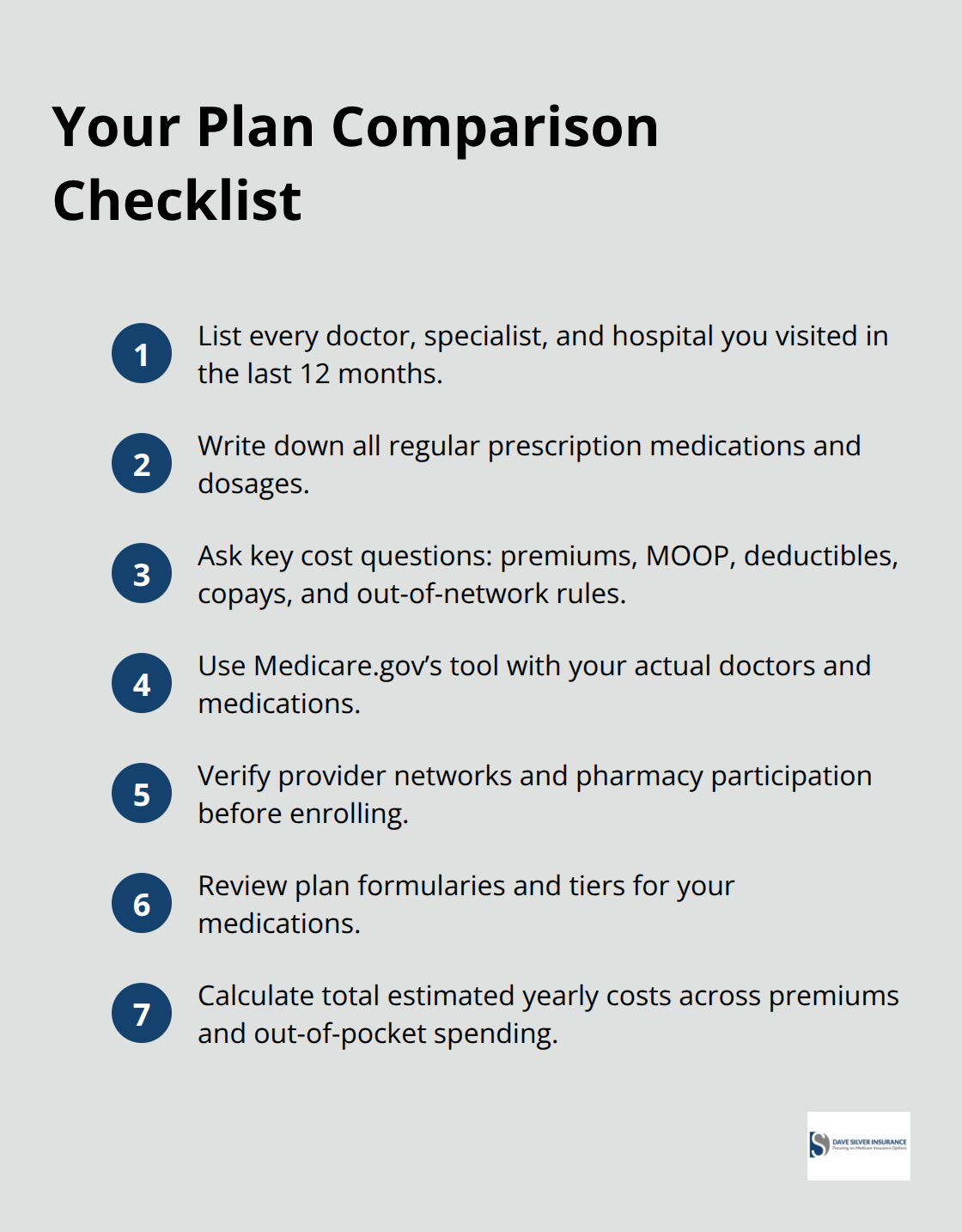
If you see the same three doctors consistently and take two or three maintenance medications, your network matters enormously-Medicare Advantage plans restrict you to in-network providers for routine care, so verify your doctors participate before enrolling.
Provider Access and Geographic Flexibility
Original Medicare lets you see any doctor who accepts Medicare nationwide without network restrictions, which matters if you travel frequently or live part of the year in multiple locations. Medicare Advantage plans require in-network providers for routine care, and out-of-network services cost significantly more or aren’t covered at all. Your attachment to specific providers should heavily influence your choice between these two paths. If you have strong relationships with particular doctors, Original Medicare wins decisively. If you see multiple specialists who don’t participate in local Medicare Advantage networks, Original Medicare offers the flexibility you need.
Prescription Drug Costs and Formulary Comparison
Your prescription drug costs deserve separate analysis because formularies vary dramatically between plans. Use Medicare.gov’s plan comparison tool and enter your actual medications to see which plans cover them and at what tier. A plan with lower premiums might place your blood pressure medication in a higher cost tier, ultimately costing you significantly more annually. If you take expensive specialty drugs, spending 30 minutes reviewing formularies now saves hundreds or thousands in out-of-pocket costs later. The Low Income Subsidy program reduces drug costs by an estimated annual value around $5,700 according to the National Council on Aging, making a standalone Part D plan with Original Medicare substantially more affordable if you qualify.
Financial Predictability and Out-of-Pocket Planning
Budget matters equally when choosing between coverage paths. Original Medicare with Medigap offers predictable monthly costs but no annual out-of-pocket maximum, so a serious illness generates ongoing expenses throughout the year. Medicare Advantage plans cap your annual out-of-pocket maximum for in-network services in 2026, providing a financial ceiling you can plan around. Most people underestimate their healthcare spending by 40 to 50 percent, so look at your actual claims history from your current employer plan or review medical bills you’ve paid out of pocket to establish a realistic baseline. Run both scenarios through Medicare.gov’s comparison tool using your actual doctors and medications, then calculate total estimated costs for the year to see which path costs less in your specific situation.
Income-Based Programs and Expert Guidance
Your income level and assets shape which supplemental options make financial sense. Medicare Savings Programs help cover premiums and cost-sharing if your income falls below specific thresholds, and BenefitsCheckUp.org identifies programs you qualify for based on your zip code and financial situation. SHIP, the State Health Insurance Assistance Program, provides free personalized counseling from trained specialists in your state who review your specific situation and recommend plans without bias or commission. These resources exist precisely because Medicare’s complexity defeats most people working alone, and getting expert guidance costs nothing. If you have retiree health coverage from a former employer, coordinate carefully with Medicare because enrolling in certain plans sometimes forfeits retiree benefits permanently. Talk with your former employer’s benefits administrator before you enroll anywhere to understand how Medicare integrates with your retiree coverage and whether any plans are excluded.
Making Your Final Choice
The decision between Original Medicare with Medigap and Medicare Advantage ultimately hinges on three factors: your attachment to specific providers, your prescription drug costs, and your preference for financial predictability versus maximum flexibility. Medicare Advantage wins if you take expensive medications that fall into lower cost tiers on a specific plan, prioritize extra benefits like dental or vision coverage, or prefer knowing your maximum annual out-of-pocket expense upfront. Most people benefit from comparing both options using their actual doctors and medications rather than trusting general advice that applies to nobody in particular.
Final Thoughts
Your pre-retirement Medicare decisions shape your healthcare access and financial security for decades to come. The enrollment windows close fast, penalties for missing them stick with you for life, and your coverage options require comparison against your actual doctors and medications rather than assumptions. Start your Medicare planning now while you still have time to research, compare, and avoid costly mistakes that compound throughout retirement.
SHIP provides free counseling from trained specialists in your state, BenefitsCheckUp.org identifies income-based programs you qualify for, and Medicare.gov’s plan comparison tools let you test scenarios with your actual health information. We at Dave Silver Insurance simplify pre-retirement Medicare enrollment with personalized guidance on Parts A, B, C, and D along with Medigap insurance to reduce your out-of-pocket expenses. Contact Dave Silver Insurance to discuss your healthcare needs, budget constraints, and provider preferences with someone who understands Medicare’s complexity and can answer your questions directly.
Disclaimer: The information provided in this blog is for general informational purposes only and does not constitute legal, financial, or insurance advice. Coverage options, terms, and availability may vary. Please consult with a licensed professional for advice specific to your situation