

Getting Medicare quotes online doesn’t have to be complicated. We at Dave Silver Insurance know that many people worry about making mistakes when comparing plans from home.
The good news: with the right information and approach, you can get accurate quotes without stepping foot in an office. This guide walks you through exactly how to do it.
Why Online Quotes Beat Office Visits
Online Medicare quotes eliminate the friction that stops most people from comparing plans. Instead of scheduling an appointment weeks out, sitting in an office for 90 minutes, and listening to a sales pitch, you can pull accurate quotes in 15 minutes from your couch. The data backs this up: nearly one-third of Medicare beneficiaries live in a county with more than 50 Medicare Advantage plans available in 2025, making side-by-side comparison essential to find value for your location and needs. Trying to evaluate that many options in a single office visit is impossible. Online tools let you compare premiums, copays, deductibles, and out-of-pocket maximums across multiple carriers without anyone pressuring you to decide on the spot. You control the pace and can walk away to think things through.
Speed Matters When Plan Details Change
Medicare plans change annually, and the Annual Notice of Change documents released each fall show how premiums, copays, networks, and drug formularies shift for the upcoming year. Getting quotes now-before October 15 when the Annual Enrollment Period opens-gives you time to absorb the numbers and spot the differences. A identical Medigap Plan G can vary by $50 to $150 per month across carriers in the same state, equating to $600 to $1,800 in extra annual cost and up to $12,000 to $36,000 over 20 years. That gap matters enormously, and you only find it when you run quotes from multiple insurers side by side. Online platforms show you these differences instantly. An office visit forces you to rely on whatever one agent happens to quote, which may not be the lowest-cost option available in your area.
Total Cost Reveals What Premiums Hide
Medicare Advantage plans often advertise low or zero premiums, but total cost can be higher due to copays, coinsurance, and high out-of-pocket maximums, plus potential network or prior-authorization restrictions. Your total annual Medicare cost depends on the interaction of premiums, deductibles, copays, coinsurance, prescription drug tier placement, and annual out-of-pocket maximums-not just the premium. Online quotes that break down these components let you spot hidden expenses before you enroll. Prescription drug costs drive a major portion of total cost; plan formulary tier placement can swing annual drug spending by $1,000 to $2,000.

When you enter your current medications into an online quote tool, the system shows you exactly how much you’ll pay for each drug under each plan. An agent in an office might mention drug coverage generally, but won’t walk through your specific medications with the same precision an online formulary check provides.
What You’ll Discover When You Compare Online
Online quote tools reveal plan differences that office conversations often miss. You see which plans cover your preferred doctors, how much you’ll pay out-of-pocket for your medications, and what your total annual costs actually look like. This transparency shifts power to you-the person making the decision. You’re not relying on someone else’s recommendation; you’re looking at the actual numbers for your situation. The next step involves gathering the right information to feed into these tools, which we’ll cover in detail.
What Information You Need for an Accurate Online Quote
Accurate Medicare quotes depend entirely on the information you provide. Garbage in, garbage out. Most people underestimate how detailed their inputs need to be, which is why their quotes come back misleading. The Medicare Plan Finder tool on Medicare.gov requires specific data points, and skipping any of them or entering approximations will throw off your entire comparison.
Your Medications: Dosages and Frequency Matter
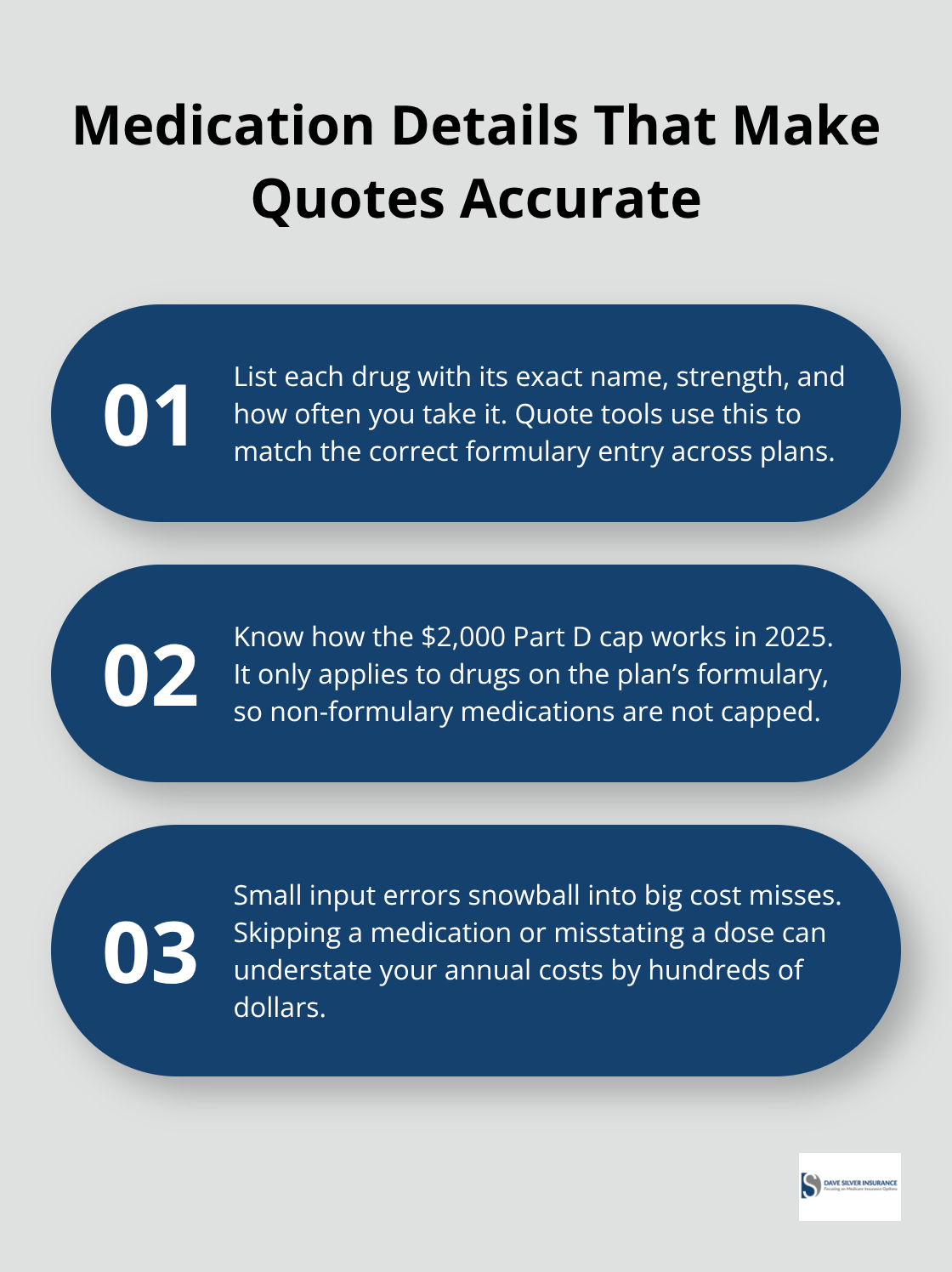
Start with your medications-not just the names, but the dosages and how often you take them. A generic search for lisinopril won’t work; the system needs to know you take 10mg daily because formulary placement varies by dosage and frequency across plans. The 2025 Part D annual out-of-pocket cap sits at $2,000 for plan-covered drugs, but this cap only applies to drugs on the formulary; non-formulary drugs aren’t protected by the cap. When you enter each medication, the tool shows you which tier it sits on under each plan and what you’ll actually pay. If you skip a medication or misstate the dose, your quote could underestimate your annual costs by $500 or more.
Income and Timing: Plan for Future Surcharges
Income matters too, but not for the reason most people think. IRMAA surcharges raise Part B and Part D premiums for higher-income enrollees, and these surcharges are determined by income reported two years prior. If you plan a large retirement income event like a Roth conversion or asset sale, your income for this year won’t trigger surcharges until 2028. That timing information shapes whether a certain plan makes sense right now.
Doctors and Hospitals: Verify Network Inclusion
Your preferred doctors and hospitals complete the picture. For Medicare Advantage quotes, verify that your preferred doctors are in the plan’s directory or call member services directly, since provider directories can be outdated. Many people discover after enrolling that their longtime cardiologist isn’t actually in the network, or requires prior authorization for every visit. Medigap with Original Medicare offers nationwide provider access without network restrictions, while Medicare Advantage plans use private networks that can limit which doctors you can see at in-network rates. Running an accurate quote means cross-referencing the plan’s provider directory against your actual care team before you commit. Once you’ve gathered these details, you’re ready to enter them into the tools that will show you exactly what each plan costs.
Where Your Quote Goes Wrong
Most people believe their Medicare quote fails because they didn’t understand the system. The real reason is simpler: they fed incomplete or inaccurate data into the tools. Medicare.gov’s Plan Finder is remarkably precise, but only when you provide the full picture. Entering your medications without dosages, skipping over secondary insurance details, or listing doctors you see once a year while omitting your primary care physician creates quotes that don’t match reality. The system calculates your costs based on what you tell it, so vague inputs produce vague outputs.
Medication Details: Dosage and Frequency Change Everything
One critical mistake stands out above the rest: people enter their medication list by searching for the generic name without specifying strength or frequency. Lisinopril comes in 5mg, 10mg, 20mg, and 40mg tablets. Each dosage sits on different formulary tiers across plans, meaning your actual out-of-pocket cost for a 10mg daily prescription could differ by $300 to $600 annually compared to what you quoted for the generic term alone. The Plan Finder requires your exact current medications with dosages and how often you take them. Write them down before you start, or pull up your pharmacy records on your phone. This single step eliminates the most common source of inaccuracy in stand-alone Part D drug coverage.
Network Restrictions: Verify Your Doctors Are Actually In-Network
Network restrictions create the second major blind spot. Medicare Advantage plans don’t cover all doctors or hospitals at the same rate, yet most people quote a plan without verifying their actual care team is in-network. You might find a plan with a $0 premium and think you’ve won, then discover your cardiologist charges $150 per visit as an out-of-network provider or requires prior authorization for routine tests. The plan’s provider directory on its website often lags reality by months, so call member services directly. Ask specifically whether each of your doctors participates, what their copay is, and whether they require prior authorization. For specialists you see regularly, confirm this before you quote the plan as viable.
Out-of-Pocket Maximums: Don’t Overlook This Number
Many people ignore the annual out-of-pocket maximum when comparing plans. A plan with lower copays might have a $7,000 maximum out-of-pocket limit, while another plan with slightly higher copays caps out at $5,500. If you have chronic conditions requiring frequent care, that $1,500 difference matters enormously. The Plan Finder shows this figure for every plan, so include it in your comparison alongside premiums and drug costs.
Income and IRMAA Surcharges: Plan Ahead for Future Changes
Income reporting represents a third area where people stumble. IRMAA surcharges (determined by income from two years prior) can swing your Part B and Part D premiums by $100 to $500 monthly for higher earners. If you retire this year or plan a Roth conversion, your current income won’t trigger surcharges until 2028, which changes whether certain plans make financial sense right now. Run your quote with both your current income and your projected future income to see how timing affects your costs.
Final Thoughts
Your Medicare quotes online are only as reliable as the data you feed into them. Once you’ve entered your medications with exact dosages, verified your doctors are in-network, and accounted for your income situation, you’re looking at estimates-not final pricing. A quote shows you what you’ll likely pay under each plan based on current formularies and networks, but the actual amount you owe depends on real claims processed after you enroll.
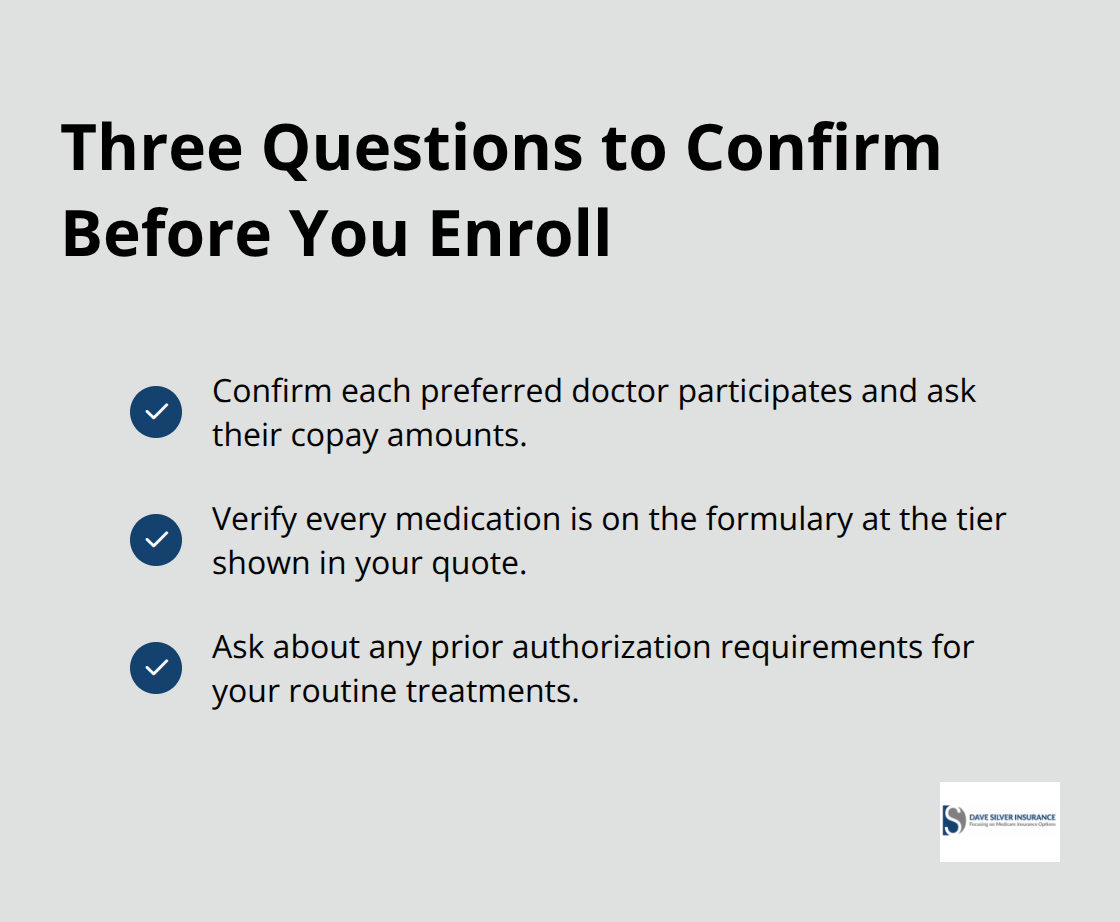
Before you commit to a plan, call the plan’s member services line and ask three specific questions. First, confirm your preferred doctors participate and what their copay amounts are. Second, verify your medications sit on the formulary at the tier your quote showed. Third, ask about any prior authorization requirements for your regular treatments-this 15-minute conversation transforms your quote from an estimate into a near-certain prediction of what you’ll actually pay.
If you want a second opinion on your Medicare quotes online or need help interpreting what you’re seeing, we at Dave Silver Insurance can help. We offer personalized guidance on Medicare Part A, B, C, and D, including Medigap Insurance to reduce your out-of-pocket expenses, and you can reach us seven days a week for a free consultation. Schedule a consultation with Dave Silver Insurance to confirm your best options and move forward with confidence in your healthcare decisions.
Disclaimer: The information provided in this blog is for general informational purposes only and does not constitute legal, financial, or insurance advice. Coverage options, terms, and availability may vary. Please consult with a licensed professional for advice specific to your situation