

Medicare costs explained can feel overwhelming, but they don’t have to be. Most people don’t realize how many different expenses add up-premiums, deductibles, copayments, and coverage gaps.
We at Dave Silver Insurance break down exactly what you’ll pay for each part of Medicare and show you how to reduce those costs. This guide gives you the real numbers so you can budget accurately.
What Are the Real Costs of Each Medicare Part
Part A: Hospital Coverage and Deductibles
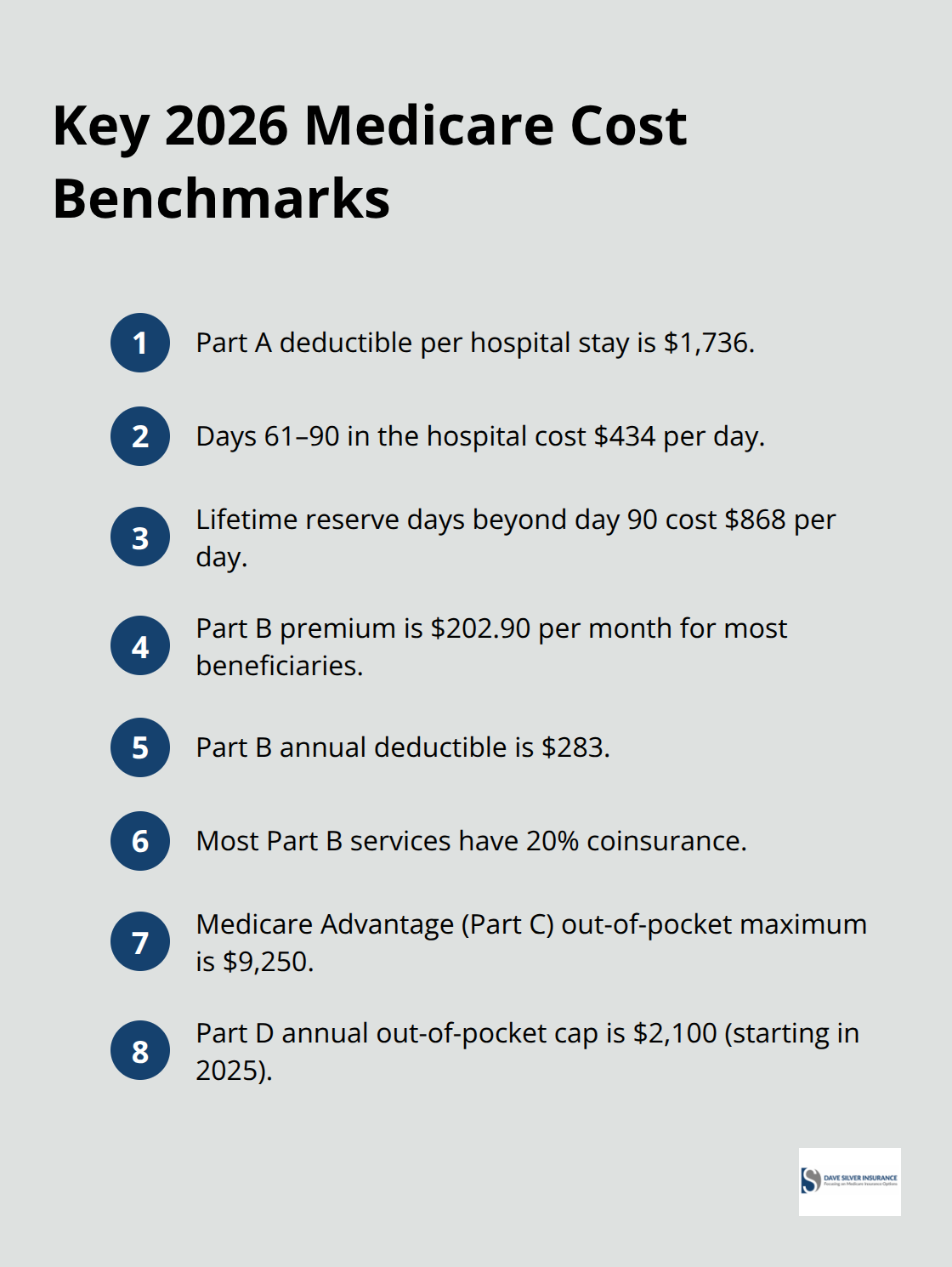
Part A covers hospital stays, skilled nursing care, and hospice. Most people pay nothing for the premium if they or their spouse paid Medicare taxes for at least 40 quarters. However, the Part A deductible per hospital stay is $1,736 in 2026, which hits your wallet immediately when admitted. After you meet that deductible, Medicare covers your first 60 days fully, but days 61 through 90 cost you $434 per day out of pocket. If your hospital stay extends beyond 90 days, you tap into lifetime reserve days at $868 per day-a steep cost that many people don’t anticipate.
For skilled nursing facilities, you pay nothing for the first 20 days, then $217 per day from day 21 through day 100. A single hospital stay can quickly exceed $5,000 in out-of-pocket costs even with premium-free Part A.
Part B: Doctor Visits and Outpatient Services
Part B costs $202.90 per month in 2026 for most beneficiaries, though higher-income seniors pay more through Income-Related Monthly Adjustment Amounts (IRMAA surcharges that can push premiums to $689.90 monthly). After meeting the $283 annual deductible, you typically pay 20% coinsurance on most services-meaning if your doctor bills Medicare $500, you owe $100.
Income matters significantly here. If your Modified Adjusted Gross Income exceeds $109,000 as a single filer or $218,000 for married couples filing jointly, IRMAA surcharges apply to Part B, raising your total monthly costs substantially.
Part C and Part D: Private Plans and Drug Coverage
Part C (Medicare Advantage) bundles Parts A and B into one plan through private insurers, often with $0 premiums and an annual out-of-pocket maximum capped at $9,250 for 2026, which protects you from unlimited costs. This financial ceiling matters when you face serious illness.
Part D prescription drug coverage varies by plan but includes a maximum annual out-of-pocket limit of $2,100 starting in 2025, though you may face a deductible up to $615 before coverage kicks in. If you have higher drug expenses, the $2,100 Part D cap becomes valuable, but early-year deductibles still force upfront spending that strains monthly budgets. IRMAA surcharges also apply to Part D for higher-income beneficiaries, raising your total monthly costs significantly.
The Critical Difference: Spending Caps
Original Medicare (Parts A and B combined) has no annual spending cap, so you could theoretically pay thousands more if you face serious illness. Medicare Advantage plans provide that financial ceiling, protecting your budget from catastrophic costs. These 2026 figures come directly from the Centers for Medicare and Medicaid Services and Social Security Administration announcements made in fall 2025.
Understanding these baseline costs sets the stage for recognizing what Medicare doesn’t cover-and that’s where hidden expenses emerge.
What Medicare Doesn’t Cover and What You Actually Pay
The Coverage Gaps That Hit Your Wallet
Medicare leaves significant gaps that catch people off guard. Original Medicare doesn’t cover uncovered dental and vision care, hearing aids, or routine foot care, which means a root canal, new glasses, or hearing aid fitting comes entirely out of your pocket. The Centers for Medicare and Medicaid Services confirms these gaps force beneficiaries to budget separately for routine care that feels medical but isn’t covered. A hearing aid alone costs $2,000 to $6,000 per ear, and most people need two. Dental work ranges from $500 for a filling to $3,000 or more for a crown. These aren’t rare expenses either-the National Institute on Deafness and Other Communication Disorders found that about one in three people over 65 experience hearing loss, yet only 30% actually use hearing aids because of cost.
Your 20% coinsurance under Part B applies to doctor services, but it doesn’t touch these categories at all. Medicare Advantage plans often bundle dental and vision benefits, which is why many people switch from Original Medicare. However, those benefits come with annual maximums that rarely cover full costs. A dental plan might cap coverage at $1,000 yearly when a single implant costs $4,000 to $6,000.
How Your Plan Type Shapes Total Spending
Your actual out-of-pocket spending depends heavily on which plan type you choose and how aggressively you use healthcare. Someone with Original Medicare and no supplemental coverage could spend $1,736 just meeting their Part A deductible during one hospital stay, then another $283 for Part B’s annual deductible, then 20% of all subsequent services. If that person develops diabetes and needs regular doctor visits plus medications, they pay 20% coinsurance on every visit plus full Part D costs until hitting the $2,100 annual out-of-pocket maximum on drugs.
A Medicare Advantage plan caps total out-of-pocket spending at $9,250 annually across all services, which creates predictability. But here’s the catch: that $9,250 cap doesn’t include premiums or services outside the plan’s network. If you need a specialist not in your MA plan’s network, you pay full price or nothing gets covered depending on your plan type.
Income Level and Your Real Healthcare Burden
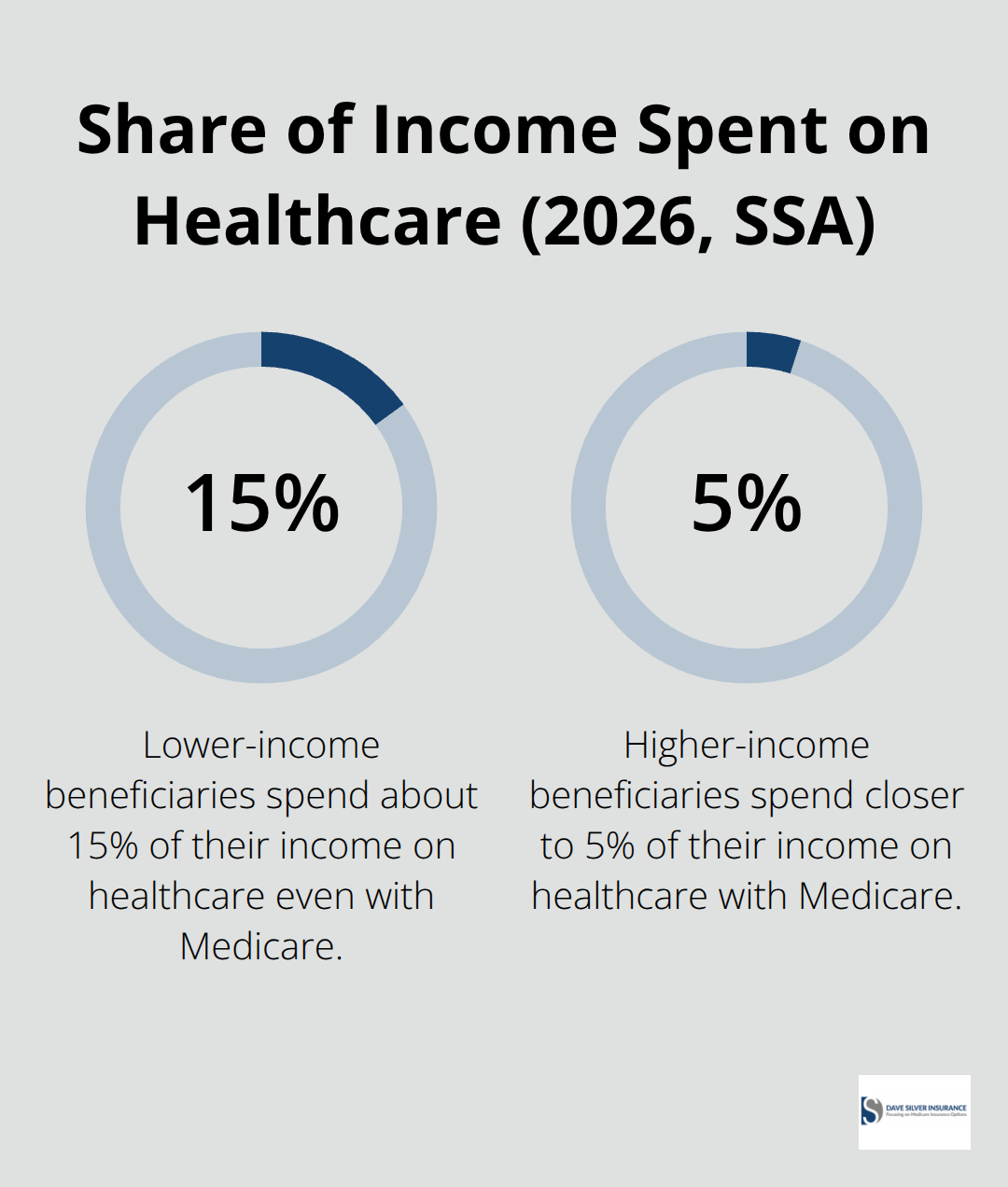
The Social Security Administration data from 2026 shows that lower-income beneficiaries spend roughly 15% of their income on healthcare costs even with Medicare, while higher-income beneficiaries spend closer to 5% because the same dollar amounts affect their budget less severely. This means your actual costs matter more than the percentages sound. Original Medicare handles acute medical care well but abandons you for preventive or routine care that most people need annually.
These spending patterns reveal why supplemental coverage becomes so valuable-it fills the gaps Original Medicare leaves behind.
How Medigap Reduces Your Out-of-Pocket Costs
What Medigap Plans Cover and How They Work
Medigap (Medicare Supplement Insurance) fills the gaps Original Medicare leaves behind by covering deductibles, coinsurance, and copayments you’d otherwise pay yourself. The Centers for Medicare and Medicaid Services standardizes these plans by letter, meaning Plan G from one insurer covers identical benefits to Plan G from another. This standardization matters because you can compare plans purely on price rather than worrying whether coverage differs. In 2026, a Plan G typically costs $120 to $250 monthly depending on your location and age, but it covers your Part B deductible ($283), your 20% coinsurance on doctor visits, and your Part A hospital deductible ($1,736). If you face a serious illness requiring hospitalization plus ongoing specialist care, that Medigap plan prevents you from paying thousands in coinsurance alone.
Plan G Versus Plan N: The Premium and Copayment Trade-Off
Plan N costs less than Plan G (often $80 to $150 monthly) but requires small copayments of $20 for doctor visits and $50 for emergency room care, making it suitable if you rarely visit specialists. The trade-off is clear: lower premiums mean you pay more per visit. Someone choosing between Plan G at $200 monthly and Plan N at $120 monthly should calculate their expected healthcare usage. If you visit doctors eight times yearly, Plan N costs $120×12=$1,440 annually plus $20×8=$160 in copayments, totaling $1,600. Plan G costs $200×12=$2,400 with zero copayments. Plan N wins only if your visits drop below six per year. Original Medicare with no Medigap leaves you exposed to unlimited coinsurance, while adding any Medigap plan caps your exposure significantly.
Total Healthcare Spending: Medigap Versus Medicare Advantage
Your total healthcare spending with Medigap depends on which plan you select and your actual usage patterns. The Social Security Administration data shows that beneficiaries with Medigap spend an average of $4,500 annually on premiums and out-of-pocket costs combined, compared to $6,200 for those with Original Medicare alone facing unpredictable coinsurance bills. Medicare Advantage plans offer an alternative by capping out-of-pocket spending at $9,250 annually, but they restrict your provider network and require prior authorizations for many services, whereas Medigap lets you see any doctor accepting Medicare nationwide without restrictions. If you have established relationships with specific doctors or specialists, Medigap preserves that freedom while Medicare Advantage might force you to switch providers.
Three Factors That Shape Your Medigap Decision
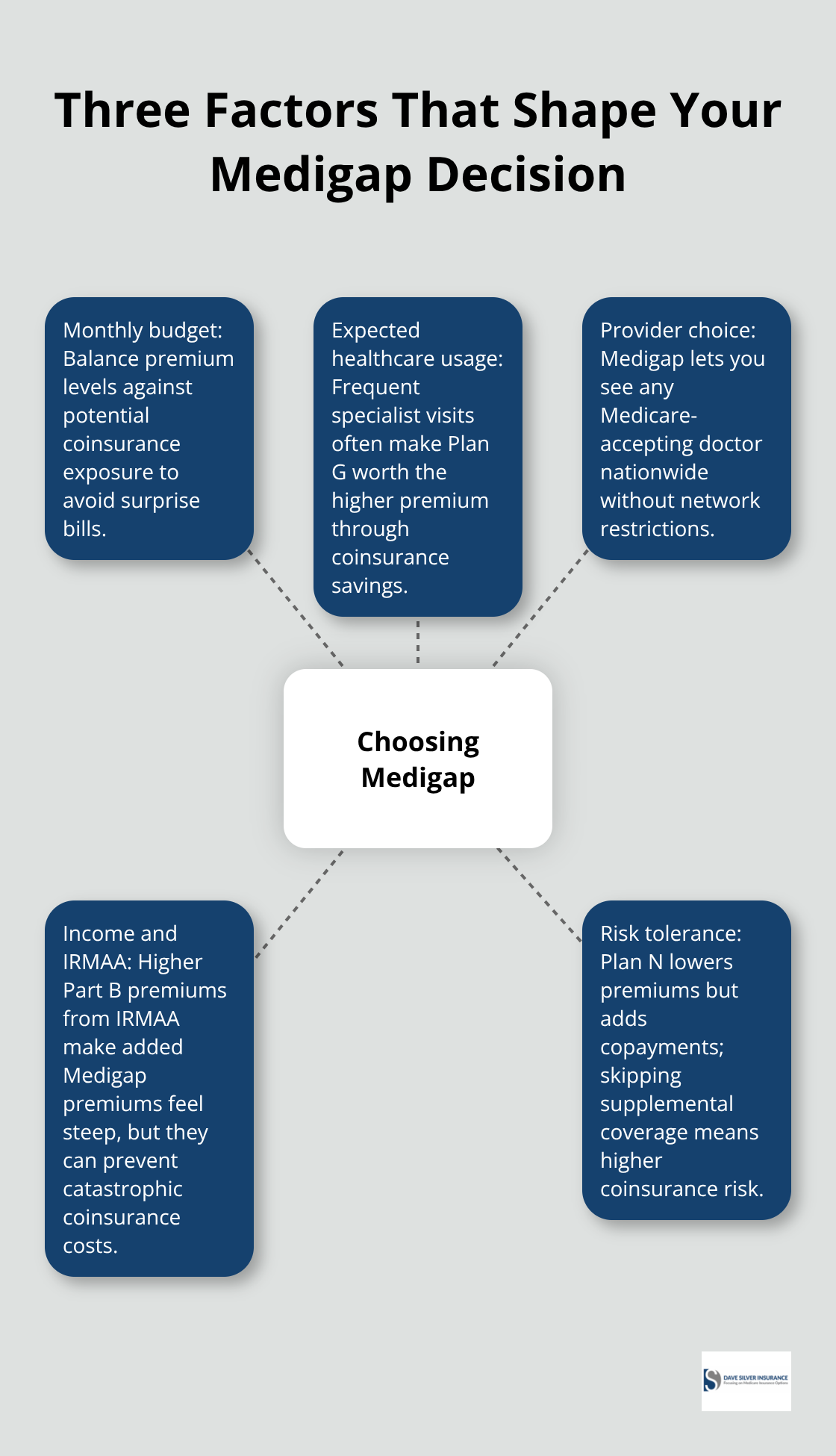
The practical decision hinges on three factors: your monthly budget for premiums, your expected healthcare usage, and whether you value provider choice. Beneficiaries with chronic conditions requiring frequent specialist visits generally benefit from Plan G despite higher premiums because the coinsurance savings exceed the premium cost. Those with minimal healthcare needs might choose Plan N or skip supplemental coverage entirely and accept higher coinsurance risk. Your income matters too-if IRMAA surcharges push your Part B premium to $689.90 monthly, adding a $200 Medigap premium feels expensive, but it prevents catastrophic coinsurance costs if serious illness strikes.
Enrollment Timing and Your Medigap Eligibility Window
Enrollment windows matter significantly: you have six months from your 65th birthday to enroll in Medigap without medical underwriting, but after that window closes, insurers can deny coverage or charge much higher premiums based on health conditions. Waiting costs money.
Final Thoughts
Your choice of coverage directly determines how much you’ll actually spend on healthcare. Original Medicare with no supplemental coverage leaves you exposed to unlimited coinsurance and significant gaps in dental, vision, and hearing care, while adding Medigap fills those gaps and caps your exposure. Medicare Advantage provides a spending ceiling but restricts your provider network, so the 2026 numbers we’ve covered-the $1,736 Part A deductible, the $202.90 Part B premium, the $2,100 Part D out-of-pocket cap-matter only when you understand how they interact with your specific health needs and income level.
Your actual healthcare burden depends on factors beyond the raw numbers. If you have established relationships with doctors outside a Medicare Advantage network, Medigap preserves that freedom, while if you face chronic conditions requiring frequent specialist visits, Plan G’s higher premium pays for itself through coinsurance savings. The enrollment window for Medigap closes six months after your 65th birthday, and waiting costs money through higher premiums or potential denial of coverage.
You need clarity on your specific situation-your expected healthcare usage, your provider preferences, your income level, and your budget constraints-before choosing between Original Medicare, Medicare Advantage, or supplemental coverage. We at Dave Silver Insurance work with you to understand your unique health and financial needs, then recommend coverage that actually fits your life rather than forcing you into a generic solution. Schedule a consultation with us to move from confusion to confidence about your Medicare costs explained.
Disclaimer: The information provided in this blog is for general informational purposes only and does not constitute legal, financial, or insurance advice. Coverage options, terms, and availability may vary. Please consult with a licensed professional for advice specific to your situation